
Pokhara's Garbage Management Becomes Increasingly Complex

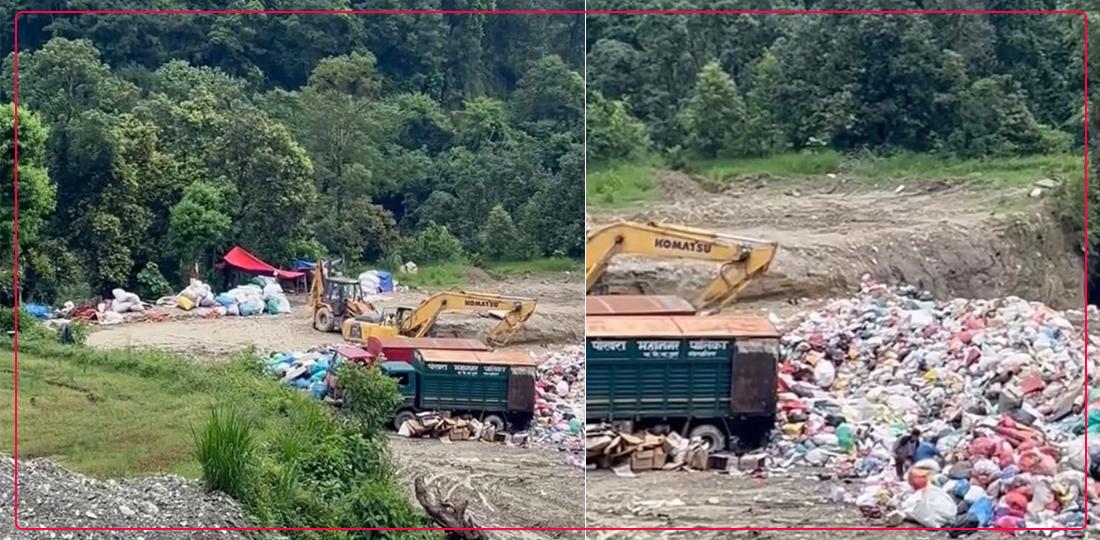
Pokhara. Pokhara's garbage management is becoming increasingly complex. After the pit in Pokhara-32 was filled, the metropolis has been dumping garbage in the Raichaur area of Ward No. 21 since last February.
Although it was started as a temporary arrangement, it has been 6 months since garbage started being dumped here. Locals are repeatedly protesting, saying that this is affecting the environment and human health.
With the onset of the monsoon, the garbage dumped in the forest area has started flowing directly into the Phusre River. This has increased pollution in settlements like Dobilla, and locals complain that garbage is mixing with drinking water sources.
Locals like Kishore Bhandari say that the water has become excessively polluted as the leachate from the garbage has been flowing directly into the Phusre River for some time.
“It is not that we are demanding that garbage should not be dumped at all. But, we should consider the environment and human health,” he said, “The place where garbage is being dumped now is not suitable land. Dumping garbage like this near settlements in a place with a water source can lead to a major crisis.”
He complained that people in the surrounding villages have complained about garbage leachate mixing with their drinking water sources.
Rigendra Giri, who contested the mayoral election in Pokhara Metropolitan City and was defeated, alleged that garbage was being dumped in violation of the constitution.
“This garbage is not the type that decomposes easily and mixes with the soil; it will remain for decades. There is a main source of drinking water there, from which the residents of Dobilla and Osho areas have been drinking water,” he said. “This garbage leachate flows directly into the Seti River. The Seti River is not only ours in Nepal but also a global biological asset. It puts the entire water cycle and human health at risk.”
Despite the metropolitan city spending crores of rupees annually on garbage management and classification, the problem has not been solved.
“Only for garbage classification, 50 to 60 crore rupees have been allocated in the past few years. But the result has been the opposite and more dire,” he said. “Currently, small contracts are being distributed here and there to suppress the protest there and silence the local youth. We will not remain silent on this issue.”
Giri said that if the metropolis does not listen, they will go to court with evidence.
Locals have complained that the unmanaged dumping of garbage has spread foul smell and flies to nearby villages. Although Pokhara Metropolitan City is running a large project with the goal of segregating garbage from homes and creating employment from it, it has not been able to provide a satisfactory solution.
There was a dispute even when garbage dumping started in Pokhara-21. Some political parties had protested. However, the metropolis started dumping garbage there for temporary management.
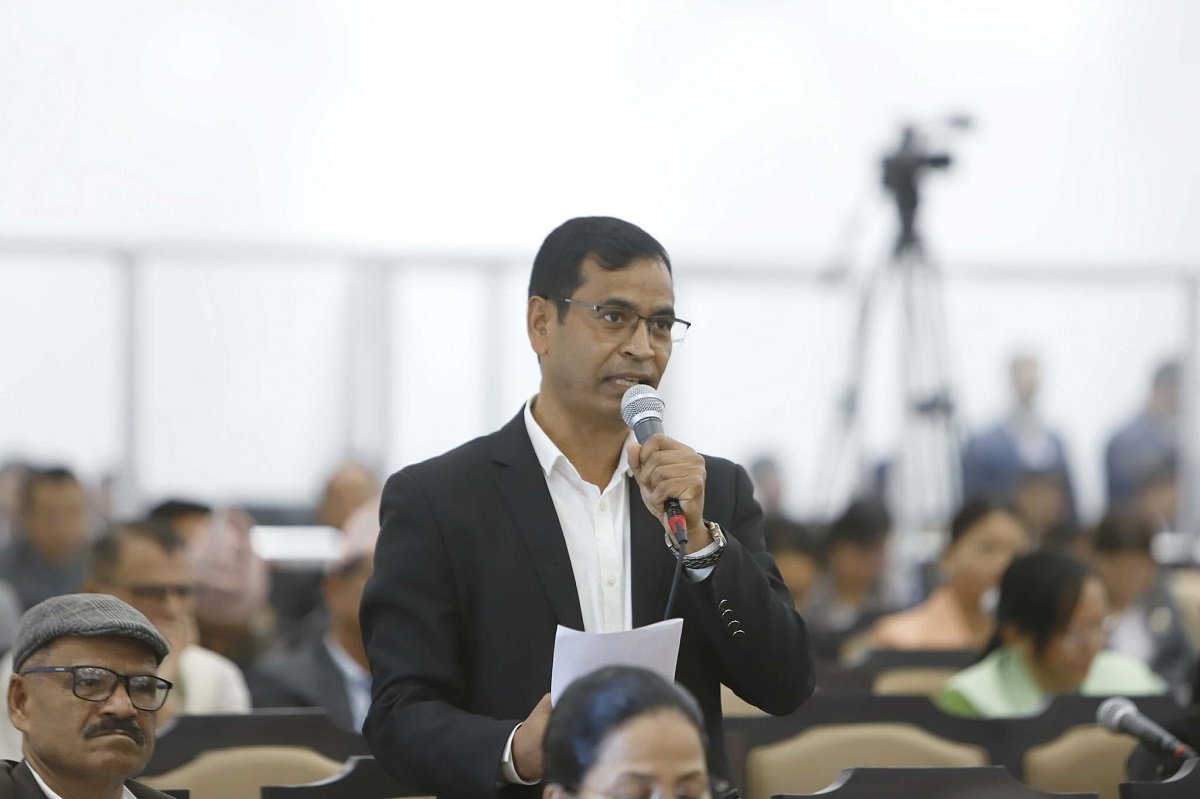
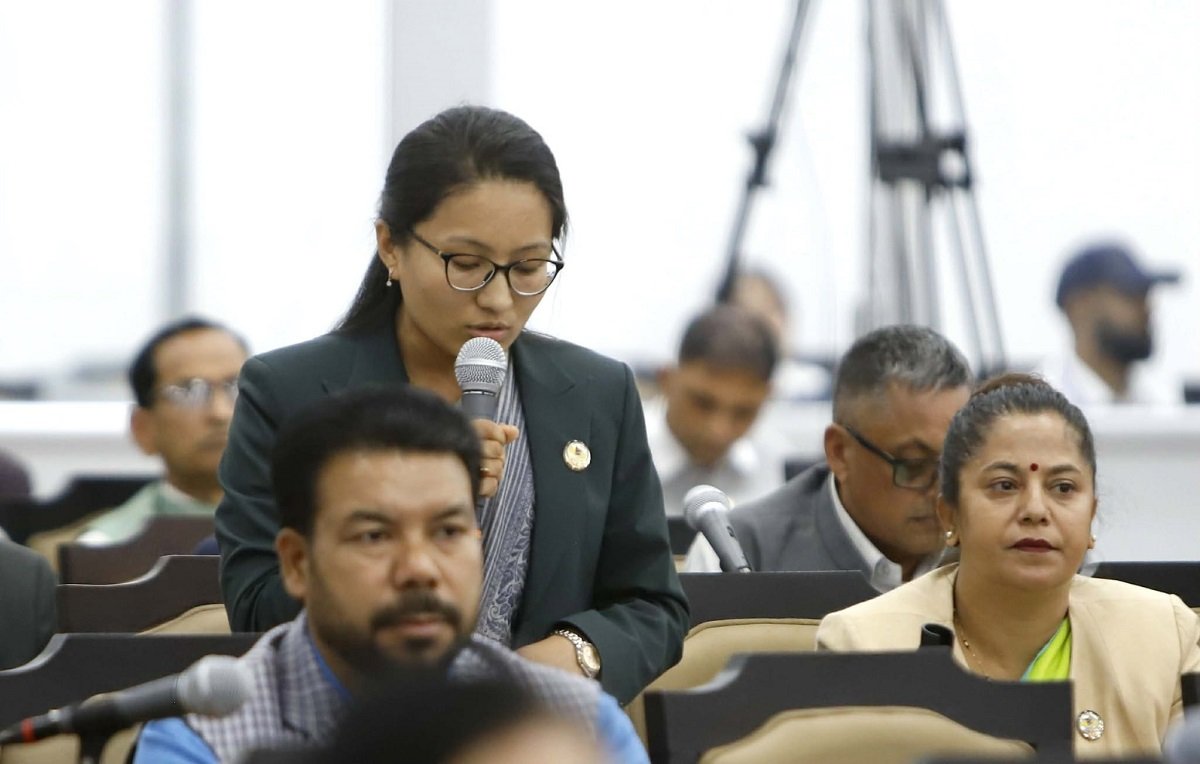
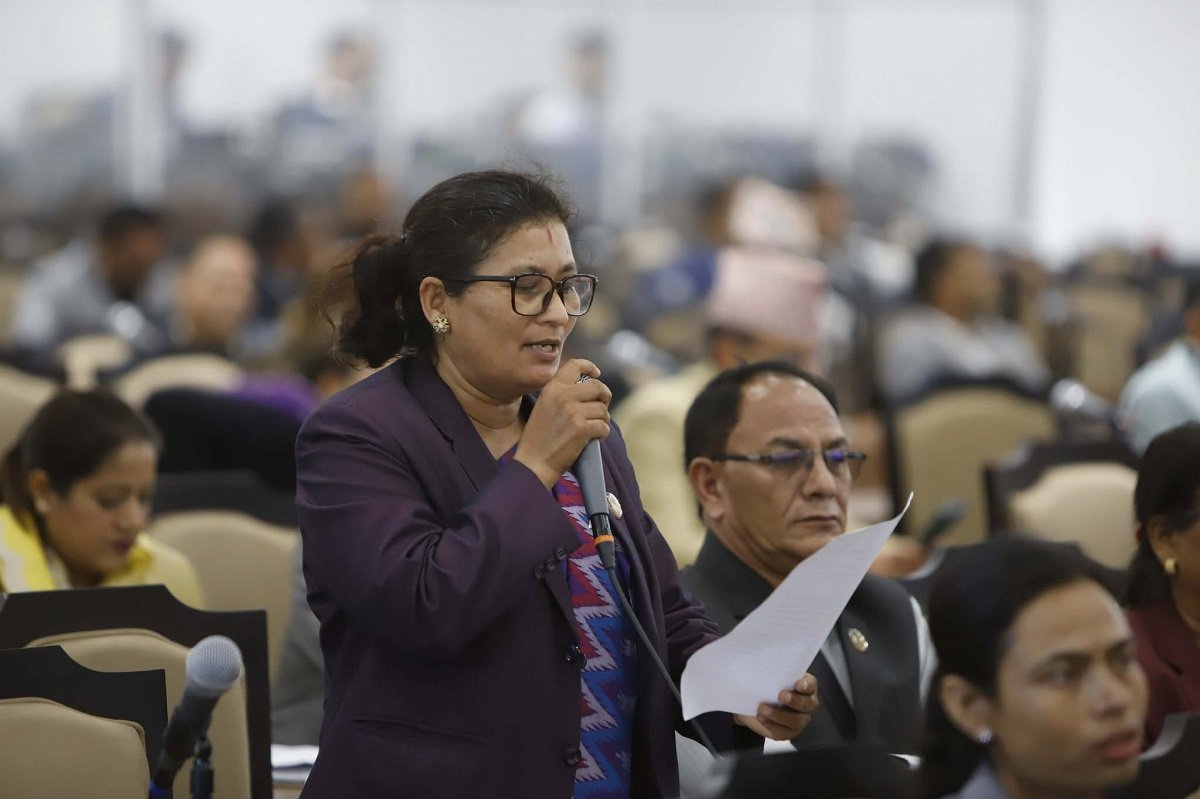
Mayor Dhanraj Acharya reiterated this as temporary management during the public hearing. He pledged to correct the shortcomings and take full responsibility.
“The issues raised regarding fundamental rights are sensitive, and we agree with them,” he said. “We are currently managing garbage in Ward No. 21 only for temporary management. The work on our permanent project, the waste processing center, is in the final stages. Therefore, we will not have to stay there for many months.”
However, the work on the processing center, which he said is in the final stages, has not even started yet.
Mayor Acharya said that due to a technical problem at the garbage management site a few days ago, the flow of leachate towards the river increased. He said that work was stopped for a few days because an excavator got stuck at the garbage dumping site.
“The excavator got stuck there the other day, and it was stuck for many days. Even the crane could not pull it out. Therefore, it was delayed by two to three days to manage and stop the leachate flowing towards the river,” he said. “We can also imagine what would have happened if it had rained heavily like now at that time.”
The Constitution of Nepal-2072 guarantees every citizen the fundamental right to live in a clean and healthy environment. Similarly, the Solid Waste Management Act, 2068, and the Forest Act, 2049, prohibit dumping garbage in forests, rivers, or public places other than those specified. Mayor Acharya said that the metropolis would be accountable, keeping in mind the legal provisions and the sensitivity of public health.
This specific news has been automatically translated by AI. As a result, there may be some inaccuracies or language errors.
_tAPo4rL4GI.jpg)