Cardamom Cultivation Boosts Farmer Income in Lamjung

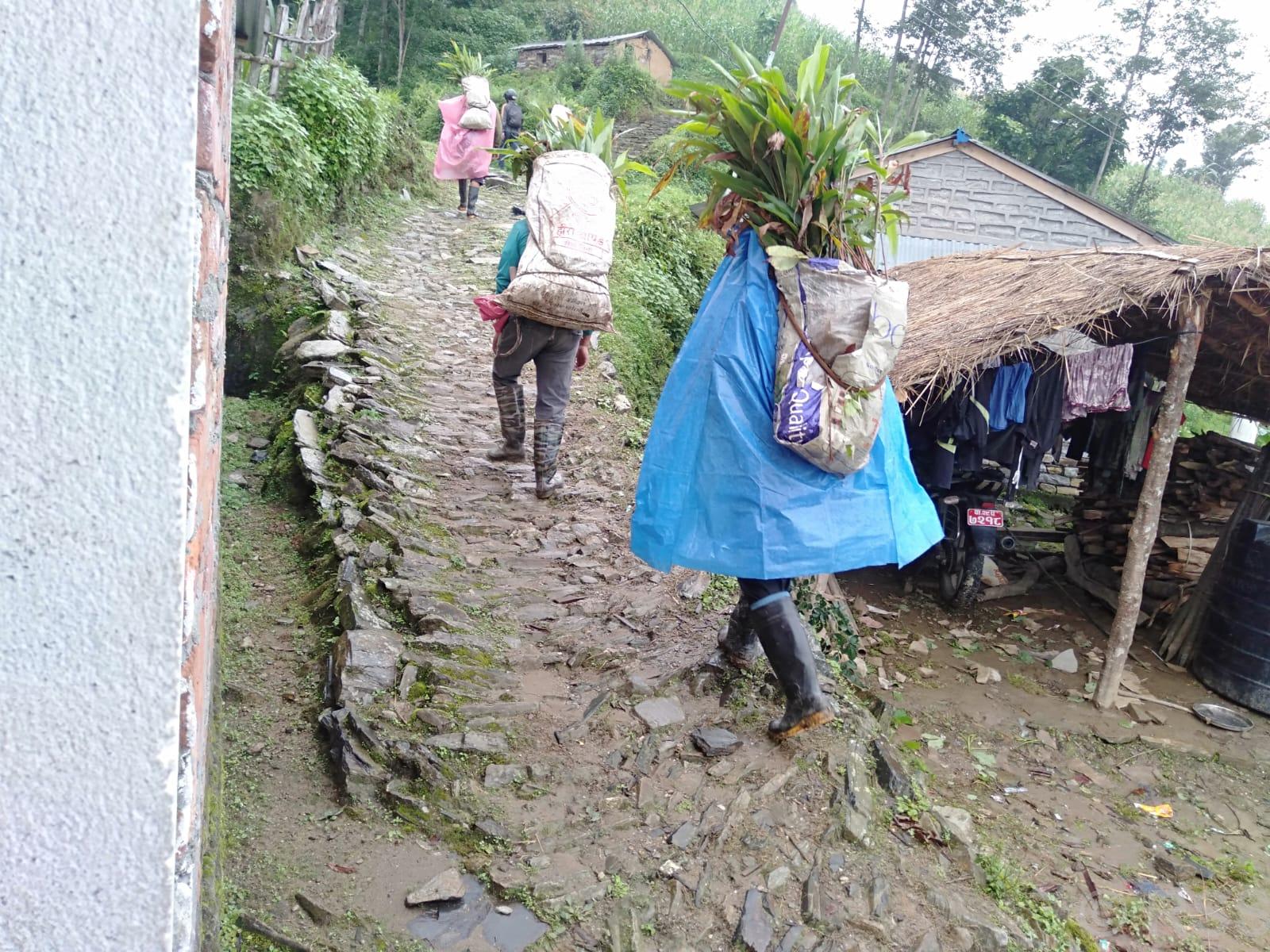
Lamjung. Cardamom, known as 'black gold,' has been contributing significantly to improving the living standards of farmers in Lamjung. Cultivation, which began expanding in the district in 2041 BS, has now been established as a major cash crop.
The hilly terrain, cool and humid environment, and shaded land along streams and gullies are considered suitable for cardamom cultivation. This is why its cultivation has been expanding in the district. As young people returning from foreign employment are increasingly attracted to this cultivation, Lamjung is becoming an important area for cardamom production.
Ajay Tamang of Chinhola, Marsyangdi Rural Municipality-7, returned from Dubai and took up cash crop farming. He has expanded cardamom cultivation on 40 ropanis of land. He earns an annual income of approximately Rs 1.5 million from the sale of seeds and saplings.
He is also the coordinator of the Nepal Cardamom Entrepreneurs Association, Gandaki Province, and has previously held the responsibility of chairman of the Lamjung branch.
According to him, a few years ago, due to the lack of sufficient income sources in the village, he had to leave his village to go to the city for employment. He returned to the village after seeing the potential of cardamom cultivation. He said that he is now able to support his family's expenses and earn a respectable income from this business, and that a good future can be built by staying in the village.
Som Bahadur Tamang, chairman of the Nepal Cardamom Entrepreneurs Association Lamjung, has also been successful in cardamom cultivation after returning from foreign employment. After working in Malaysia for ten years, he has been cultivating this crop for 25 years in Khance, Besisahar Municipality-10.
Cultivation, which started on one ropani, has now expanded to more than 30 ropanis of land. Although old plants had to be removed and new saplings planted a few years ago due to disease, the garden is now back in good condition. This year, he has also planted additional new saplings.
According to him, before the disease, many farmers in the village used to earn more than Rs 1.5 million annually. Although income has decreased in recent years due to disease and prices, farmers are encouraged this year as both production and prices have improved.
With the income from cardamom cultivation, he has purchased one kattha of land in Chitwan and constructed a four-room house in his village. He has the experience that farming in his own village with his family is less laborious and yields a good income compared to working abroad.
Due to cardamom cultivation, barren hillsides that were previously left fallow have now turned into lush gardens. Some young people who had left the village have also returned and started farming. He said that this has saved the village from becoming desolate and has increased employment and income opportunities at the local level.
Chitramaya Tamang of Chinhola, Marsyangdi Rural Municipality-7, sold cardamom worth approximately Rs 2 million in the current fiscal year, the highest in the district.
Farmers like Aas Gurung, Kamrashi Gurung, Dilmaya Gurung, and Bhupal Kunwar from the district are also earning good incomes annually from this cultivation. He said that Marsyangdi Rural Municipality has the highest cardamom production and trade in the district.
Gaj Ghale of Marsyangdi Rural Municipality-5 also took up cardamom cultivation after returning from foreign employment five years ago. Currently cultivating cardamom on seven ropanis of land, he earns an annual income of up to Rs 500,000.
He informed that he is satisfied to be able to live with his family in his own village after leaving foreign employment and plans to expand the business further in the coming days.
Som Bahadur Tamang of Ludi, Marsyangdi Rural Municipality-7, also commercialized cardamom cultivation after working in Malaysia for 10 years and returning to his country. Cultivation, which started on one ropani, has now expanded to over 30 ropanis. He said that more than four quintals of cardamom are expected to be produced this year, with an income of approximately Rs 800,000.
According to him, he has been able to earn a good income with less effort by staying with his family in his own village compared to abroad. He has the experience that cardamom cultivation has made it easier to support the family's expenses and expand other agricultural businesses.
He said that the future of cardamom cultivation is bright as it can generate good income with low investment and relatively less effort. Fluctuations in prices, disease management, and production shortfalls still remain the main challenges for farmers.
Although many gardens were affected by disease a few years ago, production is gradually improving with the expansion of new saplings. Although prices have not been satisfactory in the past few years, farmers are encouraged this year after receiving prices ranging from Rs 1,800 to Rs 2,500 per kilogram.
According to Hari Bahadur Mijar, agricultural officer at the National Agriculture Modernization Project Implementation Unit, Lamjung, cardamom produced in the district this fiscal year has generated an income of approximately Rs 243 million from the sale of 135 metric tons. He said that although production has decreased compared to the last fiscal year, farmers' income has increased due to higher prices.
Due to a decrease in cardamom production in neighboring India as well, local farmers have received good prices as demand increased. According to Agricultural Officer Mijar, priority is being given to increasing production, disease management, providing quality saplings, and technical support. He said that work is being done to improve the production and quality of cardamom cultivation by providing necessary training, awareness programs, and various support to the farmers.
According to the project, cardamom cultivation is currently being carried out on 750 hectares of land in the district, while production is taking place on 375 hectares.
Marsyangdi Rural Municipality, Besisahar Municipality, Khholasothar Rural Municipality, Dudhpokhari Rural Municipality, and Dordi Rural Municipality have been declared as cardamom zones.
In Lamjung, Saune, Jirmle, and Dambarshahi varieties of cardamom are cultivated at an altitude of 700 to 1,200 meters, Golshahi at 1,200 to 1,600 meters, and Ramshahi and Bhalange varieties at 1,600 to 2,200 meters.
Cardamom cultivation has provided a reliable source of income for farmers in Lamjung. It has helped create employment in the village for young people returning from foreign employment, utilize barren land, and make the rural economy dynamic.
It is expected that 'black gold' cardamom will further strengthen the rural economy of Lamjung in the coming days if production is increased, disease is managed, quality is improved, and a stable market is ensured.
This specific news has been automatically translated by AI. As a result, there may be some inaccuracies or language errors.