Balen Shah Employs 'Simulation' Tactic in Politics, From Mayor to Prime Minister


Kathmandu. The word 'simulation' on the football World Cup field is not new to sports fans.
In its general sense, simulation means an artificial imitation or practice of any real process, system, or behavior. In the sports field, a player pretending to fall artificially upon a slight touch from an opponent or acting to deceive the referee is an example of simulation. But this word, limited to the sports field, seems to be equally relevant in the context of Nepali politics today.
Its use in Nepali politics is being interpreted as an artificial practice by state operators to confuse citizens and the media, and to hide their weaknesses.
Instead of actual reform and transformation, the state and leadership sometimes create such incidents to create an artificial 'illusion' of good governance. According to sociologists, whenever the government or democratic leadership is surrounded by all-round failure, administrative weaknesses, or criticism, the state or leadership often presents a new 'simulated crisis' or populist stunt to divert the attention of the general public. The main objective of this is to make citizens forget the real issues, policy weaknesses, and failures, and trap them in a new cycle of debate on social media.
Stunts to Avoid Criticism While Mayor
This strategy also applies to the current Prime Minister Balen Shah during his tenure as Mayor of Kathmandu Metropolitan City. Although he built a popular base, he adopted such 'stunts' and diversionary tactics at various times to evade the pressure created by the lack of institutional homework, weakness in administrative coordination, and disregard for the rule of law.
Since being elected Mayor of Kathmandu Metropolitan City, Balen's tendency to rush only for results rather than established legal processes has been clearly visible. Although he did some popular and commendable work in the initial phase, those steps became legally controversial due to the lack of institutional and legal procedures, which repeatedly put the Metropolitan City in a position to face legal setbacks. A prime example of this is the Nurbic Hospital case. Mayor Balen himself went to Nurbic Hospital after posting a 24-hour notice to demolish structures built in violation of the map. However, the Supreme Court issued an interim order not to demolish the structure immediately against the step taken without following established legal procedures and a clear opportunity for hearing, forcing the metropolis to back down.
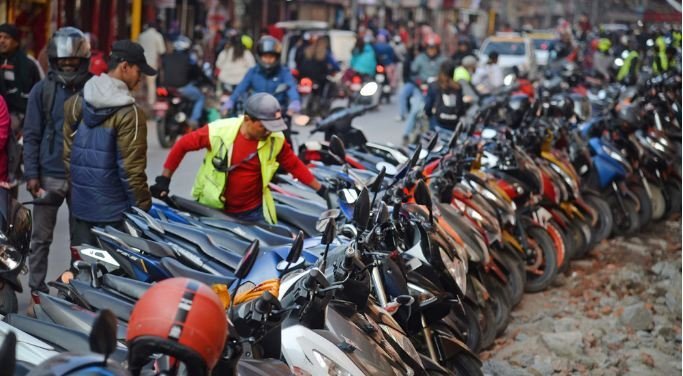
Similarly, Balen received a lot of applause from the public for clearing the parking (basement) of commercial buildings in the New Baneshwor, Sundhara, and New Road areas. However, serious legal and administrative weaknesses were seen in the excavation of the Tukucha River and the removal of the squatters' settlement in Thapathali. The court imposed restrictions, stating that the legal process was not followed when bulldozers were used under private properties and houses in the name of identifying the flow area of the Tukucha River.
The failure of the Metropolitan City to use force in the squatters' settlement is also part of this. On the day of the general election on November 4, 2079, the metropolis sent bulldozers to the squatters' settlement in Thapathali without any concrete homework or minimal coordination with the Land Commission. The attempt to use force without preparation failed due to the resistance of the local residents. 36 metropolitan police personnel were injured in the clash. To mitigate this failure and the widespread criticism it generated, Balen immediately tried to divert public attention by writing provocative and unsubstantiated things on social media.
The biggest criticism of Balen's working style was his lack of communication. Citing the federal government's failure to fulfill his 17-point demands, he took an unusual and illegal stance of not collecting garbage from Singha Durbar, the country's main administrative center, from March 26, 2079. Instead of formal talks or coordination with the federal government on this matter, he expressed aggressive anger through Facebook.
Making a sensitive issue like waste management, directly linked to national public health and the environment, a tool for political bargaining was not in line with the dignity of the position. Finally, the metropolis was forced to back down only after the Supreme Court issued a clear order to collect the garbage. This confirms that he is more interested in social media popularity, i.e., digital populism, than in institutional solutions and legal processes.
His style of often not attending formal meetings organized to resolve misunderstandings between the federal and local levels, but presenting himself aggressively on social media, has raised questions about his institutional politics and administrative maturity. The incident in May 2081, where the Metropolitan City dumped garbage at the main gate of the Department of Roads and the Division Road Office, Kathmandu, is another glaring example of this. In retaliation for the Department of Roads stopping the metropolis's plan to widen the road and increase the footpath in New Road, Balen had garbage dumped at the main gate of the Road Office on a Saturday.
The fact that he videoed the dumping of dirt and garbage at the gate of a government office and posted it on Facebook, instead of resolving disputes over legal procedures and jurisdiction through dialogue, made it clear that Balen was aiming to become a 'hero' among his staunch supporters and divert the main issue rather than solve the problem.
In August 2081, a dispute flared up again between Prime Minister KP Sharma Oli and Balen over the operation and ownership of the incomplete Dharahara in Sundhara. The metropolis had started free parking in the basement of Dharahara from January 9, 2080. Prime Minister Oli expressed dissatisfaction, stating that Dharahara did not belong to the municipality and that free parking was hastily started before the construction was fully completed for cheap publicity. Balen turned this dispute into a social media conflict of 'Oli vs. Balen' instead of resolving it legally and administratively.
Balen Became Fierce on Facebook After Becoming Mayor
Looking at Balen's Facebook posts since being elected Mayor of Kathmandu Metropolitan City, they are sometimes not in line with the dignity of the position. Apart from songs, poems, personal photos, and metropolitan notices, most of his posts on political issues were provocative.
He has written many statuses making misleading claims that reduce public trust in the main structures of the state, including the court, government, and administration. Mayor Balen, as the leader of the local government, faced defamation lawsuits twice due to his Facebook statuses.
Since being elected mayor, a glimpse of anarchy has been seen in Balen's speech and behavior. Sometimes he threatens to burn down Singha Durbar, and sometimes he challenges the federal government to 'come and fight'. After the police arrested the drivers of the garbage trucks of the metropolis, he challenged them on Facebook on May 20, 2024, saying, 'Whoever wants to fight, come, no one will be spared.' He wrote in anger, 'You couldn't catch the corrupt, but this government has caught four drivers who carry garbage in Kathmandu. Until the drivers are released with respect, the garbage of Singha Durbar, all party offices, and leaders' houses will not be collected. Whoever wants to fight, come, no one will be spared.'
Similarly, Mayor Balen made a serious accusation regarding the Gaushala Dharmashala, stating that the country was being run by organizations like the Marwari Sewa Samiti. After the Pashupati Area Development Trust signed an agreement to hand over the responsibility of operating the Gaushala Dharmashala to the Kathmandu Metropolitan City, a team from the metropolis went to vacate the Dharmashala. The Marwari Sewa Samiti, which was operating the Gaushala Dharmashala, protested this. Regarding this issue, Mayor Balen wrote, 'The metropolitan police will go to protect and manage the structure that has come under its responsibility. The Marwari Sewa Samiti protests, disregarding the court's decision and the trust's decision. The Nepal Police interferes with the metropolis and instead protects the Marwari Sewa Samiti. Now understand, the country is indeed run by such committees. Their illegitimate relationships are above rules and courts. We were under the illusion that the police and the government were running the country.'
Not only this, but Balen also wrote a status on November 29, 2023, attacking the overall political system and the relevance of periodic elections, commenting on the upcoming election of 2084 as follows: 'The country will be built, not by your 84, it will be built by finishing your 84, by finishing you.'
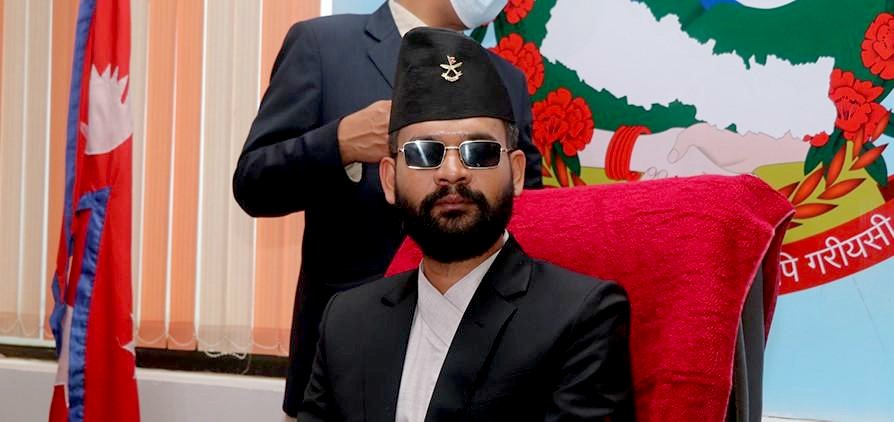
Balen had threatened to set Singha Durbar on fire through a status in 2023. Angered by the police stopping and questioning a metropolis vehicle in Koteshwor, Balen had written, 'Nothing for today, but if any of our metropolitan vehicles are stopped by the government from tomorrow, I will set Singha Durbar on fire. Remember, you thief government.' Later, after widespread criticism, he removed the status from Facebook.
After being criticized for failing to manage Kathmandu's garbage, he expressed anger towards Singha Durbar on social media in 2023, suggesting that leaders should be taken to Sisdol to clean the country. 'From today, garbage from Singha Durbar will not be collected. If the country is to be cleaned, its leaders must be dumped in Sisdol.' A while later, he wrote again, 'Either work for the benefit of Kathmandu, or move Singha Durbar to another municipality. We Kathmandu residents have no objection, whether you move Singha Durbar or the capital.'
After becoming mayor, he strongly attacked political leadership and movements, writing, 'The movement against corruption? Do you know who the leader is? Do you know where his house is? Directly throw him into the Bagmati. We have seen too many such street dramas. I don't believe it. You were given so many votes to make you leaders, not to protest, but to take direct action, to make policies for direct action.' He even commented, 'All leaders, new and old, are thieves, no one cares about the country.'
Mayor Balen faced a contempt of court case for commenting on the Indian film 'Adipurush' on Facebook. On June 15, 2023, he had directed the removal of the film 'Adipurush' from the Kathmandu Valley within three days through Facebook. As the court issued an order that the film could not be stopped from being screened, Balen openly stated that he would not obey the court's order. 'When it comes to the sovereignty and independence of the country, I will not obey any law or court. When the film's writer says Nepal was under India, you know their intentions. The fact that the Nepal government calls this a stunt and the court allows the film to run means that Nepal was under India, and the court and government are slaves to India. I am ready to face any punishment for this, but the film will not run and will not be allowed to run.'
Towards the end of 2022, he wrote disparagingly about the newly elected members of parliament. 'New MPs, new liars, same old country, same old businessmen.'
All these events and aggressive social media statuses have mostly come at times when he was facing a lot of criticism. 'Balen always resorted to such 'stunts' to divert his administrative failures and criticisms. When there was an extreme crisis in Kathmandu's waste management, haste in bulldozing indiscriminately, inhumane behavior of metropolitan police towards footpath vendors, and disputes over digging roads in New Road, he used to divert the issue rather than engage in dialogue,' says a ward chairman of Kathmandu Metropolitan City.
Same Style Even as Prime Minister
Balen's diversionary work style was not limited to his tenure as Mayor of the metropolis. After becoming Prime Minister from the Rastriya Swatantra Party following the general election, this style of his continued. The 'issue dodging' and diversionary skills developed during his mayorship continued during his tenure as Prime Minister. The recent incident involved the Ganesh Nepali suicide case and the plight of squatters at the holding center, which led to widespread criticism of the government. Serious questions were being raised about the government's sensitivity and efficiency at the citizen level and in the media.
When such widespread pressure and criticism arose, a new conspiracy was hatched by those close to the ruling party. Attempts were made to obstruct the work of established media houses like Kantipur Publications, OnlineKhabar, and Himalaya Television by parking suspicious vehicles in front of their main gates. Later, the traffic police had to remove those vehicles with the help of a crane. A thorough investigation into this incident revealed the direct involvement of leaders and cadres of the ruling party, RSP, in this act, which clearly shows an attempt to intimidate the media and divert the real public outcry.
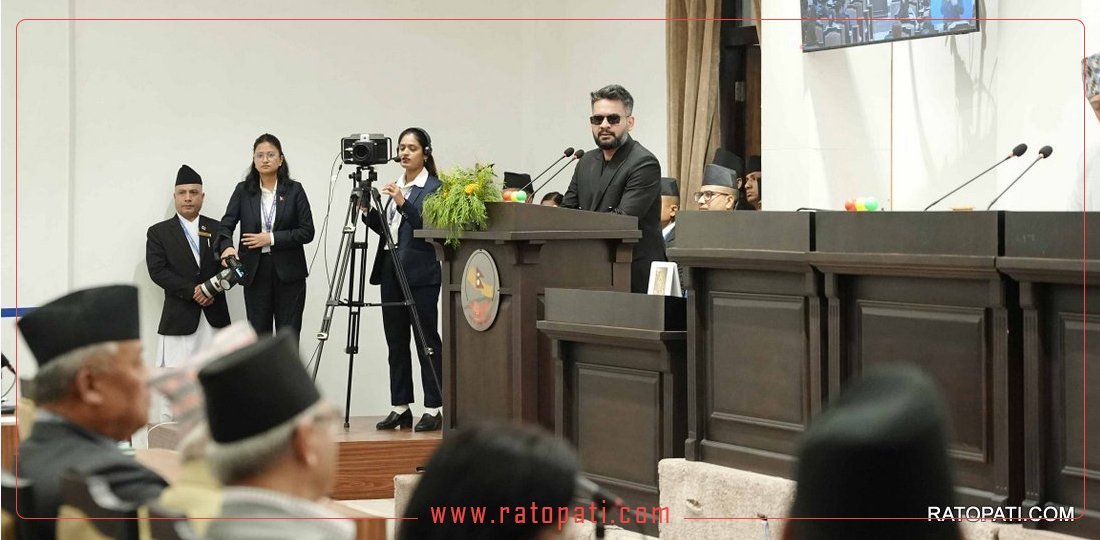
Similarly, as Prime Minister, the government's humanitarian approach was greatly questioned when bulldozers were used in squatters' settlements without alternatives or preparation. Amidst widespread criticism, Balen tried to divert public attention from the squatters' problem by bringing the issue of Dairy Development Corporation (DDC) cheese into discussion. In addition, whenever the government becomes narrow-minded on policy failures and livelihood issues, he shares attractive videos and photos of tourist places on social media or posts his personal photos to divert the debate.
Saroj Rajbhandari, a young activist and political science student, says, 'If you think for 5 minutes why all this was done, you will get the answer. Whenever questions are raised about him, some controversy or gossip arises.' He says, 'Balen's working style has been like this before. It is the same now. Nothing new. Balen's team thinks at this level too,' says Rajbhandari.
Rajbhandari interprets this as the method of modern state operators. 'In the past, it was very difficult to manipulate the masses. Not that it didn't happen. But now, being a big influencer himself, it is easy for Balen to divert issues. That's what he is doing. The practice of this varies around the world. Just as in India, when elections approach, the BJP uses religious issues and connects them with Pakistan for propaganda. This diverts the issues of the common people, but in Nepal, Balen seems to be doing this when questions are raised rather than during elections,' he said.
Balen, who is the most followed person on social media in Nepal with a huge craze, has a strong influence among internet users. Any content or opinion he posts on social media goes viral in an instant. With the strength of this network and the support of his followers, he has been 'diverting issues' by giving emotional twists to complex political and administrative matters.

This specific news has been automatically translated by AI. As a result, there may be some inaccuracies or language errors.