Balen Shah Government Completes 100 Days, Focus on Foreign Policy

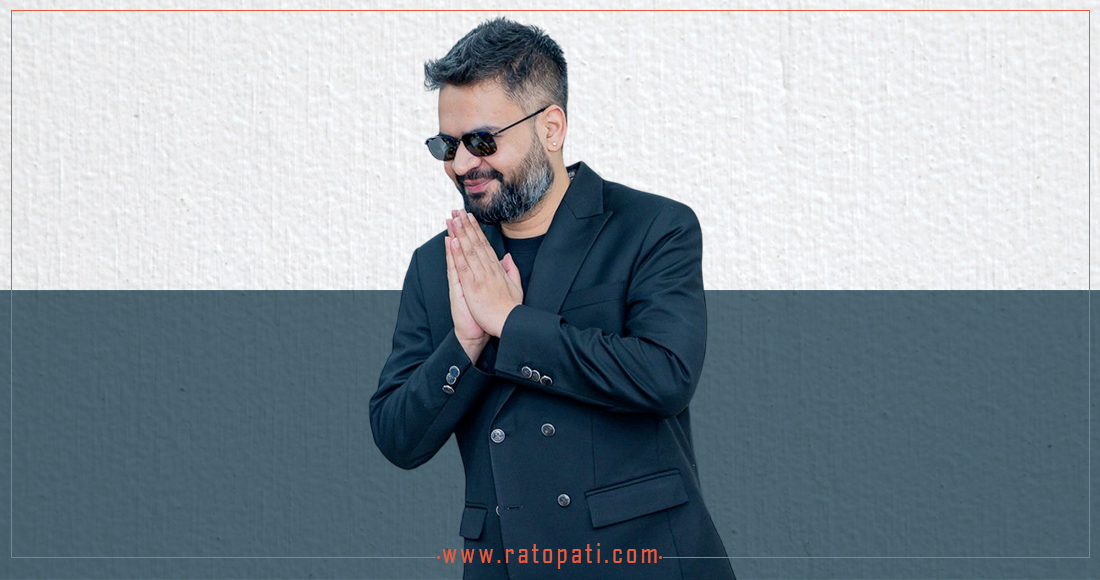
Kathmandu. The Balendra Shah government has completed 100 days since its formation.
After the formation of this government, international affairs became one of the most discussed topics. Some still claim that the main reason for the formation of the government or even before that was the 'influence of the West'. And their argument is that this is why Nepal's geo-politics has deteriorated.
The commitment letter made public after the formation of the government mentioned that Nepal would be transformed into a vibrant bridge connecting India and China, considering it a 'buffer state'. This created a stir. Nepal has been considered a buffer state for India and China since the time of Prithvi Narayan Shah, but did the government of Rastriya Swatantra Party (RSP) try to change this? Or is it trying to bring about a change in this narrative? The discussion is still ongoing.

RSP had stated that Nepal is historically an independent and sovereign nation and should not be recognized as a buffer state just because someone calls it that. Rather, the party emphasizes that Nepal should become a dynamic bridge connecting two large economies.
Not only that, Prime Minister Balen did not meet any ambassadors in Nepal individually. In the past, as soon as they became prime minister, ambassadors from various countries would flock to the prime minister's private residence and office with appointment books, but now that tradition has been broken. This is a completely new practice in foreign policy.
Similarly, the process of appointing ambassadors through advertisements has also become new. Previously, ambassadors' names were recommended from the pockets of political leaders. Party cadres would become ambassadors and go to various countries.
As the government starts new experiments in foreign policy, the world is also watching it. Even though it is unpredictable when Prime Minister Balen will make what decision, international interest has increased.
_scrVUV29JW.jpg)
International affairs that have been in the spotlight in 100 days
1. Prime Minister Balen's group meeting with diplomatic missions
2. RSP's stance that Nepal is not a buffer state but a vibrant bridge
3. Recall of ambassadors and consuls general
4. Preparation to appoint ambassadors through competition
5. Prime Minister's refusal to meet foreign diplomats individually
6. Indian Foreign Secretary cancels visit
7. Prime Minister Balen's talk of foreign visits
8. Prime Minister Balen not meeting with American delegates
9. RSP Chairman's visit to India, summoning the Foreign Minister to India in haste
10. Nepal's objection to the agreement between India and China regarding Lipulekh
11. Diplomatic note to India and China
12. Prime Minister Balen's statement that Nepal has also encroached on Indian territory
13. Foreign Minister's visit to China
14. US drone test at Everest Base Camp
15. Dalai Lama's birthday in Nepal
- What do experts say?
Some consider the government's new practice as an 'effort to do something just for the sake of doing it', while others consider the events as a result of the new government's lack of knowledge.
Moreover, many aspects of foreign policy are already enshrined in the constitution, and the government cannot go against it. There are comments on whether Prime Minister Balen's steps will increase controversy.
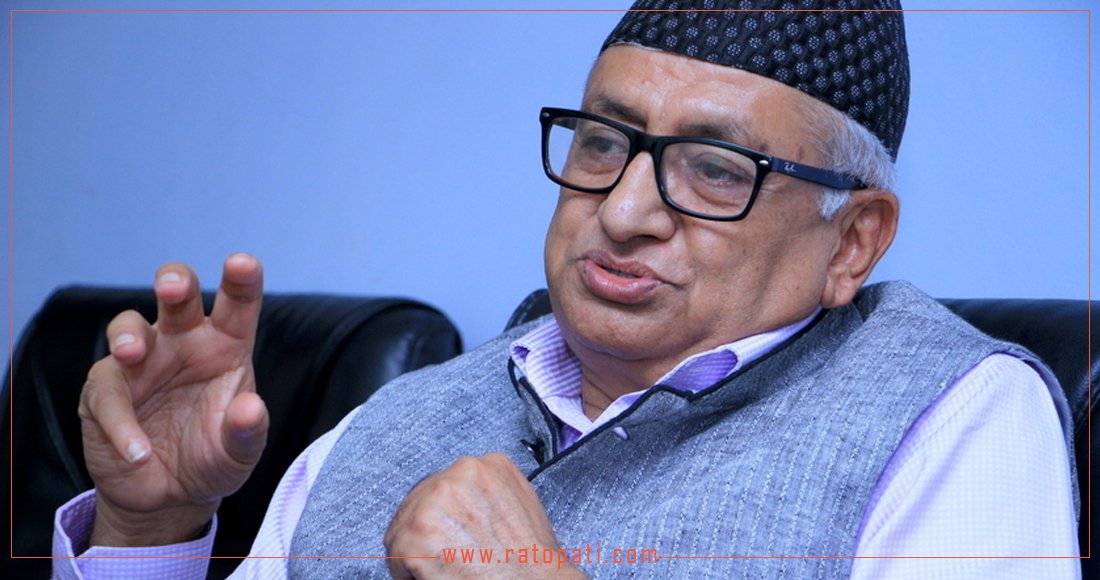
International affairs expert Dr. Deepak Bhatt says that the RSP and its leaders, who came with great speed, did not understand the core of foreign policy. 'In the name of doing something new, the government is spoiling many things. The Prime Minister does not know what diplomacy is, how it is conducted, and what it entails,' Bhatt says, 'In some cases, the Ministry of Foreign Affairs is trying to fix things after Prime Minister Balen has already spoiled them.'
Dr. Bhatt suggests that the Prime Minister should meet with the private sector before completing 100 days in government. He also advises that he should consider international relations in a timely manner. His analysis is that the government currently appears to be in a state of confusion.
Foreign policy expert Dr. Indra Adhikari also says that the government appears confused about whether to continue foreign affairs in the old way or reset it. 'One cannot create upheaval in foreign policy like in other sectors. If the foreign policy is to be reset, all circumstances must be favorable, which is not the case now.'
She says that with the way the current government is moving forward, it will not be able to do what it wants. 'Although there is an eagerness to do something, it seems that the method is not right,' Adhikari added, 'Who else knows better than us? Who can do better than this?' she said.
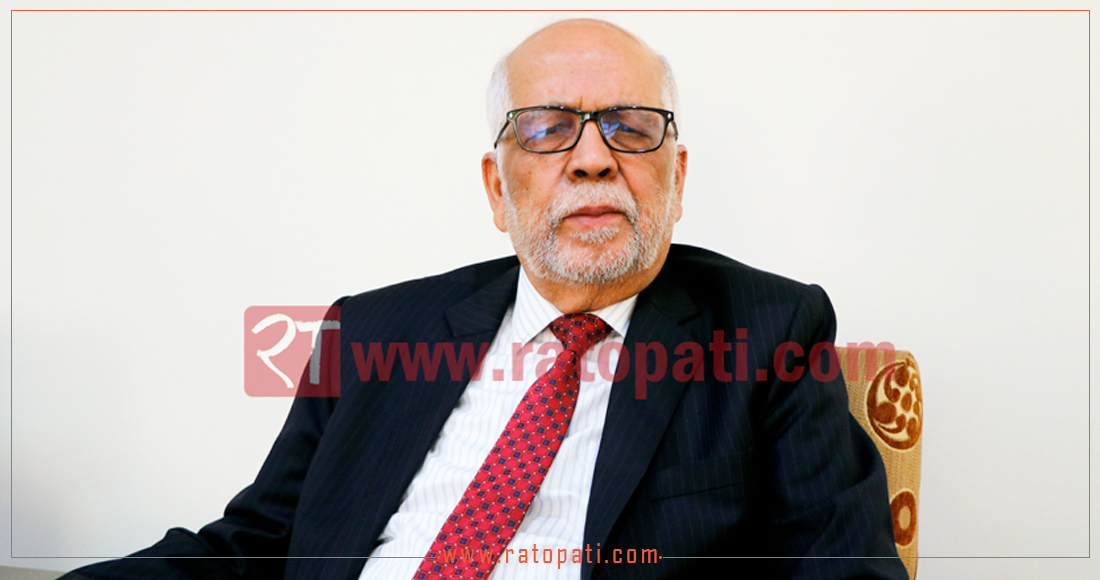
Prime Minister Balen is reluctant to meet with representatives of diplomatic missions and delegates from abroad. 'The Prime Minister might think, this is fine, what's the harm if I don't meet? But diplomacy doesn't work like that,' says another foreign affairs expert and former ambassador, Bijaykant Karna. 'If the Prime Minister understands it like others, it is a mistake.'
He states that when representatives from a country come, they should not be considered just individuals. 'They are representatives of the entire country, representatives of their government, representatives of the head of government. Not meeting them is like not meeting the country's representatives,' he explains.
He warned that Prime Minister Balen's behavior would affect Nepal's geo-politics and also impact development construction and friendly relations. 'How the country's diplomacy progresses depends on the Prime Minister. International relations are strengthened only by meeting representatives and going on foreign visits as needed,' he suggested.
Similarly, former Secretary of the Ministry of Foreign Affairs, Dr. Madan Bhattarai, also suggests that the Prime Minister should meet foreign guests as needed. 'Saying I won't meet anyone is completely wrong. One should meet as needed, not necessarily everyone. Meeting and continuous dialogue resolve many issues,' he said.
Adhikari reiterates that the Prime Minister's stance of not meeting anyone sends a bad message in the foreign and diplomatic sectors. 'The message that the Prime Minister does not meet anyone has spread everywhere. This might also deter those who want to visit Nepal,' Adhikari added. 'This is a loss not just for the Prime Minister but for the entire country.'
Since the formation of the Balen government, there have been three high-level visits from the United States alone. The Prime Minister did not meet with any of them. This might be the reason why no high-level visits of that nature have occurred from any country since then.
However, high-level visits from India and China are being prepared, but even for these, Prime Minister Balen is not ready, according to experts.
- Recall and Appointment Process of Ambassadors
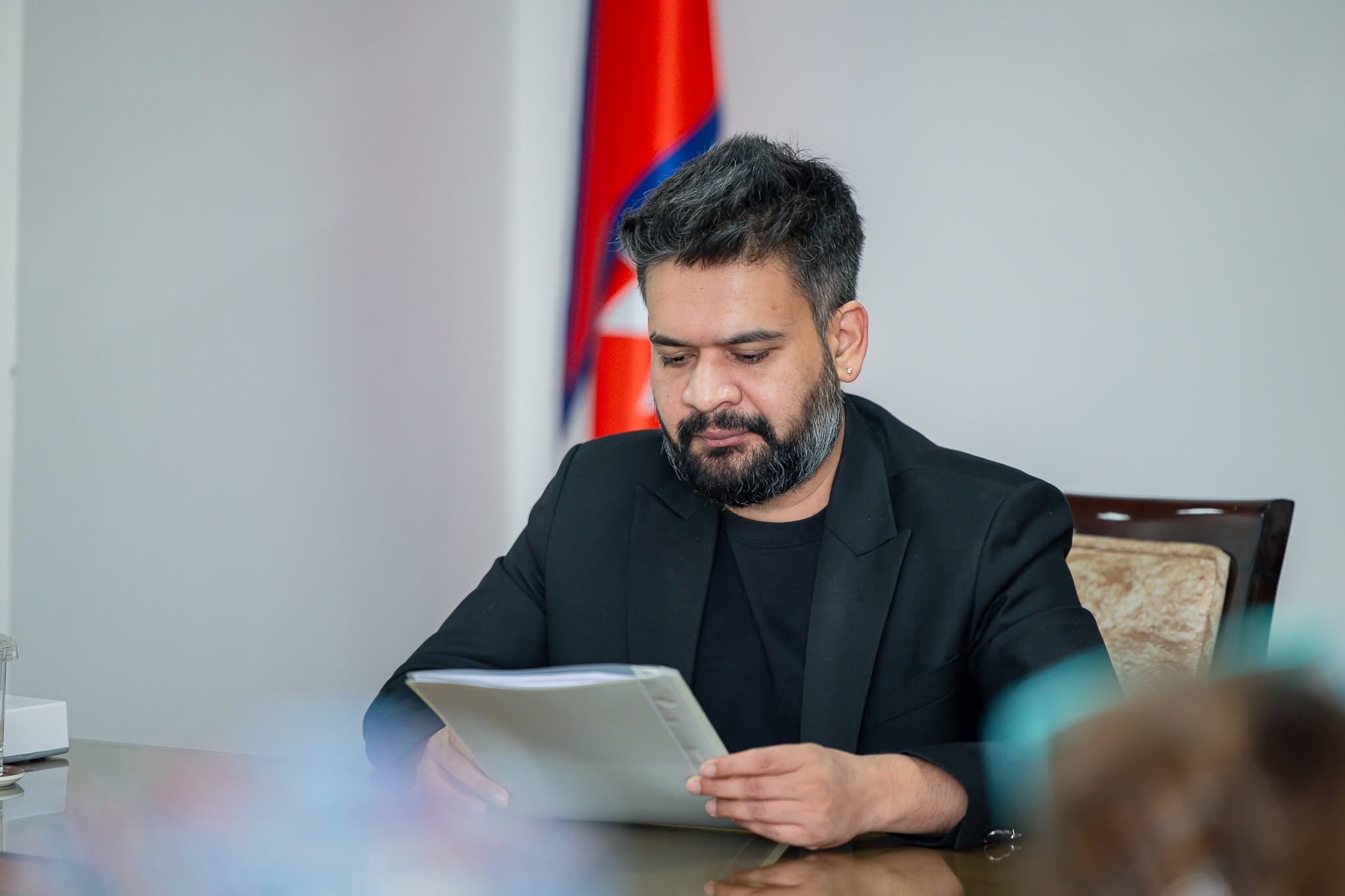
After the Janji movement, the government led by Sushila Karki recalled 11 ambassadors appointed by the previous government. Subsequently, the government led by Balen recalled the remaining politically appointed ambassadors. Currently, 14-15 embassies are without ambassadors.
The absence of ambassadors in embassies for a long time has not sent a good message internationally. Due to the lack of ambassadors, acting ambassadors have not been able to perform their duties effectively.
Former Ambassador Suryanath Mishra says, 'Many things need to be considered in diplomacy. Daily administrative work is done by acting ambassadors, and no work is stopped, but how the concerned country views it makes a lot of difference. Therefore, keeping embassies vacant for a long time does not send a good message.'
When embassies abroad remain vacant, it sends a wrong message internationally, and criticism also begins. In some cases, acting ambassadors are not even invited to formal events held there, making them feel insulted. According to former Ambassador Mishra, although the government may have intended to do something good, the delay has created some suspicion.

Former Secretary Bhattarai, however, attributes this situation to everyone aspiring to become an ambassador. According to him, about three thousand people have applied for the 14-15 ambassadorial positions requested. He highlighted that this shows the attraction and importance of the ambassadorial post in diplomacy. 'Nepal is the only country where ambassadors are appointed politically. In reality, diplomats should be sent as ambassadors, but this practice is not seen in Nepal,' he said.
The current government has started the process of appointing ambassadors by issuing advertisements. It is unknown what kind of people will come through this process. Bhattarai adds, 'Instead of advertising, it would have been better if the government had appointed ambassadors from the diplomatic corps.'
Experts in this field and individuals active in diplomacy for years are not interested in becoming ambassadors by filling out applications, and many have not even applied. This method of appointing ambassadors is likely a new experiment by the current government, the results of which will only become clear after the appointment process is completed, according to experts.
Foreign policy expert Adhikari says that Prime Minister Balen himself lacks a diplomatic background and maturity in politics, so he still has a lot to learn in foreign affairs.
- Dalai Lama's Birthday and the Arising Controversy
Recently, a major controversy has arisen over the celebration of the Dalai Lama's birthday in Nepal. Former prime ministers, former ministers, former ambassadors, and former chief secretaries of the country have issued statements criticizing the government's move. Although the government is facing severe criticism for going against the 'One China Policy', it has not officially responded to this issue so far.
Former Ambassador Tanka Karki says that although the Dalai Lama's birthday has been celebrated in Nepal in the past, there is no history of it being celebrated with the government's permission or approval. He accused the government of trying to spoil relations with neighboring countries. Claiming that Nepal's non-aligned foreign policy is being influenced at the behest of Western or other powers, he also accused them of trying to dismantle established policies and structures in the name of being 'new'.
However, foreign policy expert Adhikari believes that the issues raised regarding the Dalai Lama's birthday are merely an attempt to create unnecessary instability. She said, 'Those who are currently protesting, saying that the Dalai Lama's birthday was celebrated, even when they were in government or during their tenure, this birthday was celebrated. Why didn't they speak up then?'
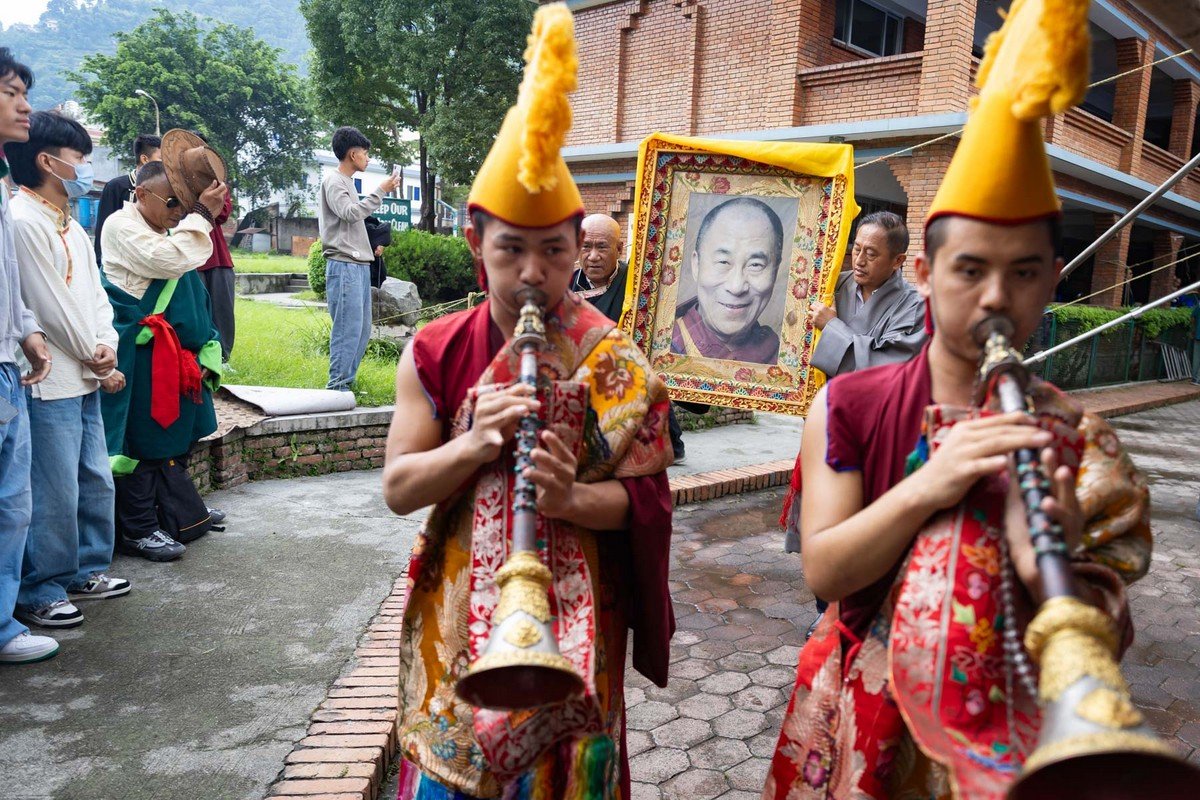
Former Ambassador Karna recalled that this birthday was also celebrated when Leelamani Poudel was the Chief Secretary and Narayan Kaji Shrestha was the Foreign Minister, and stated that those who remained silent then are now unnecessarily raising this issue to tarnish the government's image. He added, 'There are followers of the Dalai Lama in Nepal too. Can't they celebrate their guru's birthday? No one's faith and rights should be violated.'
Former Ambassador Karna claims that some individuals are creating this controversy unnecessarily to show their loyalty by portraying themselves as pro-China. Foreign policy expert Adhikari shares a similar view. She also argued that such protests are only to show oneself as pro-China and questioned why such events were not protested in the past.
'There is no trace of the 'One China Policy' in this matter. This propaganda is being spread only to tarnish the image of the Balen-led government,' Adhikari said. 'Some individuals have brought the Dalai Lama's birthday into controversy based on issues like TOB and Youth Council that emerged during the Janji movement.'
Former Secretary Bhattarai says that there is no justification for protesting the Dalai Lama's birthday, as the government itself did not celebrate it, but the general public did. 'If ordinary citizens celebrate someone's birthday, there is no point in others interfering,' he said.
He argues that this issue is being unnecessarily dragged into controversy at a time when Foreign Minister Khanal recently visited China and affirmed a firm commitment to the 'One China Policy', acknowledging Taiwan as an inalienable part of China.
This specific news has been automatically translated by AI. As a result, there may be some inaccuracies or language errors.