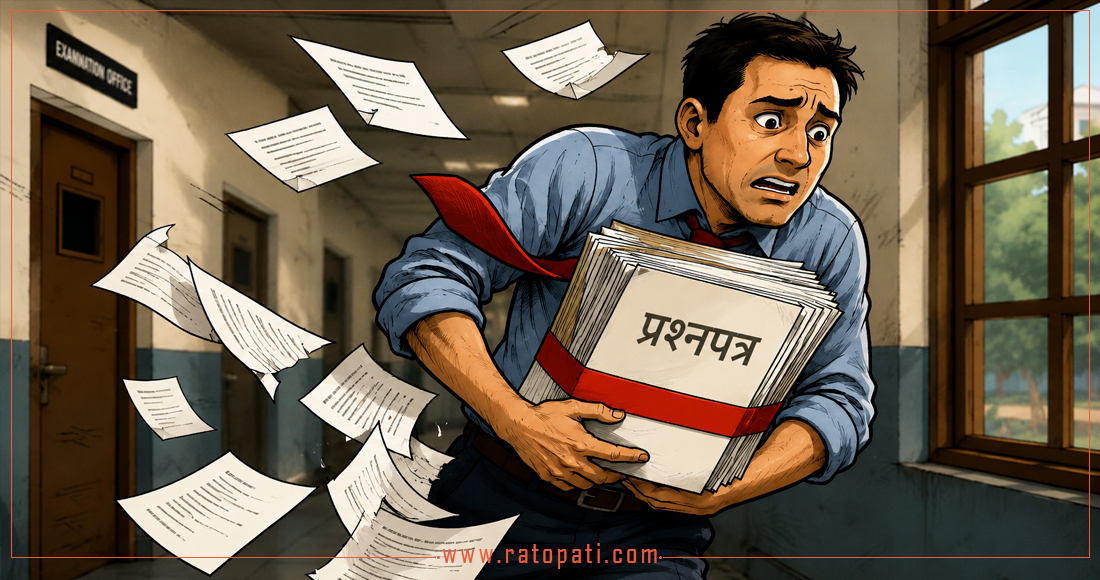
Kathmandu Flooded Due to Heavy Monsoon Rains

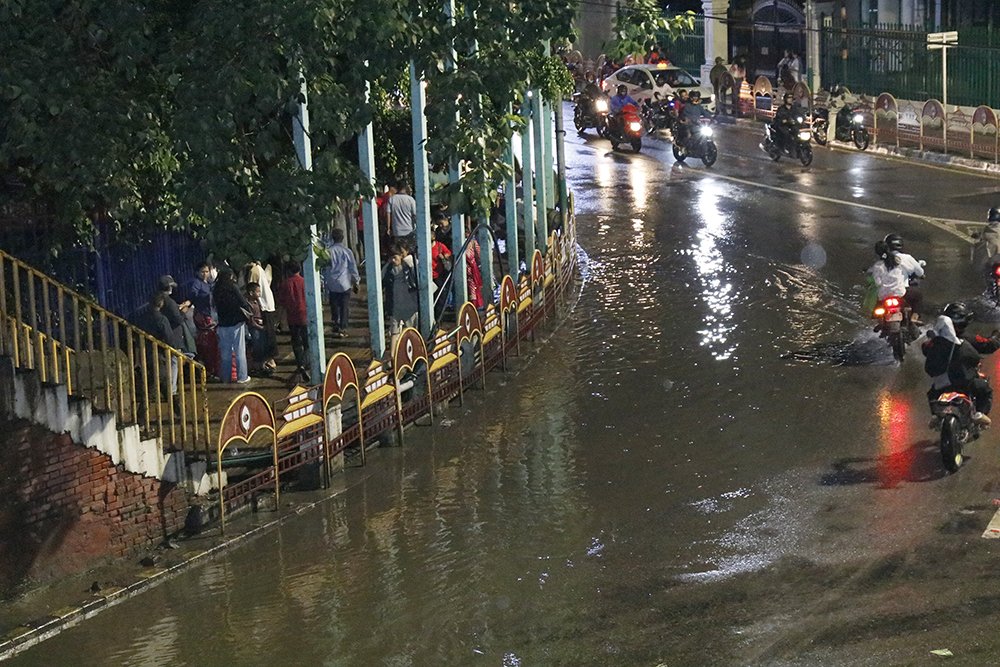
Kathmandu. The monsoon season is currently underway. Although the sun shines in the morning, it suddenly rains heavily in the evening. The sudden downpour last Thursday evening, as people were returning home from offices and schools, submerged the streets of Kathmandu.
Waterlogging in areas like Maitighar and Anamnagar near Singha Durbar left vehicles stranded and pedestrians struggling. Potholes filled with water also increased the risk of accidents. This is not just an isolated incident from Thursday; the problem of streets getting submerged and daily life being disrupted due to even a little rain during the monsoon season has become a regular occurrence in the Kathmandu Valley.
Experts attribute the flooding primarily to unplanned urbanization, narrow drains, encroachment on rivers, and the inability of water to seep into the ground due to concrete surfaces. Prakash Kumar Rai, spokesperson for the Kathmandu Valley Water Supply Limited (KUKL), stated that the problem is exacerbated by plastic waste dumped in drains and a lack of coordination between infrastructure development agencies.
"Plastic and waste accumulating in the drainage system obstruct water flow, causing water to accumulate on the streets even during normal rainfall," he said. Rai added that soil and sand from road expansion and construction projects enter the drains, further blocking the outlets. He clarified that with open spaces being covered by concrete, rainwater from rooftops and courtyards directly enters the drains, overwhelming their capacity.
To reduce the burden on the drainage system, it is necessary to channel rainwater underground. Santosh Baral, Information Officer at the Kathmandu Valley Water Management Board, informed that structures have already been built in over 300 locations in the valley for groundwater recharge. Arrangements have been made to channel water from the roof of Trichandra Campus to the Rani Pokhari area through a recharge system. Baral explained that mud and dust flowing from the roads clog the drains and stated that effective coordination between the federal and local governments would provide a long-term solution to the flooding.
Geologist Dr. Subodh Dhakal said that the risk of flooding has increased due to the lack of open land for water drainage. "In the past, a significant portion of rainwater used to seep into the ground, recharging groundwater; now, the expansion of concrete has disrupted this natural process," he said.
He suggested that when constructing houses, instead of paving the entire area, some part should be left open, and rainwater from rooftops should be collected in tanks. Dhakal emphasized that open spaces and groundwater recharge should be made mandatory criteria for developing new cities.
Nabin Manandhar, spokesperson for the Kathmandu Metropolitan City, claimed that the drains and riverbanks have been cleaned of garbage. He stated that the flooding problem cannot be completely eliminated due to the heavy rainfall occurring in short periods.
Meteorologist Binua Maharjan from the Department of Hydrology and Meteorology said that the pattern of rainfall has changed recently. She noted that rain that used to fall over two to three days now occurs within an hour. Citing the example of 47 millimeters of rainfall in just one hour in the Babar Mahal area on Thursday, she clarified that the heavy rainfall in a short period caused the flooding.
Dr. Maheshwar Dhakal, Chief of the Climate Management Division at the Ministry of Agriculture, Forest, and Environment, said that heavy rainfall in a short period can be considered an impact of climate change. He believes that the risk of disasters has further increased due to infrastructure development not keeping pace with rapid urbanization. Dhakal clarified that data on damages from such disasters would help Nepal access international climate funds.
This specific news has been automatically translated by AI. As a result, there may be some inaccuracies or language errors.

_ylu0AjgUvp.jpg)