National Independent Party's First General Convention Criticized for Lack of Technology

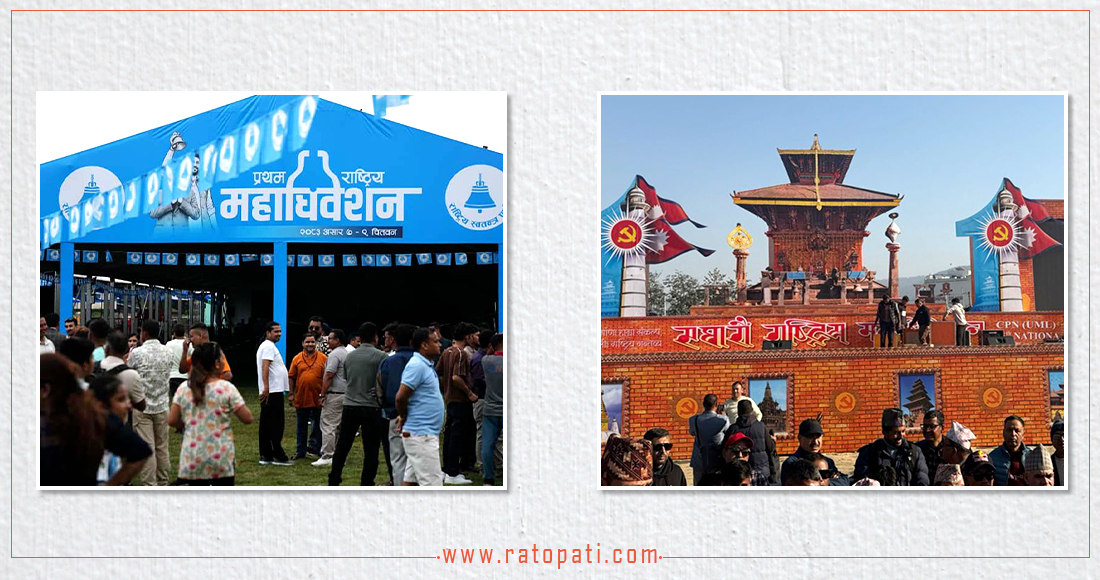
Kathmandu. The first general convention of the Rastriya Swatantra Party (RSP), which achieved unprecedented electoral results through digital platforms in a short time, was not seen to be technology-friendly.
There was widespread criticism internally and externally that the first national general convention held in Chitwan from Asar 7 to 12 was not technology-friendly. Out of the 70 percent of general convention representatives, many returned home without even voting for the officials, as the convention, scheduled for three days, was extended to six days.
In the House of Representatives elections held in February, RSP won nearly two-thirds of the seats by strategically using social media and digital platforms. Chairman Rabi Lamichhane, who has a reputation as a popular media personality, and senior leader Balen Shah, who has a strong grasp of the IT sector, are very popular among the youth.
Many in political circles argue that the main foundation of RSP's rise was the negative narrative against old parties, populism, and algorithms.
With most of the people in RSP coming from media, content creator, and influencer backgrounds, everyone was curious about how the general convention would be. RSP has been advocating for digital democracy since its early days, but the organizing team seems to have failed to demonstrate managerial efficiency at the general convention.
The process of selecting convention representatives, updating the voter list, publication, candidacy registration, and final list publication was done manually without the use of technology. Paper promotional materials littered the area around the convention venue.
Following widespread criticism, RSP leaders and cadres themselves cleaned up the garbage at the convention venue. Although Ram-Laxman e-voting machines were used for voting, the process became cumbersome due to the incompatibility of the party's software. As a result, the closed session, which was supposed to start on Asar 8, could not begin. Candidates for central committee members and officials submitted their applications physically.
RSP Central Committee member and Deputy Leader of the Parliamentary Party, Ganesh Parajuli, admitted to shortcomings in the use of technology during the general convention.
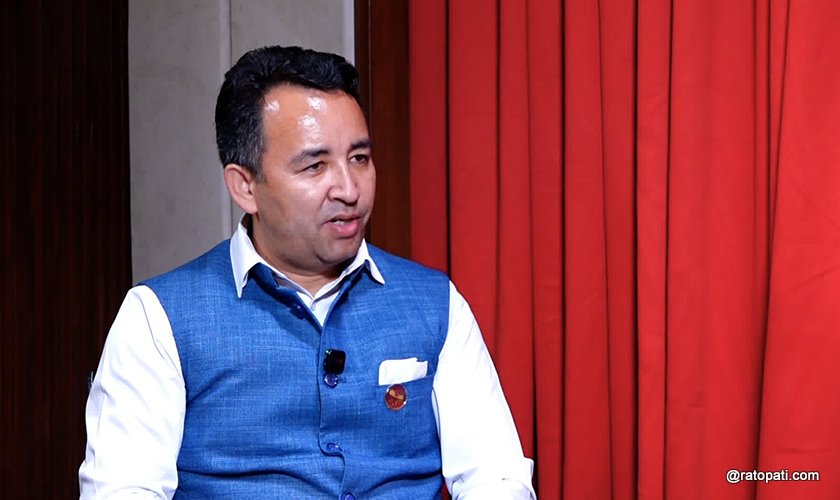
"We used digital systems while selecting representatives and proportional candidates, but now, during the general convention, using digital voting from the software we developed could lead to various accusations," he told RatoPati.
Prajuli stated that the electoral process was prolonged because their digital data could not be integrated with the voting machines. "If we had created a database for digital integration from the beginning, it would have been faster, but the framework of our digital data and the process of the voting machine appeared different," he said.
Therefore, he clarified that candidates had to apply physically. He added that it took a lot of time to scan all of them and convert them digitally.
However, RSP succeeded in a new experiment by giving voting rights to representatives abroad through an app. In the past, other parties did not give overseas representatives the right to vote through an app. Previously, representatives from various parties abroad either had to be present physically or were deprived of their voting rights.
The main reason for RSP's rise in politics was its diaspora. An attempt was made to give voting rights to Nepalis living abroad in the House of Representatives elections held in February. However, it was not successful due to legal complications and technical reasons. 163 representatives from abroad participated in the RSP general convention.
General Secretary Bipin Acharya apologized for the managerial shortcomings during the general convention.
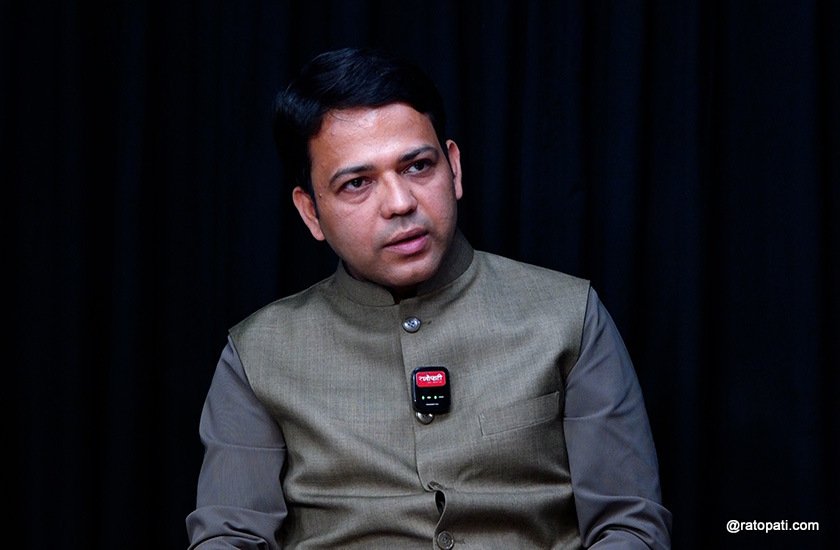
"The three-day event of the general convention extended to six days. I want to apologize from the bottom of my heart on behalf of the elected general secretary for the difficulties faced by all the party colleagues due to the delay," he said.
Chairman Rabi Lamichhane pledged to be vigilant and pay attention to avoid shortcomings in the future.
"As a new political party, this is our first experience. It has many shortcomings. Everyone is watching with interest," Rabi said while concluding the general convention. "The general convention could have been more organized. I want to pledge to pay attention consciously in the future."
RSP had developed its own software for candidate selection from the last House of Representatives elections until the local level elections to be held in May. RSP conducted a preliminary election through its own software for candidate selection for the by-election in Rupandehi-3 on Kartik 17, 2082. The selection of proportional candidates in February was also done according to the party's server.
RSP's manifesto, the government's 100-point agenda for governance reform, policy and program, and the budget for the fiscal year 2083/084 prioritized digital-based service delivery.
- CPN-UML Ahead in Technology Use, CPN Weakest
CPN-UML has been ahead in technology use so far. Old parties like Nepali Congress, Communist Party of Nepal, RPP, etc., are seen to be far behind in this matter.
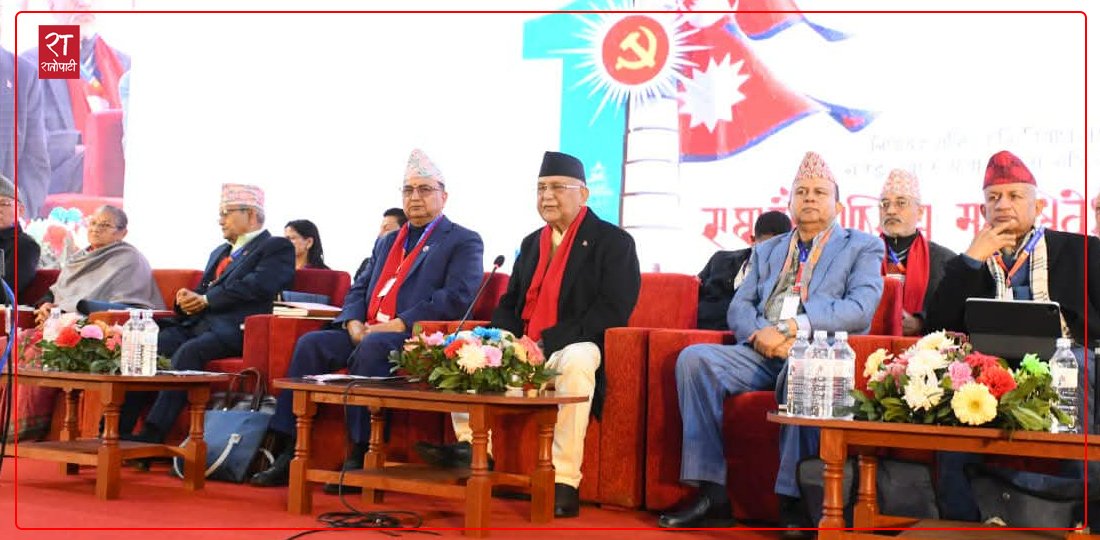
The 10th general convention of UML held in Sauraha, Chitwan in Mangsir 2078 saw the highest use of technology. UML fully utilized technology from the inauguration session to voting in the closed session. While political parties were hesitant to use the Ram-Laxman e-voting machine made in Nepal, UML was the first to accept it.
UML made a novel use of OBD (Out Bound Dialing) in its general convention. With OBD technology, candidates' audio can be heard on mobile phones. Software was developed and OBD was implemented with a system to automatically dial and play audio messages prepared virtually to the concerned representative's mobile phone.
Similarly, UML used technologies like missed call alerts and bulk SMS, which were also used in the 11th general convention held in Kathmandu in Mangsir and the elections held in February. UML appears to be far ahead in high-tech technology. However, UML's inability to use new technologies like social media and digital platforms allowed RSP to benefit.
The special general convention of Congress held at the end of Poush did not seem to utilize technology much. The convention held in Kathmandu under the leadership of then General Secretaries Gagan Thapa and Bishwa Prakash Sharma unanimously elected the leadership.
In the 14th general convention of Congress held in Kathmandu in 2078, the plastic drums used as ballot boxes became a subject of much trolling on social media.
The Communist Party of Nepal appears to be the most disorganized and least technology-friendly party. While RSP, Congress, and UML have organized websites, the Communist Party of Nepal has not yet focused on organizing its website.
The former CPN Maoist Center has not been able to hold its general convention regularly. CPN started the campaign for online membership renewal only from Asar 4.
CPN, which unified with 25 constituent components, has announced to hold a unification general convention in Mangsir. Coordinator Pushpa Kamal Dahal claimed that the party could not achieve the expected results in the last elections due to not being able to mobilize social media extensively. Dahal stated that extensive cyber armies would be mobilized keeping in mind the upcoming elections.
- Can Software or App Be an Alternative?
Former Chief Election Commissioner Nilkantha Upreti said that e-voting, internal servers, or apps can be used for electoral purposes if there is a reliable basis.
He clarified that if political parties and candidates trust it or if IT experts certify its reliability, it can be used in the country's elections.
"Technology itself does nothing; people do everything. Data processing is done through the combination of software and hardware. Whatever input you give, that's the output you get. Therefore, it depends on how seriously we develop the software," Upreti said.
He said that it is necessary to check whether the software has been tampered with to favor oneself, but if the system is all correct, the machine cannot be blamed.
"These things are being used all over the world. It doesn't matter if we use computers or software from some place in America," Upreti said.
However, he emphasized that cyber experts who control and monitor the software should test what the software is, who developed it, and whether any loopholes have been included to favor oneself.
Upreti said, "It can be used after it is certified. The machine must be powerful. It should not be slow. There is no need to be afraid of using technology. Since it is used worldwide, it is not impossible in Nepal. Political parties and candidates must be satisfied."
This specific news has been automatically translated by AI. As a result, there may be some inaccuracies or language errors.