Nepal's 'Free Visa Free Ticket' Policy Declared Failed After 11 Years

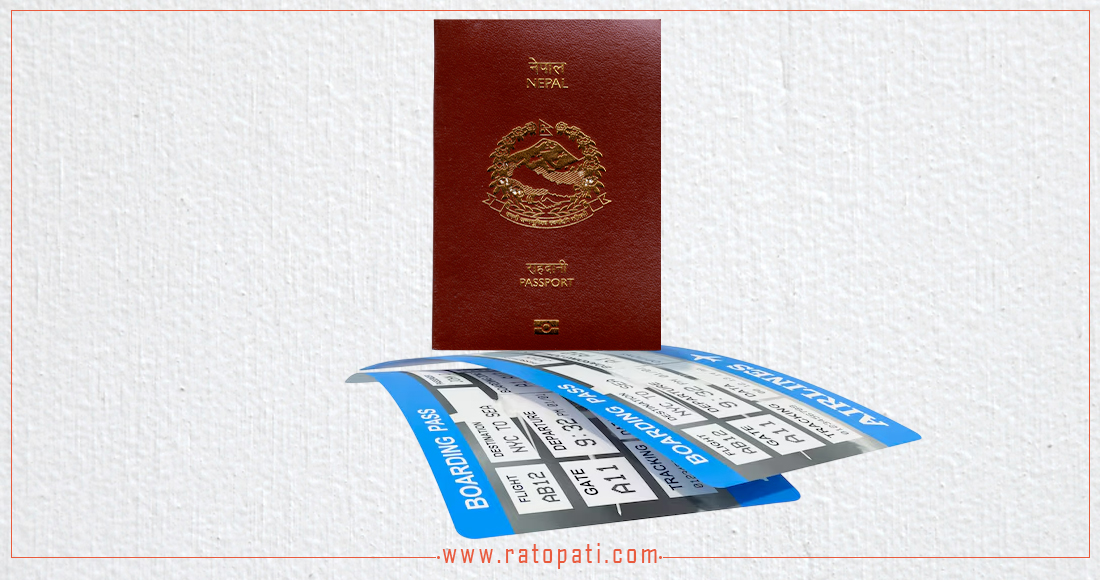
Kathmandu. In 2072 BS, the government made a popular decision for the welfare of Nepali workers going for foreign employment. That decision was 'Free Visa Free Ticket'.
With the objective of reducing the financial burden of Nepali workers, the government implemented the 'Free Visa Free Ticket' policy. This decision was made by the then State Minister for Labour, Tek Bahadur Gurung.
The Free Visa Free Ticket decision was very popular at that time. However, due to policy complexities, its implementation remained in uncertainty for 11 years. The government failed in its implementation.
Every time the government changed and during elections, it remained an election slogan. But the financial burden on Nepali workers going for foreign employment did not decrease according to government policy. Even though the decision was made to send workers for free, workers had to pay lakhs of rupees.
Foreign employment entrepreneurs have repeatedly stated that the policy has failed. Now, the government itself has admitted that it has failed.
Youth, Labour and Employment Minister Ramji Yadav has stated that due to that very policy, other policies, regulations, and laws could not be effectively implemented and that amendments should be initiated.
Foreign employment entrepreneurs have also said that the 'Free Visa Free Ticket' policy, introduced in 2072 BS to make Nepal's foreign employment sector dignified and transparent, has failed in practice.
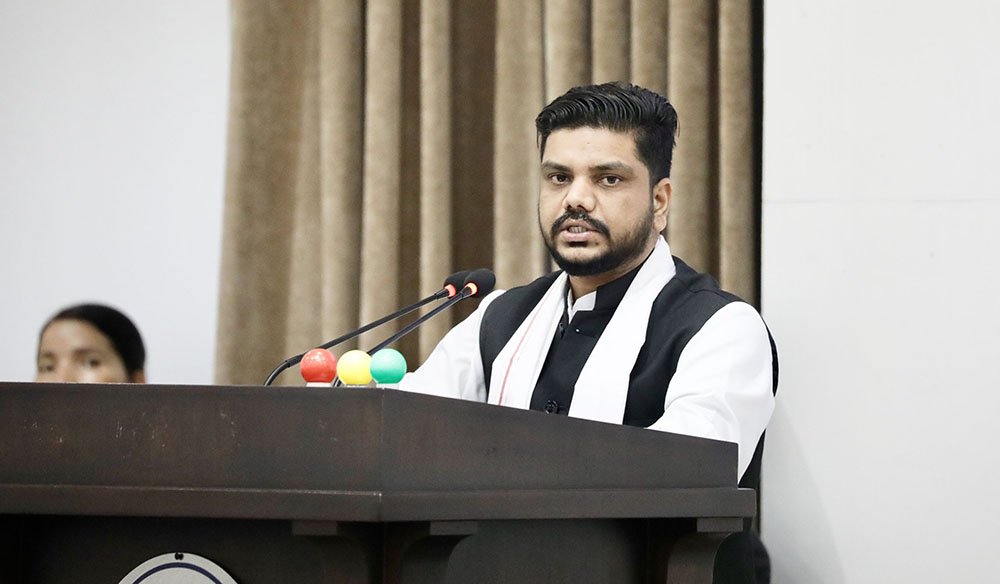
The newly elected President of the Nepal Association of Foreign Employment Agencies, Dik Bahadur Khatri, says that the policy has caused major problems in the foreign employment sector. He claims that irregularities have flourished in the foreign employment sector for the last 11 years due to this policy. In other words, he states that unhealthy competition has increased in the market and the intermediary system has become even stronger.
- Popular Slogan, Fatal Consequences
When the then State Minister for Labour, Tek Bahadur Gurung, made the decision for 'Free Visa Free Ticket' for workers going to six Gulf countries and Malaysia on Jestha 26, 2072 BS, it was considered a great revolution.
The policy, which stated that manpower agencies could only charge a service fee of Rs 10,000 and the employer would bear the remaining expenses, gave everyone hope that 'something will happen now'.
However, the practice of issuing a Rs 10,000 receipt on paper but collecting Rs 2 to 5 lakhs from workers in practice did not stop. The compulsion to pay lakhs of rupees to manpower agencies and agents remained.
Workers were also unable to show proof of payment, due to which workers lost the basis for receiving compensation in case of fraud or problems.
_MG9OHQm83u.jpg)
- Only 5 Percent Benefited
Regardless of the government's claims, only about 5 to 7 percent of workers going for foreign employment from Nepal go under the Employer Pay model. The rest are compelled to pay a significant amount in some form.
Looking at past data, 50 percent of workers still pay for both visa and ticket themselves. 35 percent get a free visa but pay for the ticket themselves. Only 10 percent have received truly free visa and ticket.
Khatri, President of the Foreign Employment Entrepreneurs, says, 'The government set a service fee of Rs 10,000, but when sending one worker, the businessman's administrative costs, health check-up, insurance, orientation training, social security fund, and promotion board fees add up to about Rs 134,000. It is not possible to send workers for Rs 10,000.'
He states that the government's forceful implementation of an impractical policy has led to deviations in the foreign employment sector, creating a situation where lakhs are transacted internally despite the stated Rs 10,000. This policy created the situation.
According to him, the government has set the average cost at Rs 134,610 for various cost headings for going for foreign employment, which includes passport, orientation, health check-up and travel expenses, interview stay expenses, visa fees, social security fund and welfare fund, insurance, air ticket (approx. Rs 40,000), and advertising.
A minimum salary of one month (approx. Rs 50,000) is proposed as a service fee for Malaysia and Gulf countries.
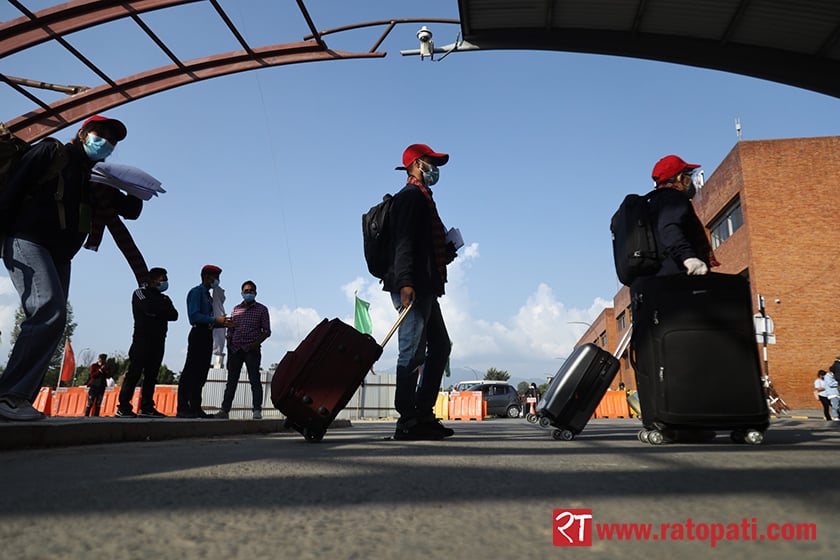
- Workers Pay Lakhs, Government Data Says Free
On Jestha 26, 2072 BS, the government implemented the Free Visa Free Ticket policy for workers going to major destination countries Saudi Arabia, Qatar, Kuwait, Bahrain, Oman, UAE, and Malaysia, with a provision that manpower companies could only charge Rs 10,000 as service fee from workers.
However, workers going to these destination countries, far from being free, have become victims of exorbitant costs.
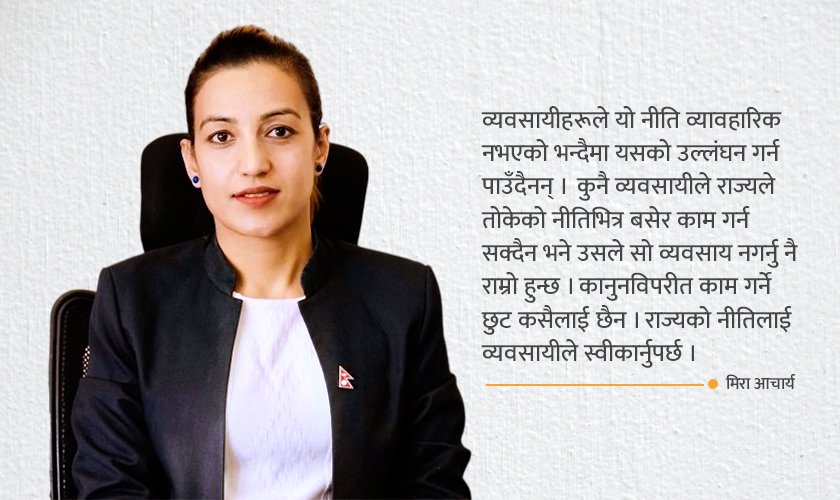
But Mira Acharya, Director General of the Department of Foreign Employment, claims that foreign employment is proceeding according to the Free Visa Free Ticket policy at the price set by the government. She also stated that all details from the time this policy was introduced in 2072 BS until now are systematically kept in the department's Foreign Employment Information Management System.
'All data from 2072 BS to the present day is in our FEIMS system. For the seven countries designated by the government, we are working based on that policy (Free Visa Free Ticket) during demand attestation and work permit issuance,' she said.
She stated that all processes, from demand attestation to issuing work permits, are recorded in the system according to that policy. 'Some manpower entrepreneurs have not worked under this policy,' she said. 'If entrepreneurs say they haven't worked under it, then there are questions about the protocol, code of conduct, and ethical aspects. Because it is the duty of entrepreneurs to support the policy taken by the state and conduct business accordingly.'
- Billions in Revenue Loss for the State
The Free Visa Free Ticket policy has devastated not only employment but also the state's revenue system. Since the actual amount collected by manpower entrepreneurs from workers is not reflected in receipts, all that money goes abroad through 'black money' via Hundi.
According to a report by the Nepal Association of Foreign Employment Agencies, if the government sets transparent costs similar to South Korea's EPS model or Israel's model, the state can earn billions of rupees.
If 550,000 workers go abroad annually and a service fee of Rs 50,000 is set, and only 50 percent of that is profit, the state can receive more than Rs 3.5 billion in income tax alone annually. However, with the limit set at Rs 10,000, all this amount has become invisible.
Cost of Employment: International Practices and Nepal's Reality
Neighboring countries, however, have made the cost of foreign employment practical. In India, manpower agencies are allowed to charge a service fee of approximately Rs 35,000 Indian Rupees. In Sri Lanka, the fee is set between $151 to $454 depending on the destination country. In Bangladesh and Pakistan, there is a legal provision to charge a service fee of $150 to $800.
A country like the Philippines, considered successful in foreign employment, has given manpower agencies the legal right to charge a service fee equivalent to one month's salary of the worker. However, in Nepal, by setting an impractical ceiling of Rs 10,000, the entire sector has been pushed towards corruption, according to entrepreneurs.
Similarly, former president of the Foreign Employment Entrepreneurs Association, Rajendra Bhandari, says that despite the long-standing demand for diversification of labor destination countries, it has not been heard.
'Entrepreneurs who have obtained licenses from the government and deposited crores in collateral are not able to send workers institutionally to attractive countries like Europe, Japan, or Korea. Our laws and policies are still limited to the traditional Gulf countries and Malaysia.'
He stated that attractive opportunities like European countries, Korea's E-7 visa, and Japan's SSW are not possible due to the law. He said that licensed organizations are unable to work due to policy obstacles from the state and complexities in demand attestation.
He added, 'This has also increased the influence of non-entrepreneurs and intermediaries. Intermediaries are charging workers lakhs of rupees from tea shops or hotels in the name of personal work permits.'
- Employer Pay Model in Proposed New Law
However, the government has moved forward with the process of amending the Foreign Employment Act, 2064 BS, to revise the Free Visa Free Ticket provision. It is preparing to introduce the Employment Act. Suggestions have also been sought from stakeholders for this.
The proposed bill includes the government's goal of addressing migrant workers in a dignified manner during the recruitment process. The draft stipulates that the cost incurred during the recruitment process for foreign employment should be borne by the employer organization in the destination country, prioritizing the Employer Pay model.
If the employer in the destination country does not bear the expenses, the worker will have to pay only the service fee as determined by the government. For countries or companies where Free Visa Free Ticket is not applicable, the government can set a specific amount.
According to the draft of the new law, workers going for foreign employment on contracts of less than one year will not have to pay any service fee or other charges to the manpower company. In such cases, Free Visa Free Ticket will be mandatory.
Similarly, a provision has been made that every worker going for foreign employment and those renewing their permits must be compulsorily enrolled in the Social Security Fund. Previously, only insurance was mandatory, but now workers will receive long-term financial security through the fund.
Individuals or organizations that deceive people by offering the lure of foreign employment without obtaining a license can now be investigated by the local police and prosecuted in court through the District Public Prosecutor's Office.
- Cashless Transactions
The government should now move away from the failed slogan of Free Visa Free Ticket and move towards a real cost model. However, the revised law proposed by the government also retains the old provisions.
The draft allows the government to revise the cost and set new fees. To determine this cost, the government has already formed a committee to review the current service fee structure charged by foreign employment entrepreneurs. The committee, chaired by Joint Secretary Pitambar Ghimire of the ministry, is expected to submit its report within five weeks.
Entrepreneurs have been stating that the service fee for Malaysia and the Gulf countries should be legally set at least equivalent to one month's salary of the worker.
The proposed new law also mandates that the service fee paid to manpower companies must now be paid only through bank vouchers or electronic payments. The department will issue work permits only after proof of payment (receipt) is submitted. This aims to curb the practice of manpower agencies charging excessive amounts secretly.
Similarly, the provision requiring manpower companies to clearly disclose the service fee and other expenses payable by the worker at the time of advertising foreign employment opportunities has been continued.
This specific news has been automatically translated by AI. As a result, there may be some inaccuracies or language errors.
_P2d7HbxtoE.jpg)