Mayor Announces Maternity Leave, Sparking National Debate

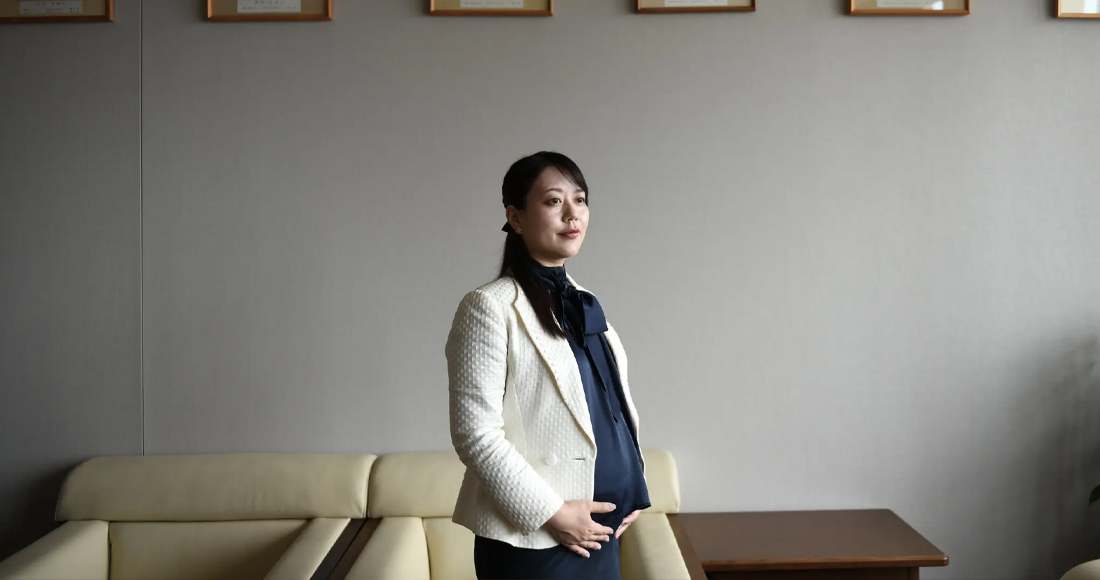
Kyoto. The mayor of a small town in western Japan thought some people might find it strange that she announced she was taking maternity leave. But the reaction to this was much broader and more divided than Shoko Kawata had anticipated.
The 35-year-old mayor has been drawn into a national debate on whether an elected official can take leave to give birth in a country struggling to boost its birth rate. 'I was very surprised by such a big reaction,' Kawata told the BBC.
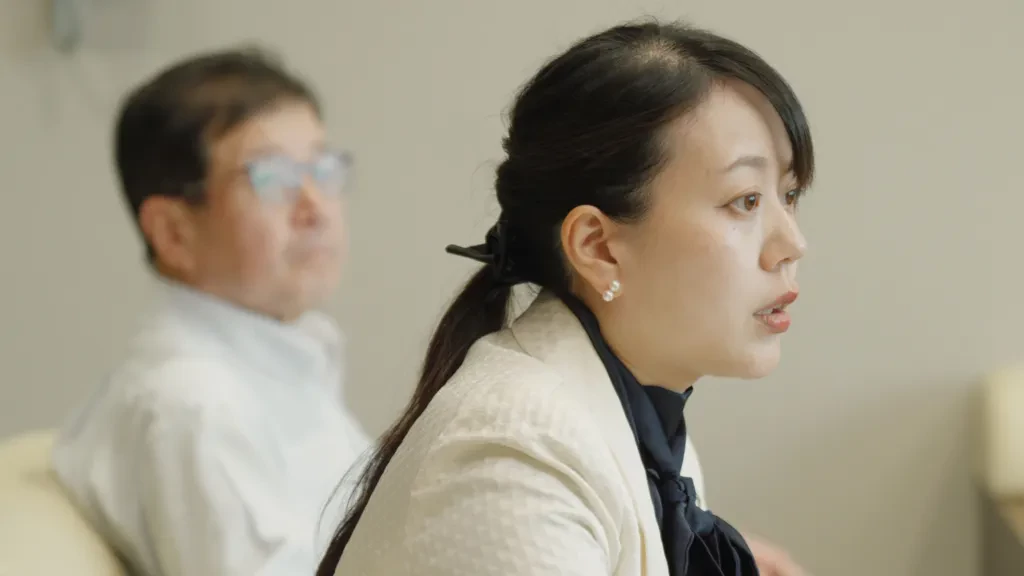
She was sitting in a chair with a thick cushion in the fifth-floor meeting room of the city hall of Yawata city, south of Kyoto, known for its temples and cherry trees. Two elderly deputy mayors sat to her right and left.
Since there is currently no legal provision for local representatives to take maternity leave, Kawata will not officially receive maternity leave. Therefore, she is temporarily handing over her responsibilities to Shigeto Nose, who is sitting to her left.
She announced her plan at a press conference held last May. She said she would be out of work for two months before and two months after her expected delivery date in mid-September. She is making history by becoming the first mayor in Japan to take maternity leave.
She says all her colleagues in the office, whose average age is 39, support her.
However, public opinion was different. People have expressed mixed reactions through thousands of 'X' posts and various YouTube videos.
Some say that giving birth is a difficult task and that Kawata is doing her best. One user claimed that Japanese society has failed to develop a suitable system considering pregnancy. Another person said that Kawata has set an excellent example by prioritizing family and making it easier for other women to enter politics.
On the other hand, critics consider staying away from public responsibility in this way to be 'irresponsible' behavior. They argue that she should have become pregnant before taking office. Another person said that high-ranking officials who want to take long leave should resign. Some have also demanded that her salary be cut during her maternity leave.

Ignoring such criticism, Kawata proudly stated that she loves her job very much and that this is the right time to start a family by having a child.
'Criticizing a politician for taking maternity leave means depriving all women of childbearing age, between 20 and 40, of public office.'
Former mayor of Akita-kata city in Hiroshima Prefecture, Shinji Ishimaru, believes that the main issue is how to keep work running during maternity leave. On his YouTube channel, he said that everyone agrees that maternity leave is a good thing. He expects this incident to start a constructive discussion to find solutions without disrupting the city's work.
Kawata became the youngest female mayor in Japan at the age of 33. After graduating with a degree in economics from Kyoto University, she entered local government and politics. According to her official profile, she enjoys participating in tea ceremonies, wearing kimonos, and visiting temples.
She has established herself in a male-dominated political sphere. According to data from last year, only about 4 percent of the 1,720 mayors in Japan were women.
While there is talk of the country getting its first female prime minister, the government has been continuously criticized for not doing enough to increase women's participation in politics. Some believe that the male-dominated cabinet and the ruling Liberal Democratic Party (LDP), which has governed Japan for most of the post-war period, are partly responsible for this problem.
A survey released by the Cabinet Office in July 2025 highlighted the main barriers preventing women from entering politics. Pregnancy, the perception that politics is only for men, and harassment were identified as the main reasons.
Although Japan is the world's fourth-largest economy, it consistently lags behind in gender equality rankings. In the latest report released by the World Economic Forum in June 2025, Japan ranked 118th out of 146 countries. Japan's performance is the weakest among G7 nations in terms of gender equality.
Although there is a legal provision for paid leave for both mothers and fathers in the country, not everyone utilizes it.
Women receive six weeks of leave before childbirth and eight weeks after. Similarly, fathers can take up to four weeks of flexible paid leave within eight weeks of the child's birth.
Both parents can take childcare leave until the child turns one year old. During this period, eligible employees receive 67 percent of their salary for the first 180 days and 50 percent thereafter. According to the rule implemented from April 2025, additional benefits are provided for the first 28 days if both parents take leave.
Deputy Mayor Shigeto Nose says, 'Many people are keenly watching how the situation of a female mayor giving birth while in office will be managed in practice.'
Nose, a 62-year-old father of two, will exercise all the powers of the mayor in Kawata's absence. However, he will discuss main issues with Kawata online once a week.
He never took parental leave in his time and left the entire care of the child to his wife. 'I used to come home very tired. Even if the baby cried at night, I would let my wife handle it. Looking back now, I really think I should reflect on my behavior back then.'
Now his son-in-law has taken six months of leave to help his wife care for their second child. 'I am very happy to see this. Times have truly changed, and it is wonderful to see them working together like this.'
Kawata understands that the criticism against her is also due to the deep-seated belief that individuals in public office must give up their private lives and dedicate themselves entirely to the public.
When asked what her future child will think about the great discussion surrounding her pregnancy, she says, 'I think they will surely be surprised to hear about this.'
'We need to build a society where it is normal for women to pursue both work and family. They should not be forced to choose between work or family.'
This specific news has been automatically translated by AI. As a result, there may be some inaccuracies or language errors.


_FWkCrRW0cH.jpg)