DRC Ebola Outbreak: Potential Treatment Trial Begins

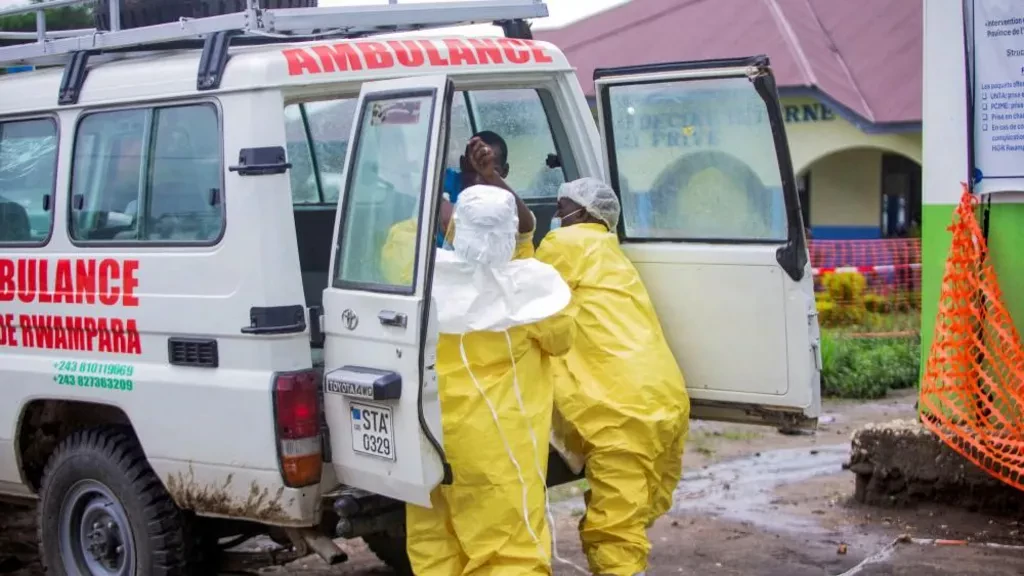
Geneva. A trial for a potential treatment against a new strain of the deadly Ebola virus spreading in the Democratic Republic of Congo (DRC) has begun.
World Health Organization (WHO) chief Tedros Adhanom Ghebreyesus informed on Thursday that the first patient in Congo has been included in this trial. According to the WHO, more than 1,400 infections have been confirmed in Congo alone so far, with 438 deaths.
There is currently no approved vaccine or treatment available for this 'Bundibugyo' virus strain of Ebola, which is considered highly contagious. The ongoing clinical trial is being conducted with the financial support of the WHO, coordinated by scientists from Congo's National Institute of Biomedical Research, Belgium's Institute of Tropical Medicine, and the UK's Oxford University.
Speaking to journalists from the WHO headquarters in Geneva, Tedros said that with the admission of the first patient, clinical trials for two therapeutic methods have begun. He said, 'Even without approved treatment, people are recovering from this disease, but if we have safe and effective treatment methods in our arsenal, we can save even more lives.'
The WHO has already declared this Ebola outbreak, which began in May in Congo and Uganda, a public health emergency. According to WHO data as of June 30, 1,406 infections have been confirmed in Congo, with 301 suspected cases. Similarly, according to data as of July 1, 20 infections have been confirmed in Uganda, with two deaths, and one infected person has also been found in France.
This disease is caused by a virus that directly attacks the body's immune system and organs. This virus is generally found in animals, especially bats. However, epidemics can sometimes start in humans when people handle or come into contact with infected animals. The disease can only spread to others after symptoms appear in an infected person.
It takes 2 to 21 days for symptoms to appear. It starts with flu-like or malaria-like symptoms such as sudden fever, headache, and extreme fatigue. There are a total of 6 species of Ebola, of which only three have been found to cause epidemics. According to scientists, a separate vaccine needs to be developed for each distinct species of Ebola.
This specific news has been automatically translated by AI. As a result, there may be some inaccuracies or language errors.