UEFA Decides Against Red Cards for Covering Mouths During Matches
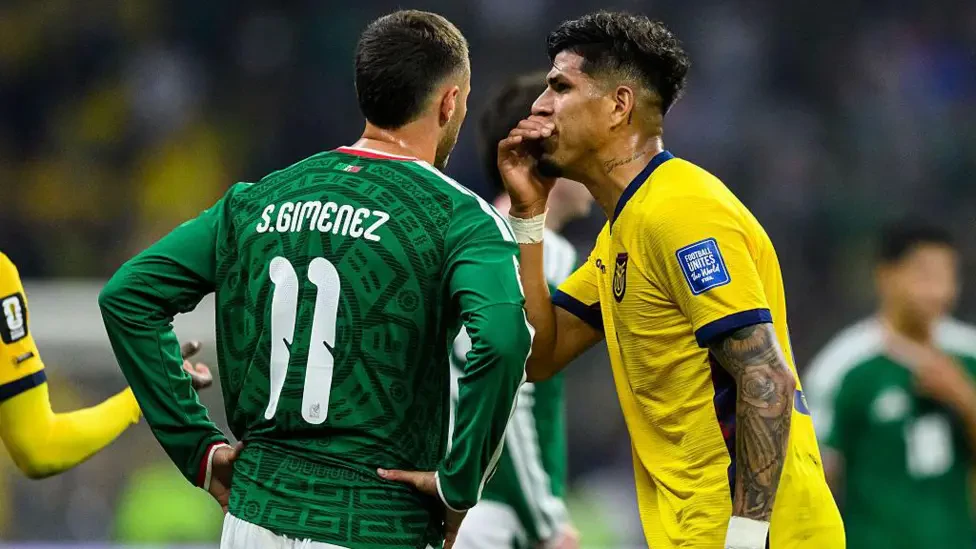
London. UEFA has decided not to issue red cards to players who cover their mouths while arguing with opponents during matches. UEFA has clarified that this rule, introduced by world football's governing body FIFA, will not be applied in major European competitions such as the Champions League, Europa League, and Conference League.
The issue of players covering their mouths while speaking gained significant attention last February. During a Champions League match, Benfica winger Gianluca Prestianni covered his mouth with his jersey while speaking to Real Madrid's Vinicius Jr. Following accusations of racist abuse against the Argentine player, he was initially suspended for one match. Later, UEFA's investigation found him guilty of homophobic behavior and imposed a six-match ban, of which three matches were suspended.
To curb such tendencies, FIFA President Gianni Infantino had proposed the red card rule during the World Cup with the intention of 'creating fear'. The International Football Association Board approved this in April.
This rule has also become quite controversial, as it raises concerns that it could directly label a player guilty instead of proving their innocence.
Under this rule, Paraguay's Miguel Almirón, who played against Turkey in the World Cup group stage, became the first player to receive a red card. Subsequently, Ecuador defender Piero Hincapié also received a red card in the Round of 16 match against Mexico. Both these players were sent off the field with the help of the Video Assistant Referee (VAR).
Although Prestianni's incident occurred in his own domestic competition, UEFA has treated Infantino's new rule as voluntary. According to UEFA, referees must make their own decisions based on the match situation.
UEFA stated that if a player is seen attempting to conceal their conversation in an unsportsmanlike manner, a yellow card can be issued. However, this will not hinder any subsequent disciplinary investigation or action due to such behavior.
This rule has also become quite controversial, as it raises concerns that it could directly label a player guilty instead of proving their innocence. Some have expressed concerns that it could be misused to send off opposing players even if nothing wrong was said.
The rule created further confusion when England's Jude Bellingham was not given a red card after covering his mouth while speaking to Ghana's Jordan Ayew during the World Cup.
Meanwhile, UEFA has decided to implement the rule of correcting wrong corner kick decisions via Video Assistant Referee (VAR), similar to the World Cup. So far, 22 corner kick decisions have been overturned and given as goal kicks in the World Cup.
However, UEFA has also decided not to adopt another new rule in its competitions, which would issue a red card to players who leave the field in protest against a referee's decision.
This specific news has been automatically translated by AI. As a result, there may be some inaccuracies or language errors.