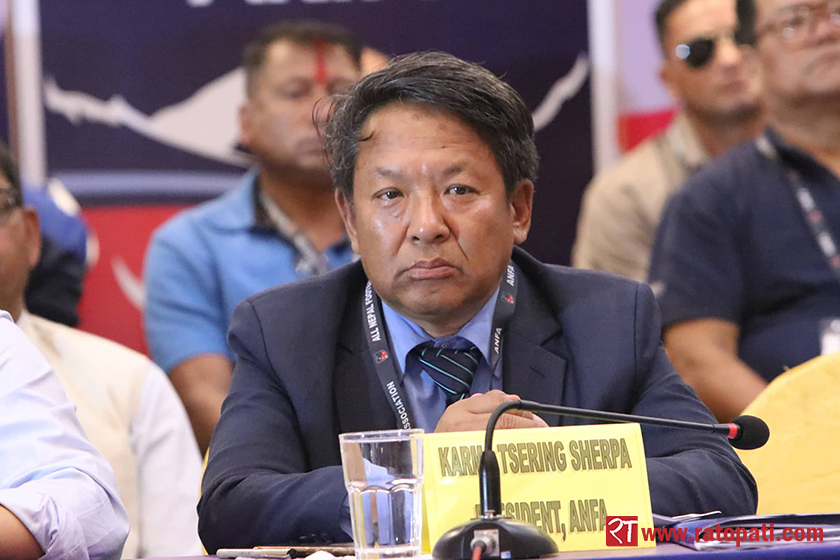
Nepal Rastra Bank Deputy Governor Highlights Monetary Policy Challenges

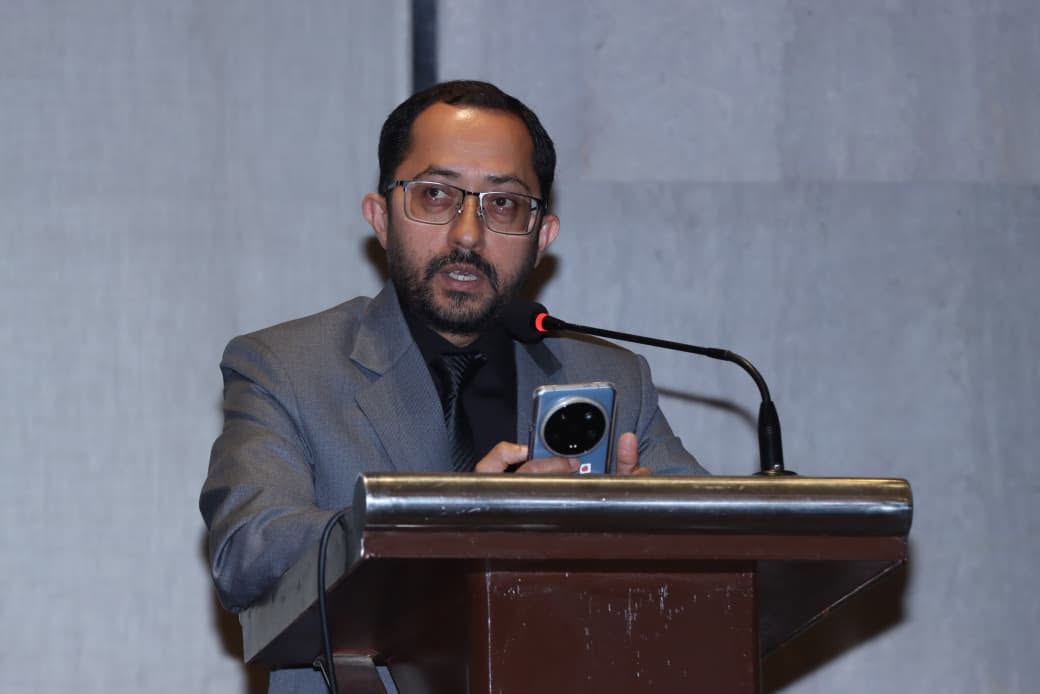
Kathmandu. Nepal Rastra Bank acting governor Kiran Pandit has stated that while the monetary policy should support the government's high economic growth target, the challenge of maintaining economic stability must be addressed equally. Speaking at a program organized by the Economic Journalists Association of Nepal (SEJON) on the topic 'Role of Monetary Policy in Accelerating Economic Growth', Pandit said that discussions like these before the monetary policy comes out provide policy suggestions to Nepal Rastra Bank. He emphasized that although fiscal policy and monetary policy naturally have interrelationships and sometimes conflicts, both policies must move forward in a coordinated manner. While the monetary policy should help achieve the high economic growth target, the responsibility of keeping inflation, financial stability, and other economic indicators within the desired limits is equally important, he said. Pandit clarified that the central bank formulates policy keeping in mind its objectives, operational basis, and mechanisms, and pointed out the need to carefully manage the high expectations in the market regarding the monetary policy. He also stressed the importance of clearly understanding the difference between regulatory reforms and monetary policy. Stating the need to build a clear narrative regarding policy decisions and regulatory arrangements related to the banking sector, acting governor Pandit mentioned that a serious review is necessary regarding the impact of loan restructuring and concessional arrangements implemented during the COVID-19 pandemic on the banking system and capital formation. He also drew attention to the rapidly evolving 'digital' challenges in the financial sector. He opined that issues like fintech, open banking, monitoring of digital transactions, and management of technology-related risks have now become important 'agendas' for monetary policy and regulatory frameworks, and that subject-specific reviews and continuous dialogue are necessary considering such changes. Emphasizing the need to bridge the gap between policy-making levels and the general public, he said that the real needs and problems of youth, farmers, and citizens at the grassroots level have not reached the policy-making process, and the media plays a significant role in reducing this gap. He stated that such discussions expand dialogue between policymakers and stakeholders and provide useful suggestions for practical policy reforms, hence the need to continue such programs. At the program, Chairman of the Association of Financial Institutions of Nepal (CBFIN), Prachanda Bahadur Shrestha, said that the country's banking sector is currently under severe pressure. He stressed that the upcoming monetary policy must address the real problems faced by the banking sector and maintain a balance between financial stability and economic recovery. According to Shrestha, although the banking system appears to have sufficient liquidity on paper, the demand for credit in the real economy has decreased, and business confidence has weakened. He mentioned that due to weak cash flow in various economic sectors, even strong and capable businesses are affected in their ability to repay loans. He stated that this situation directly impacts the asset management of banks, informing that banks have been forced to accumulate over 60 billion rupees in non-banking assets. He said that as many borrowers are unable to repay loans, banks have had to accept collateral assets, and a large portion of banks' capital is stuck in unproductive assets. Santosh Koirala, President of the Nepal Bankers Association, emphasized the need for necessary reforms in regulatory arrangements to make the banking sector and the economy dynamic through the upcoming monetary policy. He mentioned that the Bankers Association has already submitted various policy suggestions to Nepal Rastra Bank and expressed the expectation that the upcoming monetary policy will address those suggestions. He claimed that the public perception of banks being excessively profit-oriented does not align with reality, stating that since banks publish their financial statements every quarter, there is much discussion about the banking sector's profits, but currently, the average return for banks is limited to about seven percent. Banking expert Alannraj Bhattarai said that despite sufficient liquidity in the banking system, low interest rates, and the capacity to lend, the biggest challenge for the current economy is the lack of increased demand for credit from the private sector. He opined that the monetary policy should focus on solving the structural problems of the banking sector rather than just raising or lowering interest rates. Providing information that the non-performing loan in the banking sector has reached 4.36 percent when the country's economic growth rate is around 3.85 percent, Bhattarai noted that this is above the universally accepted level from the past. He indicated that although foreign exchange reserves and remittances are in a satisfactory state, the limited credit expansion to the private sector at 5.7 percent signals weak demand in the economy. He clarified that despite approximately 80 trillion rupees in liquidity in banks, around 60 trillion rupees in loans disbursed, and a CD ratio of 79 percent, investment-worthy resources are not being utilized. He analyzed that the excess liquidity in the banking system is creating challenges because, despite low interest rates, stable deposits, and sufficient lending capacity, the demand for investment from the private sector has not increased. He stated that another challenge for the banking sector is the increasing 'asset-liability mismatch and repricing' risk, and structural reforms are necessary as long-term loans are being disbursed based on short-term deposits. Nepal Rastra Bank Executive Director Guruprasad Paudel said that the central bank has been urging banks to expand according to their capacity from the beginning. He expressed the view that institutions wishing to expand credit should also add the necessary capital according to the principle of 'swallowing a bone according to the size of the throat'. Mentioning that Nepal is implementing Basel-II and Basel-III standards, he informed that during the process of increasing the minimum paid-up capital from 2 billion rupees to 8 billion rupees in the past, a large amount of 'equity' entered the banking sector, which created a sufficient basis for credit expansion.
This specific news has been automatically translated by AI. As a result, there may be some inaccuracies or language errors.


_oyx9OCRcTz.jpg)