Nepal Secures $10 Million Grant for Climate Resilience Project

Kathmandu. With the objective of strengthening climate resilience in the food systems of Nepal's highly vulnerable mountainous and hilly communities, the international ‘Adaptation Fund Board’ has approved a new grant project of 10 million US dollars, approximately 1.33 billion Nepalese Rupees, for Nepal.
This project, to be operated in partnership between the Ministry of Forest and Environment and the United Nations World Food Programme, will directly involve more than 60,000 households in five remote districts of the Sudurpashchim and Karnali provinces in climate adaptation activities.
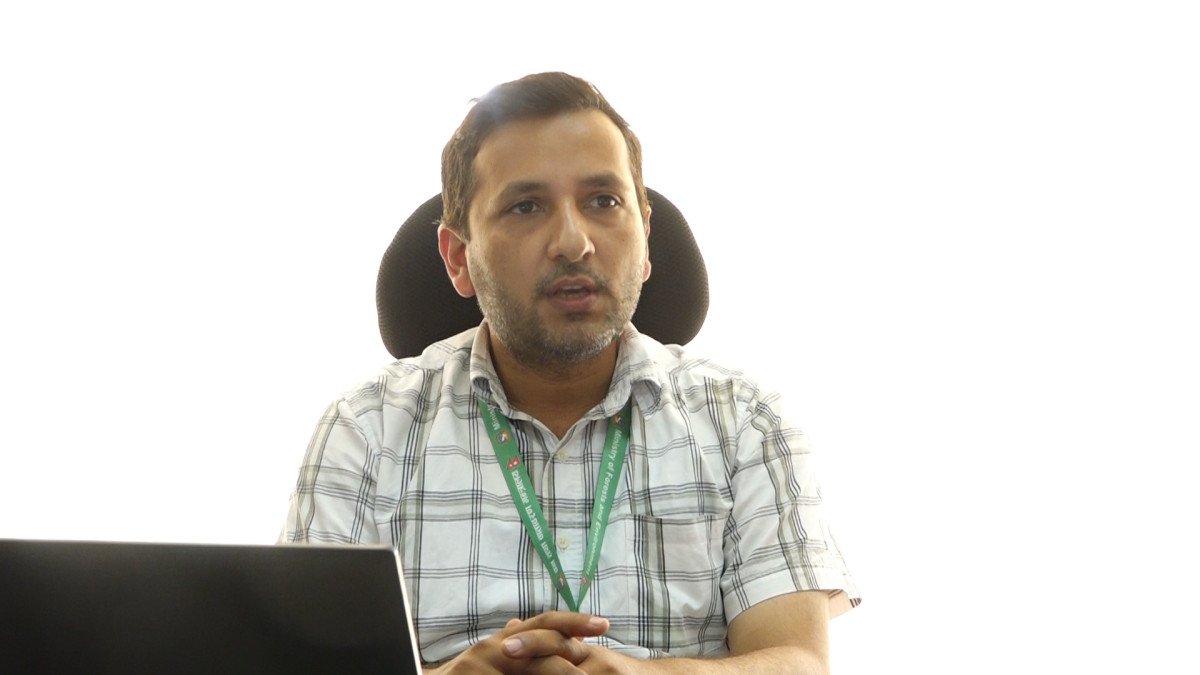
The financial management of this project, titled ‘Improving Food System Resilience of Vulnerable Communities in Nepal through Community-Based Adaptation’, will be entirely through the Government of Nepal's own budget and government fund system. Suman Subedi, Undersecretary at the Ministry of Agriculture, Forest and Environment and focal person for the Climate Change Adaptation Fund, informed that the project's construction, its financial structure, and expenditure will be from the government fund.
He said, ‘This project is an important milestone in Nepal's climate adaptation sector. The World Food Programme has assisted Nepal as a multilateral recognized body in obtaining this 10 million dollar project approved by the Adaptation Fund Board. The World Food Programme will be the partner organization in this, while the responsibility for its full implementation will lie with the Government of Nepal. The most important aspect is that it will be operated purely through the Government of Nepal's own budget and government fund system, which strengthens national ownership and accountability.’
This project, which will operate for the next six years, will cover eleven local levels in Humla, Kalikot, and Mugu districts of Karnali Province and Bajhang and Bajura districts of Sudurpashchim Province. Highly vulnerable families dependent on natural resources and traditional agriculture, and facing crises in drinking water, irrigation, and agricultural production due to climate change, are the main priorities.
In line with the spirit of federalism, the administrative structure of the project has been determined to transfer resources and responsibilities to the local government itself. While the federal and provincial governments will provide policy and technical facilitation, the ministry has formulated a strategy to entrust the main responsibility for financial transactions to the local levels.
According to Undersecretary Subedi, the eleven local levels will be designated as the main expenditure centers for program implementation, ensuring that programs are operated directly under their supervision. The federal government will provide technical support, knowledge, and skills to the local levels through the provincial government and advance the program through participatory methods.
Under the project, nature-based solutions at the local level, promotion of agriculture and agro-forestry, distribution of climate-adapted seeds, development of medicinal herb cultivation, and climate insurance programs to reduce damage in the agricultural sector will be advanced. In addition, alternative income-generating activities to increase the income of vulnerable poor communities, especially women, and strengthening local early warning systems for weather and climate will be undertaken.
The selection of areas and households for the project was not arbitrary but was based on the indicators from the ‘Vulnerability and Risk Assessment and Identification of Adaptation Options Report, 2021’ approved by the Government of Nepal. It fully adopts the principles of climate justice and the policy for operating foreign aid. It is claimed that this selection was made only after a meticulous analysis of the investment status of other donor agencies to end the problem of budget duplication in the same geographical area.
The bilateral agreement process for this project, which has already received official approval from the International Adaptation Fund Board, is now in its final stage. The program implementation process at the local level will begin within the next two months, immediately after the signing of the Memorandum of Understanding between the Ministry of Forest and Environment and the World Food Programme.
This specific news has been automatically translated by AI. As a result, there may be some inaccuracies or language errors.

_ke6hmvuewe_XLPTtgxmKE.jpg)