National Asset Management Company to be Established by Poush

Kathmandu. The banking system is currently at a serious and complex juncture. Due to the slowdown in the economy, businessmen are unable to repay the principal and interest of their loans.
As debtors do not pay the principal and interest on time, the graph of non-performing loans in banks' balance sheets continues to rise. As loans cannot be recovered, banks are compelled to take over the real estate held as collateral. Although such compulsions arise for banks to recover loans, in a general sense, it appears that banks are becoming more of real estate traders than bankers.
This problem has not suddenly appeared in banks; non-performing loans have been increasing in banks for the past few years.
The slowdown in the economy, the recession in the real estate market, and the crisis in the construction sector continue to pose problems for banks in loan recovery. However, the government has announced the establishment of a National Asset Management Company through the budget for the upcoming fiscal year 2083/84 to solve the problems of the banks.
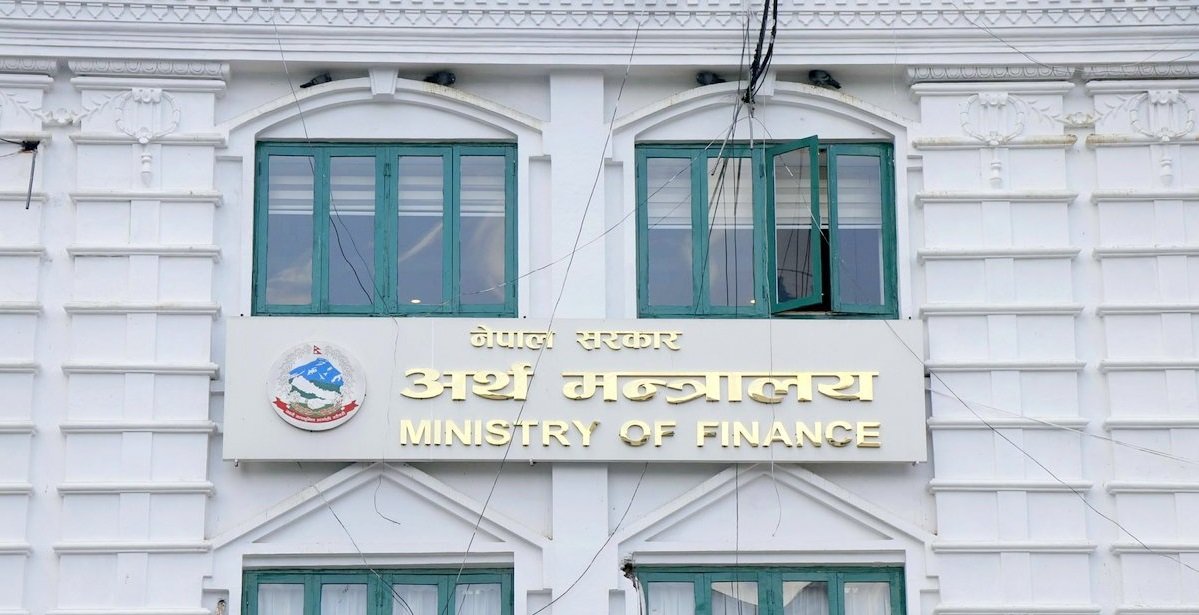
The budget, presented by Finance Minister Dr. Swarnim Wagle, has set a deadline in point number 29 to establish this company by the end of Poush. Previous governments had also announced the establishment of such a company but did not set a deadline.
Budget point no. 29 states, ‘To effectively manage the increasing non-performing loans and non-banking assets in the banking sector, a National Asset Management Company with special legal authority will be established by the end of Poush.’
The situation where announcements are made in the budget but not implemented has been ongoing. In the budget of the current fiscal year, the then-government had also announced the establishment of the company. While the groundwork for establishing the company might have been laid, it has not yet been formed. The current government, however, has not only made an announcement but also set a deadline for the company's establishment.
However, discussions have begun on whether the government can establish this company, which has been debated for two decades, within the next six months. After a two-decade-long wait, the government has started the work by setting a date.
The issue of establishing this company has been under discussion since 2057 BS. This concept first emerged in the Financial Sector Reform Strategy of 2057/58 BS. It was also included in the budget of 2058/59 BS and the central bank's strategic plan of 2071 BS. However, it was announced every time but never implemented.
Guru Prasad Poudel, Executive Director and Spokesperson of Nepal Rastra Bank, stated that work is underway to establish the company within the specified deadline as per the government's announcement. He informed that the central bank is also moving forward with the necessary legal processes.
Similarly, Mahesh Acharya, Joint Secretary and Chief of the Financial Sector Management Division at the Ministry of Finance, also stated that preparations are underway to establish it by the specified date. He mentioned that since this issue was included in the Financial Sector Reform Strategy of 2057/58 BS, the company will be established soon.
Why is an Asset Management Company needed?
A bank's primary function is to collect deposits and lend them in secure areas. However, when a loan becomes non-performing and the collateral cannot be sold even through auction, the bank has to take ownership of that asset itself. This is called a non-banking asset.
Poudel, an Executive Director and Spokesperson of the bank, stated that the government is implementing the concept of a company for the management of non-banking assets.
He said, ‘Currently, banks have accumulated about 54-55 billion rupees worth of non-banking assets. When banks’ money is frozen in such fixed assets, it affects liquidity flow in the market. Banks have to leave their core functions and get involved in selling real estate and legal disputes. A separate company has been envisioned to clean up this mess.’
According to Spokesperson Poudel, the main headache for banks right now is non-performing loans and unsold collateral. ‘If we look back to 2074 BS, banks had only about 4.5 billion rupees in non-banking assets, but today it has increased to 54-55 billion rupees,’ said Spokesperson Poudel.
He stated that the total loan disbursement of banks has now reached about 59 trillion rupees. He added that the ratio of non-performing loans to total loan disbursement has reached 5.7 percent, and loans that are about to mature or are at risk are around 10.9 percent.
Poudel added, ‘10 percent of 59 trillion is approximately 600 billion rupees. This amount is at risk in one way or another. In such a situation, banks have abandoned their core work and are engaged in door-to-door debt collection and frequenting courts.’
According to him, when a bank cannot recover a loan, it has to take over the collateral. That acquired asset remains frozen in the bank's vault. This creates a liquidity crunch in the market, and the AMC concept has emerged to surgically address these banking sector problems, he said.
Nepal is closely observing the practices of India, Malaysia, South Korea, and the Philippines. India has recently introduced the bad bank concept, which is working to acquire large non-performing loans.
Meanwhile, according to Mahesh Acharya, Joint Secretary and Chief of the Financial Sector Management Division at the Ministry of Finance, the ratio of non-performing loans has increased due to economic expansion and the impact of the post-COVID era.
‘We are currently at a total loan disbursement of about 59 trillion rupees. The latest data from the central bank shows 5.7 percent non-performing loans. Loans on the watchlist are around 10.9 percent,’ said Joint Secretary Acharya. ‘This is a large figure. In such a situation, such a company has become indispensable to enable banks to focus on their core business and to transfer the burden of non-performing loans to a specialized institution.’
He stated that although this issue was included in the Financial Sector Reform Strategy of 2057/58 BS, it is now being implemented.
‘At that time, when non-performing loans were only 20 billion rupees, the idea of a company arose. Today, even with trillions, we are still discussing it,’ Acharya admitted. Although many previous budgets and monetary policies have touched upon this, this year's budget has set a deadline of Poush, bringing a new wave.
The central bank has prepared the draft and sent it to the Ministry of Finance, and the second phase of consultation has also begun. Joint Secretary Acharya said, ‘This time, the government is serious about governance reform. Instead of just making announcements like in the past, we are in the process of registering the company by Poush by giving it a legal framework.’
Mixed and Autonomous Model for Asset Management Company
Nepal is closely observing the practices of India, Malaysia, South Korea, and the Philippines. India has recently introduced the bad bank concept, which is working to acquire large non-performing loans.
This is considered a successful model in Malaysia because it achieved its objectives within a specified period and was dissolved. However, it failed in Pakistan due to excessive political interference in the company.
The challenge for Nepal is to run the company through skilled professional manpower, keeping it free from political interference. Joint Secretary Acharya says, ‘This company should not be like a government office, but like an efficient investment bank.’
According to Poudel, Spokesperson of the central bank, there are various models for operating asset management companies worldwide.
Given the government's current financial situation, investing such a large amount of cash is challenging. Discussions are underway regarding the option of issuing bonds to address this. The company, which will acquire 55 billion rupees in NBA and trillions in NPL, must have at least 50 to 100 billion rupees in liquid funds.
Nepal is intensively studying which path to choose. He mentioned that it can be taken as a centralized model, where it is a single powerful entity of the state. However, in a decentralized model, private sectors or banks can establish such companies themselves.
Joint Secretary Acharya stated that the model for the asset management company to be established by the government by Poush could be a mixed and autonomous model.
According to him, a mixed model might be suitable for Nepal, where the government has a stake, the central bank has up to 10 percent investment, and commercial banks also have small shares. This fosters a sense of ownership among all stakeholders and reduces moral hazard.
‘We can go for a PPP model where the central bank has 10 percent, the government has a certain percentage, and banks have a certain percentage of shares,’ he said.
In such a model, banks will have ownership, and the government will also have oversight.
How will it work?
The Asset Management Company will buy non-performing loans and acquired collateral from banks. However, it doesn't just buy land; it also adds value. Spokesperson Poudel says, ‘Suppose a bank has acquired a large hotel or airline that cannot repay its loan. The bank does not have the expertise to run that hotel. It will only try to sell it at the land value. But the AMC company will take such a hotel, add some investment, improve its management, and sell it at a profit for a higher price.’
Similarly, for large land parcels where access roads are not available or there are legal complications, the Asset Management Company will use special state authority to provide access roads, develop plots, and sell them at a fair price to return the bank's money. This is also called step-in.
Where will billions of rupees come from?
The company may require a fund of approximately 100 billion rupees to acquire banks' non-performing loans and non-banking assets.
Given the government's current financial situation, investing such a large amount of cash is challenging. Discussions are underway regarding the option of issuing bonds to address this. The company, which will acquire 55 billion rupees in NBA and trillions in NPL, must have at least 50 to 100 billion rupees in liquid funds.
There is also concern about how such a large amount of money will be raised when the government's treasury is currently under pressure. However, Joint Secretary Acharya of the ministry stated that the company can allocate the budget by issuing bonds.
‘We don't have to provide cash. The company can issue bonds to the bank. It can take the bank's bad assets and in return provide government-guaranteed 10-15 year bonds,’ he said. ‘The bank can show that bond as a liquid asset on its balance sheet and also obtain SLF facilities from the central bank. Later, as the company sells assets, it will pay off the bond.’
Similarly, Spokesperson Poudel stated that the company can issue government-guaranteed bonds instead of paying cash when buying non-performing loans from banks. He added that it is possible to pay off the bond later as assets are sold.
Legal and Structural Complexities
According to Joint Secretary Acharya of the Ministry of Finance, the Company Act alone is not sufficient for the establishment of the company; a National Asset Management Act may need to be introduced.
‘We need to provide special legal protection, such as exemption from registration fees for land transfer, reduction in auction process time, and ensuring that work is not halted by court stay orders.’ Acharya clarified.
The difficulties encountered when liquidating two development banks (Nepal United and Nepal Development Bank) in the past further confirm the need for a powerful company. They stated that the central bank itself faced many legal hurdles when trying to manage assets.
He stated that the company will not function merely by registering under the Company Act, hence an act with special powers is necessary. He emphasized the need for legal guarantees for exemption from registration fees on land transfer and a faster auction process.
Spokesperson Poudel stated that they faced many legal complications when liquidating two development banks in the past. He opined that ordinary laws cannot handle such specialized tasks.
AMC Will Not Solve All Banking Sector Problems: CEO Gyawali
Nabil Bank Chief Executive Officer (CEO) Manoj Gyawali states that the establishment of an Asset Management Company (AMC) will not magically solve all the problems of the banking sector. He argues that the narrative that AMCs will immediately buy all the non-performing loans (NPLs) of banks, leaving banks at ease, is incorrect.
According to Gyawali, the AMC assesses the business feasibility of distressed companies, improves financial management and cash flow, and undertakes restructuring and remodeling. If necessary, the AMC can even take over the management of such companies.
‘No bank has even thought that the AMC will simply buy their assets and we will sit back relaxed, and the AMC cannot take all the assets,’ Gyawali said. He warned that if the government adopts policies of ‘strangling, breaking, and binding’ instead of being flexible, further complications could arise.
Although the budget has given a deadline of Poush, the legal process and structural construction are very complex. A separate Asset Management Act may be required for this. The Ministry of Finance and the central bank have stated that they are currently working on a war footing.
Gyawali completely denied the claim that banks are crippled and ruined due to the increase in non-performing loans. He stated that although the increase in NPA from 1.5 or 1.67 percent to 5.6 percent is challenging, it is still the second lowest in the South Asian region.
He cited statistics, mentioning that Pakistan has around 10 percent, Sri Lanka has over 10 percent (gradually improving after the economic crisis), and Bangladesh has around 30 percent (situation worsened due to political unrest and 1.5 years of instability), indicating that Nepal's situation is relatively low.
He clarified that the 5 percent NPA is eligible for NPA deduction according to the Income Tax Act, and the central bank's circular also specifies certain facilities within that limit, making the 5 percent appear as a major issue.
Is the Poush deadline achievable?
Although the budget has given a deadline of Poush, the legal process and structural construction are very complex. A separate Asset Management Act may be required for this. The Ministry of Finance and the central bank have stated that they are currently working on a war footing.
The government has set a target in the budget to establish it by Poush of the upcoming fiscal year 2083/084. Officials from the central bank and the Ministry of Finance express optimism about its establishment by the end of Poush.
Spokesperson Poudel of the central bank says, ‘We have already prepared the draft. If we proceed through an act or ordinance after obtaining theoretical consent from the Council of Ministers, it is not impossible to register the company by Poush.’
He stated that this company is not just a real estate agency but the backbone of financial stability.
Joint Secretary Acharya of the Ministry of Finance said that there is pressure to work because the budget has set a deadline. He said, ‘We are under pressure because the budget has set a deadline of Poush. As it is the first year of governance reform, we are advancing this on a war footing.’
He stated that the work to establish at least the legal and structural framework of the company by Poush is almost certain. If the legal form of the company is finalized by the end of Poush, it will undoubtedly be a milestone in Nepal's financial history.
This specific news has been automatically translated by AI. As a result, there may be some inaccuracies or language errors.




_Kgl2yyjKum.jpg)