Global Power Shift: Asia's Leaders Question US Capability Amidst China's Economic Rise
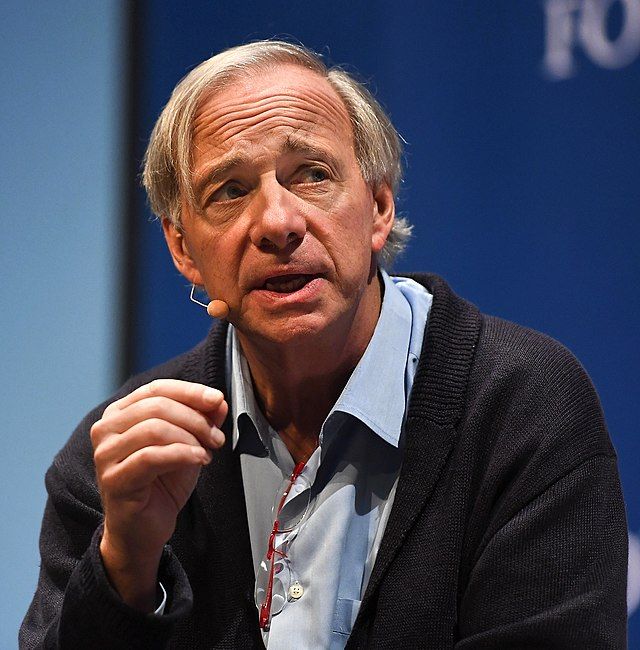
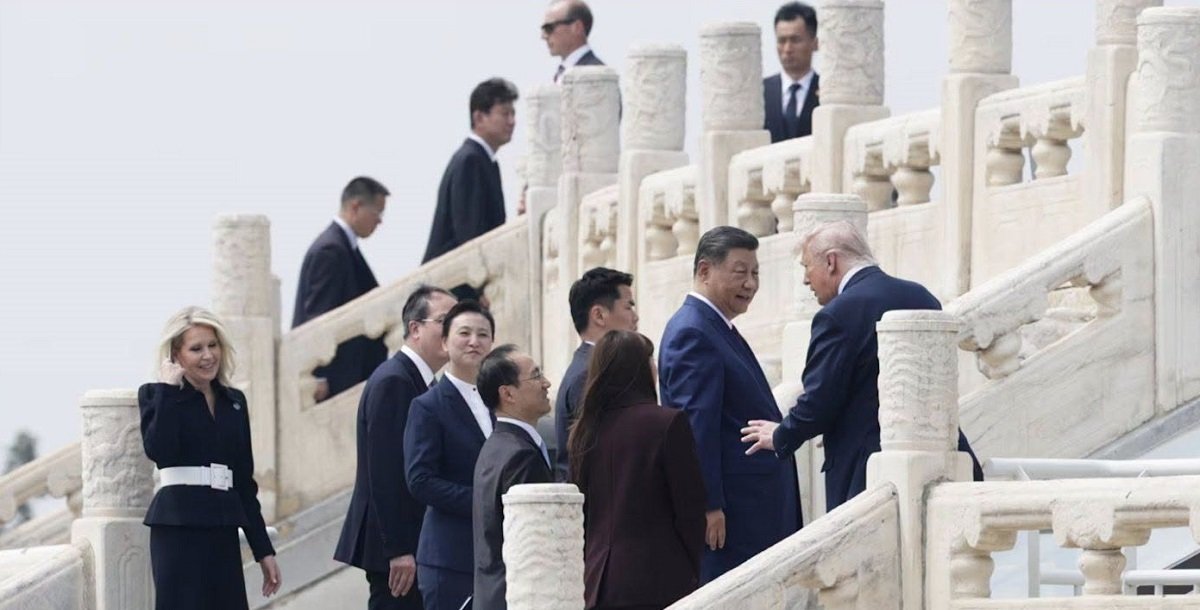
I spent about a month at the beginning of this year in Asia. During my stay there, I met high-level policymakers from China and other countries. In the course of these meetings, I felt that a major change was happening in the world order.
There seemed to be two main reasons behind such a change. First, Asian leaders seem to have developed doubts about America's capability in dealing with Iran's occupation of the 'Strait of Hormuz'.
Such doubts were particularly related to America's ability to fight on two or more fronts simultaneously. Second, China is accumulating a large amount of money due to its exports. Therefore, Chinese companies and banks are accumulating large capital profits and purchasing power.
Due to such accumulation, the Chinese currency 'Renminbi' is facing pressure relative to the US dollar. The use of the Chinese currency in trade and capital transactions is increasing. Chinese investors and capital markets are emerging as competitors to their American counterparts in the coming days.
I have been traveling to and from China for the last 42 years. I am also committed to the idea that there should be mutual understanding between China and America. I believe we need to understand the perspective of China, which is based on the roots of Confucian culture.
I also believe we need to understand China's tribute system, or 'tributary system', and Beijing's 'Art of War' perspective on conflict. Similarly, we need to understand the century of humiliation that China experienced, a time when foreign powers not only controlled large parts of China but also exploited it. We need to understand that many contexts, including Japan's occupation of Taiwan from 1895 to 1945, have shaped China's psychology and strategic direction.
The tribute system was guided by Confucian values. It was particularly influenced by the idea that the source of order comes from clearly defined hierarchies. The relationships within such a system are not between equals. Rather, it is a relationship where the superior and subordinates understand and maintain their relative positions.
The understanding of Chinese leaders is completely different from the Western approach of occupying and controlling the geography of other countries. This is the main reason why America has established 700 to 800 military bases in more than 80 countries, while China has only one.
In such a hierarchical structure, the strong should treat the weak well. Similarly, the less powerful should also treat the more powerful well. It is believed that harmony is maintained in this way. If the less powerful person behaves wrongly towards the more powerful person, they will be punished. The more powerful person will administer such punishment.
Such punishment is not necessarily violent, but pressure and deception are certainly used. Sun Tzu, in his famous work 'The Art of War', said, 'The supreme art of war is to subdue the enemy without fighting.'
As an extension of these cultural beliefs, Chinese leaders today do not seek to expand their empire to control other countries. Because they believe that such actions are not effective.
The understanding of Chinese leaders is completely different from the Western approach of occupying and controlling the geography of other countries. This is the main reason why America has established 700 to 800 military bases in more than 80 countries, while China has only one.
By observing the events of the past few months, we can get a glimpse of what the world order will be like in the coming days. Many foreign leaders visited Beijing. Some sent their representatives. All these activities were aimed at building a 'tribute' relationship with Chinese President Xi Jinping.
However, no one has defined it in exactly these words. Reflecting this change, Xi Jinping, in a veiled threat to the US President, made it clear that China would not look favorably upon America selling arms to Taiwan.
World leaders are well aware that 'microchips' are the most important economic asset at the present time. Microchips are more important than oil in the coming days. It is also well known that the world depends on the chips made by Taiwan.
Many believe that Xi Jinping wants to reunify with Taiwan under his leadership and may increase pressure to achieve this without any major military conflict. Cheng Li-wen, the current leader of Taiwan's Kuomintang party and an opposition leader who advocates for close relations with China, met Xi Jinping in Beijing last April. She also spent two weeks in America recently. While in America, she also met with members of the US Congress.
World leaders are well aware that 'microchips' are the most important economic asset at the present time. Microchips are more important than oil in the coming days. It is also well known that the world depends on the chips made by Taiwan.
There is growing concern about the risk of a blockade on chip exports from Taiwan. If a blockade occurs, global stock markets, especially those of AI companies, will be severely affected. Even a slight increase in the risk of chip supply has a significant impact. This also demonstrates the power of a blockade to cause impact without violent conflict.
A military blockade capable of stopping chip exports is just one of the many potential pressure tactics that China could employ. However, it is a notable tactic because China plans to become self-sufficient in chip production by 2028.
By then, the rest of the world will still be dependent on Taiwan for chips. In such a situation, China can put America in an extremely uncomfortable position. It can put America in a situation where it has to choose between fighting or not fighting.
Whichever option is chosen, America will be in a difficult position. If the option of not fighting is chosen, American power will appear to be diminished. In that case, China can put itself in a comfortable position through mere threats, without war.
Having power that is only for show and not for use is the greatest display of strength. I believe this Chinese perspective, rooted in the Confucian tradition, will emerge as a new order in Asia.
It will make the fight for geopolitical dominance so subtle that we may not even realize it is happening.
(From Financial Times)
This specific news has been automatically translated by AI. As a result, there may be some inaccuracies or language errors.


_hXuKAenRlA.jpg)