Nepal's EV Policy Shift: From Peak Power to Price-Based Taxation and its Implications

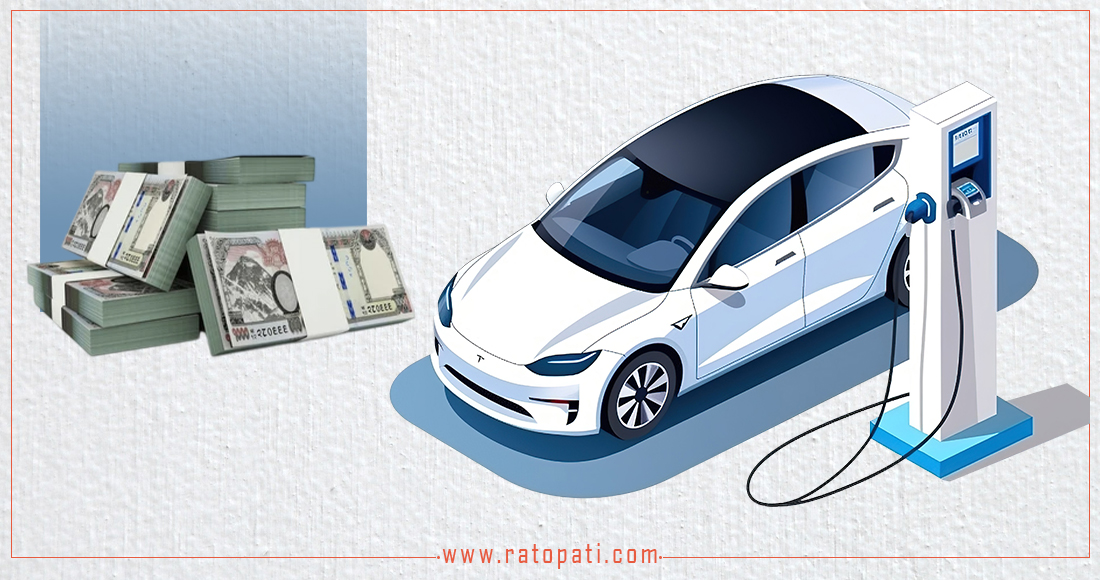
Nepal, on the path to becoming a powerhouse in hydroelectricity production, views EVs not just as a mode of transport but as a strategic opportunity linked to energy self-sufficiency, foreign exchange savings, and environmental protection.
EVs are considered a crucial foundation for Nepal's future transportation system due to their ability to reduce the substantial expenditure on petroleum imports, utilize domestically produced clean electricity, offer significantly lower operational and maintenance costs, and contribute to reducing air pollution.
The government recently made a significant change to the tax structure for EV imports, abandoning the old system based on the motor's 'peak power' and adopting a new approach where the price at the customs point is the primary basis.
This move appears to have a positive impact on simplifying the tax system and making it administratively easier. Furthermore, this change could alter the competitive landscape of the EV market. Importers are now likely to focus more on price, design, and features rather than just power limits.
However, this change seems to be primarily driven by financial considerations. There appears to be insufficient attention paid to technical aspects, long-term traceability, and potential systemic control challenges. Since the actual specifications of EV vehicles can change even after import, a price-based tax structure alone may create complexities in monitoring and regulation in the future.
From this perspective, while the EV import policy focuses on short-term simplicity and revenue management, questions remain open about how to ensure technical control, clarity in classification, and market transparency in the long run.
Many people compare the peak power of EVs to the engine size of petrol or diesel vehicles. However, the reality is different and more technically flexible. The direct rule of 'bigger engine, more power' as in engine vehicles does not always apply to EVs.
In EVs, although the basic structure of the electric motor used is the same, the power it delivers is determined entirely through the control system. For this reason, manufacturers can tune the same motor platform to different capacities in different models.
For example, the same motor design is seen configured for capacities ranging from 100 kW to 150 kW or more.
This power variation is controlled not just by the motor's hardware but also by its inverter, current limit from the battery, thermal management (cooling system), and most importantly, software calibration. In other words, how much power the motor delivers is determined not just by its physical size, but by the electronic control system set by the manufacturing company.
However, there are limits to this. If extremely high or extremely low power is required, the entire motor design, winding, magnet structure, or component level may need to be changed, which would make it a different model or a different motor family.
Thus, even among EVs that appear similar in the market, there are models with different peak power capacities due to internal differences in software tuning and power mapping. This flexibility is the most significant feature of EV technology. It enables manufacturing companies to produce vehicles for different markets and needs from the same platform.
- Impact of the New Tax Structure
The new tax structure could change the nature of market competition. Previously, 'peak power' was an important basis along with price in tax determination, requiring importers to strategically choose lower-power models, which imposed limitations from product selection to marketing messages.
However, with the implementation of a price-based system at the customs point, the tax pressure related to power limits is expected to decrease significantly, giving companies more freedom in technical specifications.
This could directly lead marketing competition in a new direction. Brands may now focus not only on 'low price' or 'luxury design' but can also make technical claims such as 'how many kilowatts of power', 'how fast acceleration', and 'real driving performance' their primary sales strategy.
There is a growing possibility of intense comparison between models within the same segment regarding power output and driving experience. This could create a 'performance war' in advertising, digital marketing, and showroom sales pitches. Ultimately, the consumer's decision-making process is likely to shift from being price-centric to focusing on 'power and premium driving experience'.
- What Happens When Peak Power Increases?
An increase in peak power directly affects the overall performance of the vehicle, making the driving experience more 'responsive' and smooth. A higher-power motor can produce more torque in less time, resulting in faster acceleration and better pulling power from the start.
This feature is even more evident in daily use. The vehicle does not have to work hard on inclines, can gain speed quickly when overtaking, and performance does not significantly degrade even with a full load of passengers or goods. In Nepal's geographical context with many uphill and downhill roads, such power reserves not only make driving easier but also safer.
Another important aspect is 'power reserve', i.e., the extra power immediately available when needed. This gives the driver confidence, as the vehicle never feels like it is constantly operating at its limit.
Overall, an increase in peak power is not just about a higher number in the specifications, but an improvement in the vehicle's practical capability and driving comfort in real-world road conditions.
- Challenges are Equally Significant
On the other hand, increased power is not always positive. It also brings significant challenges related to road safety and traffic management. A higher peak power vehicle can achieve high speeds in a short time, which can affect both driver behavior and how vehicles are used on the road.
Simply put, when vehicles with 800cc and 3000cc engines are driven on the same road, their acceleration capabilities and ease of reaching speed differ. The same applies to EVs, where higher power provides faster acceleration capability.
However, the problem is not just about 'reaching speed quickly' but also about the ability to control that speed. In a country like Nepal, where the traffic management system is still developing, speed control, lane discipline, and enforcement mechanisms may not be fully effective.
In such a situation, an increase in the number of high-power vehicles could also increase the possibility of uncontrolled speeding, which could directly or indirectly affect the accident rate.
Another aspect is the disparity between urban and rural road infrastructure. In areas with narrow roads, sharp turns, high pedestrian density, and weak traffic signaling systems, high acceleration capability vehicles can further increase the risk level. This can challenge not only individual drivers but also the overall traffic flow and public safety management.
Therefore, it seems necessary to adopt a comprehensive approach for future tax policies that includes aspects like power classification, speed control potential, and safety impact, rather than limiting them solely to price or import costs. Without parallel improvements in traffic laws, speed limit enforcement, and road safety infrastructure, the increasing use of high-performance vehicles could increase accident risks in the long run.
A tax policy that encompasses technical evaluation and regulation in the long term is necessary.
Promoting EVs is a matter connected with Nepal's national interest. However, the direction in which the tax policy leads the market is equally important. The new system based on price may provide consumers with higher-capacity vehicles, but it is also necessary to study its impact on road safety, energy consumption, and traffic management equally.
While the new tax structure may appear simple and 'price-centric' in the short term, its future practical implications need to be considered. When the tax system bases itself solely on price rather than technical aspects (like peak power), the policy may seem simple, but the system's control and monitoring aspects can become complex.
The practice of local service centers or workshops making various modifications or component changes after import also needs to be viewed clearly from a policy perspective. This is because after a vehicle clears customs, its actual specifications and its final form of use can differ.
If the practice of importing separate components and fitting or upgrading them later becomes widespread, a significant gap can arise between the declared value at customs and the actual product being used in the market. This can challenge not only the transparency of the tax system but also the classification and valuation process.
Therefore, instead of leaving such practices completely uncontrolled, a system is needed to track major post-import hardware changes, such as motors, batteries, or power-related components. Additionally, there should be clear criteria for what level of change is considered an 'upgrade' and what is considered a 'new vehicle structure'.
In the long term, such activities should be viewed not merely as workshop-level practices but as issues connected with taxation, safety, and technical regulation, so that both fair competition in the market and safe operation on the roads can be ensured.
For example, if the practice of importing a lower-feature or down-spec variant and later upgrading it to full features at the dealer level occurs, a significant difference may appear between the actual import price and the product being used in the market.
Besides this, in such a structure, not only importers but also consumer behavior can change. If the trend of buying a 'cheap entry version' and upgrading it later increases in the future, how will policymakers track it? Without a clear digital and physical monitoring system to regulate hardware changes in vehicles, such a market can become even more informal.
Because the structure of EVs is different compared to diesel or petrol vehicles, component-level changes are relatively easier here. This also increases the possibility of changes in the technical specifications from the initial import state to the final usage state of the vehicle.
In such a situation, if tax and policy arrangements are focused only on financial aspects, the aspects of technical monitoring, standardization, and traceability may weaken. Therefore, in future policy-making, a clear framework is needed that considers not only the economic value but also the potential technical changes throughout the vehicle's lifecycle, which will help balance market transparency and regulation.
This specific news has been automatically translated by AI. As a result, there may be some inaccuracies or language errors.