Ved Awasthi Becomes Symbol of Courage for Thousands of Single Women in Sudurpashchim
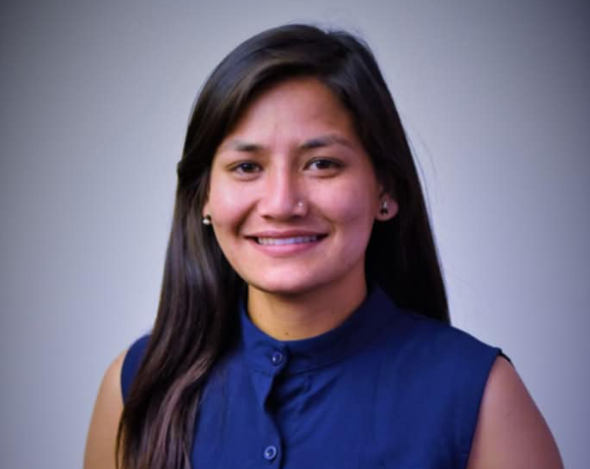
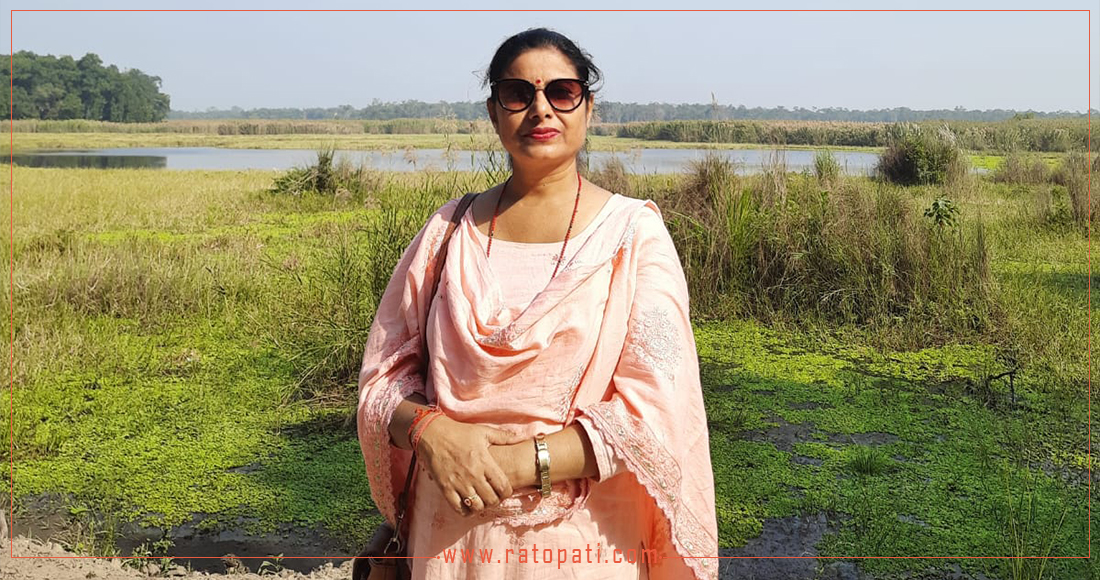
Dhangadhi. 47-year-old Ved Awasthi of Dhangadhi has become a pillar of support and hope for thousands of single women in Sudurpashchim Province. She has dedicated her life to raising her voice for the rights of single women and inspiring them to become self-reliant.
In this endeavor, she had to fight a long and arduous battle against her own family, society, and conservative thinking.
Ved was born into an ordinary family. As the eldest sister of two sisters and two brothers, she understood responsibility from childhood. Raised in a middle-class family supported by her father's job, she passed her SLC from a secondary school in Dhangadhi. She then enrolled in Kailali Multiple Campus for higher education. Despite her interest in studies, she got married in 2057 BS according to her parents' wishes.
Shortly after her marriage, her life was struck by tragedy. Her husband passed away a few months after the wedding. At that time, Ved was three months pregnant. On one hand, there was the unbearable pain of losing her life partner, and on the other, the worry about the future of her newly begun married life and the child growing in her womb.
After her husband's death, Ved faced not only personal grief but also the cruel behavior of society.
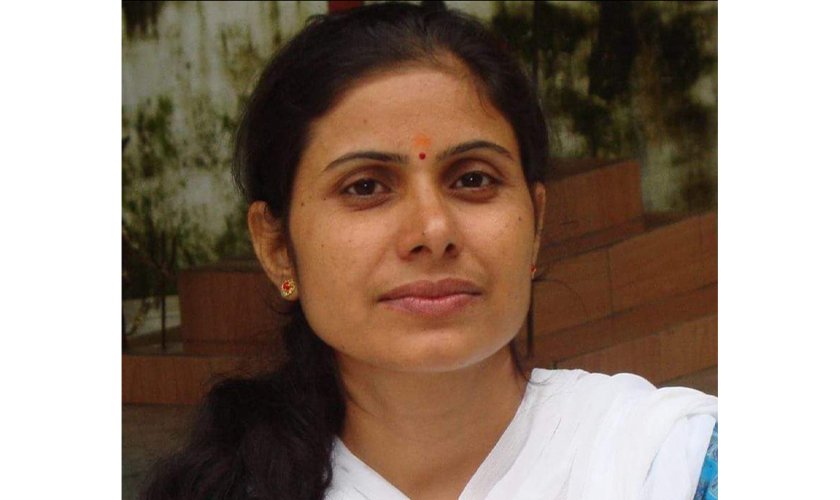
'At that time, many of my rights were violated. I had to fight for my rights myself,' she said. After becoming a single woman, society began to control everything from her attire to her food. 'You shouldn't eat this,' 'You shouldn't wear that' – such orders were imposed on her, she recounted.
Some even looked at her forehead and limbs and said, 'Her fate is bad,' blaming her for her husband's death. She spent five years of her life in difficult struggle amidst confusion and despair.
Time does not always remain the same. Ved understood that life cannot go on by crying and drowning in pain. She started searching for new opportunities for herself. In this process, in 2063 BS, she learned about an organization working for the welfare of single women.
Meetings and conversations with the organization's representatives boosted her confidence. Initially, she felt like she was the saddest woman in the world. But after joining the group, she met women who were living in much more pain and deprivation than her.
'I had a house, and there was no problem with food and clothing, but in the group, I met sisters who had faced violence and extreme economic hardship. Seeing them, I felt like I was a wealthy widow, and I gained the courage to do something,' she said.
After that, Ved became associated with the 'Women for Human Rights, Single Women Group Center'. Initially given the opportunity to work as the Kailali District Secretary, she intensified her work of organizing single women, boosting their morale, and providing legal counseling. 'People who saw me used to pity me, but when I started working for others, the perspective of that society began to change,' she said.
Currently, Ved is working as the Sudurpashchim Province Officer for the same organization. She is also working through the 'Peace Project' for the upliftment of marginalized and conflict-affected women. Through her initiative, a two-story building for the Single Women's Group has been built in Taranagar, Dhangadhi, where single women are provided with various training in sewing, vegetable farming, goat rearing, bead making, and entrepreneurship. Many women have become self-employed after receiving these trainings.
Ved received support from her parents during her difficult times, who encouraged her to educate her daughter. Her daughter passed 12th grade in Science in 2078 BS. Her daughter is currently studying BSc Ag, i.e., Agricultural Science, in Bhairahawa.
'The storm I went through gave me the awareness that I must make my daughter capable,' she said. Despite so much struggle and success, Ved's experience is that the legal and social challenges faced by single women still remain. Especially in property rights, there is a big problem. Many single women do not receive their share of inheritance. Families often dismiss them by saying, 'We are providing you with food and clothing, why do you need a share?'
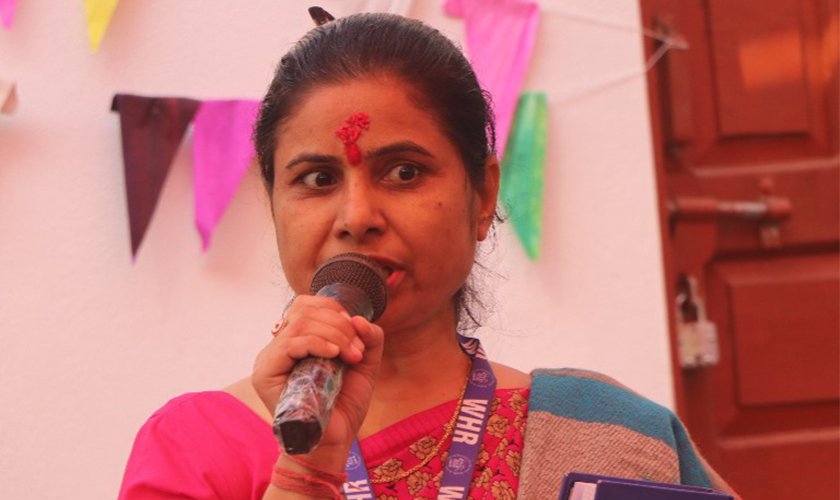
There is a tendency not to give inheritance at all to women who only have daughters. Besides this, problems like sexual exploitation, domestic violence, and character assassination continue to trouble single women.
In Nepal, about 8 percent of the total population are single women, of which more than 826,000 are widows, more than 59,000 are separated, and more than 21,000 are divorced women. The number of unmarried women above 35 years is also more than 90,000. In Sudurpashchim alone, there are more than 86,000 single women.
According to Ved, 52.5 percent of widowed women are outside the labor market, and about 40 percent of women are deprived of basic health services. Some women are unable to receive social security allowances provided by the state due to not having citizenship.
'Single women must have mandatory representation from local to federal levels. Concessional loans and special grants should be arranged for entrepreneurship. Furthermore, the scope of health insurance should be expanded to include all single women,' is Ved's demand from the state.
She has also strongly raised the demand for tax concessions when registering property in the name of single women.
Ved, who faced suspicion from her family and ostracism from society in the early days, is now an established and respected personality.
'When I lost my husband while studying in college, I thought my world was over. Struggle gave me a new life,' she said.
In recognition of her work, organizations like Kailali Janapustakalaya and Sankalpa have honored her. She was also selected for an international peace award.
Ved's daily life is spent in the pursuit of the rights of single women. She has become a symbol of courage and self-respect for thousands of women in Sudurpashchim.
'People who saw me used to pity me, now I am in a position to help others. This is the biggest earning of my life,' she said.
This specific news has been automatically translated by AI. As a result, there may be some inaccuracies or language errors.