Medical Education Commission to Determine Seats Based on Infrastructure and Monitoring Reports

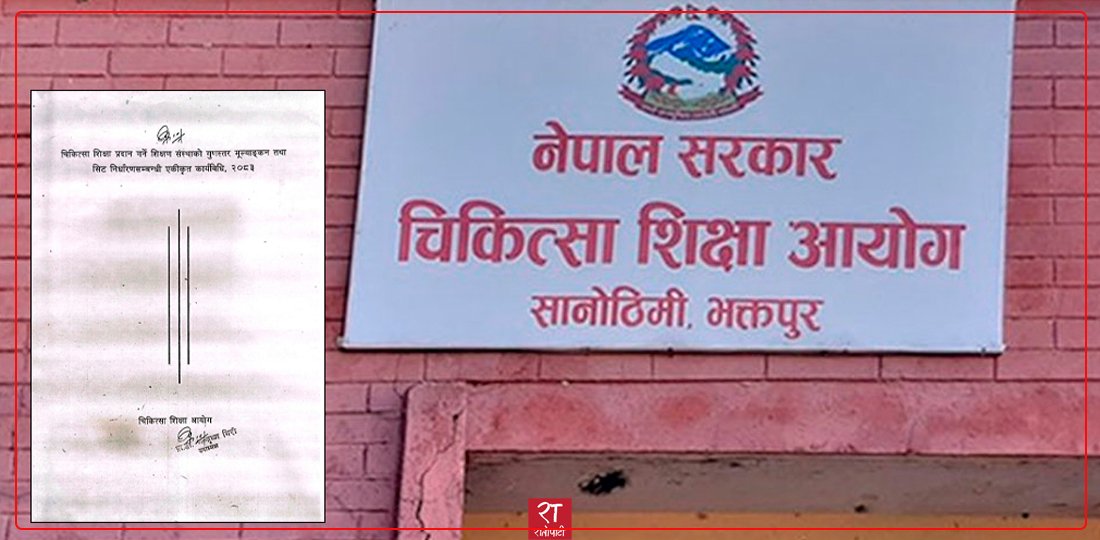
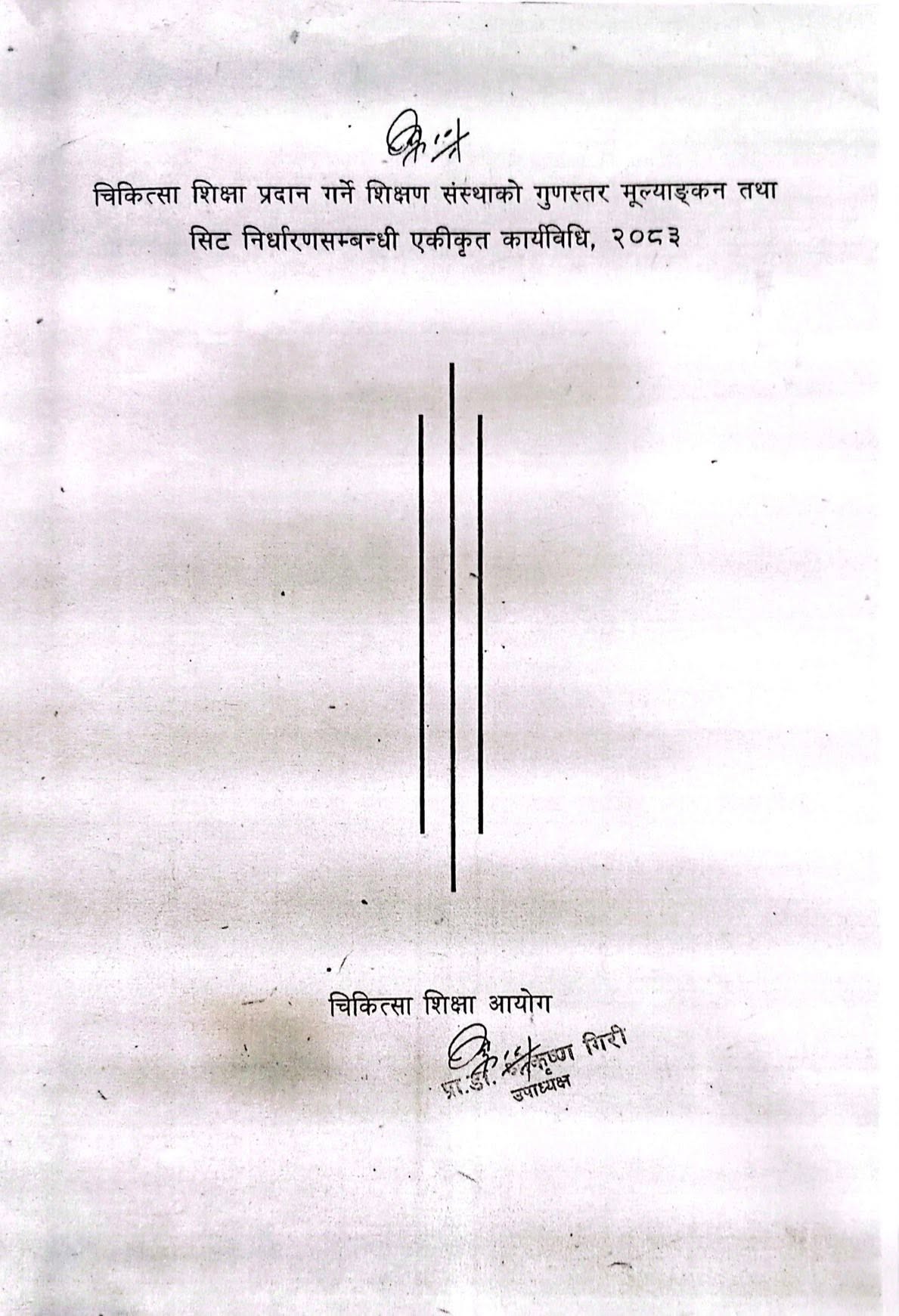
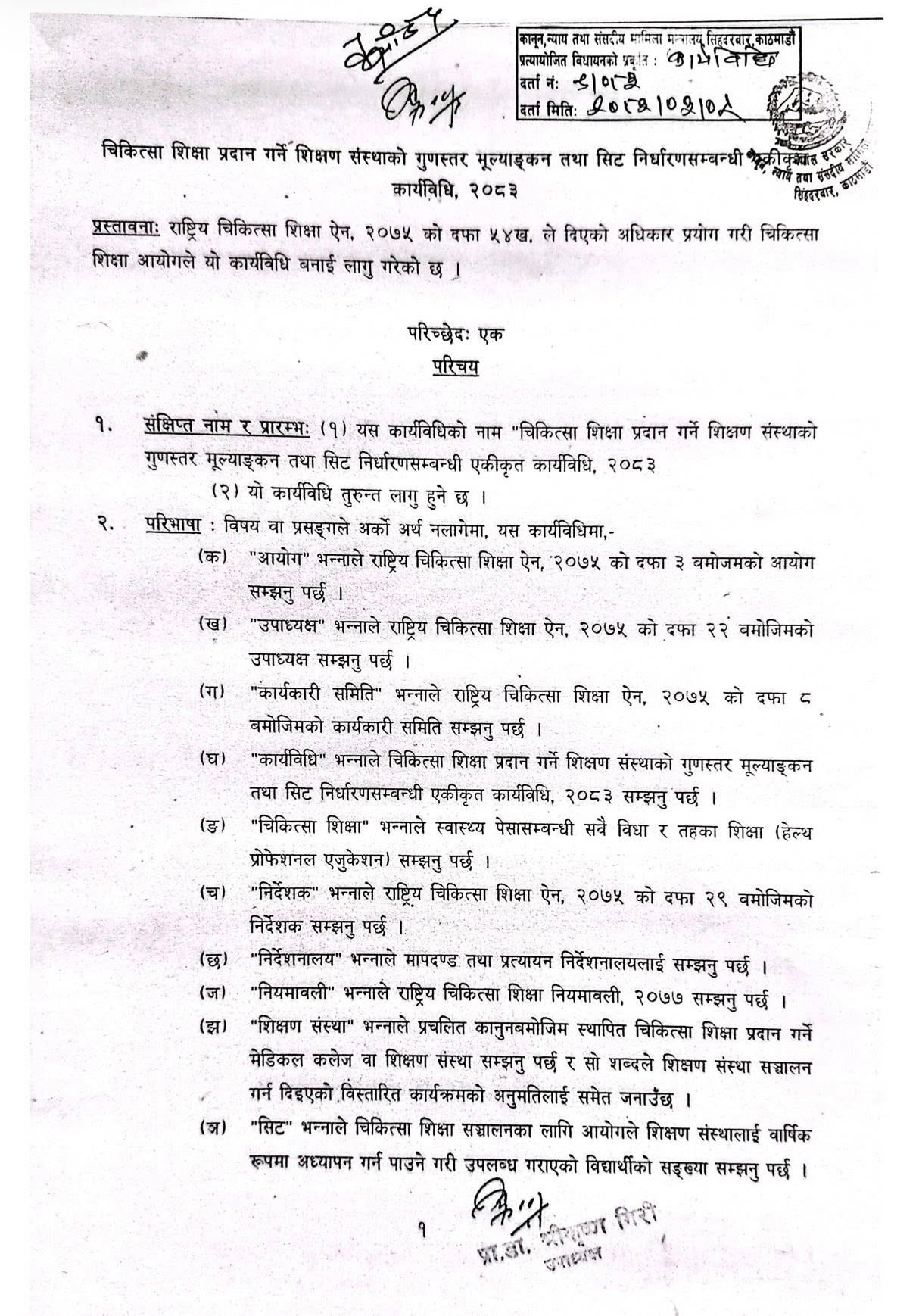
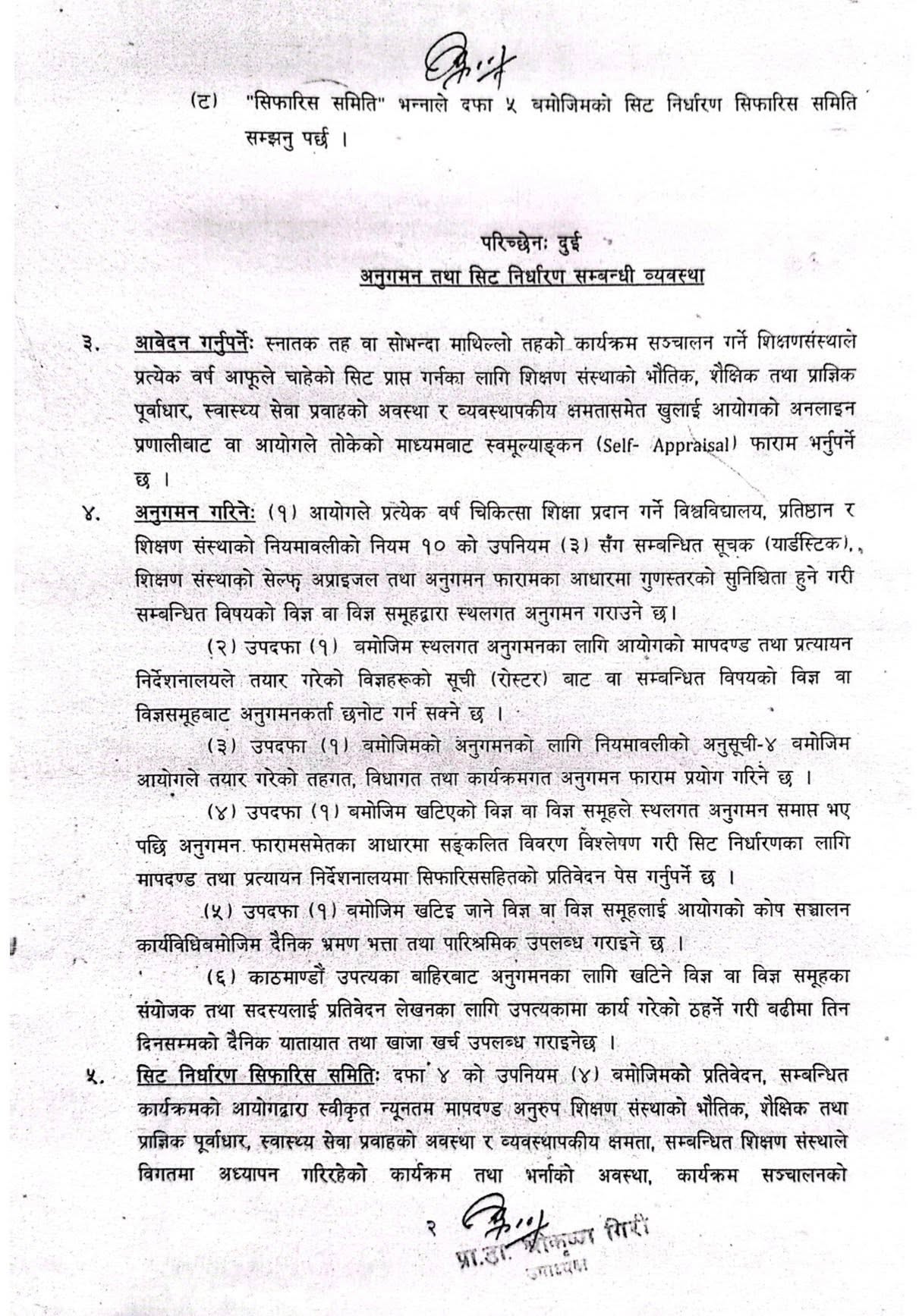
Kathmandu. The Medical Education Commission will determine seats only after looking at the monitoring report and infrastructure of the educational institution. According to the Integrated Procedure for Quality Evaluation and Seat Determination of Educational Institutions Providing Medical Education 2083, the commission will determine seats only after looking at the monitoring report and infrastructure of the educational institution.
The procedure states that a seat determination committee will be formed to recommend to the executive committee for seat determination every year by analyzing the physical, educational, and academic infrastructure of the educational institution, the status of health service delivery, and the admission status and feasibility of the relevant program according to the approved minimum standards. The director of the Planning Coordination and Academic Development Directorate will be the coordinator of the committee.
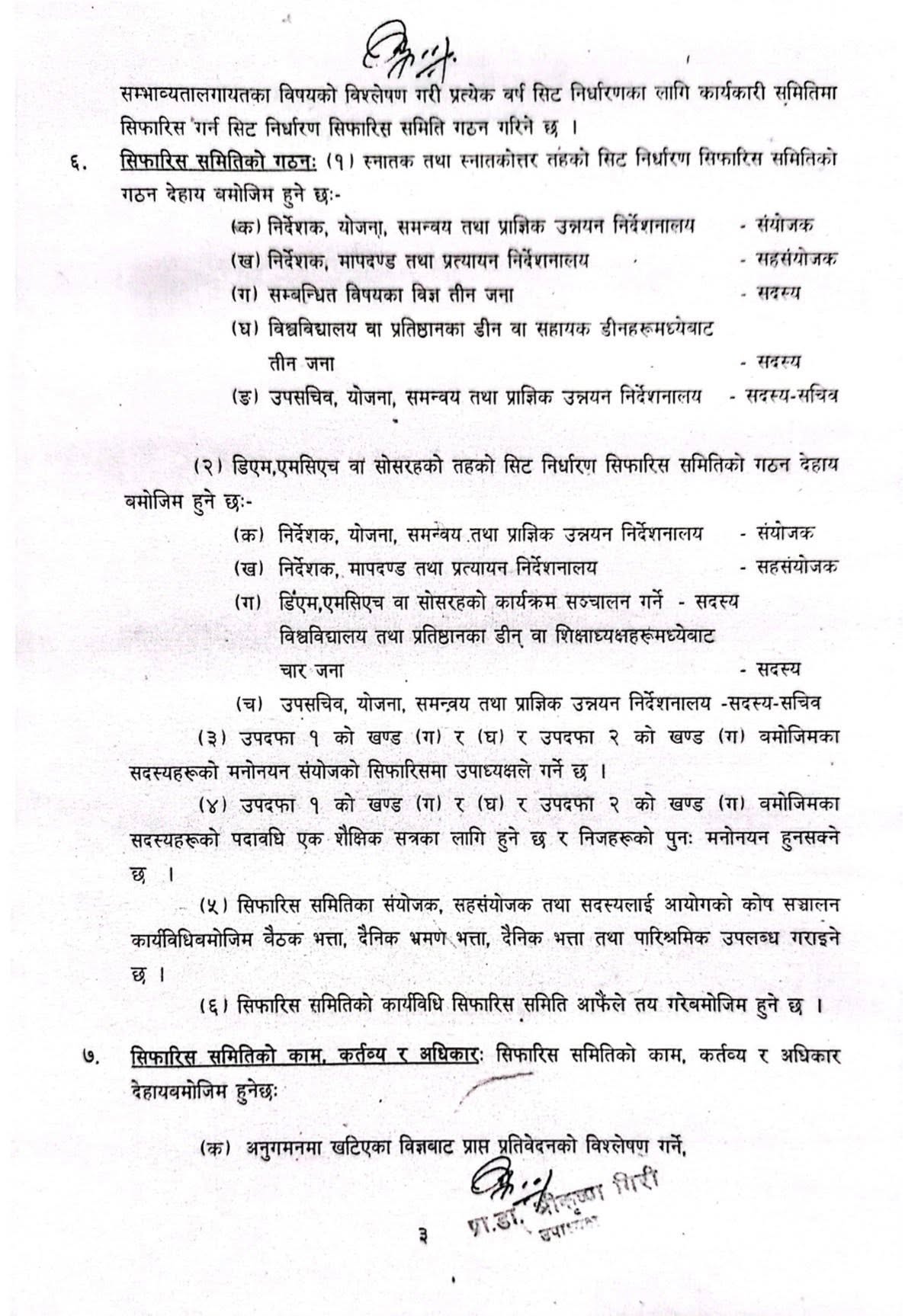
Similarly, the director of the Standards and Accreditation Directorate will be the co-coordinator. The committee will have three members who are experts in the relevant subject, and three members from the deans or assistant deans of universities or institutes. The deputy secretary of the Planning Coordination and Academic Development Directorate will be the member secretary.
Similarly, the procedure also includes provisions for the formation of a recommendation committee for seat determination at the DM, MSCH, or equivalent level. The director of the Planning, Coordination, and Academic Development Directorate will be the coordinator. Similarly, the director of the Standards and Accreditation Directorate will be the co-coordinator, and four members from the deans or academic heads of universities and institutes will be members. The deputy secretary of the Planning, Coordination, and Academic Development Directorate will be the member secretary of this committee.
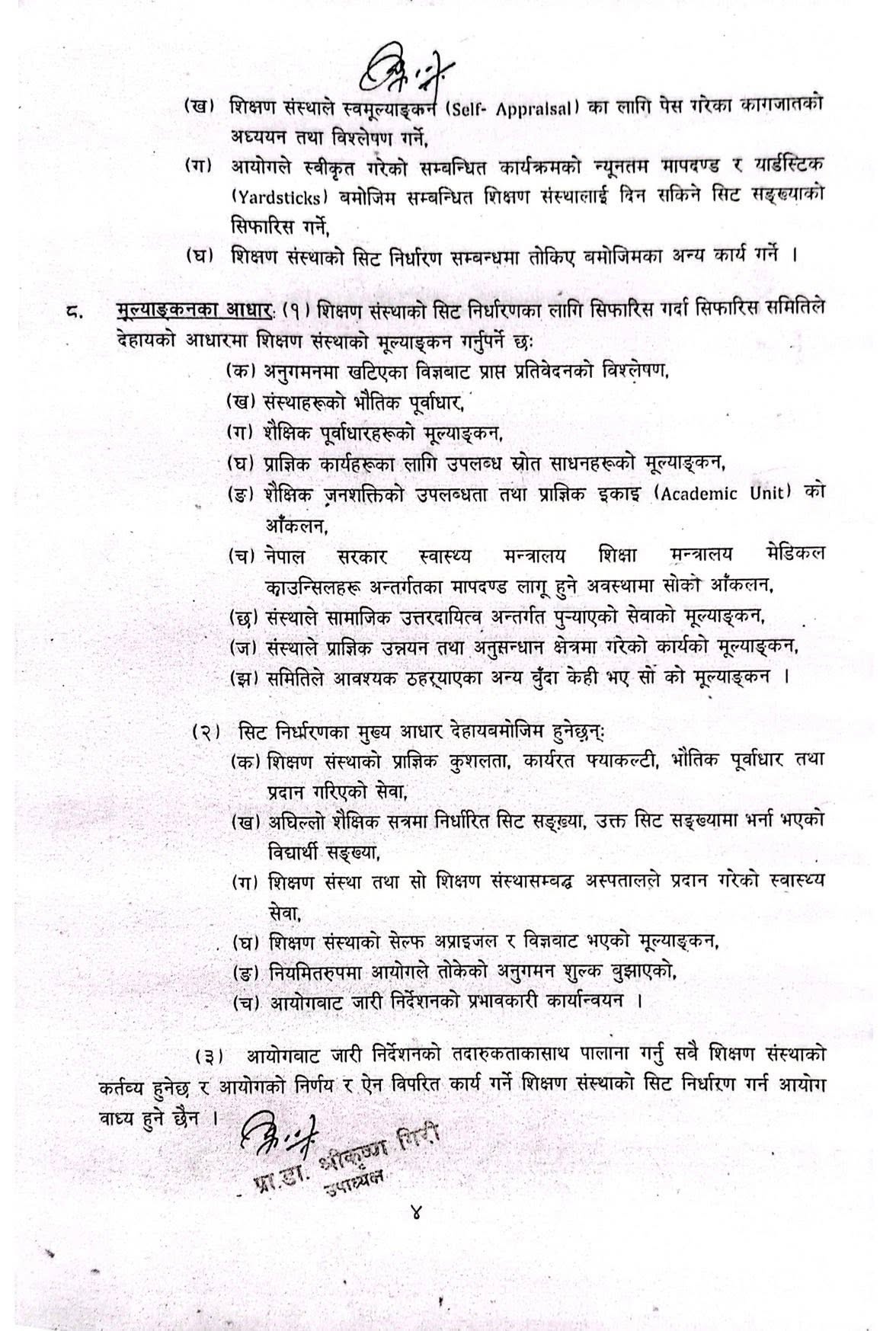
The main basis for seat determination includes the academic excellence of the educational institution, the working faculty, physical infrastructure and services provided, the number of seats determined in the previous academic session, the number of students admitted to that number of seats, and the health services provided by the educational institution and its affiliated hospital.
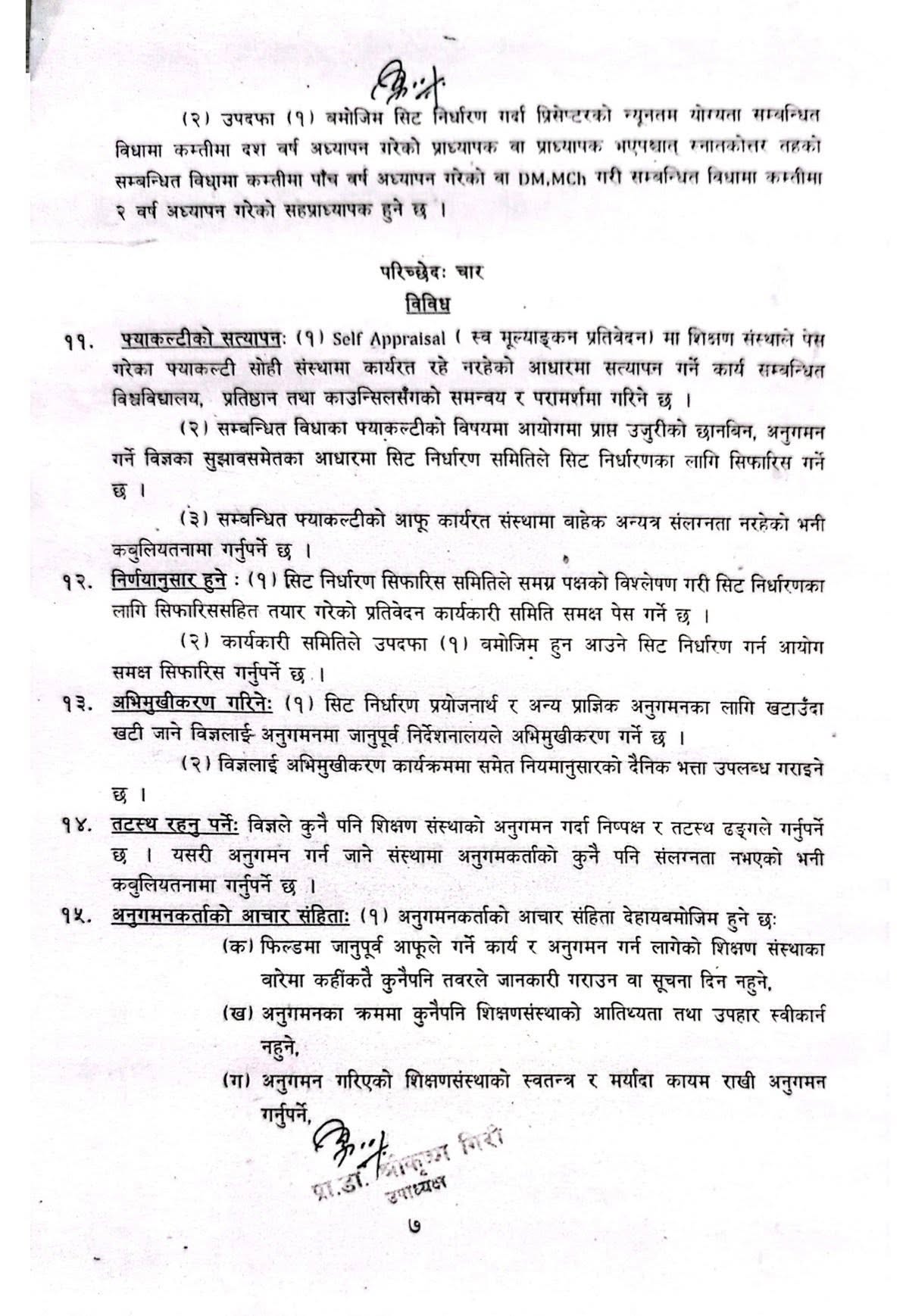
Similarly, the self-appraisal and expert evaluation of the educational institution, timely payment of the monitoring fee set by the commission, and effective implementation of the directives issued by the commission are also considered as bases for seat determination.
The commission has formulated the criteria for seat determination based on the analysis of the report received from the experts deployed for monitoring and the evaluation of the institution's physical and educational infrastructure.
Similarly, the evaluation of the available resources for academic activities and the assessment of the availability of educational manpower and academic units have been taken as evaluation bases.
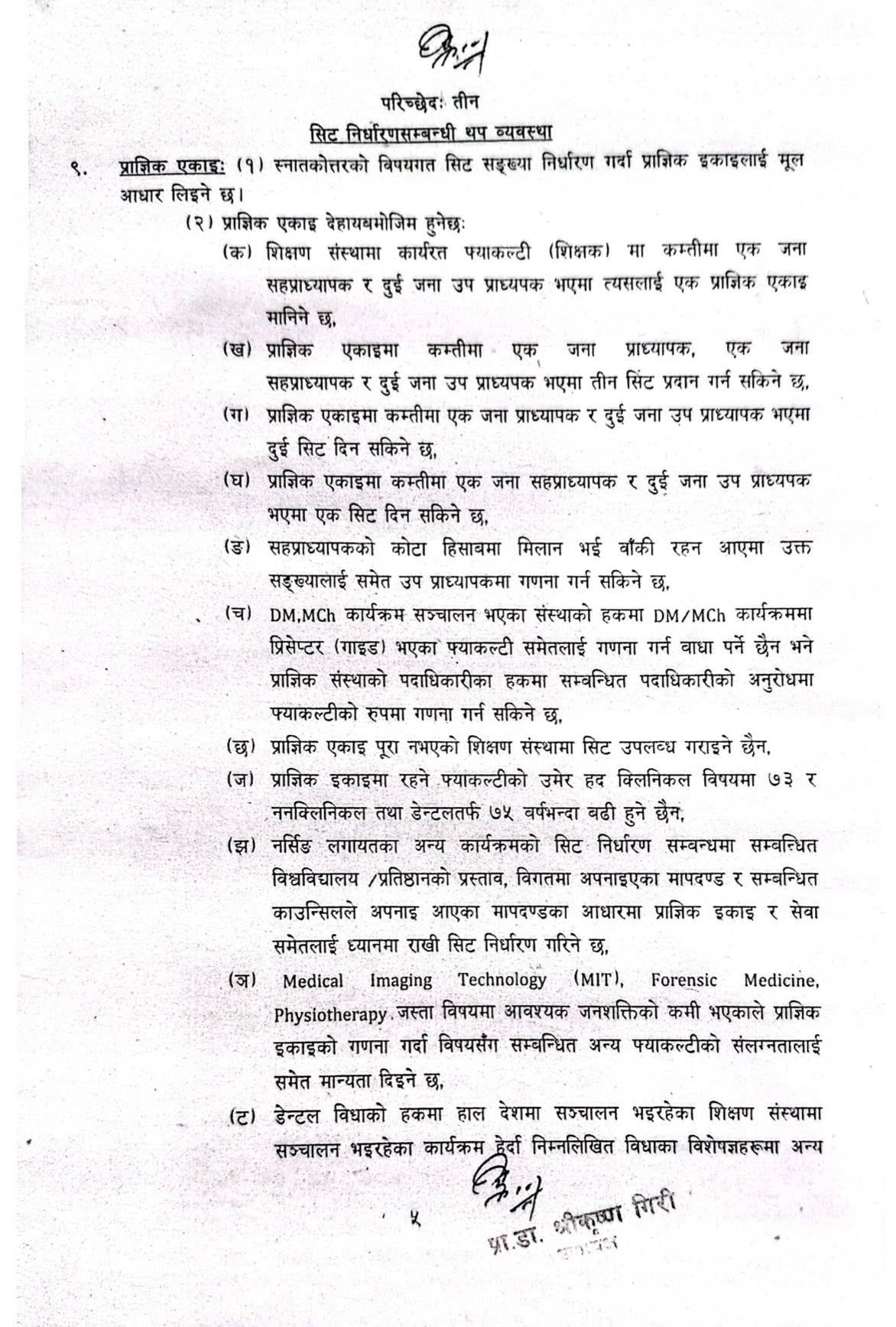
The Medical Education Commission has made further arrangements to use the academic unit as the main basis for determining the number of seats in various postgraduate (PG) programs in medical education. The number of seats will be determined based on the availability of working faculty (teachers) in the educational institutions. An academic unit with at least one professor, one associate professor, and two assistant professors can be provided a maximum of three seats according to the standards.
Similarly, if there is one professor and two assistant professors, two seats will be provided, and if there is one associate professor and two assistant professors, one seat will be provided. The policy clearly states that educational institutions that do not meet the prescribed academic unit will not be provided with postgraduate seats.
Similarly, the new arrangement includes relaxed and specialized rules for the age limit of faculty and special subjects. The age limit for faculty in academic units should not exceed 63 years for clinical subjects and 65 years for non-clinical and dental subjects. In the case of institutions operating DM and MSCH programs, faculty working as guides or preceptors and institutional officials can also be counted as faculty. In special subjects with a shortage of manpower such as Medical Imaging Technology, Forensic Medicine, and Physiotherapy, the involvement of other faculty related to the subject will also be recognized when calculating the academic unit, while for subjects like nursing, seats will be determined based on the proposal of the concerned council and university.
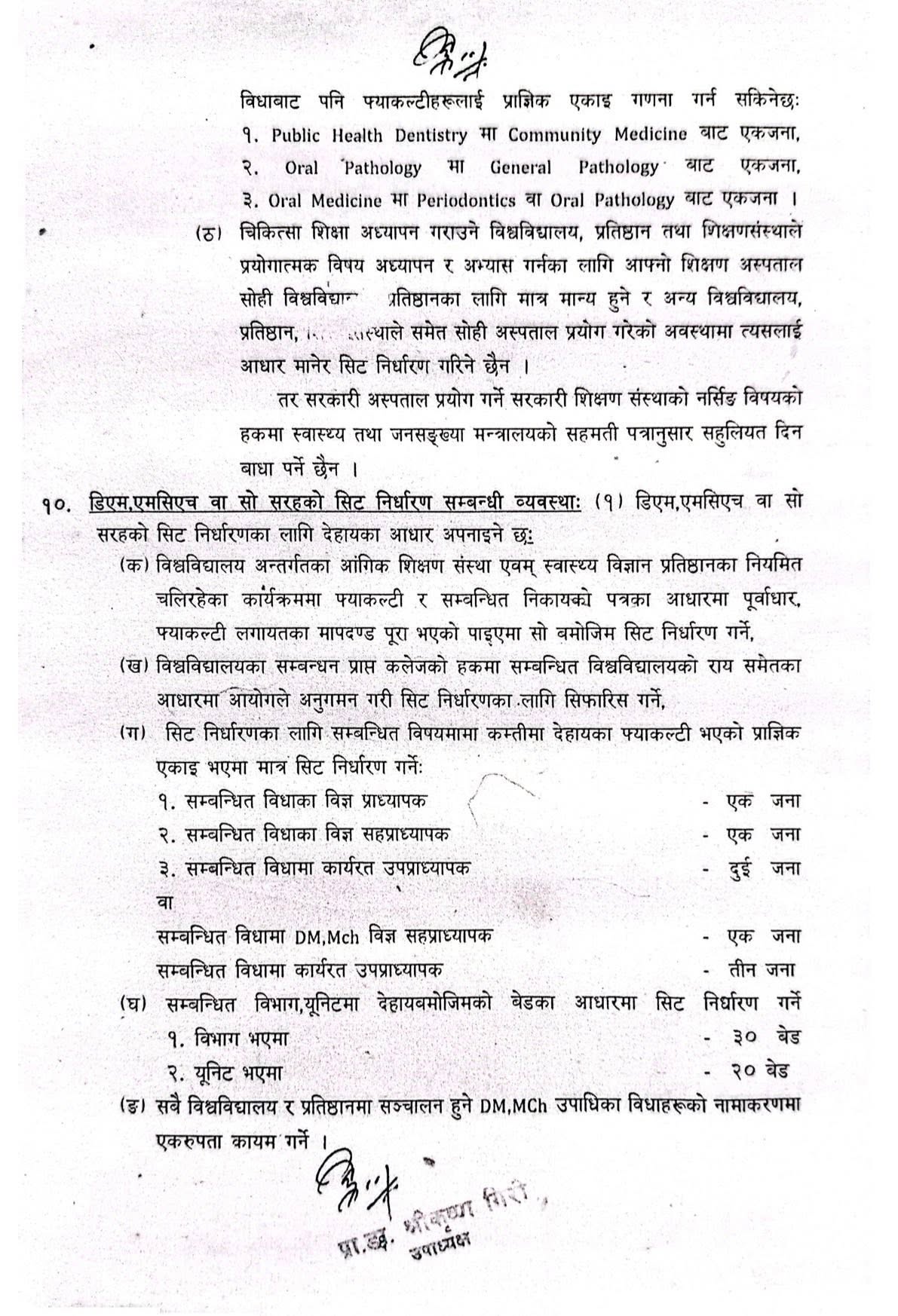
The commission has put forward clear provisions regarding teaching hospitals and specialized seat determination for universities, institutes, and educational institutions imparting medical education. Educational institutions must use their own teaching hospitals for practical subject teaching and practice, and if the same hospital is used by another institution, it will not be considered as a basis for seat determination. However, in the case of nursing subjects in government educational institutions using government hospitals, there is no obstacle to providing concessions in accordance with the agreement of the Ministry of Health.
Similarly, the commission has set a policy to determine and recommend seats for DM, MSCH, or equivalent programs in regular programs running in constituent and affiliated colleges under universities based only on the necessary infrastructure, faculty, and monitoring.
Specific criteria for the minimum academic manpower and bed numbers required for seat determination of high-level educational programs DM and MSCH have also been set.
For seat determination, it is mandatory to have an academic unit with at least one expert professor, one associate professor, and two assistant professors in the relevant field, or alternatively, one associate professor and three assistant professors who are DM and MSCH experts. In terms of hospital bed numbers, the criteria set is a minimum of 30 beds for a department and 20 beds for a unit only.
This specific news has been automatically translated by AI. As a result, there may be some inaccuracies or language errors.