Apple Reportedly Preparing Camera-Equipped AirPods for Next Year

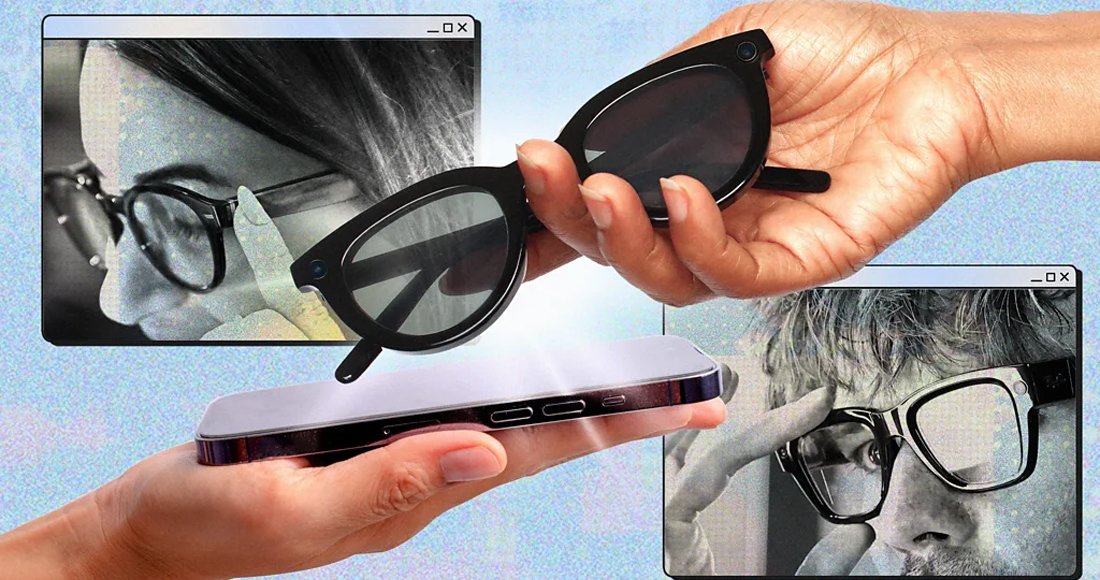
If you've ever wished your ears had eyes, there's interesting news for you. Apple is reportedly preparing to launch AirPods with built-in cameras as early as next year.
The interesting part is that these cameras won't be for taking photos. According to Bloomberg, they will provide information about your surroundings to Apple's virtual assistant, Siri. This will open up new possibilities for interacting with your devices without even looking at a screen.
Apple has not confirmed or denied this. However, this news from Bloomberg comes from a journalist known for reliably revealing the company's secret plans. It also fits into a larger trend of improvement.
For the past 60 years or so, screens have been the primary way we interact with computers. But now, screens may gradually be pushed into the background. Along with wearable devices like smart glasses and neck-worn AI pendants, some of the world's largest tech companies are developing devices that will allow people to spend less time on screens.
If their vision succeeds, it could fundamentally change the way humans interact with computers.
However, it's not yet clear whether this change will be positive.
It could make our relationship with everyday technology more seamless, human, and natural. Or, conversely, it could usher in an era where technology penetrates our private lives even more deeply than it does now.
But before reaching that stage, you and millions of people worldwide will have to answer a fundamental question: Do people really want this technology?
- Goodbye to Screens?
Last week, Snap, the company behind Snapchat, launched its new AI-powered smart glasses, Spectacles. The price is quite high—£1,995 in the UK and $2,195 in the US.
However, the most talked-about aspect of Spectacles wasn't its price, but a TV interview with CEO Evan Spiegel. During the interview, the glasses he wore seemed to pinch his ears quite a bit, making him look quite uncomfortable.
Spiegel later joked, 'My ears just look like that.'
Spectacles are larger and heavier than most competing smart glasses. However, according to a company spokesperson, they can be worn comfortably for many hours continuously.
But Spectacles may have a feature that many current smart glasses lack. Most importantly, according to the company, they can be used independently without the help of other devices. Most smart glasses today need to be paired with a mobile phone.
Spiegel said in a statement, 'For decades, computers have forced us to look down, sit in one place, or disconnect from the present moment. Spectacles are the beginning of a new era of computing.'
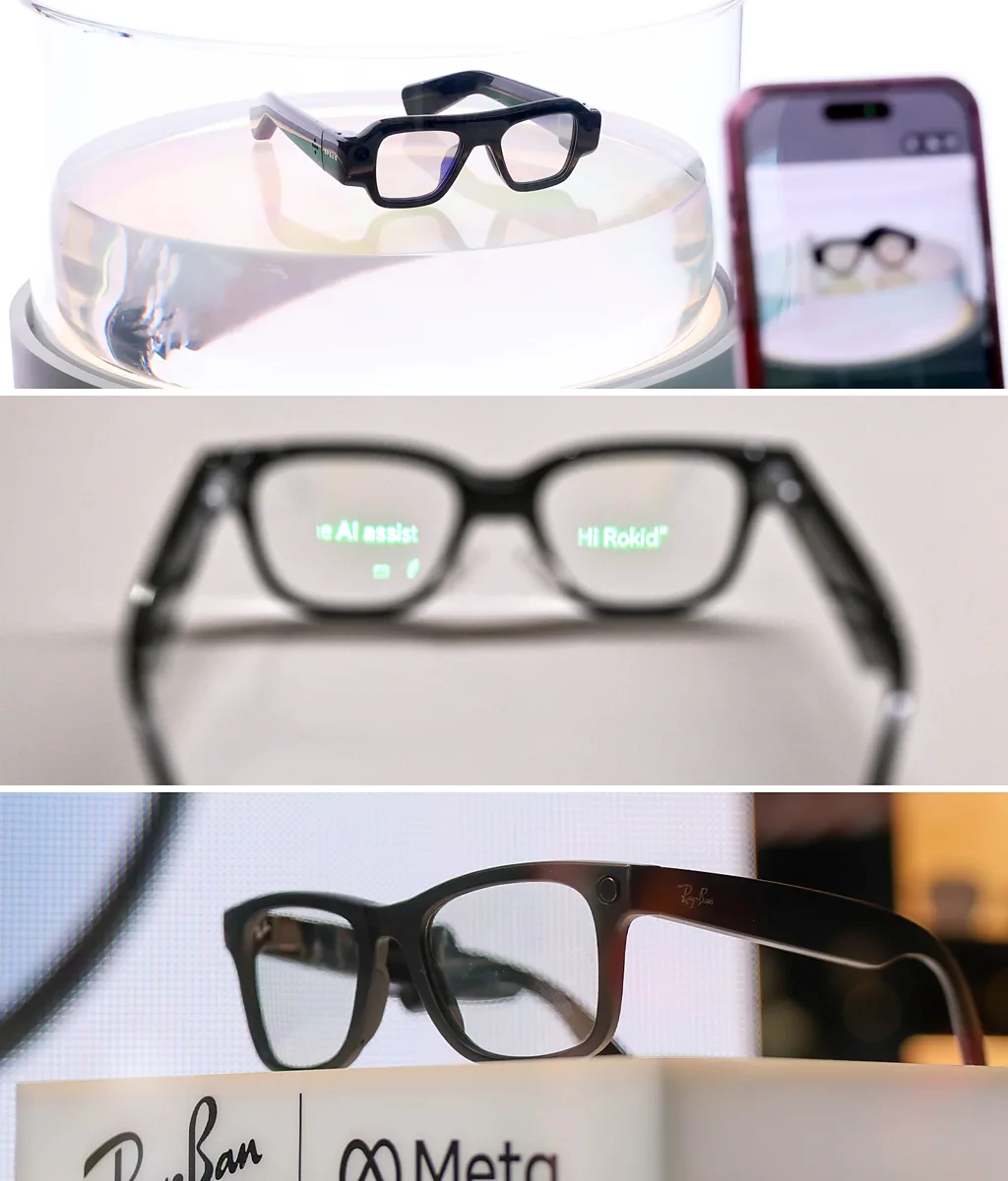
Spectacles have a display embedded in the lens. Some of Meta's smart glasses have a similar feature. However, these displays are not designed to cover your entire field of vision or be constantly visible.
Instead, when needed, some digital information will be temporarily overlaid on the real world you see through the glasses.
- The Growing Market for Wearable Computers
The number of people who can afford such expensive and somewhat unusual products, and who can use them comfortably, may not be large. But for this niche group of users, Spectacles hold the potential to offer a truly new experience.
Meanwhile, the market for smart glasses and other body-worn computers is expanding rapidly.
So far, the most popular product is Meta's smart glasses, with an estimated 7 million pairs sold. This week, the company also launched new, more affordable models.
However, such devices also raise serious privacy concerns.
To say the least, smart glasses have become quite controversial.
There is a distinct group of people on the internet who use the cameras in Meta's smart glasses to harass strangers, video them without their knowledge, and make money from it.
In many cases, it is very difficult to tell whether they are recording video.
Both Meta and Snap have equipped their smart glasses with a small light that illuminates to indicate video recording. But many argue that this is not enough.
On my BBC podcast 'The Interface,' I discussed this very privacy issue with CNBC journalist Brandy Jadwongis.
Jadwongis said, 'I was out for a run one morning. I asked a park employee when the water fountain would be turned on. He was wearing Meta's smart glasses.'
'I'm a tech journalist myself. But even that scene made me very uncomfortable. There will be a big backlash against this.'
- Smart Glasses Without Cameras?
However, Meta is reportedly also developing smart glasses that do not have cameras, relying only on audio. And if anyone can manage such complex privacy challenges well, it is likely to be Apple.
This is because privacy is one of the cornerstones of Apple's market strategy. Therefore, it is conceivable that the company's rumored new product could easily address many privacy concerns.
If the details revealed are correct, the cameras in the AirPods will not allow taking normal photos or videos. Instead, Apple could theoretically process all visual information from the camera directly within the user's mobile phone, without sending it to the cloud or storing it later.
- What Could Such a World Look Like?
Now, let's set aside privacy concerns for a moment (which doesn't mean we should ignore them). What might this new world look like then? I see two ways of looking at it.
The first perspective is positive.
If your AirPods have cameras, you will be able to interact with various pieces of information related to your surroundings without having to touch or look at a screen.
For example, you could ask questions about an object you see in front of you.
When you open the fridge, you could get recipe suggestions based on its contents without typing anything. Or you could receive navigation instructions based on what you are seeing.
Not only that, but much easier and less intrusive ways of controlling devices through simple hand gestures might also be possible.
Perhaps you won't need any of these features.
But think about it from another angle. Currently, the number of computing tasks that can be done without constantly looking at a screen is extremely limited.
- Don't Throw Away Your Phone Just Yet
Ben Wood, Chief Analyst at CCS Insight's FDM and a wearable technology expert, says, 'If Apple didn't have credible use cases for such technology, it wouldn't be incorporating it into its products.'
He added, 'What people will be able to do with these devices is almost a matter of our imagination.'
I think this is one of the most exciting possibilities offered by artificial intelligence (AI). If AI fully succeeds in its purpose, we will be able to talk to computers just as we talk to someone who can do a task for us.
The company is releasing a new, AI-powered version of Siri, taking small but significant steps towards this concept. If this concept succeeds, you will be able to perform various tasks through your devices while looking at the world around you.
In other words, the need to repeatedly look at a screen to use devices may decrease.
Today, excessive screen time is a concern for many people. Therefore, such a change may be welcome for many.
But there is another potential future. There is also another, somewhat darker side to this issue.
The tech industry still generates significant revenue from screen-based products. For example, most of Apple's income comes from the sale of products with screens, such as iPhones, iPads, MacBooks, and other devices.
If devices without screens become common in the future, it might not reduce our interaction with technology, but even increase it.
We will spend as much time looking at screens as we do now, but in addition, we will remain connected to technology through new devices while walking, running, or doing other activities, without looking at screens.
In other words, there is an equal possibility that screens will not disappear, but rather a new layer of technology will be added to our lives.
Ben Wood says, 'I firmly believe that the smartphone is not going anywhere. It has become an integral part of the fabric of society.'
But he adds, 'However, there is a desire in the tech industry and among some users—let's lift our heads up from the screen.'
BBC
This specific news has been automatically translated by AI. As a result, there may be some inaccuracies or language errors.