African and Caribbean Nations Demand Formal Apology and Reparations for Transatlantic Slave Trade
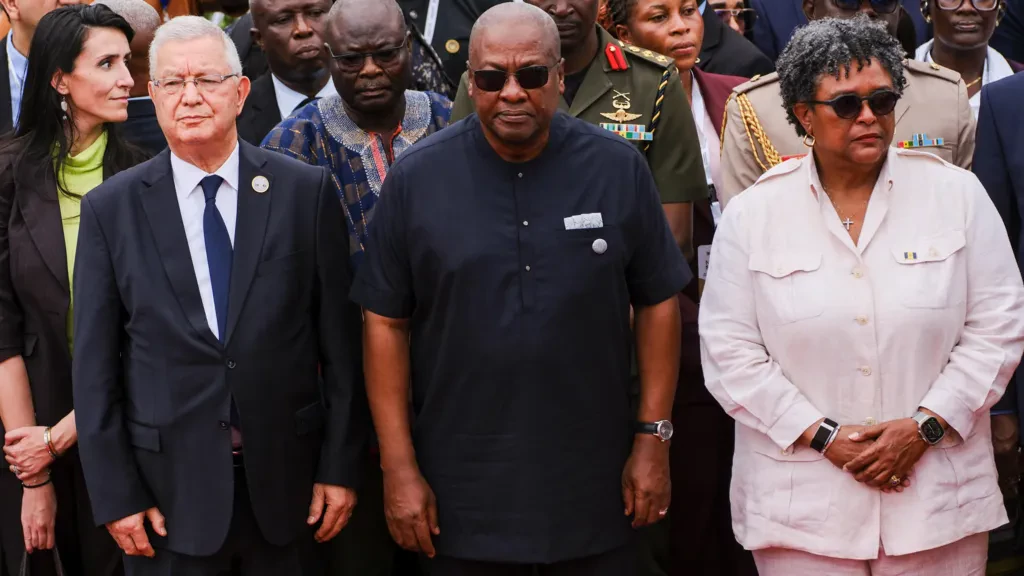
Accra. African and Caribbean nations have formally demanded that powerful nations that benefited from the transatlantic slave trade apologize and pay reparations. This demand has been put forward with the aim of advancing the campaign for reparative justice following the conclusion of the three-day 'Next Steps' conference held in Accra, the capital of Ghana.
Earlier in March, the United Nations passed a historic resolution recognizing the transatlantic slave trade as 'the most serious crime against humanity.' The resolution also urged member states to contribute to a reparations fund. It is a historical fact that between the 15th and 19th centuries, approximately 12 to 15 million African men, women, and children were forcibly captured and trafficked to America to be enslaved.
The conference held in Ghana has approved a 19-point reparations plan, which includes proposals for comprehensive debt relief, the return of looted cultural artifacts, and the establishment of a global reparations fund. However, this plan does not specify any amount for reparations. The conference also addressed the disproportionate impact of slavery on African women and girls. Leaders at the conference have called on countries involved in the slave trade to 'offer a full, formal, and unconditional apology.'
Addressing the delegates, Ghanaian President John Dramani Mahama stated, 'History does not ask us to be heirs of guilt, but rather to be responsible heirs.' Similarly, French President Emmanuel Macron, in a virtual message to the conference, acknowledged that enslaved people were 'treated inhumanely and like objects.' However, he warned against limiting reparations for slavery to mere financial 'compensation,' stating that it should not be seen as 'a check signed to end the story.'
In the UN General Assembly, the resolution was passed with 123 votes in March. The United States, Israel, and Argentina voted against the resolution to declare the transatlantic slave trade a crime against humanity, while 52 countries, including the United Kingdom and member states of the European Union, abstained. Resolutions of the General Assembly, unlike Security Council resolutions, are not legally binding.
The United Kingdom has long rejected demands for reparations. The UK's stance is that current institutions cannot be held responsible for past wrongs. At the time, the British Ambassador to the United Nations, James Kariuki, stated, 'No atrocity should be considered more or less significant than another.'
The US Ambassador to the United Nations echoed this sentiment, arguing that his country 'does not accept the right to legal reparations for historical injustices that were not considered illegal under international law at the time they occurred.' He added, 'It is unclear who would actually be the beneficiaries of 'reparative justice' in the UN resolution.'
To date, no country has provided reparations to the descendants of enslaved Africans or to the affected African, Caribbean, and Latin American nations. Most of the compensation previously provided by governments was paid to slave owners in the 19th century as compensation, not to the enslaved individuals. This includes the United Kingdom, which paid over 21 billion US dollars (16 billion pounds) in today's value to slave owners after the abolition of slavery in the 1830s.
This specific news has been automatically translated by AI. As a result, there may be some inaccuracies or language errors.