Parliamentary Committee Discusses Economic Slowdown, Industrial Revival, and Trade Barriers

Kathmandu. To invigorate the country's sluggish economy, it has been pointed out that domestic raw material production needs to be increased, sick industries need to be restarted, and policy and technical obstacles in foreign trade need to be removed immediately.
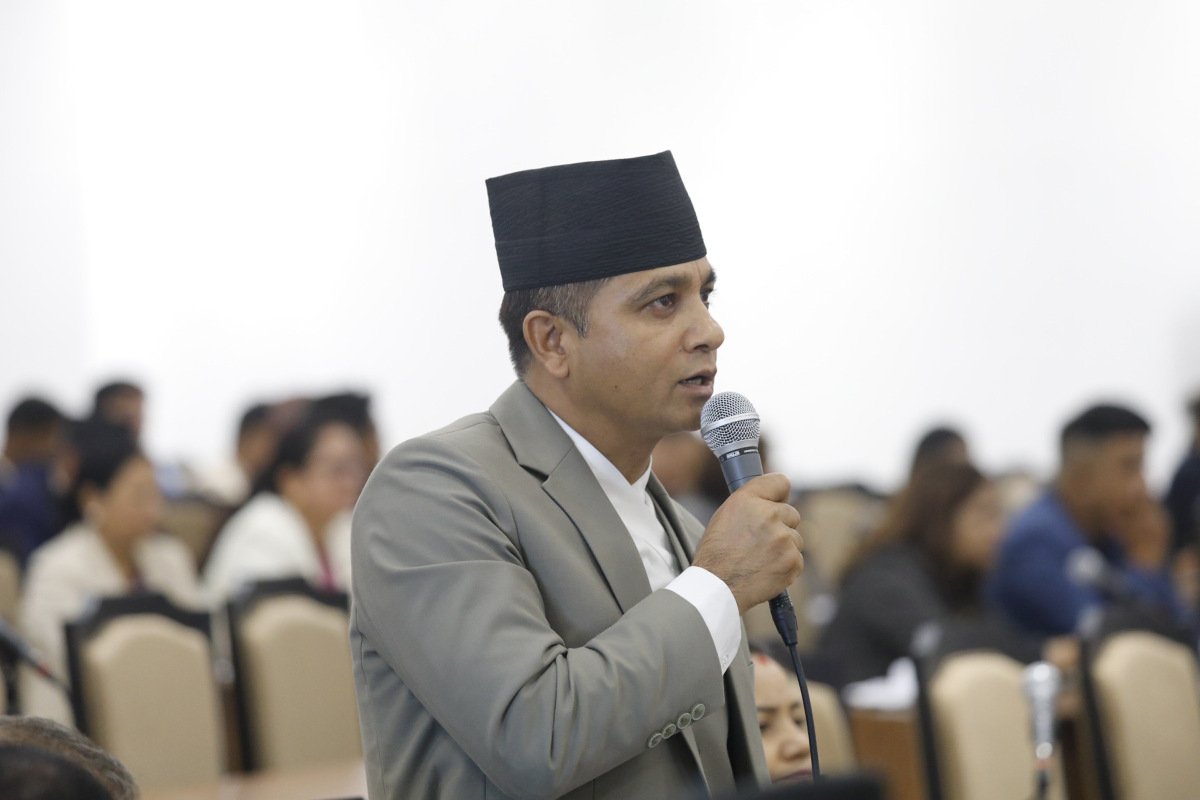
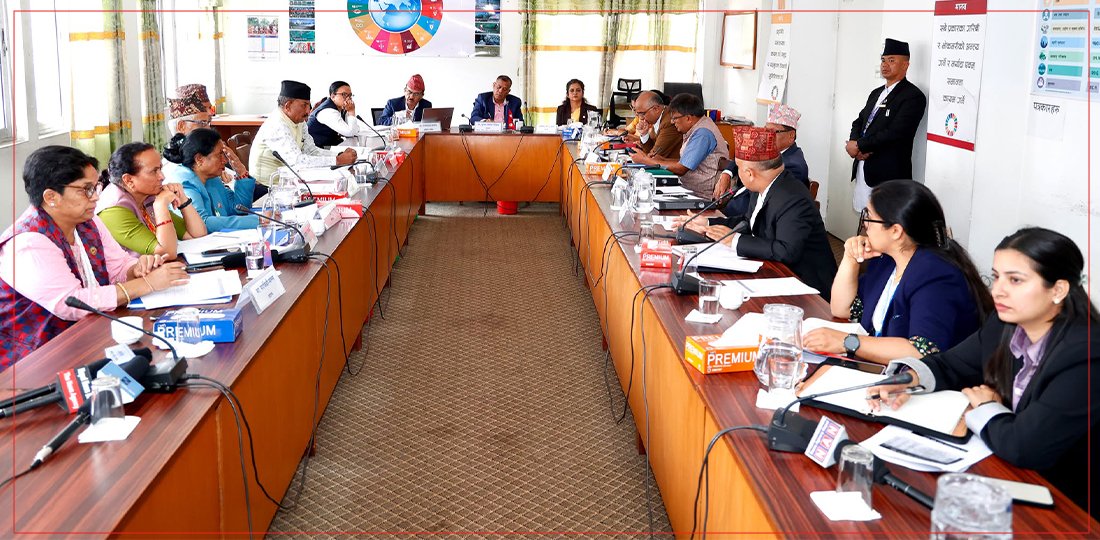
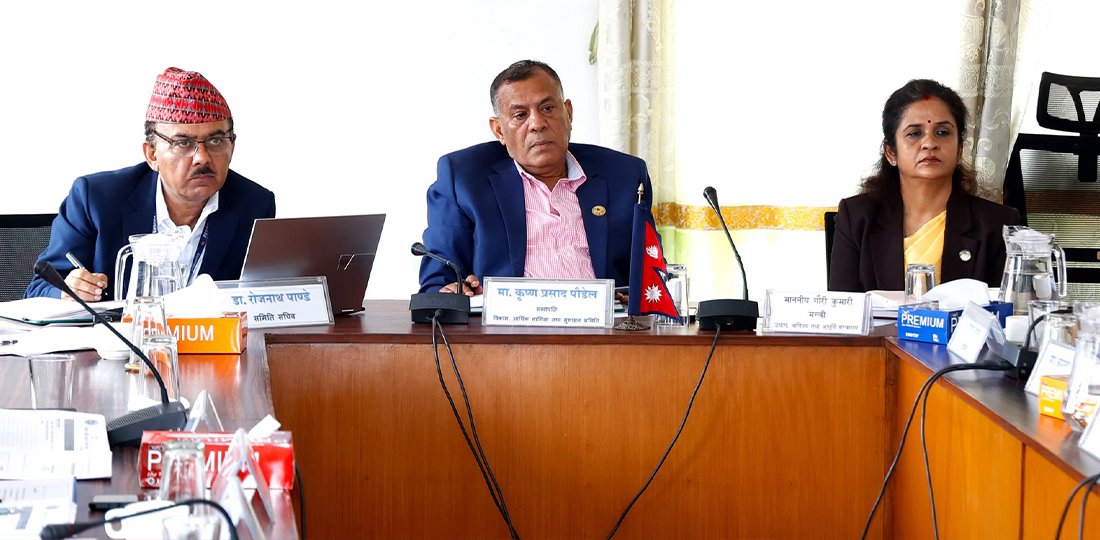
A discussion was held on the Ministry of Industry, Commerce and Supply's work plan, budget implementation status, and policy reform efforts during a meeting of the National Assembly's Development, Economic Affairs and Good Governance Committee. In Thursday's meeting, the members of parliament expressed serious concern and worry about the ministry's activities.
Secretary of the Ministry, Krishna Bahadur Raut, gave a detailed presentation on the plans for industrial reform and promotion of domestic production for the upcoming fiscal year 2083/84.
During the discussion, the members of parliament criticized the government for budget shortfalls, implementation weaknesses, lack of coordination among ministries, and policy limitations in foreign trade. They also demanded that the government take practical and effective steps to solve the problems.
Revival of Sick Textile Industries in Collaboration with the Army
The ministry has initiated policy and practical processes to bring government-owned sick industries, which have been closed and in a dilapidated state for a long time, back into operation. According to Secretary Raut, the ministry has started a strategic collaboration with the Nepali Army's Directorate of Military Equipment Production to revive the Hetauda Textile Industry, which has been on the verge of closure for years. Under this, the repair of the industry's machinery and reconstruction of the building are currently progressing rapidly. The ministry believes that the operation of this industry will contribute positively towards Nepal becoming self-reliant in textile production.
Similarly, the process of asset and liability valuation has been expedited for the revival of other sick industries with government investment. According to Secretary Raut, the DDA reports for Gorakhkali Rubber Industry, Hetauda Cement, and Udayapur Cement Industry have been prepared and submitted to the Ministry of Finance for approval. Realistic details of other industries, including Biratnagar Jute Mills, are being collected, and preparations are underway to move forward with a public-private partnership (PPP) model soon after determining the appropriate modality.
However, during the meeting, the members of parliament emphasized that the revival of sick industries should be for the purpose of creating actual employment, not just a formality.
Uncertain Future of Dolakha Magnesite and Mining Industry
During the meeting, MP Ghanashyam Rizal raised angry questions about the uncertain future of the magnesite mine and industry in Kharidhunga, Dolakha. He said, 'In the past, dozens of ministers and prime ministers visited the mine and only took photos, but the implementation part has always been zero.' Pointing out the reality that local farmers are cultivating potatoes in the mining area and the country has to import millions worth of magnesite, he demanded that the government clarify its stance on whether the industry will operate or not. He urged the ministry to clarify the future of the Kharidhunga mine, magnesite industry, and methane gas project.
In this regard, Ministry Secretary Raut informed that the initial partner, the Indian company 'Orient', has submitted a proposal to restart Dolakha Magnesite. Established in 2034/35 BS with 75 percent share ownership by the Nepal Government and 25 percent by the private sector (Khetan Group and Orient Company), this industry has been completely closed due to the 2072 earthquake and technical problems. He clarified that the ministry is working on operating this mine, which is one of Asia's best and largest, under a PPP model. Similarly, the Nepal Metal Company in Ruby Valley has infrastructure but has not yet started commercial production, and preparations are underway to bring it under an appropriate modality, according to Secretary Raut.
Indian Obstacles to Nepali Tea Exports
The issue of the overall tea sector being in serious crisis due to technical and policy obstacles created by neighboring India in Nepal's tea exports was prominently raised during the meeting. MP Jagat Timilsina drew the government's serious attention to the fact that 83 tea industries in Nepal have been closed and the livelihoods of about 50,000 farmers and laborers have been lost due to the ban imposed by the Indian side on Nepali tea.
He questioned, 'Is this step taken by India, which is contrary to the Nepal-India Trade Treaty and the provisions of the World Trade Organization, a 'non-tariff barrier'? Why is the government unable to take a clear stance, lodge a diplomatic protest, and bring a relief package for the affected farmers?'
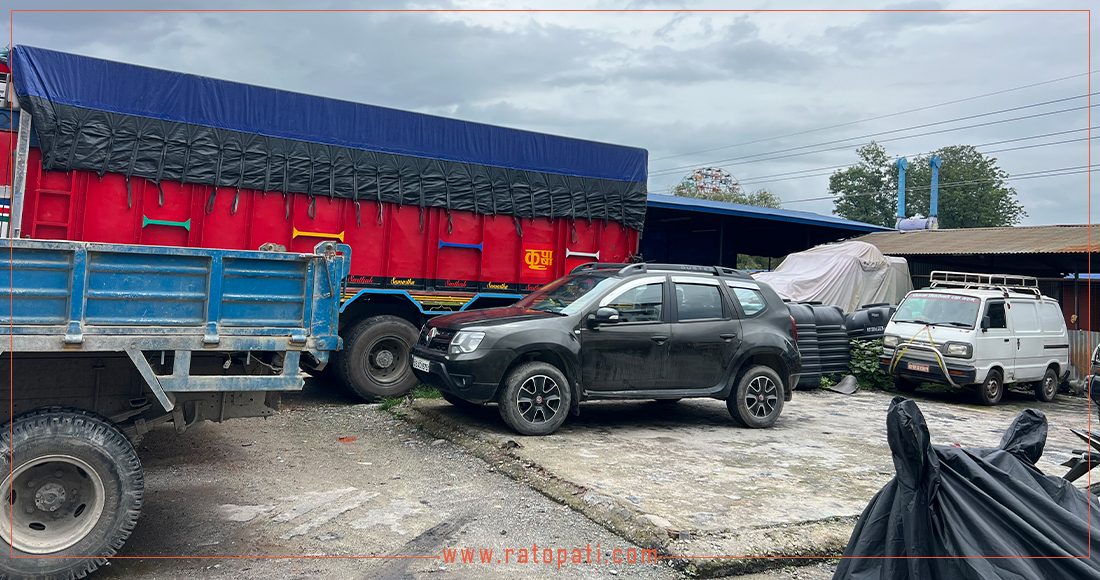
Similarly, MP Samjhana Devkota stated that the provision of mandatory laboratory testing for every truck and batch of Nepali tea by the Indian side has put the livelihoods of 15,000 farmers and more than 50,000 laborers in crisis. She said, 'The impractical rule imposed by the Indian side, which requires paying a fee of Rs 11,120 for testing each truck and also wastes time, has pushed Nepali tea industries towards closure, necessitating immediate diplomatic talks and a special initiative to find a solution.'
Responding to the MPs' concerns, Secretary Raut stated that the ministry is aware of the impact on Nepali tea exports due to the standards set by India's 'Food Safety and Standards Authority'. He informed that bilateral talks are ongoing with the demand that the Indian side should recognize the lab reports of Nepal's Department of Food Technology and Quality Control. He also mentioned that discussions are being held at the commerce secretary level and various technical levels to resolve the 'counter-vailing duty' issues in the steel and jute industries.
Low Budget, Lack of Inter-Ministerial Coordination, and Policy Dissatisfaction
Most of the MPs present at the meeting expressed dissatisfaction, stating that the latest budget presented by the government has failed to bring any concrete plans for industrial promotion, import substitution, and employment generation. MP Basudev Ghimire commented that the budget for the upcoming fiscal year for the Ministry of Industry is extremely disappointing. He accused the government of being focused only on staying in power, with no game-changer projects included in the budget that could transform the country's economy.
MP Bhuvan Bahadur Sunar argued that the budget for the Ministry of Industry is very low and there are serious anomalies in budget allocation. He said, 'Road construction is the responsibility of the Ministry of Physical Infrastructure and military equipment production is the responsibility of the Ministry of Defense. By spending the Ministry of Industry's budget on such headings, the budget for actual industrial development has been cut.'
MP Narayandatta Bhatta described the budget for the upcoming fiscal year as 'a mirror to deceive the public, like showing a mirror to a hungry lion to scare it.' He cited examples of development work being stalled due to a lack of coordination among ministries, saying, 'The Department of Roads awards contracts, but the Ministry of Forests does not allow trees to be cut; the Ministry of Industry tries to build industrial villages, but the forest office does not give permission – such uncoordinated policies prevent work from being done.' He complained that the implementation of rules and laws is weak, and regulations like not being allowed to sell alcohol within 500 meters of schools and temples, and not being allowed to excavate within 200 meters of bridges, remain only on paper.
Similarly, MP Mahanta Thakur expressed concern that although the government is strong and has a two-thirds majority, the general public and businessmen are becoming weaker day by day. He analyzed that businessmen and industrialists are migrating due to the lack of a suitable investment environment.
MP Urmila Aryal suggested that policy should be formulated to prioritize domestic production, as the consumption habits of Nepalis are heavily dependent on foreign goods, adding challenges to building a self-reliant economy. She also advised the government to prepare an annual 'progress report' and move forward accordingly.
Dalit Empowerment, Traditional Skills, and Financial Hassles
During the meeting, an objection was raised that the budget allocated for the 'Shaheed Bhagat Industrial Village', which is intended to be launched for the marginalized Dalit community, is very low. MP Bhuvan Bahadur Sunar commented that it is shameful that only 70 million rupees have been allocated now, whereas previously 350 million rupees were discussed. He demanded that the significant skills and technology possessed by the Dalit community in making khukuri, jewelry, household items, and indigenous musical instruments be linked with national industries, and that the traditional artisans who have adopted these skills be recognized as the primary holders of patent rights.
MP Samjhana Devkota shared the reality that the process of industry registration and renewal in the country is very cumbersome, and young people with new ideas become discouraged because they cannot get loans from banks. She said, 'Just yesterday, I met an entrepreneur in Singha Durbar who has invested millions to produce snakebite medicine in Nepal. However, banks are refusing to provide loans for purchasing the machinery required to make the medicine, calling it a new type of industry.' She emphasized the need to further refine and make the 'Bhagat Sarbajit Shilpa Udyam Vikas Karyakram' more effective by connecting traditional occupations with modern technology.
MP Rekha Kumari Jha expressed the view that the Ministry of Industry must take concrete steps to improve the economic condition of Dalits, youth, and girls, especially in the Madhesh Province. She stated that employment opportunities can be created and the emigration of the younger generation can be stopped only by coordinating youth and women with banks and integrating them into the economic sector.
Petroleum Exploration, Conservation of Natural Resources
MP Bhuvan Bahadur Sunuwar emphasized that the government should pay special attention to the drilling and testing of petroleum mines. He said, 'If we only do drilling and stop, it is meaningless. There should be no delay in bringing these important projects, which have started with the help and investment of friendly nations, into production.' Furthermore, he demanded strict legal provisions and effective monitoring to control the practice of reusing adulterated cooking oil in the market, which seriously affects public health.
MP Samjhana Devkota expressed dissatisfaction with the low budget allocated for petroleum exploration work in Dailekh. Similarly, discussing the valuable ruby stone in the 'Ruby Nala' area on the border of Dhading and Gorkha, and the famous 'Gyanji Tama' mine in Dharche Rural Municipality of Gorkha, she stated that natural resources are being illegally smuggled out due to the state's indifference. 'Tourists carry those valuable stones in their bags, but the state has no proper policy for their regulation and extraction,' she said.
Ministry's Response and Future Strategy
Secretary Raut committed that the ministry is prioritizing and implementing market monitoring, the evaluation of applications for the Bhagat Sarbajit program for Dalit self-employment, and the industrial and trade logistics master plan approved to reduce transportation costs.
Special priority has been given to cotton cultivation to reduce dependence on industrial raw materials. Collaboration with the Ministry of Agriculture is underway to produce the raw materials required for yarn factories and textile industries within the country. Cotton cultivation will be promoted on the land of the former Cotton Development Committee and other government lands by providing seeds and technology to farmers.
Presenting the data that out of more than 371,000 registered companies in the country, only about 50,000 are currently active, Secretary Raut stated that the government has brought special provisions through the Economic Act to provide relief to inactive companies. He expressed confidence that this will provide significant relief to entrepreneurs, as they will be given the facility to close companies or renew and operate them in a new way with exemptions from fines, penalties, and fees until the end of Ashwin 2083 BS.
Similarly, to protect domestic industries, the government has reduced the customs duty rate on more than 270 industrial raw materials in accordance with the policy provision that there should be a difference of at least two tiers or 10 percent between the customs rate on imported raw materials and the rate on imported finished goods.
Citing a study report from the Asian Productivity Organization, Secretary Raut admitted that Nepal's productivity is extremely weak in Asia (the third weakest after Afghanistan and Myanmar). He stated that the 'Productivity Master Plan' and 'Women Entrepreneurship Strategy' have been put forward through this year's budget precisely to increase productivity. Discussing that the industry sector's contribution to Nepal's GDP has fallen to 12.5 to 13 percent and the manufacturing sector's contribution has fallen below 5 percent, leading the country to transform into a consumption-oriented economy, he clarified that focus is being placed on the digital technology and information technology sectors to make it production-oriented.
To end the delay in industry and company registration, the ministry has digitized administrative services. A system is being developed where citizens will no longer have to repeatedly submit documents like citizenship and passports at every office, and once registered in one body, it will be automatically approved everywhere.
This specific news has been automatically translated by AI. As a result, there may be some inaccuracies or language errors.
_8xHho19k4P.jpg)