Foreign Minister Khanal's China Visit Revitalizes Strategic Partnership

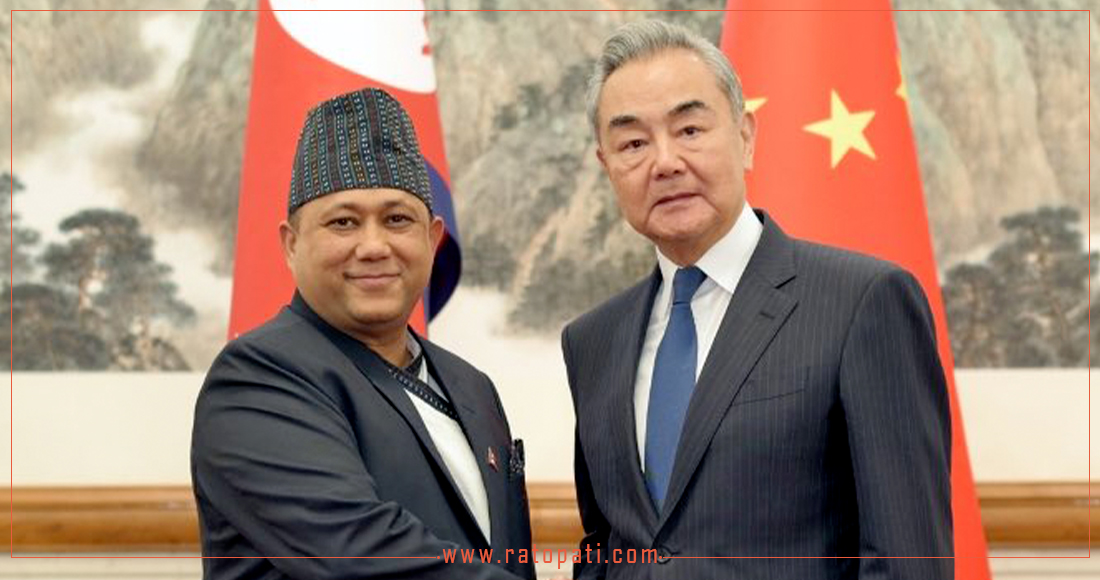
Nepal's evolving political landscape and the formation of a new government have added a historic dimension to revitalizing the strategic partnership between Kathmandu and Beijing, following Foreign Minister Shishir Khanal's visit to China. Undertaking a four-day official visit to northern neighbor China immediately after completing an official visit to southern neighbor India clearly signals that the new government prioritizes a balanced and pragmatic foreign policy.
This visit has become an opportunity to showcase Nepal's diplomatic maturity in the changing regional and global geopolitical environment, going beyond mere formality. Minister Khanal, who joined the government from the Rastriya Swatantra Party (RSP), has outlined a concrete roadmap to bring bilateral economic cooperation, border security, and strategic development partnerships to a practical level.
Dr. Kalyan Raj Sharma, an expert on Nepal-China affairs and an अर्थराजनीतिक विश्लेषक (economic-political analyst), interprets this visit as a significant and fruitful starting point after the formation of the new government. According to him, the organized schedule and sequential meetings during the visit to Beijing itself clarify that this visit has set the right direction and diplomatic priorities.
The interaction with non-resident Nepalis and investors at the Nepali Embassy in Beijing on the initial day of the visit has had a positive impact on diplomatic circles. Minister Khanal has assured Chinese and expatriate Nepali investors, who have long complained about the investment climate and lack of a stable government in Nepal, that a stable and committed government is now in place. Dr. Sharma believes that Nepalis living abroad are the most crucial bridge and reliable partners for bringing foreign investment into Nepal. Subsequently, academic meetings with renowned think tanks such as the Chinese Academy of Social Sciences have helped clarify the perspective and future course of action for the Nepali state.
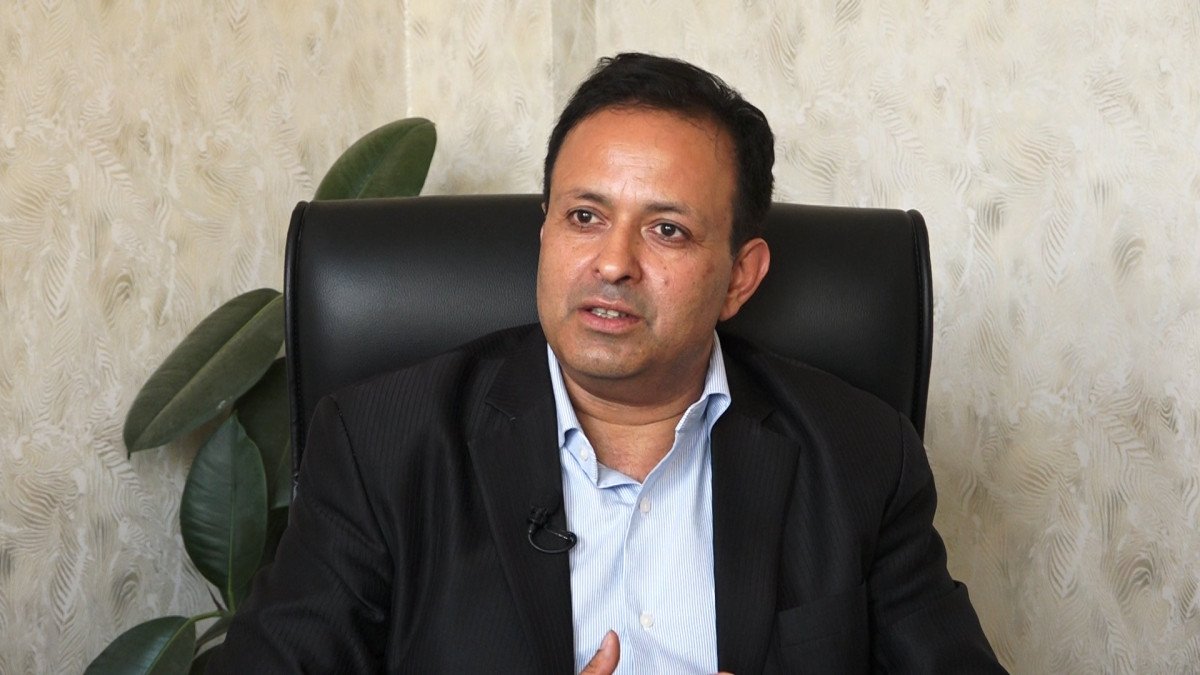
This diplomatic activity has extended beyond government-to-government relations to the political party level as well. Dialogue with senior leaders of the International Department of the Communist Party of China has added a new dimension to diplomatic and party-to-party relations. In this context, Dr. Sharma, analyzing the relationship between Nepal's changing internal politics and China's stable diplomatic legacy, states, 'While RSP, with only three-four years of history in Nepal, is running a government with a two-thirds majority, on the other hand, there is the Chinese Communist Party with a history of 105 years and a legacy of 75 years of rule; therefore, the diplomatic and political dialogue between these two ruling parties is highly symbolic in itself.' In this diplomatic perspective, the RSP appears to be trying to prove its diplomatic maturity by developing international-level relations with other established parties in the world through party-to-party cooperation.
Specifically, policy instability and political fluctuations seen in Nepal for a long time had created a stalemate in foreign relations. Overcoming that, the new government has initiated credible and mature relations with both neighboring countries. It is evident that the Chinese leadership has given high priority to this visit because the new government is firmly established in domestic politics with a strong majority.
Minister Khanal's visit, which began with dialogue with non-resident Nepalis and investors at the Nepali Embassy in Beijing, progressed through academic and political meetings to serious discussions with his Chinese counterpart Foreign Minister Wang Yi and senior Chinese leader Wang Huning, indicating that Nepal's external diplomacy is now moving forward systematically and strategically. The time given by Mr. Huning, who holds a very high position in the Chinese political system, to the Nepali delegation is being analyzed in diplomatic circles as an indicator of much greater respect and priority than Nepal had expected. This political maturity and diplomatic activity have laid the foundation for making the relationship between Nepal and China more credible and results-oriented.
The 'Gen Z' rebellion that brought about radical change in Kathmandu's political power and the subsequent strong government (with nearly a two-thirds majority in parliament) have established a new standard in diplomatic protocol. Analysts have begun to view this new protocol policy, initiated by the government led by Prime Minister Balendra Shah 'Balen', as a new diplomatic standard. The Indian Ministry of External Affairs Secretary Vikram Misri, who was about to land in Kathmandu, postponed his visit because New Delhi perceived this new protocol policy as an obstruction to its traditional open communication system.
On the other hand, Beijing appears to have taken this as a very positive and natural diplomatic practice. Because Chinese diplomacy has always believed in strict protocol, dignity, and systematicity compared to Indians, they have respected this type of change. Chinese diplomats in Nepal have always stated that they respect the promotion of Nepal's diplomatic dignity and sovereignty, and this has been evident in practice. This new practice related to diplomatic dignity is not just an administrative reform but also proof of the internal strength Nepal has demonstrated in its foreign policy.
- Beijing's Suspicions and Concerns
China's primary aspiration has always been for political stability in Nepal to ensure its security interests. However, recent strategic developments in Nepal seem to have made Beijing seriously suspicious. China's security sensitivity is particularly linked to Tibet affairs. China is still not fully convinced, having observed the continuous visits and interest of American diplomats in Nepal.
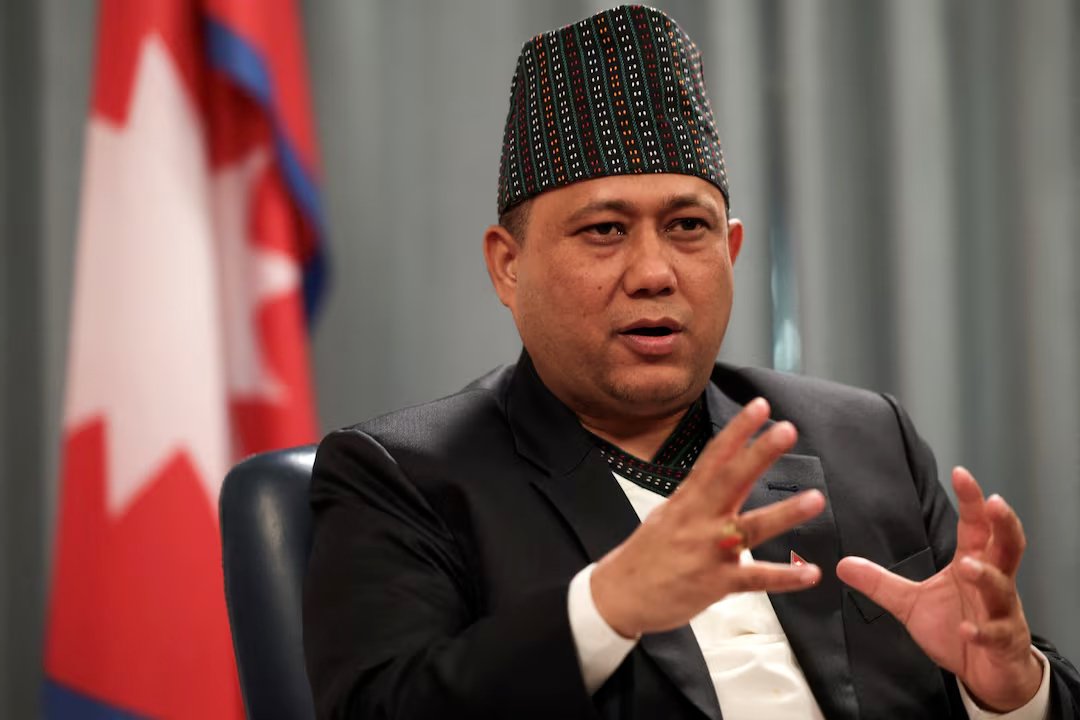
Amidst complex geopolitical fluctuations, Chinese Foreign Minister Wang Yi, quoting the old Nepali proverb 'a close neighbor is better than a distant relative' during his meeting with Foreign Minister Khanal in Beijing, clearly expresses China's security concerns and expectations from a bordering neighbor. China's concern is not that Nepalis will do something against China themselves, but that external forces might use Nepali territory as a base against China by taking advantage of Nepal's weak political and administrative situation.
Dr. Sharma, an expert on China affairs, believes that the political ideology of the government in Nepal is not a priority for Chinese foreign policy. Because China consistently works towards its priorities and interests, it always seeks stability. According to him, the Chinese leadership always seeks stability of government and policy continuity in Nepal. Clarifying this nature of Chinese diplomacy, Dr. Sharma says, 'The Chinese diplomacy understands well how essential political stability and a strong government are for national development; therefore, they have shown positive signs of cooperation with the new government.'
Dr. Sharma further refutes the common market narrative that China maintains close relations only with communist parties in Nepal, stating, 'China never holds political prejudice based on party affiliation in diplomatic relations; the government of Nepal is chosen by Nepalis, and China's policy is to advance diplomatic channels by cooperating with whoever is in power.' Historically, the Nepal-China border dispute was resolved permanently during the government led by BP Koirala of the Nepali Congress, and later, the BRI agreement was signed during a coalition government led by the Congress.
Therefore, China appears to focus more on systemic integrity and credibility in Nepal's internal diplomacy rather than ideology. Discussing the fundamental definition of Chinese democracy and state governance, Dr. Sharma clarifies that China practices socialism and democracy according to its national needs, where its core principle is to manage its own affairs without external interference and to respect the sovereignty of its neighbors.
- Challenges of Chinese Investment and Infrastructure
During Foreign Minister Khanal's visit, there was a serious discussion about the problems seen in old infrastructure development projects and Nepal's legal and administrative hurdles. The issue of the construction process of Pokhara International Airport and the case filed by the Commission for the Investigation of Abuse of Authority in the Special Court against the Chinese contractor company and its high officials on charges of corruption was raised by the Chinese leadership during formal talks. Dr. Sharma strongly disagrees with the tendency to always blame Chinese companies for delays in Chinese investment projects in Nepal and to create negative narratives in the media.
Pointing out the weaknesses in development and good governance within Nepal, Dr. Sharma says, 'We often try to evade responsibility for delays in infrastructure construction by blaming Chinese contractors, but we ignore our internal weaknesses and administrative sluggishness in land acquisition and diplomatic coordination.' While the rest of the world has reached new heights of development and prosperity in the last 40 years, Nepal has remained entangled in the struggle for political rights and consciousness. Now, Nepali society is completely hungry for development and economic prosperity, for which infrastructure development is the first prerequisite.
However, in large infrastructure projects like the expansion of Kathmandu's Ring Road or the Narayangadh-Butwal road section, even though Chinese technology and capital have arrived, the Nepal government's failure to acquire land in time, not providing clearance for forest areas, and taking months to move electric poles have led to extended construction periods. The project was delayed for years due to the relocation of a small temple on the Ring Road and the inability to clear the land. Dr. Sharma points out the risk that such internal administrative weaknesses will damage Nepal's international reputation and prevent the proper utilization of Chinese grants, suggesting that before bringing in Chinese investment, it is imperative to create an investment-friendly legal and administrative foundation; otherwise, a situation where foreign partners invest in Nepal but face reputational damage due to work stoppages caused by internal obstacles would be detrimental to both countries.
- BRI Implementation and Opportunities
Although Nepal signed the 'Belt and Road Initiative' (BRI) in 2017, the fact that no major projects have reached the implementation stage yet has become a subject of review for both countries. It must be acknowledged that Nepal has treated BRI merely as a political slogan and a topic for theoretical debate, without undertaking any practical implementation groundwork. Although a strategic partnership in bilateral relations was announced during Chinese President Xi Jinping's visit in 2019, BRI projects have remained largely stalled due to COVID-19 and Nepal's political transition.
Highlighting the weakness in the implementation of large projects like BRI, Dr. Sharma says, 'Instead of harboring the superficial illusion that miracles will happen overnight with the arrival of BRI, we should focus on practical projects and concrete financial modalities.' In this regard, Dr. Sharma explains the impact of China's industrial revolution and technology on Nepali life through a simple and striking example. According to him, in the past, when winter arrived, one had to buy a thick jacket and wear it continuously for 3-4 years, but due to the expansion of Chinese technology and the increase in production capacity, ordinary Nepalis can now easily afford to buy 4-5 jackets in a single season.
This accessibility of Chinese technology and products can make BRI a milestone in Nepal's industrial development. As China is currently emphasizing high-quality development under BRI, Nepal should prioritize strategic connectivity projects such as roads, railways, and border upgrades. The construction of the Kerung-Kathmandu railway and the establishment of cross-border transmission lines will help Nepal achieve its national goal of becoming a land-linked country from a landlocked one.
'Even today, Tibet's main priority is the Chinese culture that gives more importance to Nepali dal bhat and considers products made in Nepal as organic,' argues Dr. Sharma. The recently signed exports of buffalo meat and silage show that the Chinese are ready to invest themselves and provide a prepared market within their own country. Sharma stated that Nepal only needs to focus on safe production and does not need to worry about where to sell the produced goods. He added, 'The Nepali government must immediately utilize this golden opportunity practically.'
- Strategic Vigilance in Multilateral Diplomacy
In the current global environment, as the conflicts between major powers escalate, it is imperative for a small and strategically sensitive country like Nepal to take balanced steps in multilateral forums. Nepal has supported the Global Development Initiative (GDI) and the Global Civilization Initiative (GCI) put forth by China. As these initiatives are primarily based on development and cultural cooperation, developing nations like Nepal can benefit maximally from them.
However, Nepal has maintained a diplomatically cautious distance from China's security-related Global Security Initiative (GSI) and Global Governance Initiative (GGI). The new government appears to have well-considered the geopolitical pressure and internal turmoil the country faced in the past when some governments expressed commitment to participate in GSI.
During the Beijing talks, Foreign Minister Khanal clearly stated that adhering to a non-aligned foreign policy is Nepal's priority, without making any comments on the GSI. Minister Khanal has clearly articulated Nepal's established stance of not joining any external military or security alliances. Nepal should cooperate in global affairs only on issues of development and human welfare, keeping its national security and interests at the center. Considering the reality that joining the military or security strategies of external powers could compromise the country's sovereign independence, Dr. Sharma analyzes that the Foreign Minister is clear on the need for Nepal to always maintain its neutrality and image as a peace-loving nation.
- 'Pro-Nepali' National Policy
Nepal must bring clarity to its foreign policy to overcome the strategic pressure it faces while situated between two giant economies like India and China. The current government must adopt a balanced and nationally interest-focused policy, abandoning the immature style of some past leaders who leaned towards one neighbor or antagonized the other. Nepal's diplomatic interests should be solely focused on protecting its own interests, without being influenced by any external power.
Dr. Sharma clarifies Nepal's strategic direction and diplomatic dignity, stating, 'We will not act at the behest of any neighbor or external power, but rather must move forward by focusing purely on Nepali interests and economic self-reliance.' If Nepal does not become economically strong and self-reliant, foreign intervention will automatically increase in the name of foreign aid. Economic freedom is the main shield of national sovereignty. Highlighting this strategic opportunity, Dr. Sharma emphasizes that the two giant economies to the north and south are not challenges but excellent doors to economic prosperity for us. According to him, if Nepal can achieve the right diplomatic balance, the country will move towards prosperity with the strength of neighboring markets and technology.
Foreign Minister Khanal's four-day visit to China this time has yielded successful diplomatic and strategic results. The Chinese leadership has wholeheartedly supported Nepal's sovereign independence, internal good governance, and the new government's development priorities. Nepal must now bring this cordiality, readiness for cooperation, and diplomatic openness shown by China into the mainstream through diplomacy that suits its national interests. Instead of limiting the far-reaching agreements and commitments made during the visit to paper only, Kathmandu must now demonstrate strong will and homework to translate them into practical and results-oriented outcomes.
News Agency Nepal
This specific news has been automatically translated by AI. As a result, there may be some inaccuracies or language errors.
_iL3K2wYemS.jpg)