Public Land Encroachment Report Details Widespread Illegal Occupation
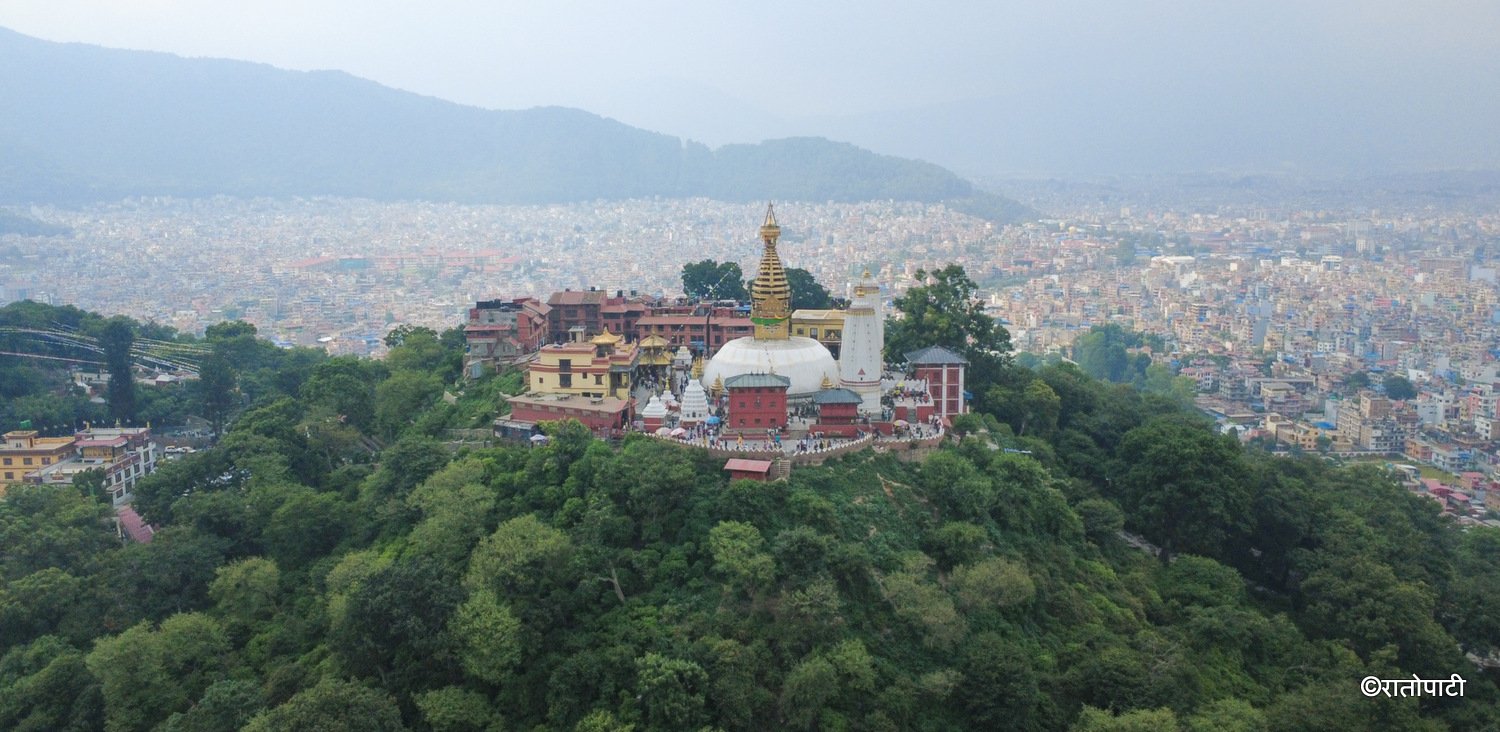
Kathmandu. Public land from Swayambhu in Kathmandu to Devsthal in Dallu has been encroached upon by individuals. The high-level investigation commission formed by the then government in 2049 BS under the convenership of former secretary Rambahadur Rawal to protect government and public land had submitted a report with details of 1,859 ropanis, 14 annas, 2 dams, and 3 paisa of land being encroached upon within Kathmandu Metropolitan City.
In the report submitted by the Rawal Commission to the then government, it was found that individuals had encroached upon public land for their private use and also encroached upon their own land in various places in the Swayambhu area and Dallu of Kathmandu. The report mentions that Kanchhi, Vaikaji, and Siddhiman Maharjan built three concrete houses on 5 annas, 1 paisa, and 1 dam of land in plot number 1 of Devsthan Chaur in Dallu, and also built a shed on another 3 annas of land and rented it out.
According to that report, Dorje Lama and Chundari Lama have built concrete houses on 1 ropani and 8 annas of public land. It is seen that on plot number 726, 252 ropanis and 4 annas of land, some have built sheds, some houses, some compounds, some vegetable gardens, and some water tanks, encroaching upon it. The report states that two concrete houses are being occupied and used on 11 ropanis and 7 annas of land in plot number 28 of Swayambhu. Similarly, the report points out that a school is located on 1 ropani and 13 annas of vacant land in plot number 96, and various individuals have encroached upon this land, with Thule Lama and Rambahadur building houses and encroaching.
Similarly, it is mentioned in the report that some Muslims have encroached upon 3 ropanis and 12 annas of public land connected to the main road in plot number 629 by encroaching into their plot numbers 630 and 342, and into an 11 ropani and 3 anna graveyard.
Similarly, the investigation commission concluded that some individuals were using public land as private property, claiming it was for religious use. The report states that 1 ropani and 10 annas of land out of 2 ropanis and 8 annas in plot number 445 of Ward No. 4 has been used privately by individuals by building a Gumba. It was also found during the investigation that land was encroached upon in one place by showing a plot number in another location.
The then government received the report in 2052 BS, and the Council of Ministers meeting held on Poush 6 of the same year formed a committee under the chairmanship of the Chief District Officer of Kathmandu to reclaim government and public land according to the report. However, the committee could not function.
It has been found that two concrete houses have been constructed on 11 ropanis and 7 annas of land in Swayambhu 4. In the Swayambhu area, 539 individuals were found to have encroached upon 48 ropanis, 1 anna, and 1 paisa of land into their own land, while 80 individuals were found to have encroached upon government and public land, the report indicates. The encroached public land appears to be in 28 plots alone, totaling 51 ropanis and 15 annas.
The commission, formed by the government on Poush 16, 2049 BS, took three years to collect data on the encroached land. Although the commission submitted its report with suggestions for land reclamation in 2052 BS, it could not be implemented. The government led by Balendra (Balen) Shah, formed after the Janji movement on Bhadra 23 and 24, 2082 BS, and the subsequent House of Representatives election, has decided to implement the commission's report.
The then government received the report in 2052 BS, and the Council of Ministers meeting held on Poush 6 of the same year formed a committee under the chairmanship of the Chief District Officer of Kathmandu to reclaim government and public land according to the report. However, the committee could not function.
After that, the government also formed a committee under the chairmanship of the Deputy Director of the Land Revenue Department. This also could not function. Subsequently, a third committee was formed on Baisakh 6, 2056 BS, under the leadership of the Director General of the Land Revenue Department. This committee also did not work to return the encroached government and public land.
As the process of forming committees and not working continued, senior advocate Prakashmani Sharma and others filed a writ in the Supreme Court in 2060 BS against the Prime Minister and the Council of Ministers' Office. In Sharma's writ, the Supreme Court ordered on Jestha 12, 2067 BS, to implement the report prepared by the Rawal Commission.
Although the court ordered the implementation of the verdict, it could not be implemented for a long time. Even though the Supreme Court's Verdict Implementation Directorate asked the government to provide information on the status of the implementation of the report led by Rambahadur Rawal, the government had been ignoring it.
The joint bench of then Supreme Court Justices Tap Bahadur Magar and Mohan Prakash Sitoula had stated, '...Regarding the implementation of the Rawal Commission report, 2052 BS, after the order of this court dated 2066.2.17, the process of implementing the report has moved forward, an expert committee has been formed, and the expert committee has presented its opinions and suggestions along with the necessary mechanisms for the implementation of the report.'
The court, issuing an order in the name of the government, stated, 'Therefore, it is deemed necessary that the Rawal Commission report be implemented according to the said report of the expert committee, and that encroachment of government and public land in other parts of the country be investigated and action be taken according to the law, and thus a directive order is issued in the name of the respondents to implement the said task with high priority and quickly.'
Although the court ordered the implementation of the verdict, it could not be implemented for a long time. Even though the Supreme Court's Verdict Implementation Directorate asked the government to provide information on the status of the implementation of the report led by Rambahadur Rawal, the government had been ignoring it. Despite repeated letters from the Verdict Implementation Directorate, the situation remained that implementation did not happen. Currently, the government led by Balendra Shah has shown interest in implementing the Rawal Commission report.
This specific news has been automatically translated by AI. As a result, there may be some inaccuracies or language errors.
_8xHho19k4P.jpg)