Nepal-India Border Dispute: Susta and Darcula Highlight State Capacity


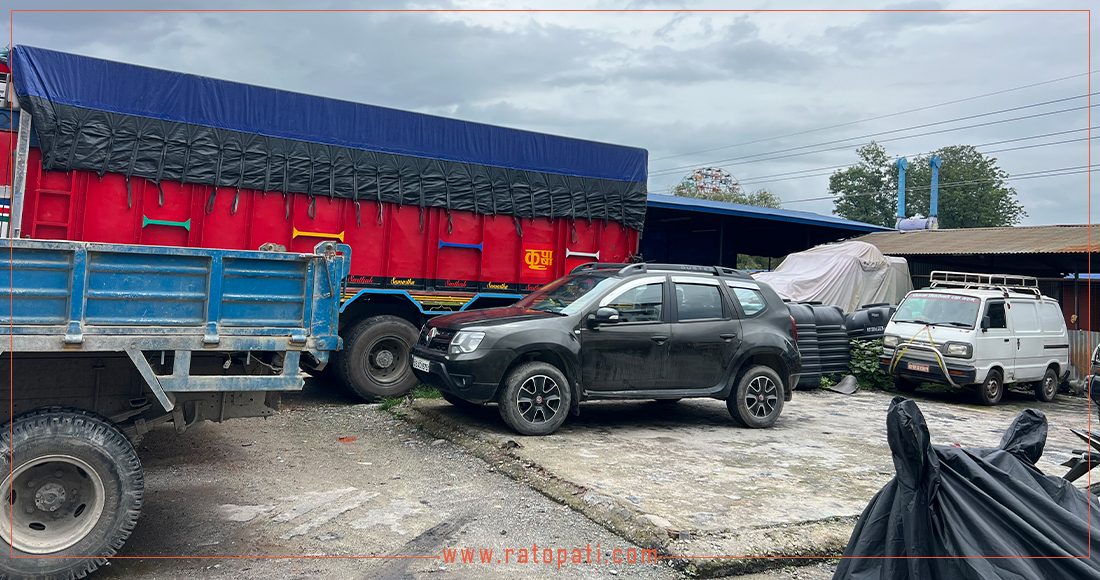
Allegations of Indian Border Security Force (SSB) members entering Nepali territory in the Susta region of West Nawalparasi and the subsequent protests by locals have once again brought the issue of the Nepal-India border to the center of national debate.
The tension in Susta has highlighted a deep reality once again - the Nepal-India border issue is not just a matter of border pillars, maps, or geography; it is also a question of sovereignty, diplomatic trust, economic dependence, and the actual capacity of the state.
When the border issue arises in Nepal, the attention of most citizens turns towards Kalapani, Lipulekh, and Limpiyadhura. But Susta is equally important and complex. In fact, to understand Nepal's border challenges, it is necessary to view Susta and Darchula within the same analytical framework. Although geographically different, both regions highlight Nepal's structural weaknesses in border management, diplomatic challenges, and state governance issues.
The Nepal-India border is one of the world's open borders. Along the more than 1,800 km long border, daily movement of millions of people, trade activities, family relationships, and labor mobility are connected. The open border has made the relationship between the two countries special. But this openness also complicates border management. When border pillars disappear, river courses change, disputes arise over the use of no-man's-land, or questions are raised about the activities of security agencies, the border issue is not limited to administrative matters.
To understand the Susta dispute, one must look back at history. The Sugauli Treaty of 1816 laid the foundation for the modern Nepal-India border. This treaty, signed after the Anglo-Nepal War, not only changed Nepal's geography but also laid the groundwork for future border disputes. Complications have increased over time, especially in areas where rivers were used as border markers.
Rivers are not static. Their courses change. Their flow shifts. Their banks move. But state claims, administrative authority, and historical maps remain static. This difference makes river boundary disputes complex.
In the context of Susta, the change in the course of the Narayani River has become a decisive factor. The local community and various studies have been raising questions about border ambiguity, land use, and administrative control for years. The dispute is not just about land ownership; it is also related to effective control, administrative access, and the security of local citizens.
In international law, border issues are not viewed solely based on maps. Historical documents, treaties, administrative practices, effective control, geography, and state behavior are all evaluated jointly. This is why international border disputes often remain unresolved for decades. Both Susta and Kalapani are examples of this complexity.
Nepal's constitutional system and foreign policy consider sovereignty, territorial integrity, independence, and border security as the fundamental basis of national interest. The UN Charter also recognizes the respect for the sovereign equality and territorial integrity of member states as the basis of international order. Therefore, any border dispute cannot be viewed merely as a local incident or an administrative error.
However, the border issue must be analyzed by understanding the difference between emotional nationalism and international law. Not every border incident is an invasion. Not every dispute is a national crisis. But every incident certainly tests the state's sovereignty and diplomatic capacity. Mature states collect facts in such incidents, deploy technical mechanisms, advance diplomatic dialogue, and seek long-term solutions.
In this context, the principle of state responsibility is important. According to international law, the behavior of state security agencies, administrative officials, or institutions exercising public authority is ultimately evaluated as the behavior of the state itself. Therefore, it is natural for activities seen at the border to have diplomatic implications beyond the local level.
But Susta is not just a legal question. It is also a question of political economy.
The relationship between Nepal and India can be described in the language of international relations as 'asymmetrical interdependence'. Both countries are connected to each other, but the level of dependence is not equal. For Nepal, India is a major trading partner, transit route, energy partner, and source of supply. For India, Nepal is important strategically, culturally, and from a security perspective. However, economically, India's dependence is much lower compared to Nepal.
This asymmetrical structure makes border disputes more sensitive. The impact of border tensions is not limited to diplomatic relations. It can also affect trade, transit, investment, supply chains, and border economies. Therefore, limiting the border issue to slogans of national pride is not enough. Its economic and strategic dimensions are equally important.
The debate over Darchula and Kalapani further clarifies this reality. After India inaugurated the road connecting to Lipulekh in 2020, Nepal issued a new map and gave it constitutional recognition through its parliament. Since then, Kalapani, Lipulekh, and Limpiyadhura have become permanent subjects of Nepal's national political debate. In Darchula, the border issue is not just a geopolitical matter; it is a matter connected to local identity, development, state presence, and national pride.
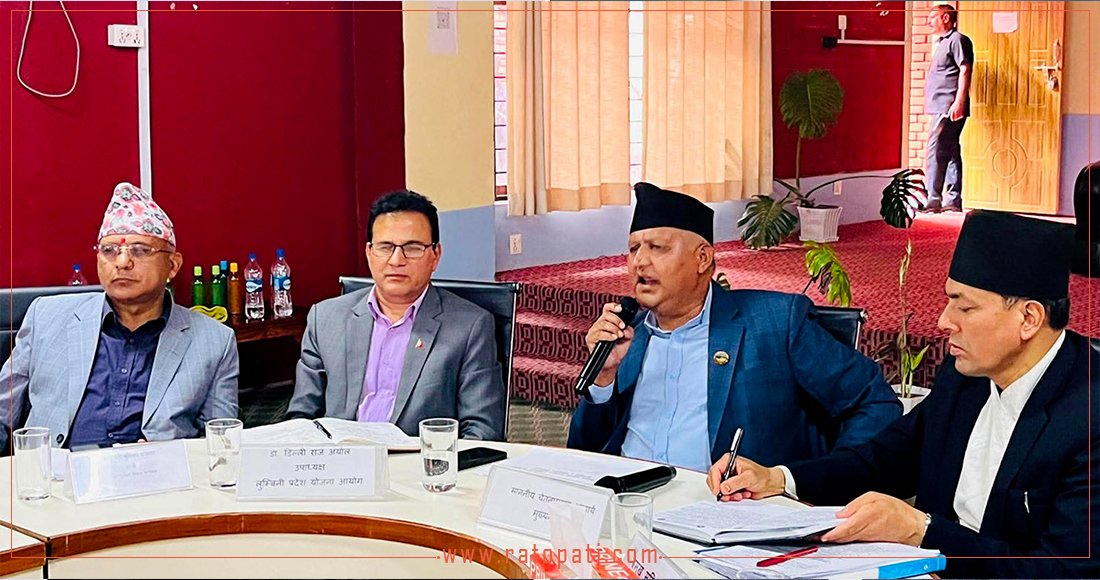
Against this backdrop, Prime Minister Balendra Shah's recent statement seems to have given the debate a new turn. He appears to have tried to move the border debate from a one-sided narrative of encroachment to the complex issues of land use and border management. Although his statements became a subject of political controversy, they raised an important question - should border disputes be viewed solely on the basis of emotional slogans, or on the basis of facts, law, and administrative reality?
In reality, Nepal's challenge is not to create disputes with India. Nepal's challenge is to strengthen its claims with facts, history, maps, legal basis, and diplomatic capacity. This is why border working groups, technical committees, joint surveys, and diplomatic dialogue are important. Border solutions emerge not from social media debates, but from institutional mechanisms.
Today, Nepal faces three parallel challenges regarding border issues. First, maintaining a balance between historical claims and modern administrative realities. Second, balancing national pride and diplomatic pragmatism. Third, securing the benefits of an open border while making border governance effective.
Susta and Darchula are ultimately asking us the same question - not just how secure Nepal's border is, but how strong Nepal's state capacity is? Sovereignty is not just a word written in the constitution. It is determined by how clearly the state can maintain records of its territory, how effectively it can maintain its presence at the border, how systematically it can respond in case of disputes, and how credibly it can present its claims in international forums.
The Nepal-India border dispute must be understood not just from current events, but from the long history of treaties and institutional arrangements. The Sugauli Treaty of 1816 laid the initial framework for Nepal's modern border politics, but since then, disputes have resurfaced from time to time due to reasons such as changes in river courses, differing interpretations of topographical maps, decay of border pillars, and weak local administration.
Such disputes in international law are generally of four types: Treaty Interpretation Disputes, River Boundary Disputes, Effective Control Disputes, and Administrative Access Disputes. Susta and Darchula are mixed forms of all these. Therefore, solutions should be sought not just from political statements, but from historical treaties, old maps, and joint field verification.
However, technical mechanisms are effective only when they can simultaneously address local grievances, border security needs, and changes in riverine geography.
From the Sugauli Treaty of 1816 to the Susta incident of 2026 BS, one thing is clear - the border issue is a highly sensitive and serious matter. It is also a joint test of the state's institutional capacity, diplomatic maturity, economic realities, and national confidence.
This specific news has been automatically translated by AI. As a result, there may be some inaccuracies or language errors.



-(2)_QJLjKxR87n.jpg)