SSP Suresh Prasad Kafle Warns of Unmanageable Traffic Chaos in Kathmandu Valley Within Two Years

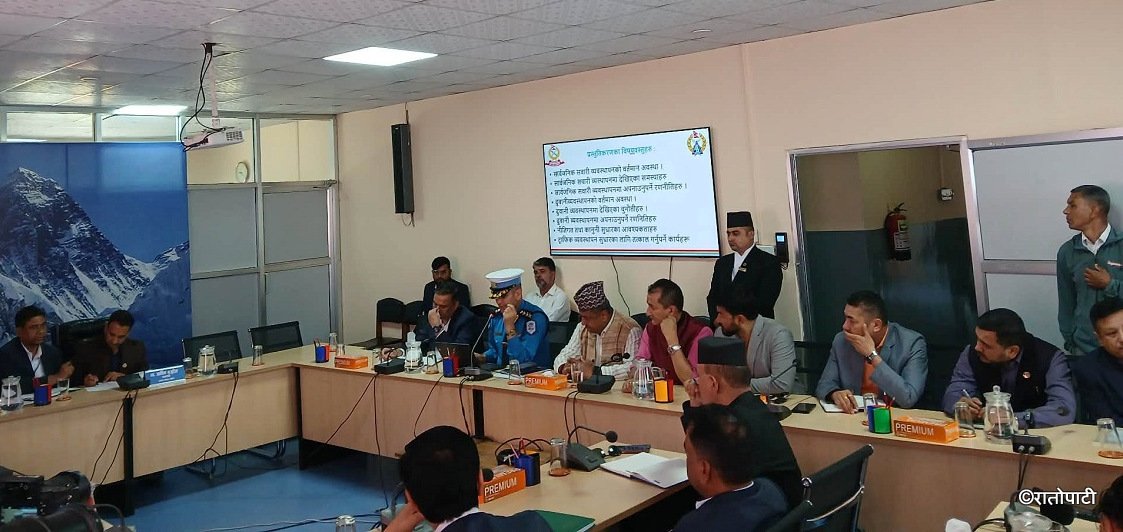
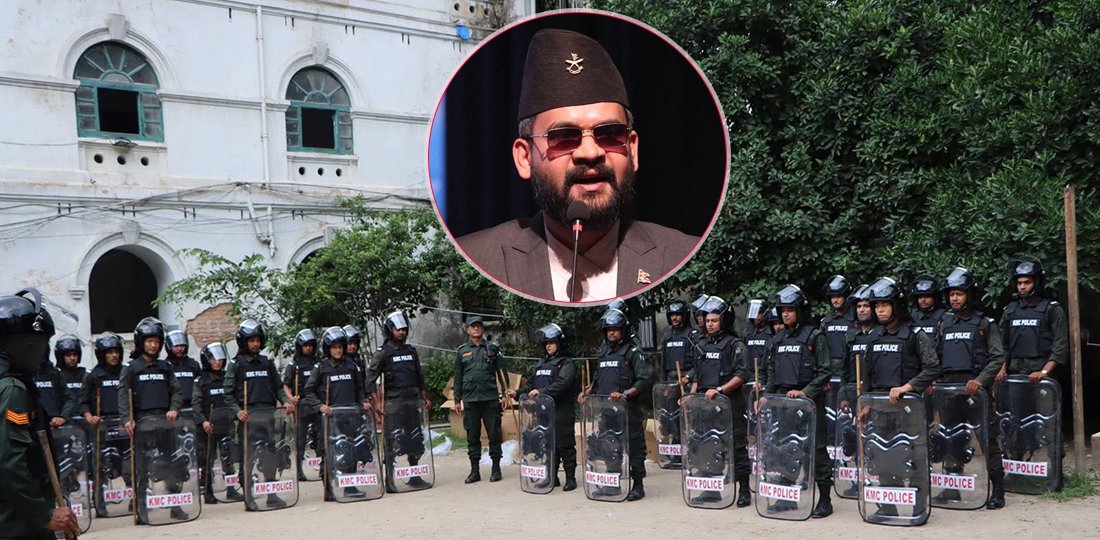
Kathmandu. Senior Superintendent of Police (SSP) Suresh Prasad Kafle of the Valley Traffic Police Office has warned that if the existing traffic system in the Kathmandu Valley is not improved immediately, a dire situation will arise within the next two years where it will be impossible to even walk on the roads.
Presenting on 'Public Transport and Freight Management' at a meeting of the Infrastructure Development Committee of the Federal Parliament, SSP Kafle stated that the problem is becoming complicated due to the non-tech-friendly traffic management system in the valley.
According to SSP Kafle, out of approximately 6.5 million registered vehicles in Nepal, an average of 2 million vehicles ply in the Kathmandu Valley daily. He mentioned that despite such a large number of vehicles, only about 2500 to 2600 traffic police personnel are deployed across the country to manage them.
He also stated that an average of 2,000 to 3,500 Indian vehicles enter Nepal every day, and due to the lack of proper monitoring of their load capacity, the roads are deteriorating quickly.
To discourage traffic rule violations, SSP Kafle proposed a significant increase in fines. He said, 'The current fines of 500 and 1000 rupees are too low; they don't deter anyone.' He added, 'There is a need for legal provisions to impose fines ranging from 5,000 to 50,000 rupees for rule violators.'
He suggested replacing the current manual (hand signal) traffic management on Kathmandu's roads with an AI-generated integrated traffic light system. The estimated investment for this would be around 15 to 20 billion rupees.
'The current traffic lights are not synchronized with each other, which makes traffic jam management difficult,' Kafle said. 'If we don't invest in technology, ambulances will not be able to reach hospitals on time after some time.'
He stated that dashboard cameras should be made mandatory in public and private vehicles to collect actual evidence of accidents and resolve disputes. Additionally, digital integrated checkpoints should be established at border crossings, and weighbridges ('dharmakanta') should be arranged by the government. He also mentioned that a 'scrap policy' should be immediately implemented to remove old and expired vehicles from the roads.
He also said that traffic rules should be included in the school curriculum and the use of drones and robots for traffic monitoring should be increased.
SSP Kafle argued that the practice of not considering road capacity and structure when issuing route permits also increases traffic congestion. He urged the government and concerned bodies to increase investment in infrastructure development and technology, rather than relying solely on the traffic police.
This specific news has been automatically translated by AI. As a result, there may be some inaccuracies or language errors.