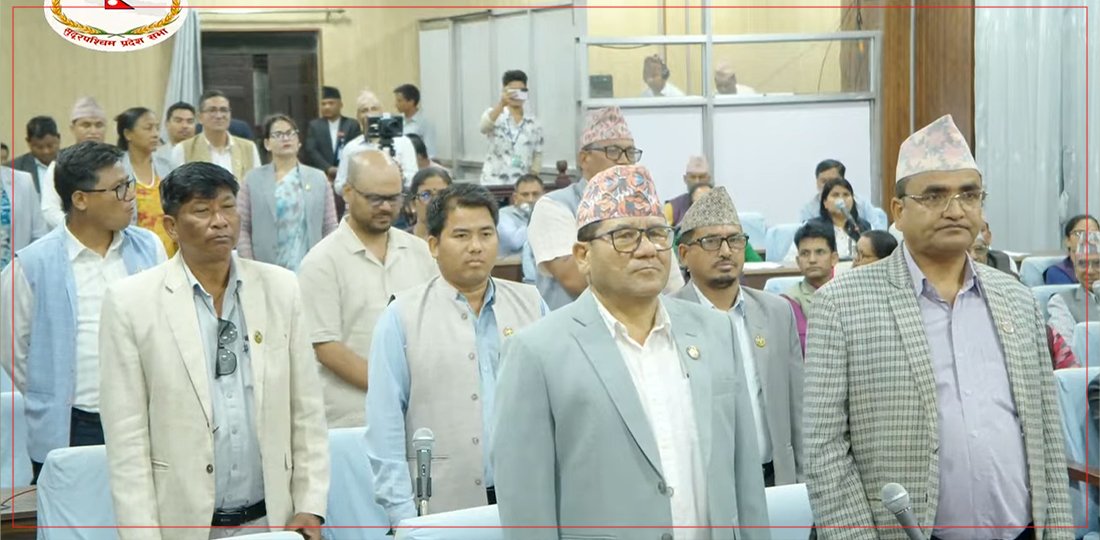
Karnali Government Admits Failure to Meet Development Goals
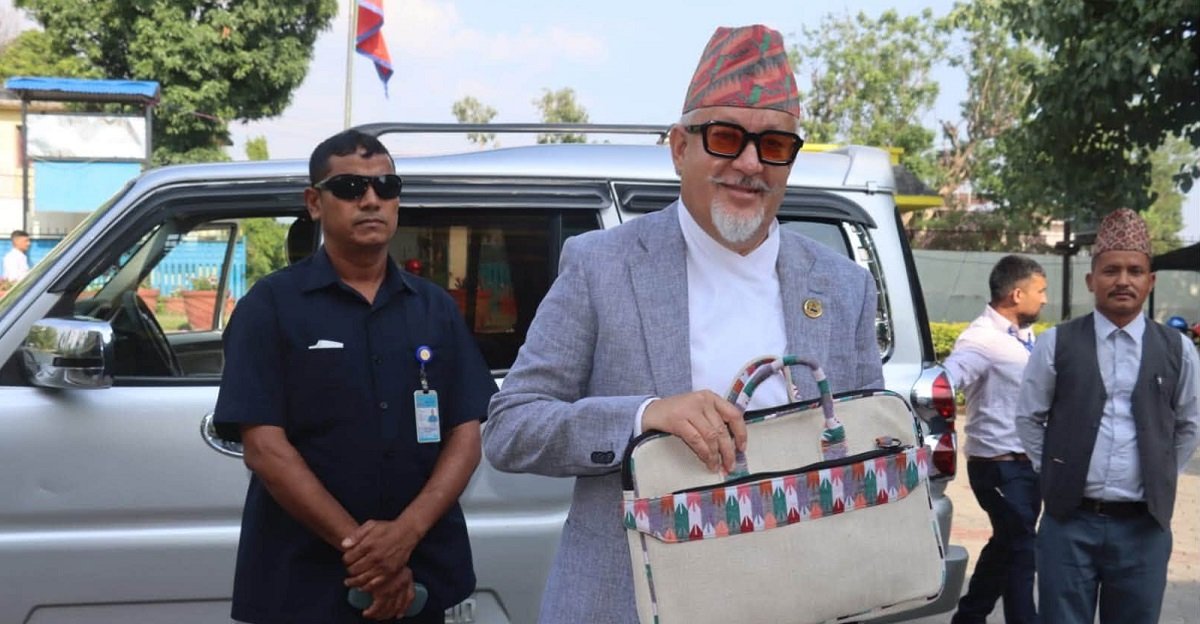
Surkhet. The Karnali Provincial Government has formally admitted that it has not been able to achieve the expected development goals. Finance Minister Rajiv Bikram Shah mentioned the province's challenges in his budget statement for the upcoming fiscal year on Monday.
It is mentioned that due to reasons such as geographical remoteness, lack of skilled manpower, shortage of construction materials, and high development costs, the expected development goals have not been achieved as the ongoing and new projects could not be completed on time according to the work schedule.
According to him, the provincial government lacks adequate resources and technical manpower. "It is felt that disaster response, rehabilitation, and reconstruction of disaster-damaged structures have not been carried out quickly and effectively due to the need to work in coordination with the federal and local levels," said Finance Minister Shah.
Karnali is completely dependent on federal grants. Shah also stated that it is difficult to increase internal revenue because the provincial government has not been able to expand its tax base. Due to this, the dependence on resources received from the federal government has not been reduced.
He said that the provincial government faces the challenge of significantly improving the control of unproductive expenditure, making grants production-based, and increasing the share of internal revenue in the province's total income, as it is necessary to make the financial system result-oriented and make resource management effective.
The government has been adopting reforms in budget implementation and new policies in project selection. However, fragmented projects have not yet been controlled.
Finance Minister Shah also admitted this weakness in the budget.
"Extensive collective efforts have been made towards efficiency in budget allocation, effectiveness in implementation, and maintaining financial discipline," he said, "but still, the tendency to demand budget for small and fragmented projects rather than large infrastructure development of long-term importance has not been completely stopped."
Weak Economic Growth Rate
The budget presented by Finance Minister Shah shows that Karnali's economic growth rate is weak.
While the provincial government's economic growth rate was 5.25 percent last year, it is projected to be 2.94 percent in the current fiscal year.
Similarly, while Karnali Province's Gross Domestic Product was 1 kharba 51 arba 41 crore in the fiscal year 2075/76, it is estimated to reach 2 kharba 77 arba 25 crore in the current fiscal year.
"While the per capita Gross Domestic Product was 1,121 US dollars in the last fiscal year, it is estimated to be 1,108 US dollars in the current fiscal year," says Finance Minister Shah.
Similarly, the budget mentions that while Nepal's average consumer inflation was 4.47 percent in the first ten months of the fiscal year 2082/83, Karnali Province's average consumer inflation was 3.42 percent during the same period.
Karnali has presented a total budget of 2 kharba 64 arba 34 crore since the province was established. Only 58.92 percent of the budget allocation has been spent.
As of the end of Jestha in the current fiscal year, 50.63 percent of the current expenditure and 27.46 percent of the capital expenditure have been spent, with an overall expenditure of 36.25 percent. It is estimated that 20 arba 96 crore 20 lakh 10 thousand will be spent by the end of Asar. A large amount of the remaining will be saved, and the size of the upcoming budget has been increased based on that savings amount.
However, the government has not been able to increase its internal revenue.
What to do now?
Finance Minister Shah has made some commitments to expand and revitalize the province's economy by facing the challenges.
Shah said that the government has adopted a policy of setting a maximum period of three years for source agreement for multi-year projects.
"The provision to cancel the source agreement for projects for which the procurement process has not started by the end of Jestha of the current fiscal year and which are not proposed in the budget allocation for the next year will be strictly enforced," he said.
Similarly, small-scale projects will be gradually discouraged.
Shah says that the policy will be to identify and implement large-scale projects that have high returns and can contribute to the province's internal revenue.
The government's plan is to create employment opportunities by conducting skill development and targeted programs for the development of agriculture, forest, industry, and service sectors by refining the province's specific potential, and to promote youth entrepreneurship in the province by preventing brain drain through sustainable infrastructure development, production, and quality human capital formation, and utilization of demographic benefits for a self-reliant economy.
Revenue is currently increasing. "Efforts will be given high priority to policy, structural, and coordinated efforts to further increase this in the upcoming fiscal year, and revenue potential will be explored," says Shah.
This specific news has been automatically translated by AI. As a result, there may be some inaccuracies or language errors.
_D4v4Yqko03.jpg)

_hXuKAenRlA.jpg)