Experts Urge Government to Establish Legal Framework for DNA Testing and Database

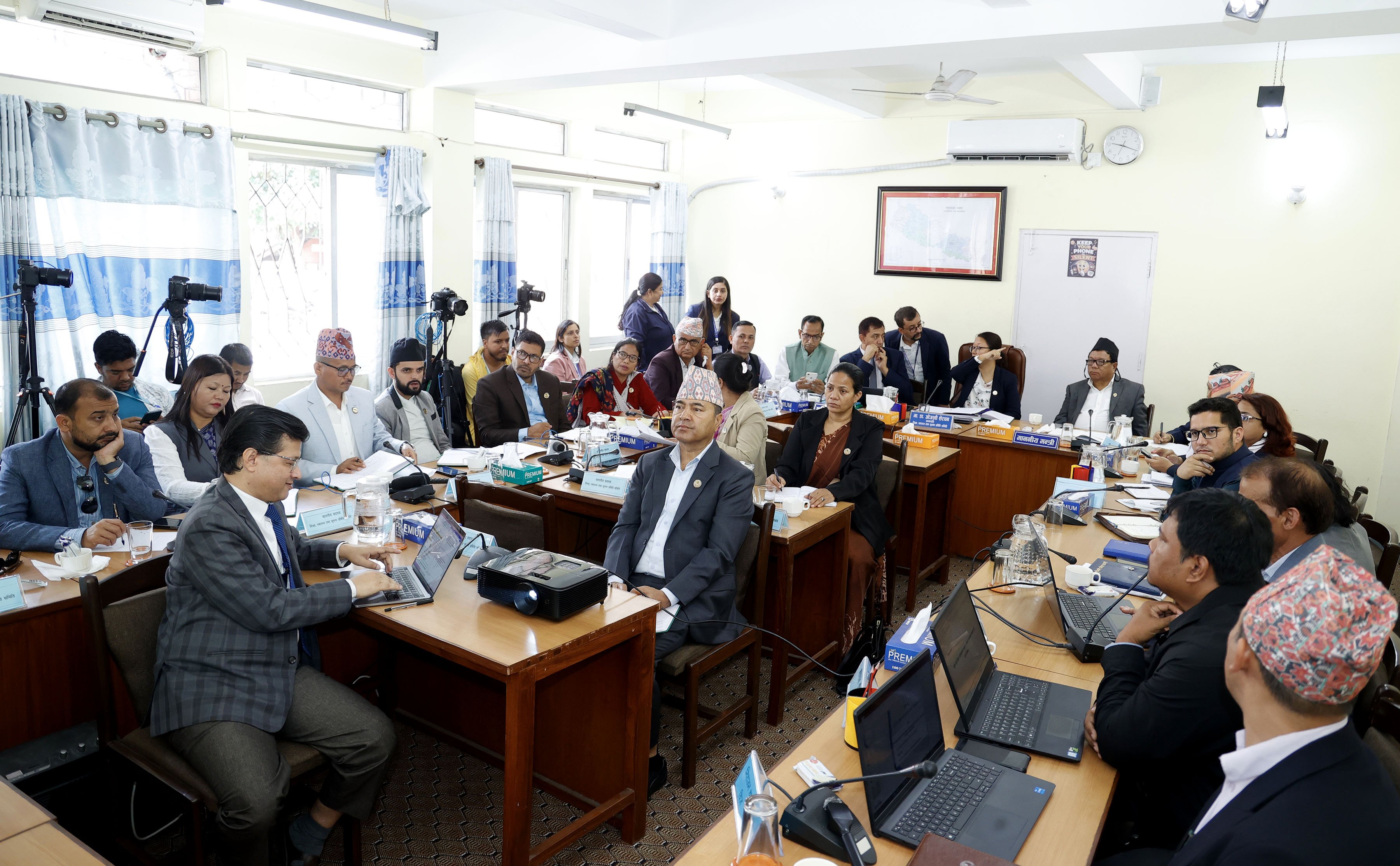
Kathmandu. Experts have advised the government to immediately make the necessary legal arrangements for DNA testing. Experts Om Prakash Sharma, Gopal Chaudhary, and Nirajan Thapa have drawn the government's attention to the need to immediately enact separate legal provisions for DNA testing in Nepal, as there is no such specific law. Speaking at a discussion on the 'National Forensic Science Laboratory (Establishment and Operation) Bill, 2081' in the meeting of the Education, Health and Information Technology Committee of the Federal Parliament on Monday, expert Sharma urged the government to bring an act related to DNA immediately. He clarified that the government should not delay in enacting laws to create a database for DNA testing. Sharma said, 'In some countries, new laws have also been made to ensure individual freedom after disputes arose later. For example, this happened in Qatar. Therefore, forensic DNA databases have been created in the UK, USA, and Canada. India enacted the DNA Act in 2020. The intention was to create a DNA database under that, but it has not been successful there yet. The UK created it as early as 1995. Creating a DNA database like this requires many legal provisions. A DNA Act is needed, which we do not have. The court has also ordered to create it. What we have made now is only for the operation of the forensic science laboratory. It would be very good if a DNA Act is brought and a database is created. My suggestion is that the DNA database should be considered in the operation of this laboratory.' Sharma stated that the integrity of the sample, collection, and transportation are extremely important in forensic reports. 'If we do not do these tasks correctly, what is the point of testing after bringing it to the laboratory? For example, the police catch a rhino horn and bring it to the laboratory, but it turns out to be fake upon testing. This problem occurs due to not maintaining the 'chain of command'. Therefore, we need to include a provision somewhere in this bill to secure these samples,' he added. Another expert, Gopal Chaudhary, clarified that due to the lack of necessary equipment for testing in Nepal, DNA test samples are piling up. He said that the police are unable to maintain the reliability of DNA testing due to the lack of equipment. He stated that while DNA testing needs to be done quickly, the lack of equipment makes it difficult to get accurate results. He said, 'Samples that require forensic testing are piling up. There are so many samples that the police's forensic science and the current forensic lab cannot test them. This is because the machines available to the police are insufficient. There are also fewer testing equipment in forensic science. All evidence related to the incident goes to the police, and the police lab tests it. However, if someone dies due to poisoning, the police lab cannot determine the amount in the body. This is due to a lack of technology. In such a situation, we send it to forensic science itself. For positive results, testing must be done as soon as possible. If a blood test needs to be done, it must be done within 72 hours. Only then can the results be accurate. Now, the samples are piled up. Therefore, if such a lab is established at the provincial level, the test reports will be accurate.' Experts have also alerted the government to immediately establish a DNA data bank. Expert Nirajan Thapa suggested that the bank is necessary to facilitate the identification of missing persons, unidentified bodies, and bodies from accidents, and therefore advised the government to make legal arrangements for it. He said that legal provisions are also necessary to maintain personal privacy during DNA testing and to prevent unauthorized access. Thapa said, 'The main thing is that the issue of maintaining personal privacy and preventing unauthorized access must be included in the act. If there is a DNA data bank, it will be much easier to identify missing and unidentified bodies, and to reunite those involved in accidents and family separations. For example, there is currently a commission for the investigation of enforced disappearances. If that commission could have collected and stored data related to families, it would have been easier to identify them immediately. Therefore, such arrangements should be made. Otherwise, this testing work can take years.' In the discussion with the parliamentarians, the experts also pointed out the need for the government to arrange the necessary equipment to prevent evidence from being destroyed during DNA testing.
This specific news has been automatically translated by AI. As a result, there may be some inaccuracies or language errors.
_fwfFaTGV0L.jpg)

_jzYzccnKV6.jpg)