Nepal Launches "Clean Air and Prosperity Project" with World Bank Support

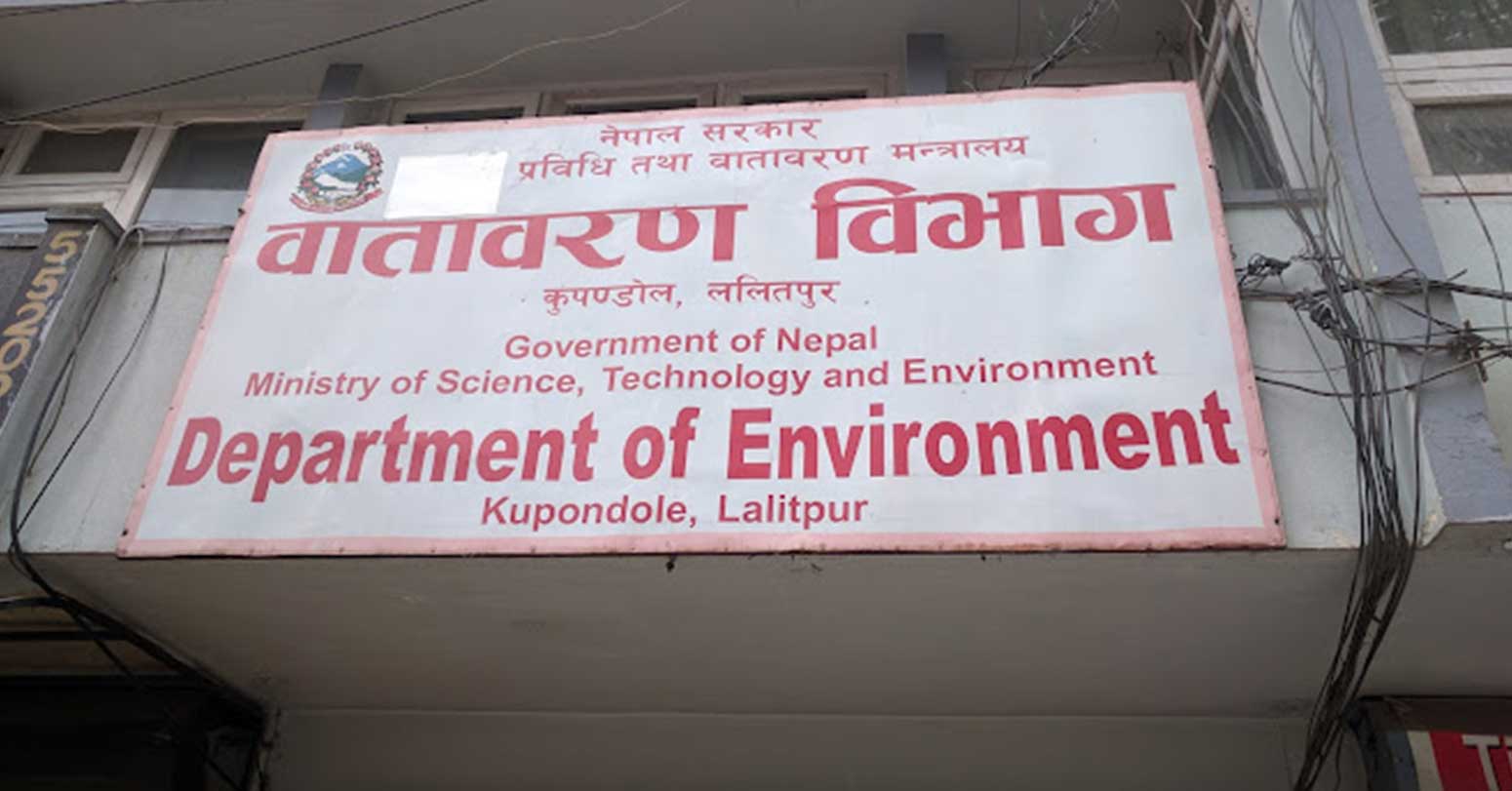
Kathmandu. The government has put forward a plan to remove polluted air and establish a clean environment. The 'Nepal Clean Air and Prosperity Project (NCAP)' is being prepared for implementation from the upcoming fiscal year 2083/084. The project, worth approximately NPR 8.71 billion (USD 57 million), aims to control air pollution, promote green transformation in industrial sectors, and foster clean air in Nepal. The project's implementation path has opened up following the approval of a USD 52 million concessional loan and a USD 5 million grant from the World Bank. Gyanaraj Subedi, Director General of the Department of Environment, expressed confidence that the 'Nepal Clean Air and Prosperity Project (NCAP)' will bring a qualitative change to the country's air quality management system. According to him, the project is expected to significantly reduce industrial pollution by assisting the industrial sector in transforming to clean energy. "We are trying to make the monitoring system more effective. Pollution levels will decrease as industries transform to clean energy, and we are confident that positive results will be visible within the next five years," he said. Subedi stated that multilateral and cross-border coordination will be necessary to control transboundary air pollution, especially pollution entering from neighboring countries. He mentioned that the project will focus on controlling pollution sources within Nepal, reducing industrial emissions, effectively monitoring air quality, and supporting evidence-based policy making. According to him, the project will expand the number of air quality measurement centers, enhance the capacity of existing stations, add modern equipment to laboratories, develop the capacity of technical manpower, and strengthen the institutional capacity of the Department of Environment. Director General Subedi noted that air pollution is also having a significant impact on the economy, with various studies showing that air pollution causes economic losses equivalent to about six percent of the global Gross Domestic Product (GDP). "We will also study how much air pollution affects the economy in Nepal, how much pollution is emitted from which sectors, and what its economic and social impacts are," he said. According to him, the project will also prioritize research and studies necessary for evidence-based policy making, identification of pollution sources, and effective control in the coming days. Saroj Kumar Chaudhary, Deputy Director General of the Department of Environment, stated that the main objective of the project is to reduce the emission of fine particles (PM-2.5) found in polluted air and enhance air quality management capacity. He mentioned that in Nepal, especially in the Kathmandu Valley and Terai regions, the amount of PM-2.5 is eight to nine times higher than the standards set by the World Health Organization, which is having a serious impact on public health. "Under the project, boilers and furnaces in the industrial sector operating on fossil fuels and coal will be transformed into clean energy-based green technologies," Chaudhary said, adding, "Under this program operated through the Department of Industry, industries converting to electric furnaces will be provided with up to 20 percent of the total capital expenditure (CAPEX) as capital subsidy." He also stated that industries converting to biomass-based furnaces such as biocoal and biopellets will be provided with a subsidy of up to 10 percent of the total capital expenditure. "Under this program operated through the Department of Industry, industries converting to electric furnaces will be provided with up to 20 percent of the capital investment as capital subsidy, and those converting to biomass (biocoal and biopellets) based furnaces will receive up to 10 percent of the capital investment as capital subsidy, which will be provided after conversion to boiler and furnace," he said. "The remaining amount will be provided at market interest rate for a long term (approximately 15 years)." There is no provision for subsidy for other air pollution control equipment, but long-term loans can be provided at market interest rates. Four hundred industries will receive concessional financial access. The economic impact of the project is expected to be significant. According to Chaudhary, the project aims to provide concessional financial access to 400 industries, install clean boilers or furnaces in 300 industries, and mobilize concessional loans worth USD 30 million. He also estimates that an additional USD 18 million in private sector investment will be attracted. "Under the project, air quality measurement centers will be expanded and upgraded. Four centers will be transformed into 'supersites' to enhance the capacity for identifying pollution sources, analyzing data, and monitoring transboundary air pollution," Chaudhary said. "Once the project is fully implemented, PM-2.5 emissions are expected to decrease by 500 metric tons annually, and greenhouse gas emissions are expected to reduce by 110,000 tons annually." He believes this will also help Nepal achieve its Nationally Determined Contribution (NDC) targets committed internationally. Chaudhary informed that 400 industrial establishments across the country, approximately 60,000 workers employed in these industries, and about 18 million citizens in the Kathmandu Valley and Terai region will directly and indirectly benefit from the project. He expressed confidence that the project will reduce industry production costs, increase competitiveness, expand the consumption of domestic hydropower, promote green industrialization, and contribute to public health improvement through clean air. A project steering committee chaired by the Secretary of the Ministry of Industry, Commerce, and Supplies will provide overall direction for the project. Separate implementation units will be established in the Department of Industry and the Department of Environment. Rastriya Banijya Bank will be the main banking partner, and other financial institutions will also collaborate. Challenges in Project Implementation Environmental youth activist Prakash Lama said that air pollution should now be considered not just an environmental problem but a daily public health crisis. He stated that the Nepal Clean Air and Prosperity (NCAP) project, to be operated with USD 52 million in loan and USD 5 million in grant assistance from the World Bank, provides a significant opportunity for pollution control. "But with loans come responsibilities," he said. "It has to be repaid with interest, and the burden will ultimately be borne by our generation." According to him, the investment needs to deliver real and measurable results. He emphasized the need for effective intervention targeting major pollution sources such as brick kilns, high-pollution emitting vehicles, small and medium-sized industries, and traditional stoves. "The use of clean industrial technology, rapid transformation towards electric transportation, and the widespread availability of clean cooking technology for households are necessary," he said. Activist Lama also stressed the need to prioritize transparency and accountability in the project's implementation. He stated that a clear plan is needed to ensure the return on investment through green job creation, contribution to economic growth, and reduction in pollution-related health expenses. "Every rupee borrowed must be able to yield returns in the future," he said. He expressed the view that youth should be involved in the clean air campaign not just as beneficiaries but as leaders, researchers, and innovators. "57 million US dollars is not just financial aid, it is also a responsibility," he said. "Let's use it wisely, ensure results, and build a Nepal where clean air and sustainable economic prosperity go hand in hand." What's in Other Policy Arrangements? The Air Quality Management Action Plan for Kathmandu Valley, 2076, also states that the Government of Nepal considers an Air Quality Index (AQI) value exceeding 300 as a disaster. To prevent this disaster, the action plan includes measures such as stopping waste burning, extensive use of brooms and vacuum cleaners for road cleaning, and issuing public notices for children, the elderly, and the sick to take special precautions. According to the National Environment Policy 2076, the government's strategy is to prepare and implement national standards related to the prevention of pollution from water, air, soil, noise, electromagnetic waves, radioactive radiation, and hazardous chemical pollution to reduce pollution. The strategy mentions the establishment and operation of quality measurement centers in major cities, industrial establishments, and other areas at risk of pollution, and mapping of air, water, and soil quality. "Arrangements will be made for the treatment of polluted water discharged from industrial and other sectors. Environmentally friendly technologies will be implemented to manage polluted smoke, dust, and water discharged from industries and other businesses," the policy states. "To reduce indoor air pollution, devices such as solar stoves, electric stoves, biogas, improved stoves, and chimneys will be promoted. Emphasis will be placed on constructing energy-efficient buildings." The strategy mentions the use of innovative methods such as dispersion for emission mapping for pollution control, safe disposal of non-recyclable waste through waste disposal sites, hazardous waste disposal sites, and incinerators as needed, and the establishment of integrated incinerators for waste generated from industrial establishments, hospitals, or any other specific locations. National and international study reports indicate that the air in the Kathmandu Valley is harmful and its quality is continuously deteriorating rapidly. In the 2018 Public Environment Performance Index, which surveyed 180 countries, Nepal was among the five countries with high air pollution. Nepal's air pollution level is 31.44. The Department of Environment has established pollution measurement centers in Dhulikhel, Pulchowk, Ratnapark, TU Kirtipur, Saibu, and Sainik School Bhaktapur, targeting the valley. Arrangements have been made for data to be sent to the central system, allowing the general public to access information about the pollution status.
This specific news has been automatically translated by AI. As a result, there may be some inaccuracies or language errors.