US and Iran Escalate Military Tensions with Airstrikes and Retaliation
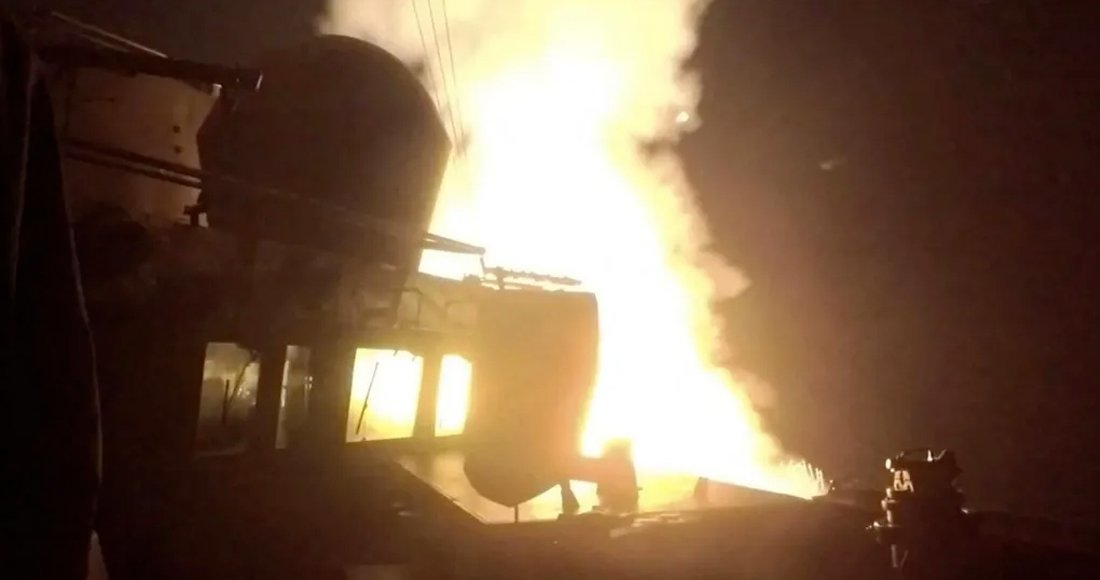
Tehran. US President Donald Trump's warning of 'strong strikes' on Iran has escalated military tensions between the US and Iran to a peak. After the US launched airstrikes on Iran for the second consecutive day, Iran has targeted US military bases in the Gulf region in retaliation.
The US Central Command (CENTCOM) stated that after Trump's statement that Iran had 'delayed too much' in reaching a deal to end the war, it completed 'strikes in self-defense' for the second day overnight. In response, Iran has claimed to have attacked US military bases in Bahrain and Kuwait.
Iran had targeted these two countries' US bases the previous day as well. These series of attacks by both countries in recent days have put the fragile ceasefire reached between the two countries in April into serious crisis.
Following the latest US attack, powerful explosions have been heard in Iran's southern cities and near the Strait of Hormuz. In the previous attack, the US military had targeted Iran's air defense systems, radar, and other military positions in the same area.
Meanwhile, Iran's Islamic Revolutionary Guards Corps (IRGC) has claimed to have attacked two oil tankers passing through the Strait of Hormuz. Iranian state media have reported that the Strait of Hormuz has been 'completely closed to all types of ships'. However, US CENTCOM has refuted Iran's claim, stating that commercial ships are regularly transiting through the Strait of Hormuz.
As soon as the news of the waterway closure and attacks on ships was released, oil prices rose in the international market. During morning trading in Asia, crude oil prices rose by about 2 percent, with Brent crude, the global benchmark, exceeding $95 per barrel.
A few hours before the latest attack, Trump had warned, 'We hit them hard yesterday and we will hit them hard again today.' He wrote on Truth Social, accusing Iranian leaders of taking too long to negotiate.
US Defense Secretary Pete Hegseth also clarified that Iran was given an opportunity for a deal but did not utilize it, and therefore bombs would now be dropped on Iran's key facilities. The US President has stated that if no peace deal is reached, Iran will be attacked again.
On the other hand, Iranian President Masoud Pezeshkian has made it clear that Iran 'will stand firm against any pressure or threat'. The Iranian Foreign Ministry has accused the US of damaging the diplomatic process by sending contradictory messages. After the two-week ceasefire in April, sporadic attacks were occurring between both sides, but the situation had not escalated into a full-scale war.
However, with the recent halt in negotiation efforts between Washington and Tehran, attacks have intensified. This week, a US helicopter was shot down in an attack allegedly involving Iran, in response to which the IRGC targeted US bases across the Middle East.
United Nations Secretary-General Antonio Guterres has expressed serious concern over this escalating tension. He wrote on social media platform X that the Middle East is 'being pushed towards a deeper crisis' and that recent attacks have 'further weakened the ceasefire'.
He said, 'We must not ignore the risk that this small fire could turn into a major war tomorrow. All parties must work towards a diplomatic solution. There should be no more attacks, nor any excuses.'
This specific news has been automatically translated by AI. As a result, there may be some inaccuracies or language errors.