Foreign Minister Emphasizes Diplomatic Solutions for Border Disputes During India Visit

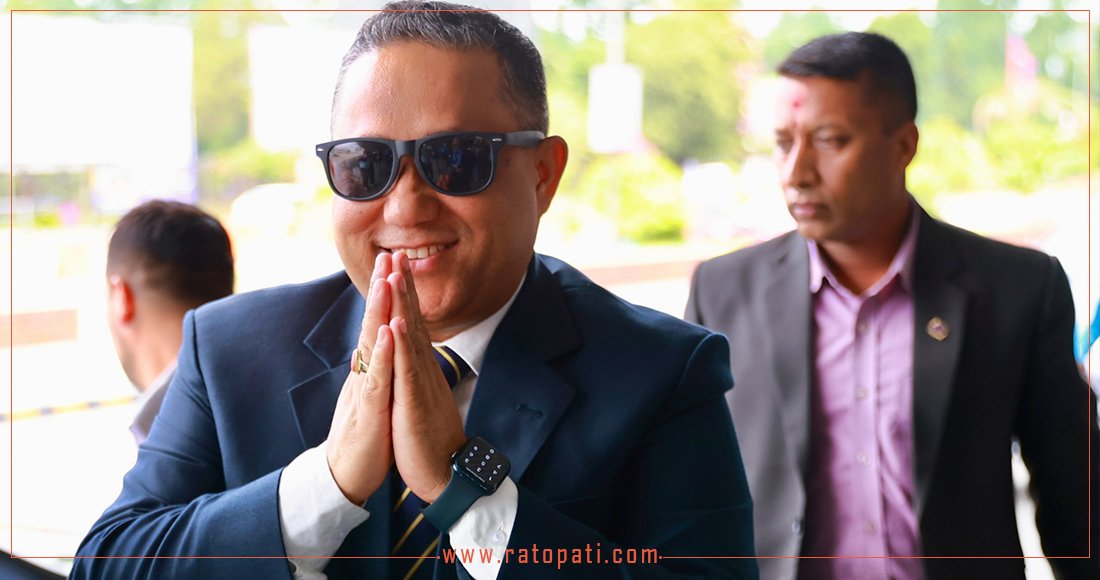
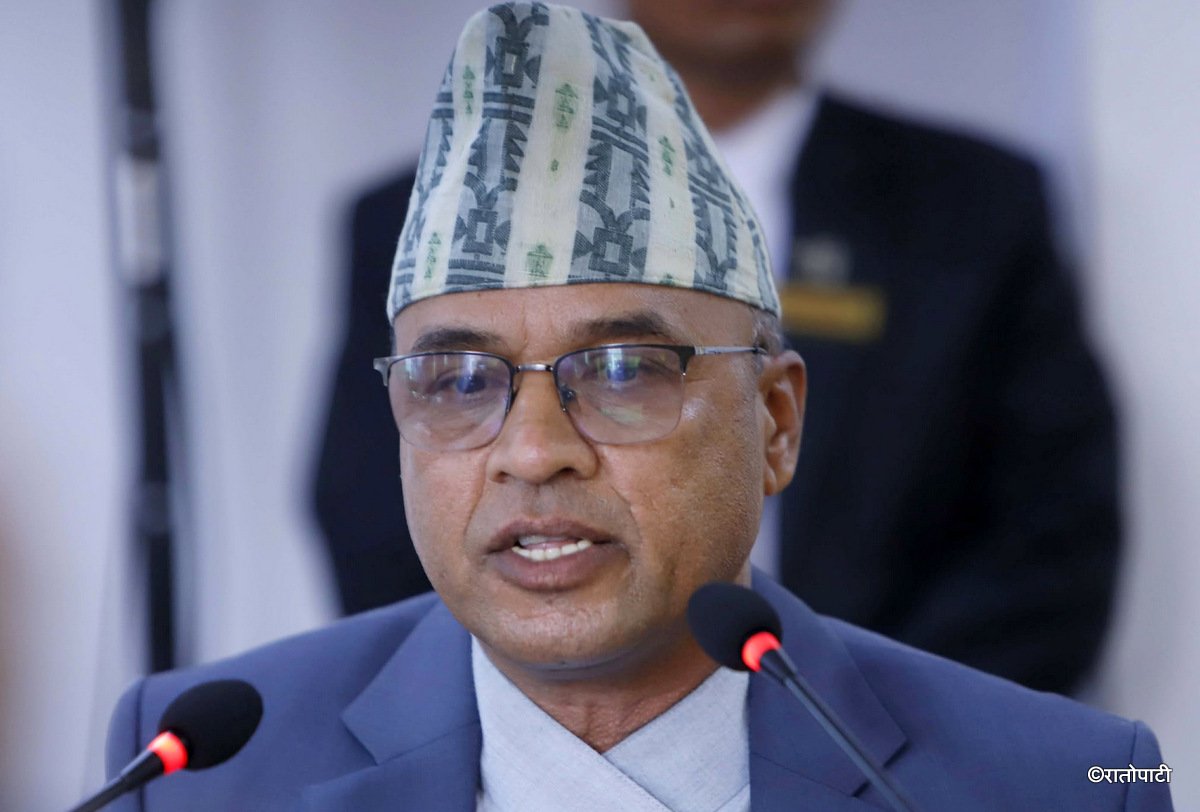
Kathmandu. Foreign Minister Shishir Khanal has stated that Nepal is ready to resolve border disputes with India through diplomatic means.
During his visit to India, Minister Khanal clarified that no problem is insurmountable if both sides engage in dialogue with an open heart.
Speaking to journalists in New Delhi, he said that Nepal's new government will not view India through the narrow and sensitive lens of 20th-century geopolitics. His statement indicated that Nepal is currently focused on building partnerships based on mutual interest for shared prosperity.
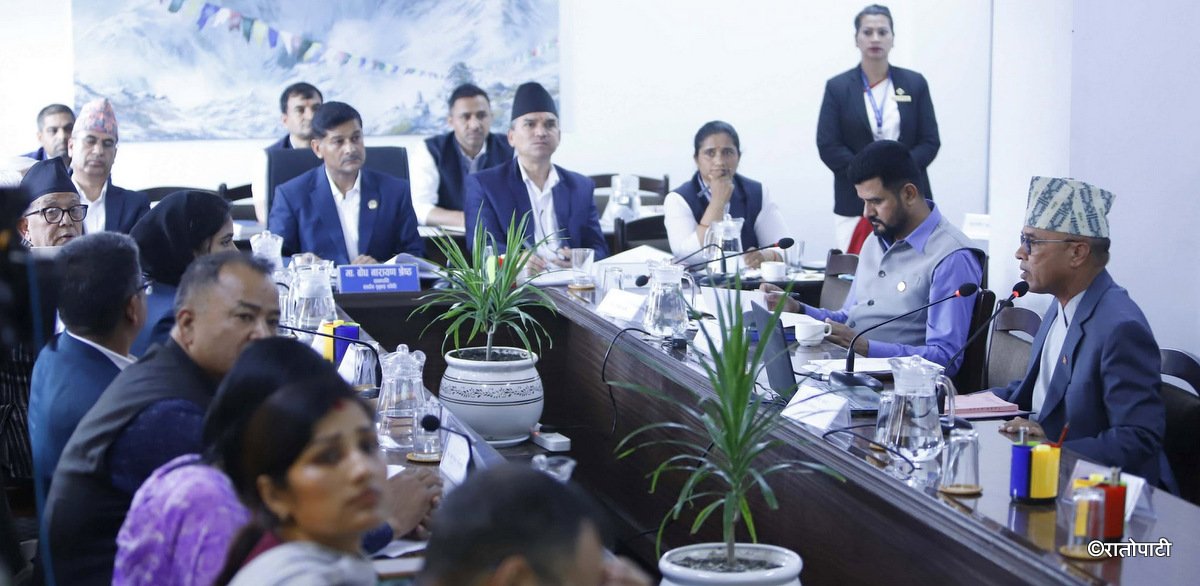
During his three-day official visit to India, Foreign Minister Khanal held detailed discussions with his Indian counterpart S. Jaishankar on Saturday. This statement from the Foreign Minister comes amidst discussions fueled by Prime Minister Balen Shah's recent remarks on border disputes, during a visit aimed at further strengthening relations between the two countries.
Khanal mentioned that Nepal looks towards India with an open heart, a clear vision, and a single transparent agenda of economic transformation. He clarified that the policy is to adopt a calm and fact-based approach to problem-solving rather than getting entangled in jingoistic sloganeering.
Praising India's rapid economic progress, Khanal described it as a model for Nepal's aspirations. He stated that India is establishing itself as a rapidly advancing technological and economic power on the world stage, and Nepal wishes to connect with this modern technology and rapid development.
With a development-oriented perspective, he emphasized the need for cooperation between the two countries in trade, connectivity, energy, and economic transformation. He clarified that the Rastriya Swatantra Party aims to keep the relationship between the two countries away from geopolitical confrontation and focused on development and diplomacy.
Claiming to represent a new and progressive political landscape in Nepal, Khanal stated that his government's rise is based on good governance, meritocracy, and direct accountability to the people. He mentioned that the government's priority is to bridge the gap between old promises made on paper and the ground realities, delivering tangible results for citizens.
He informed that fruitful discussions were held with his Indian counterpart on trade, cross-border connectivity, energy cooperation, water resource management, and people-to-people relations. He expressed the view that the open border between the two countries should serve as a bridge for mutual prosperity and connectivity, not as an obstacle.
During the visit, the formal launch of cross-border digital payment transactions was announced as per the agreement between Nepal Clearing House Limited and National Payments Corporation of India. This will facilitate easy digital transactions in a UPI-style for entrepreneurs, tourists, and the general public. Additionally, 72 health sector and 12 cultural sector projects reconstructed in Nepal with Indian development assistance were formally handed over. A Memorandum of Understanding was exchanged between Kathmandu University and India's Digital India Mission to enhance cooperation in the field of digital public infrastructure.
Khanal stated that Nepal and India are not only connected by political boundaries but are also children of civilizations bound by the same rivers, mountains, and ancient knowledge, and he highly appreciated the warm welcome and spirit of cooperation received in New Delhi.
Edited excerpts of remarks at the press conference
Distinguished representatives of the media, friends, and colleagues! Greetings, and good morning to you all!
I am here in India on an official visit at the invitation of the External Affairs Minister of India, His Excellency Dr. S. Jaishankar. I am especially pleased to welcome you all to the Nepali Embassy this morning.
I wish to begin my remarks by expressing my deep respect to the media fraternity. In a vibrant and pluralistic democracy like ours, the media plays an indispensable role. You are not just observers of our bilateral journey; you are also important pillars of our democratic ethos. The media is the medium through which our peoples understand each other. Furthermore, you are the principal custodians of shaping the narrative of our shared future.
As I travel from Kathmandu to New Delhi, gazing at the view from the majestic Himalayas above to the vast fertile plains of the Gangetic basin below, I am struck by a profound truth every time. We are not merely neighbors connected by political lines drawn on a map; we are descendants of the same rivers, the same mountains, and the same ancient wisdom.
I wish to express my sincere gratitude for the immense goodwill, warm hospitality, and spirit of cooperation that I and my delegation have received since arriving in New Delhi. Thank you all for embracing this boundless goodwill in your hearts and in your reporting.
I represent a completely new political reality in Nepal. Our rise is driven by an extraordinary and historic mandate from our citizens, the core of which is good governance, meritocracy, and direct accountability without compromise. As a new generation of leadership, we possess a unique capital: we are completely free from any ideological or political baggage of the past.
We refuse to view India through the narrow and overly sensitive prism of 20th-century geopolitics. Instead, our government wishes to shift the entire narrative of Nepal-India relations away from geopolitical confrontation and firmly towards 'Development Diplomacy'. We look towards India with an open heart, a clear vision, and a single transparent agenda: the economic transformation of Nepal.
When we look across the border, we see a rising India. An India that has uniquely and beautifully redefined itself on the world stage as a dynamic, rapidly growing technological and economic powerhouse. We wish to partner with this India of rapid aspirations, cutting-edge technology, and continuous execution. In return, we bring the energy of an aspirational Nepal. Our primary responsibility is to bridge the gap between promises made on paper and results achieved in reality, delivering measurable and life-uplifting outcomes, far removed from abstract political rhetoric.
Yesterday, I held detailed and fruitful bilateral talks with my counterpart, His Excellency Dr. S. Jaishankar. Our discussions covered the entire spectrum of bilateral relations, focusing on trade, cross-border connectivity, energy cooperation, water resource management, and people-to-people ties. True freedom means our shared borders should serve as high-impact bridges, not as frustrating barriers.
We are pursuing calm, data-driven, and evidence-based discussions to resolve challenges with good intentions, rather than engaging in nationalist theatrics. To that end, I am pleased to share some key concrete achievements from our collaboration that reflect this spirit of execution:
- Digital Financial Integration: We have officially announced the operationalization of person-to-person cross-border payment transactions under the MoU betweenNCHL and NPCI. This will seamlessly connect our fintech systems, enabling UPI-style cross-border payments and directly empowering small entrepreneurs, tourists, and citizens on both sides.
- Infrastructure and Reconstruction: We have formally handed over 72 health sector and 12 cultural sector projects in Nepal, beautifully constructed under Indian development assistance as part of post-earthquake reconstruction.
Furthermore, moving towards state-of-the-art digital public infrastructure, an exciting MoU has been exchanged between Kathmandu University's DPI and AI Center and India's 'Digital India Bhashini Division'. Together, we will build national digital infrastructure for voice-first language translation platforms, breaking down linguistic barriers through technology.
To truly understand the pulse of an aspirational Nepal, one must experience it firsthand. From the snow-capped Himalayan peaks to our sacred spiritual sites and circuits, our potentials are fully and beautifully interdependent. Therefore, I wish to take this opportunity to extend a warm and heartfelt invitation to the media and all of you in India to visit Nepal.
Come and witness the transformation happening on the ground. Experience the sacred sites like Pashupatinath, Janakpur, Lumbini, and Muktinath, and witness the incredible energy of our youth eager to build a modern, connected future. Your news and stories can build the sustainable bridges our region needs. When Nepali skills and talent meet the vastness and depth of the Indian market, world-class results are born.
Our vision for Nepal is a nation actively envisioning 'disruptive tech startups', an organized business landscape, vibrant cross-border trade, seamless tourism circuits, and deep digital connectivity. History offers nations short, precious, and historic opportunities. This moment in 2024 is the most opportune chance we have had in decades to elevate and transform Nepal-India relations entirely.
When we sit with open hearts, discerning minds, and mutual respect, no problem is too big, and no border is too complex. Dear friends! I believe your role will be crucial in taking Nepal-India relations to new heights. As I prepare to return to Kathmandu after today, I am returning with immense optimism.
Let us build a partnership inspired by the high hopes and possibilities of our shared future, unburdened by past concerns. Media friends, thank you very much for your time, generous goodwill, and the valuable role you have played in charting the course for this upcoming journey.
Q&A with journalists:
- Journalist: Sir, I have two questions. First, there has been a lot of controversy regarding the strict enforcement of pre-existing customs rules on goods exceeding 100 rupees brought in by locals from India, while you have the compulsion to stop it at the borders. What is the thinking behind this entire process? Do you think this could actually escalate and affect relations? And second, you spoke at length about your movement, rising from the Gen-Z movement and finding a new political reality. Just yesterday, we saw Gen-Z protesting in the national capital of India. Do you have any thoughts you would like to share on this?
Regarding your first question, there was an old law from the 70s and 80s that allowed bringing goods worth only about 100 rupees from India. That has been revised to a much higher amount. But what I wanted to explain is that due to our open border, many people use it for undesirable and unethical activities. Therefore, managing our borders was very important for us. This rule was not made or targeted to prevent people living across the border and making a daily living from coming to India and buying the goods they need. It was primarily to prevent unethical trading activities at the border.
On the question of Gen-Z, there was a movement/wave in Nepal some time ago, and that political transition certainly brought us to power. However, I do not wish to comment on what is happening in India. I prefer to talk only about Nepal and Nepal-India relations.
- Journalist: Honorable External Affairs Minister, I would like to ask you two questions on the fundamental aspects of Nepal-India relations. First, you spoke about Nepal's economic situation. You want to see more economic growth. But I have seen many comments recently, focusing more on border issues and disputes. I want to understand whether the primary priority of foreign policy is the economy or border resolution?
As a government, as I mentioned earlier, we are very clear about our relationship. We want to build our relationship on issues of mutual interest. We prioritize expanding connectivity through roads, rail networks, and air routes. We want to be connected through energy transmission lines and develop the energy sector together. We want to see seamless trade and connect our startup ecosystems. In this way, we are creating opportunities for the people of Nepal. Because these are the two major priorities that this government has promised since taking office or even during the elections – good governance and rapid economic growth of Nepal. Therefore, we are moving forward with that perspective.
We understand and acknowledge that there are some issues between us. There are remaining issues, including borders and boundaries, which can and must be resolved through diplomatic dialogue. There are active mechanisms for that. In fact, the truth in all this dialogue and discussion happening on both sides of the border is that many mechanisms related to trade, energy, floods, irrigation, or borders exist between Nepal and India, and they are active too. For example, the 'Field Survey Team' with technical personnel is currently working together at the border. In my discussion with the External Affairs Minister yesterday, we also agreed to further activate all these mechanisms so that we can resolve our problems through openness and dialogue.
Again, this is part of the entire scope of our relationship, and I have always found the Indian side open to discussions. When the time is appropriate, we will also discuss those issues through the appropriate mechanisms. This is also the spirit of our discussion yesterday.
- Journalist: There was a report that Prime Minister Balen Shah has taken a kind of vow not to go on foreign visits for the first year. Given that India and all major powers want to invite him, why was such a decision taken? Do you think he will break that vow to visit India in the near future?
I have not heard about any such vow from our Prime Minister. I do not know what your source is. Therefore, I have not heard about any specific timeline being set for this. The fact is, the Prime Minister is ready to go abroad when necessary. The 'honeymoon period' (initial 100 days) of the government has not even been completed yet. As a new government, we are at the end of Nepal's fiscal year and had to propose a new budget. The Prime Minister is very keen to show initial results to the people who gave us such a strong mandate to govern. Therefore, he is currently focused mainly on showing results on the domestic front. However, when the time is right, he will commence his visits.
- Journalist: Both India and Nepal are facing a potential US tariff of 27.5% due to issues of forced labor. What are the concerns regarding this, and how does Nepal plan to address it? The United States has proposed tariffs on imports from 60 countries, including Nepal and India, regarding the use of forced labor. How do you plan to address this?
We are actively engaged in discussions with the US side on this matter. They have certainly raised some concerns. However, as you may have seen, since our government came to power, there have been three or four high-level visits. Therefore, we are actively engaged on these issues. This is part of the ongoing discussions. I will share the concrete outcomes once they materialize.
- Journalist: There was a lot of speculation about Indian Foreign Secretary Vikram Misri not being given time by the Prime Minister's Office, and that's why he had to reschedule his visit. Can you shed some light on this? Also, the Prime Minister's remarks seemed to indicate a desire to correspond with the UK and involve China in the border dispute with India. However, the Indian Ministry of External Affairs has already clarified that border issues should be resolved bilaterally only. What is your view on this?
As you know, Nepal has sent diplomatic notes regarding its territorial claims in the past few years. Since India and China have an agreement, we have expressed our stance to both countries through official diplomatic notes. We have clearly told both countries that the territory belongs to us. That has been our historical claim. The Prime Minister has spoken in the same vein.
Regarding the mention of Britain, many of these border disputes are part of a long historical legacy. The current border was established by the Treaty of Suguali in 1816. Therefore, the Prime Minister has clearly stated that this will be resolved through dialogue between the two parties and diplomatic mechanisms. We want to resolve our disputes through diplomatic processes. If we need historical evidence, we are only looking to see if we can get access to historical documents that might be in British libraries or archives. Our stance is not that we are requesting third-party mediation. If you listen to what he said in Parliament, it is clear: we want to resolve our border disputes by talking to each other through diplomatic means. This has been Nepal's historical stance and remains its current stance.
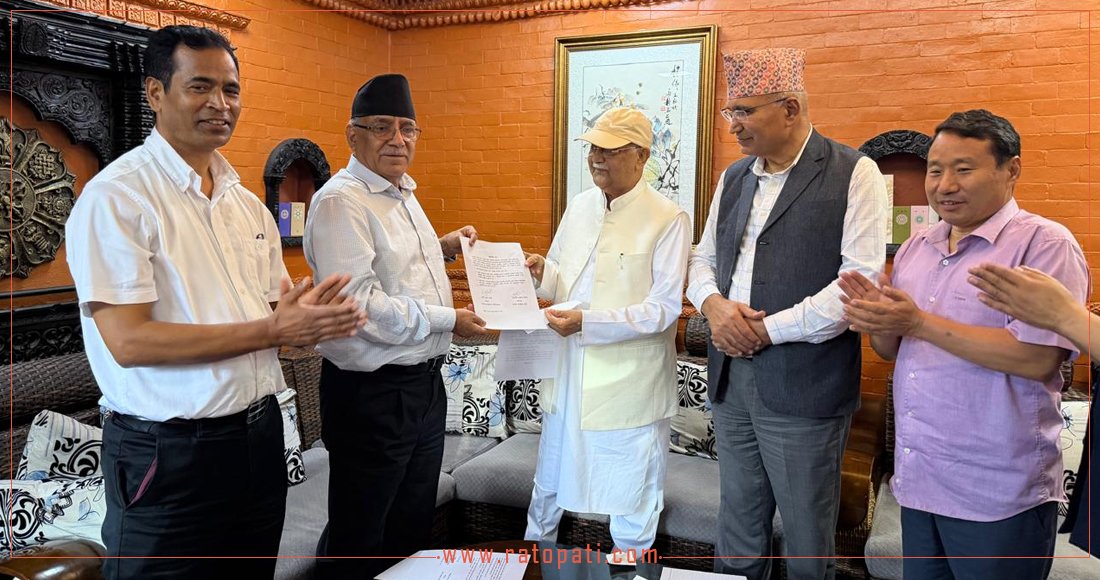
- Journalist: Former Ambassador Bhesh Bahadur Thapa recently handed over the EPG report to you. Do you have any plans to make that report public?
The EPG was formed with the agreement of the Prime Ministers of the two countries, and its mandate is to submit the report only to the Prime Ministers of both countries. Therefore, I have no authority to make the report public, accept it, or do anything about it. When the agreement is finalized at the level of the two Prime Ministers, it will be processed through that mechanism only.
- Journalist: Did you receive any assurance from the Indian side regarding a timeline for reviewing the Nepal-India Peace and Friendship Treaty during your discussions with the External Affairs Minister and National Security Advisor?
We discussed the broad scope of bilateral relations. As you know, this is my first visit, and our government has only been in power for two months. Therefore, during this visit, we are conducting an overall review of all aspects of bilateral relations. The main emphasis from both sides is to resolve all outstanding issues through dialogue and diplomatic negotiations.
- Journalist: What was discussed regarding the Kailash Mansarovar Yatra? Will you allow it to proceed unhindered?
As you know, the Kailash Mansarovar Yatra passes through many different border points, and many people travel through Nepal. We have always welcomed and facilitated tourists and pilgrims traveling through various Nepali checkpoints. Our main concern is the renewal of the agreement between India and China via the Lipulekh and Kalapani areas. We have been claiming that these lands are ours for a long time. Without Nepal's consent, the two countries cannot enter into an agreement to use these lands on their own. We have made this very clear to both countries through our communication channels, including diplomatic notes.
- Journalist: When the new government took office, there was a special mention that Nepal is moving from a buffer state towards a living bridge. You are also going to China soon. Is this 'living bridge' concept being discussed here, and will it be discussed there as well?
Certainly, from a historical perspective, Nepal has always been a bridge. For hundreds of years, Nepal has facilitated trade between Tibet (China) and the southern plains of India. My first official visit is part of communicating the new government's priorities to our two important neighbors and advancing the bilateral relationship. During this visit, we are more focused on the bilateral dimension of the Nepal-India relationship.
- Journalist: Was there any discussion about the recruitment of Gurkha soldiers in the Indian Army in the context of the stalemate arising after the implementation of the Agnipath scheme?
The Gurkha recruitment process used to be conducted through a tripartite agreement. We have not entered into these discussions and dialogues in recent conversations. When the Government of India feels it is necessary, we are ready to sit at the table and discuss this issue, like any other.
This specific news has been automatically translated by AI. As a result, there may be some inaccuracies or language errors.
_p7LjIzVhkU.jpg)