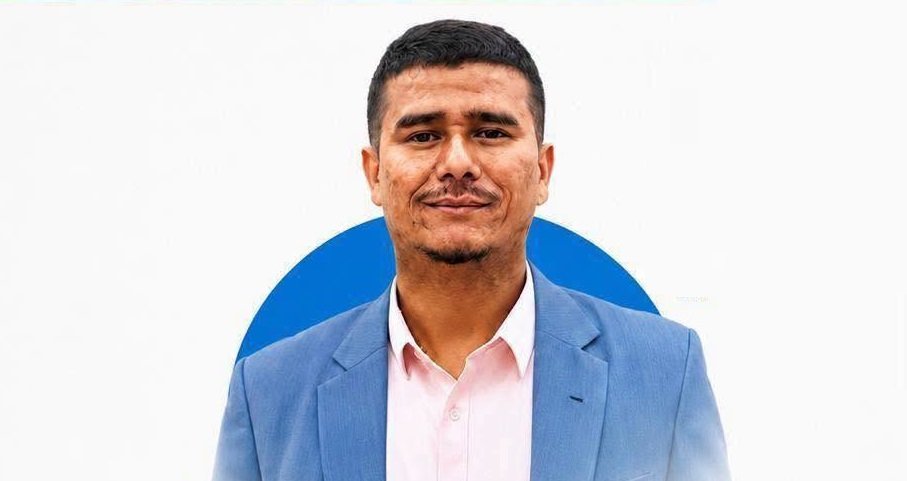
Bagmati Province Government Allocates Budget Ceilings to Provincial Lawmakers


Makwanpur. The Bagmati Province Government has distributed budget ceilings of 3 and 5 crore rupees to the lawmakers. The provincial government has distributed a ceiling of 5 crore rupees to directly elected lawmakers and a ceiling of 3 crore rupees to proportional lawmakers, including it in the budget ceiling for the upcoming fiscal year (2083/084).
The Bagmati Province Government has prepared to distribute more than 4 billion rupees in budget to 104 provincial lawmakers. Out of a total of 110 lawmakers, 6 lawmakers have already resigned from their posts.
Provincial Assembly member and former minister Yuvraj Dulal 'Sharad', former Minister of Agriculture and Livestock Development Prakash Shrestha, former minister Aman Kumar Maske, former minister Kundanraj Kafle, Basanta Manandhar, and Sunil KC resigned from the provincial assembly membership for the House of Representatives elections held in February.
A budget ceiling of 3 crore rupees and 5 crore rupees respectively has been provided to 44 proportional and 60 elected lawmakers of the Provincial Assembly.
According to an employee of the Ministry of Economic Affairs and Planning, budget ceilings have been provided to lawmakers in the past in the style of the Member of Parliament Development Fund. He said that accordingly, plans have been sought by setting a limit in the upcoming fiscal year.
The employee said that the Congress and UML coalition government has distributed budget ceilings to the lawmakers and has sent letters to select plans in their respective constituencies. He said that the government will enter the budget information system and allocate funds according to the plans submitted by the lawmakers.
A minister said that the government has sent letters to the lawmakers to provide plans according to the limit as per the project selection directive. According to him, the plans recommended by the lawmakers will be entered into the project bank through the implementation units under the relevant ministry. He said that letters have been sent to the lawmakers to include projects above 50 lakh for physical infrastructure and above 30 lakh for social sectors based on the criteria set by the directive.
According to a member of the Provincial Assembly, plans worth 3 billion rupees at the rate of 5 crore rupees each for 60 directly elected lawmakers and 1 billion 32 crore rupees at the rate of 3 crore rupees each for 44 proportional lawmakers have been requested. According to him, the lawmakers are in the process of sending plans according to the ceiling they received. He said that some lawmakers have already sent plans according to the received ceiling, while some are in the process of sending them.
"The government has also set a minimum budget limit (threshold) for the plans selected by the lawmakers. Initially, the government's stance was that projects in infrastructure should be at least 50 lakh rupees and others at least 30 lakh rupees. However, after the lawmakers pressured to include small plans as well, the limit has been reduced. The government is also positive about this matter. According to the current arrangement, the minimum budget for infrastructure should be 30 lakh rupees and for projects in other sectors, it should be 15 lakh rupees," he said.
However, the government's spokesperson and Minister for Economic Affairs and Planning, Prabhat Tamang, claimed that budgets were not allocated to the lawmakers by setting specific amounts. He said that lawmakers were only given options for selecting projects in their constituencies and their consultation was sought to balance which projects from the project bank to prioritize.
The Ministry of Economic Affairs and Planning had invited proposals for plans by the deadline of Jestha 21, 2083. Minister Tamang said that some time has been extended after the lawmakers' complaints. He said that the plans that come according to the Annual Project Proposal and Selection Directive, 2083 will be processed for budget formulation.
This specific news has been automatically translated by AI. As a result, there may be some inaccuracies or language errors.
_hXuKAenRlA.jpg)
_jWnD0U1v7e.jpg)