CPN UML Criticizes Human Rights Commission Report as Biased and Malicious


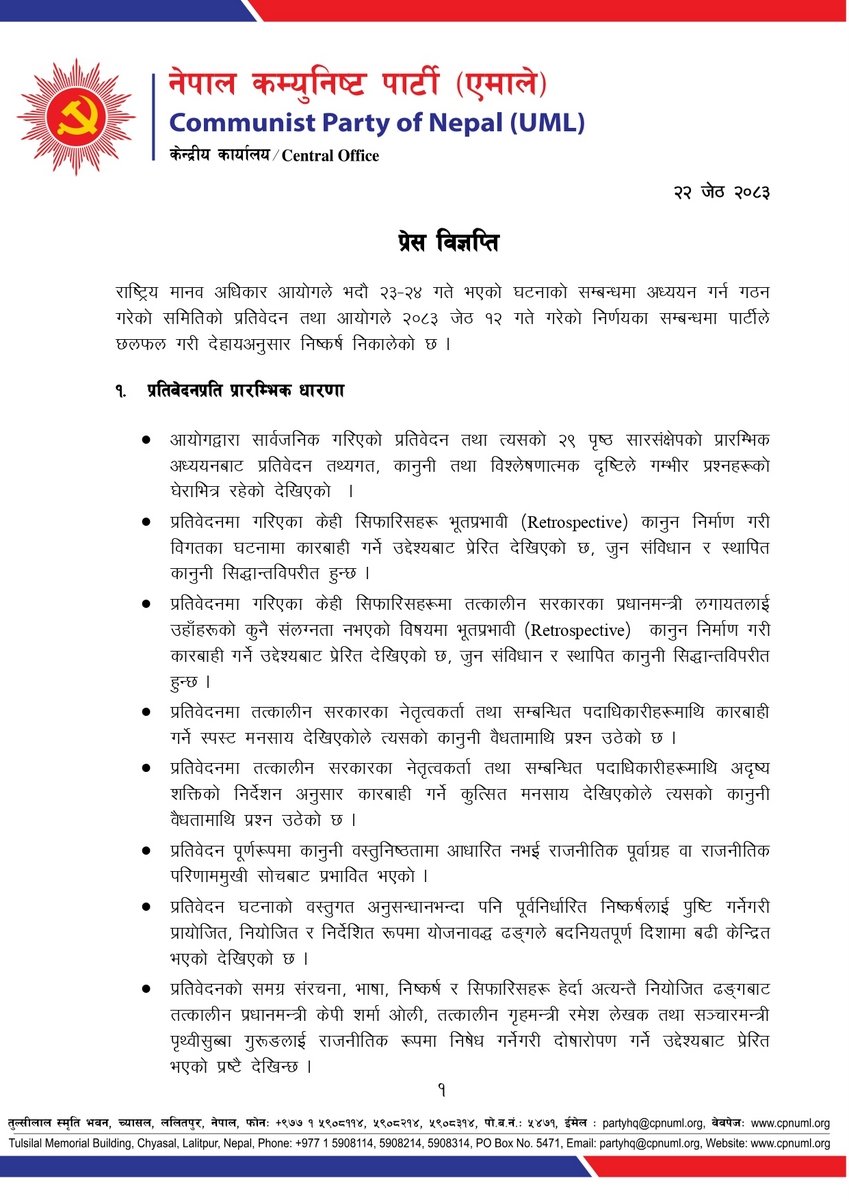
Kathmandu. CPN UML has objected to the report prepared by the National Human Rights Commission regarding the incidents of Bhadra 23 and 24, calling it biased, malicious, and conspiratorial.
According to a press release issued by the party on Friday, the commission's report was found to be factually and legally flawed, and motivated by a desire to frame former Prime Minister KP Sharma Oli and other ministers.
The statement alleged that the 29-page summary released by the commission was prepared under the direction of an invisible force. It was claimed that the report was part of a plan to politically eliminate former Prime Minister KP Sharma Oli, former Home Minister Ramesh Lekhak, and Communications Minister Prithvi Subba Gurung.
Even though direct orders or involvement in the incident could not be proven, the recommendation for action with the intention of political revenge raises serious questions about the legal validity of the report. It is alleged that the investigation was not objective but focused only on confirming a predetermined conclusion.
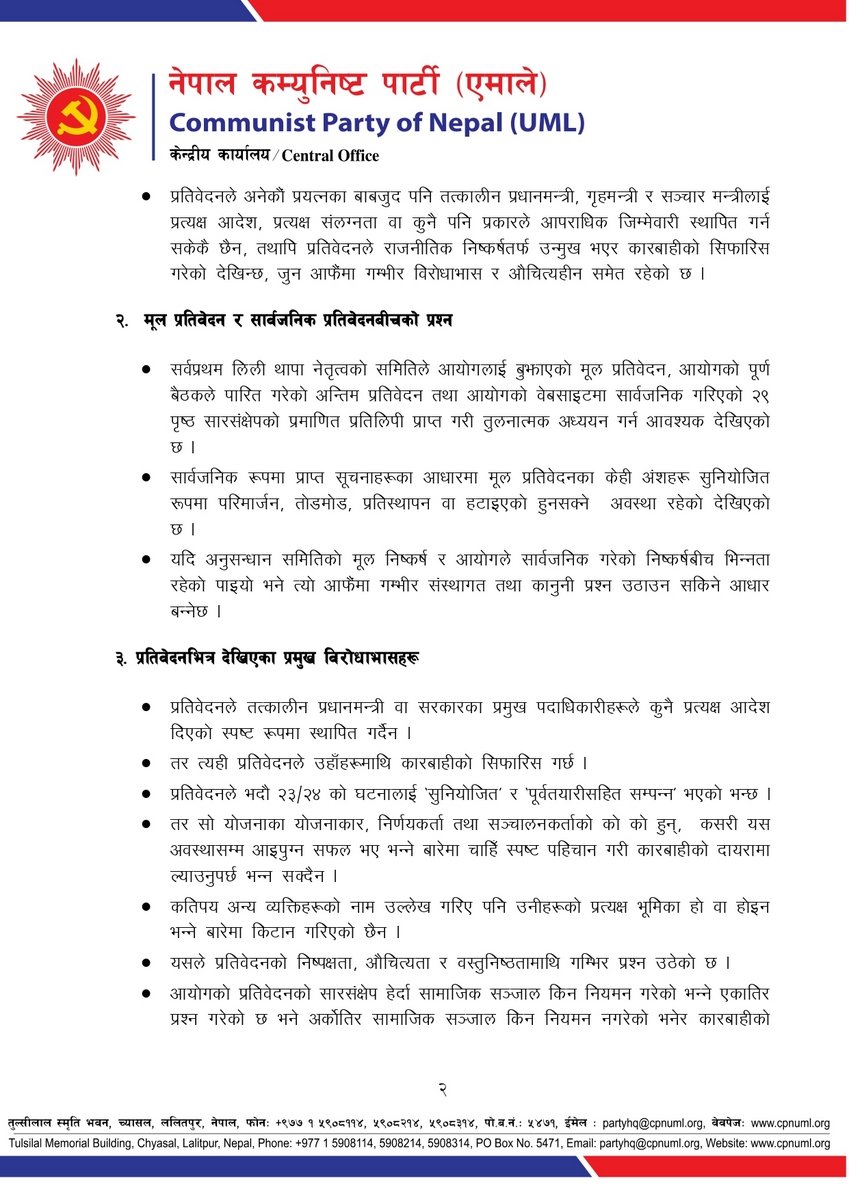
The statement also expressed suspicion that there could be a significant difference between the original report submitted to the commission by the committee led by Lily Thapa and the summary released by the commission. It was demanded that both reports be compared by obtaining certified copies, as parts of the original report might have been deliberately removed, distorted, or replaced. A warning was issued that if the original findings of the investigation committee and the public findings differ, serious institutional and legal questions would arise against the commission.
Attention was also drawn to serious contradictions within the report itself. Although the report described the incidents of Bhadra 23 and 24 as 'pre-planned' and 'carried out with prior preparation,' it failed to identify the main planners and operators. However, it recommended action against the top officials of the then government whose direct involvement was not proven.
Furthermore, the commission's double standard, which on one hand questions why social media was regulated and on the other hand recommends action for not regulating it, has destroyed its impartiality and justification, the statement mentioned.
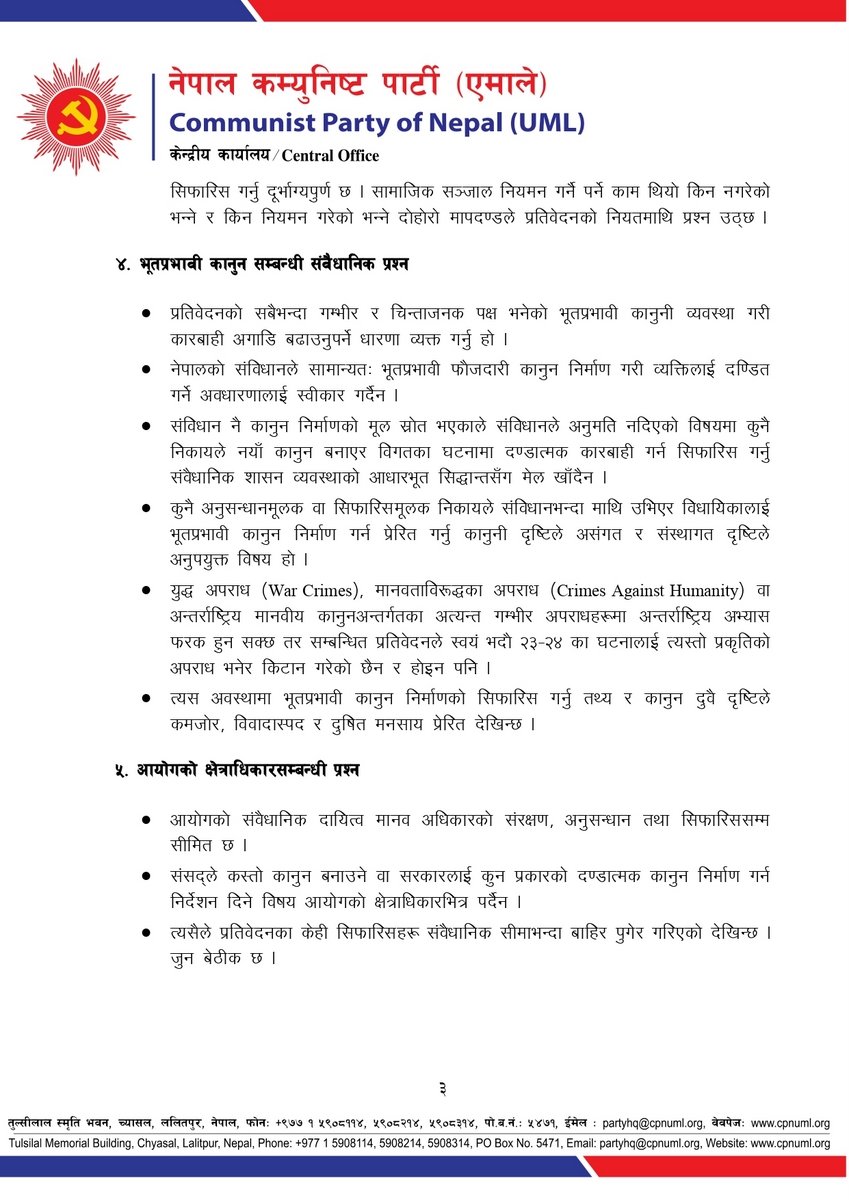
The most significant objection was raised against the commission's recommendation to take action on past incidents by enacting retrospective laws. The Constitution of Nepal does not accept the enactment of retrospective criminal laws to punish individuals. It was stated that recommending such action when the incidents of Bhadra 23 and 24 were not of a serious nature like war crimes or crimes against humanity is contrary to the constitution and established legal principles.
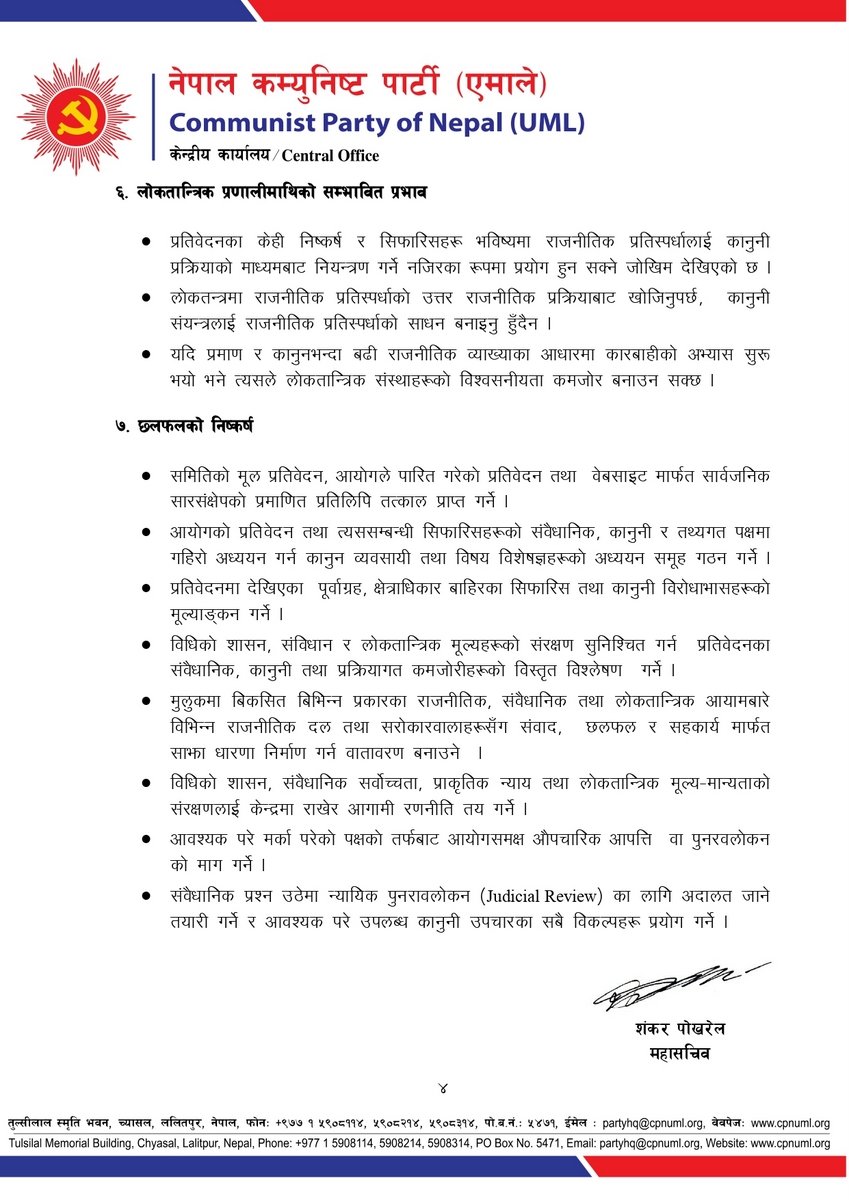
It was concluded that the commission has exceeded its constitutional limits, as it is not within the commission's jurisdiction to decide what laws the parliament should make or what type of punitive laws the government should enact.
This specific news has been automatically translated by AI. As a result, there may be some inaccuracies or language errors.


_hXuKAenRlA.jpg)
_jWnD0U1v7e.jpg)