Bidushi Rana: From Entrepreneurship to Parliament
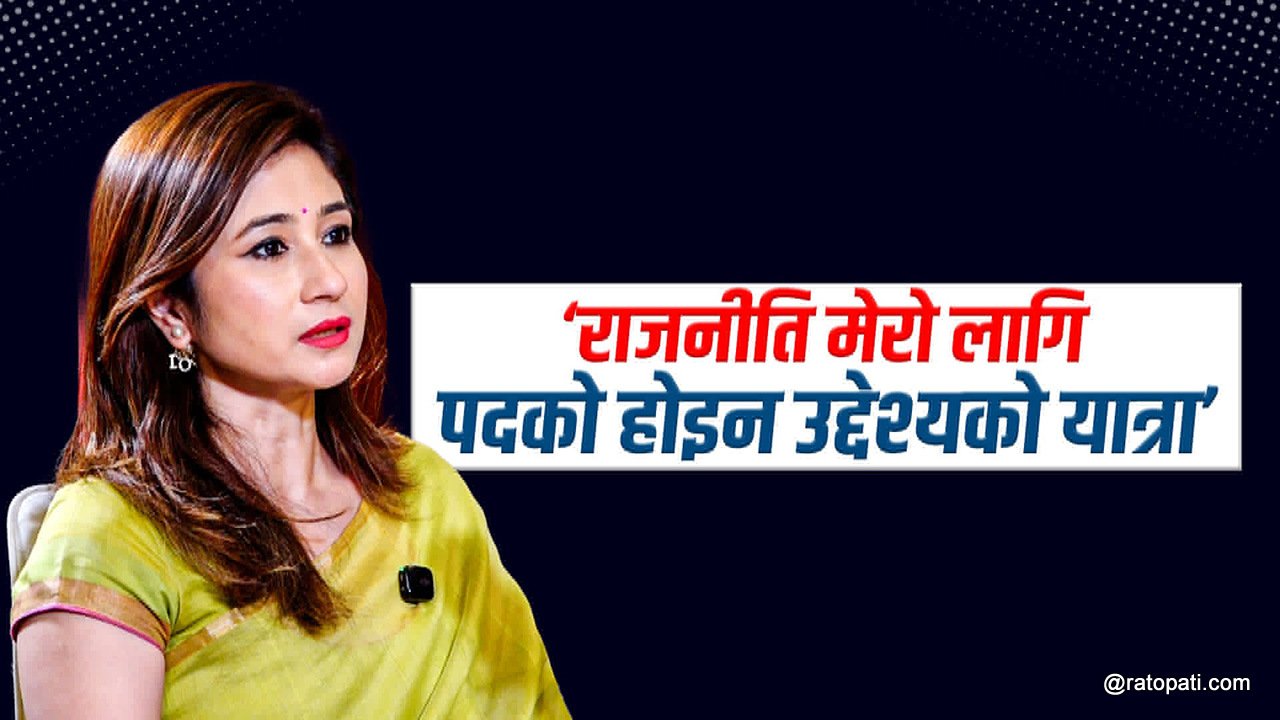
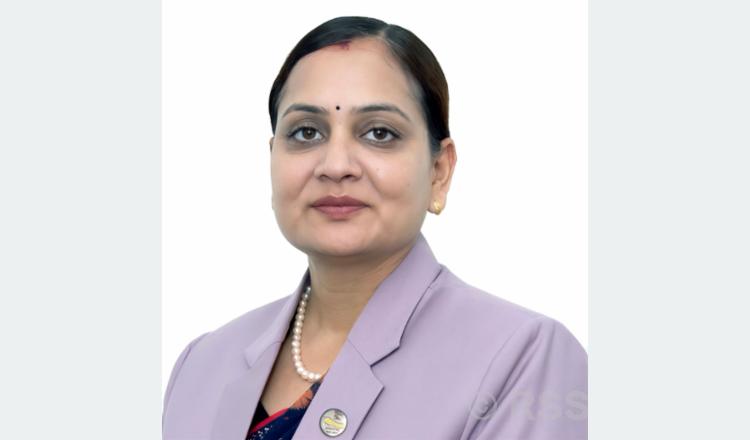
Kathmandu. Bidushi Rana, who has achieved great heights in entrepreneurship and business, is currently on a parliamentary journey. Rana, the executive director of Nepal's popular shoe brand Goldstar Company, is a proportional member of parliament from the Rastriya Swatantra Party. After entering parliament, she wants to work on a plan to take the country towards production, entrepreneurship, and a self-reliant economy.
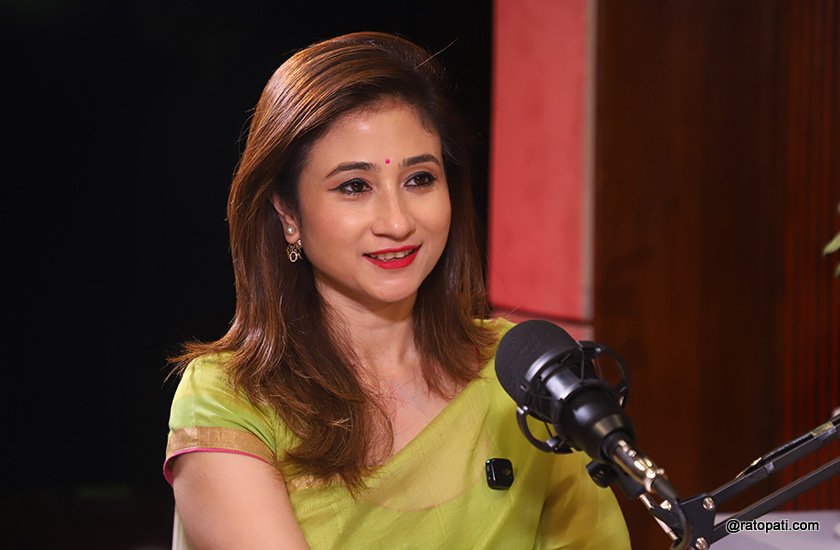
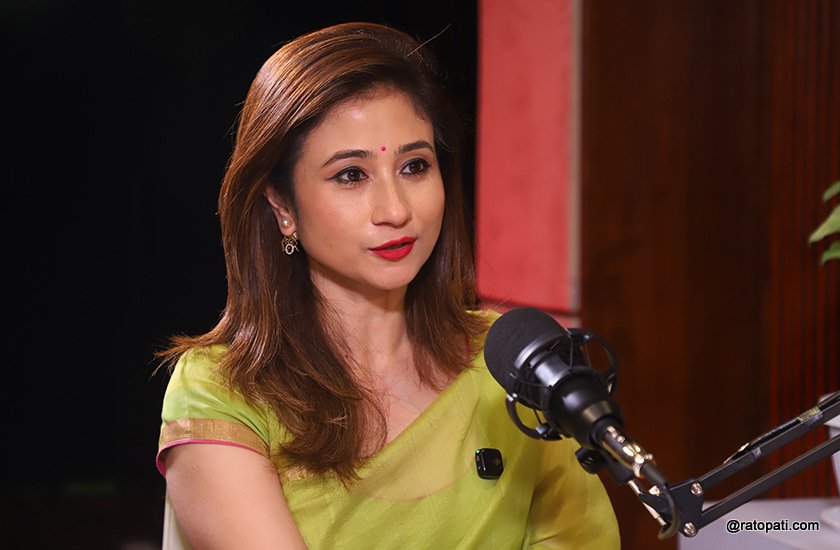
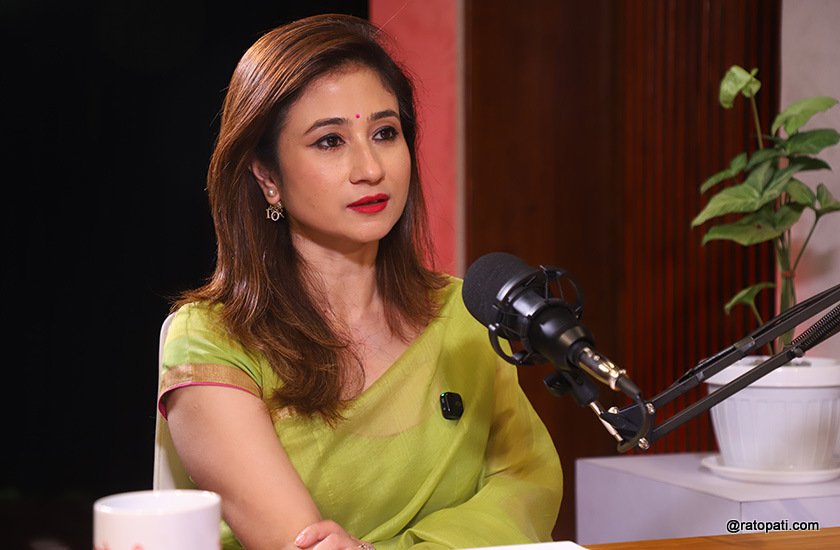
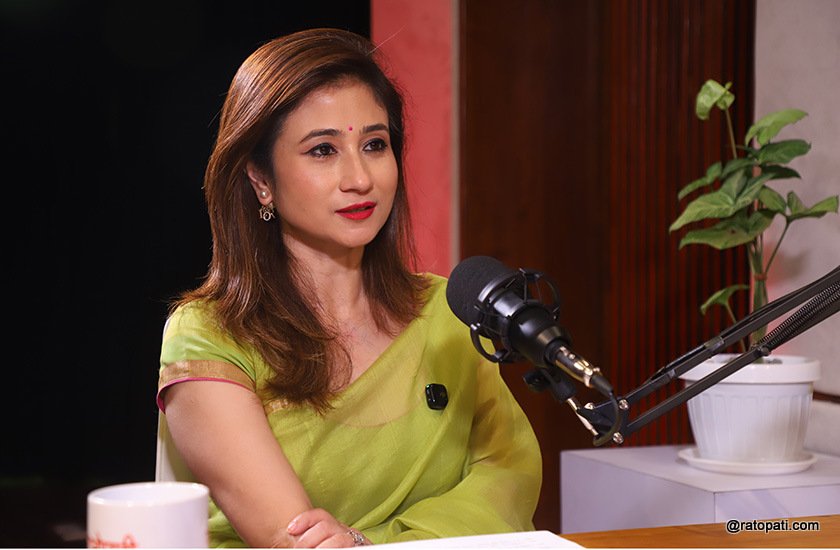
In Rato Pati Podcast's 'Talk Forward', she was first asked - How is the parliamentary journey of an entrepreneur going?
She replied thoughtfully, 'I am experiencing a big learning curve. Because every day I am learning new things. I was an entrepreneur before, and then I learned about my field. After entering parliament, I am getting to understand the whole of Nepal.'
She was asked another question - Why did an entrepreneur who succeeded in branding her industry internationally have to enter politics?
'The perspective towards the private sector in Nepal has always been negative. It was necessary to break the narrative that sees the private sector only as 'profiteers' or 'cheats',' she said, 'I thought it would be more appropriate to go to the policy-making forum and find solutions to problems rather than just shouting from the outside, so I entered politics.'
In an interview lasting about an hour, MP and entrepreneur Rana discussed her parliamentary journey, the challenges and possibilities of entrepreneurship and business. Here is the edited excerpt of the interview (detailed video can be watched and listened to):
You are a successful entrepreneur, now on your first parliamentary journey. Recently, the atmosphere in parliament has been quite tense. Parliament has also looked like a 'wrestling ground'. How is the parliamentary experience going?
Parliament is a forum for debate and discussion. In some situations, there are disagreements, but solutions must be found amidst those disagreements. Representatives from various geographies and backgrounds raise the voice of the people in parliament. Some scenes were also embarrassing. But this should not happen. Democratic rights should be exercised in a civilized manner.
When parliament is obstructed, the urgent issues of citizens are overshadowed. We have come to make rules and laws. Therefore, our priority should be on result-oriented work. I consider the verbal debates in parliament natural, but physical chaos is not good. Despite these various things, I am learning a lot in parliament.
You are an established entrepreneur who has successfully taken a shoe brand like 'Goldstar' to the international level. Why did you need to enter politics?
I never thought I would enter politics. I was satisfied with my own business. But I have experienced through 10-11 years of experience how complex it is to run an industry in Nepal, especially in the manufacturing sector. I used to repeatedly urge for policy reforms in government bodies. My constant demands were for controlling smuggling, protecting domestic production, and creating an industry-friendly environment for job creation.
After agriculture, industry is the biggest basis for employment in our country. But the perspective towards the private sector has always been negative. It was necessary to break the narrative that sees the private sector only as 'profiteers' or 'cheats'. I entered politics thinking it would be more appropriate to go to the policy-making forum and find solutions to problems rather than just shouting from the outside.
Why did you join the Rastriya Swatantra Party (RSP)? Weren't there other parties?
I used to advocate for various issues through the Confederation of Nepalese Industries (CNI). During that time, I had the opportunity to meet the then Mayor of Kathmandu (currently Prime Minister) Balendra Shah. I explained to him in detail the problems of industry, policy complexities, and smuggling.
Later, during the election, he told me - 'You have been complaining a lot from the outside, now come to the policy-making place and work to solve these problems.' His proposal and the agendas of good governance and economic prosperity included in the RSP's 'manifesto' attracted me. Their clear vision that prosperity is not possible without ending corruption and 'good governance' in the country inspired me to join this party.
Your expensive car became a topic of discussion when you became an MP and entered the parliament building. How do you view this?
There is no point in such a discussion. Being a businessman or entrepreneur is not bad. It is a matter of personal freedom what kind of car one drives or what kind of house one lives in with their clean earnings, who pays taxes to the state and provides employment to thousands. If someone lives a life of luxury through corruption or tax evasion, they should be investigated. But entrepreneurs who contribute to the state through transparent business should not be viewed negatively regarding their assets. I understand there is a significant class divide in Nepal. But for this reason, entrepreneurs who do transparent business should not be looked at with suspicion.
Let's talk about the budget for the upcoming fiscal year recently released by the government. How do you see this budget?
Overall, I think the budget is good. An effort has been made to cover all aspects. I firmly believe that the tax base should be expanded rather than increasing the tax rate. If the size of the bread is small, only a few people can eat it, but if the size of the bread is made larger, it will suffice for many. There may be dissatisfaction with some tax rates in the budget, but revenue is needed to run the state.
The current budget has some good provisions that are industry-friendly. Especially the encouragement of the manufacturing sector and import substitution are commendable. Without industries, jobs cannot be created, and without jobs, the exodus of youth abroad cannot be stopped. To break this cycle, an industry-friendly budget and policies are necessary.
Your shoe company 'Goldstar' is currently gaining more attention. The scene where Prime Minister Balendra Shah wore Goldstar shoes and showed them to you went viral on media and social media. Was it a coincidence or planned branding?
It was a complete coincidence. I was leaving after the budget speech. I met the Prime Minister exactly, he was shaking hands with other MPs. Seeing me, he smiled and said - 'Look, I am also wearing Goldstar.' He was wearing our new 'Arc Series' shoe.
His wearing Goldstar is not just about supporting one company, but about promoting domestic industries as a whole. It has sent a message to the youth of Nepal that domestic products are also of good quality and can be worn with pride. I felt sad hearing comments on social media about advertising a private company. The private sector is also a part of the government. It is a matter of pride that the Prime Minister wears shoes from an industry that contributes to the state.
Goldstar has a history of 55 years. It gained special attention in two circumstances. One during the Maoist conflict and the other after Prime Minister Balen Shah wore it. What difference do you see in the attention from these two periods?
The nature and impact of these two discussions are completely different. During the conflict, Maoist rebels wore Goldstar because it was cheap, strong, and easy to walk in the hills and jungles. But although our brand's discussion intensified, it resulted in losses in business. At that time, security personnel used to view anyone wearing Goldstar as a rebel and harass them. For this reason, we had to reduce sales in Nepal for some time and export to India.
However, the attention generated by the Prime Minister wearing it now is positive. It is associated with pride in 'Nepali identity' and 'domestic production'. Now, youth have also accepted it as a matter of fashion and quality.
It is said that the participation of women in your industry is very high. What is the work environment and the condition of the workers there?
There are about three thousand workers in our industry, of which 70-75 percent are sisters. Making shoes is a very 'labor-intensive' job. We train them for three months and make them skilled. Even during the training period, we pay the minimum wage set by the government.
Maternity benefits, leave, and a clean environment are guaranteed. We treat workers not just as laborers but as members of a family. However, when the government fails to control smuggling and counterfeit brands, honest entrepreneurs like us suffer. We are forced to compete with genuine Goldstar, which costs fifteen hundred rupees, with foreign imitation shoes available in the market for five hundred rupees.
When will we be self-reliant in shoes?
We are largely self-reliant in shoes. But the problem is that it takes 70 to 80 small components to make a shoe. Not all of them are manufactured in Nepal yet. If the government provides concessions on raw material imports and encourages small industries that produce them here, we can become fully self-reliant. When an industry runs, not just one factory runs, but also transportation, restaurants, shops, and small auxiliary industries around it flourish. The transportation business runs, and many others get indirect business and employment opportunities. Therefore, the government must move towards building a self-reliant economy.
Now, another topic. The party's general convention is coming up. Are you thinking of joining the central committee or as an office bearer?
I have not entered politics for a position. I am still in the learning phase. But if my work and experience can contribute to the party's policy-making and the party deems it necessary, I am ready to take on any responsibility.
What do you envision as the destination of your political journey?
It might be a bit early to answer this question. But I can say this much - politics for me is not a journey for position, it is a journey for a purpose. As long as I have the confidence that I can 'value add' to the country's economy and policy-making, I will remain active in politics. I want to see the country move forward on the path of industrial revolution, and I wish to make my small contribution to it.
Video/Photo: MANOJ KHADKA/RATOPATI
This specific news has been automatically translated by AI. As a result, there may be some inaccuracies or language errors.