Economist Dr. Govinda Nepal Criticizes Budget for Failing to Stimulate Economy


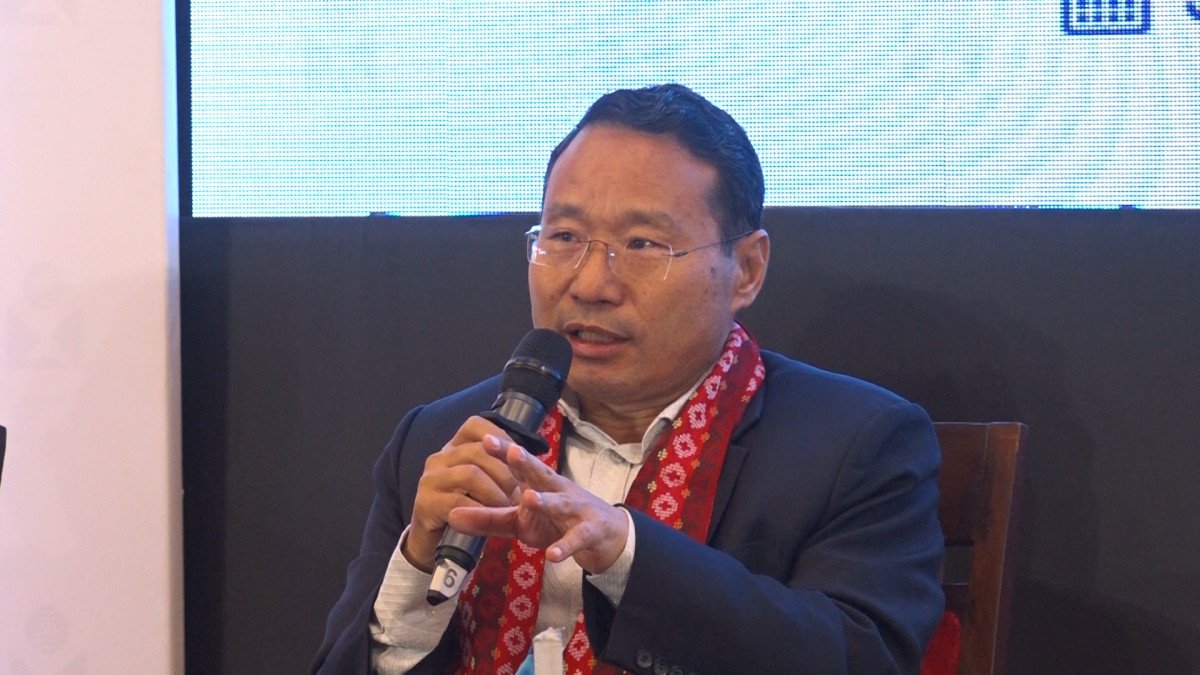
Kathmandu. Economist Prof. Dr. Govinda Nepal has stated that the budget unveiled by the government for the upcoming fiscal year will not be able to invigorate the overall economy.
Speaking at a program organized in the capital, he commented that there is a lack of clear consistency between the policy and programs introduced by the government itself and the budget allocation.
He stated that while the current budget partially addresses the demands of the new tech-savvy generation, the private sector, and some employees, it has not sufficiently reached the poor, small farmers, informal sector workers, and small entrepreneurs. Commenting on the impact of price hikes, Dr. Nepal presented data showing that while prices have increased by 17.6 percent in the last four years, the benefits for retired employees have only been increased by 6.6 percent.
He mentioned that a large group is in economic risk and their future is a cause for concern because bank interest rates are only around 3 percent, and the state has not paid adequate attention to this. He also noted that the upcoming budget is silent on the issue of senior citizens, with no significant programs announced except for the declaration to establish 30-35 day care centers.
Economist Nepal strongly opposed the government's arrangement to collect 459 crore rupees by levying an additional 3-3 percent 'equity fee' from students and patients. He argued that the justification for seeking additional funds is unclear when it is possible to allocate 22.37 billion rupees under the contingency expenditure head. Expressing objection to the provision of levying additional fees in the education and health sectors, he sarcastically remarked, 'There is a situation where an additional 3 percent fee can be added even to the treatment costs of patients on ventilators or those who have already passed away.'
Dr. Nepal stated that the reduction of the top rate of income tax for the high-income group by 10 percentage points and the imposition of a 5 percent value-added tax (VAT) on electricity consumption exceeding 50 units per month for general consumers is unbalanced and not equitable. His analysis suggests that the decision to impose VAT on electricity is inconsistent with the government's policy to move towards a green economy and replace imported petroleum products.
He questioned the government's announcement to save 20 billion rupees by dissolving various committees and boards, while simultaneously increasing the allocation for social service grants from the revised estimate of 109 billion rupees in the current fiscal year to 128.5 billion rupees. He stated that the clear basis for this increase is not evident in the budget. He pointed out that the budget does not include the integration of skill development and training programs operated by various ministries, nor has adequate provision been made for the expansion of infrastructure and institutional capacity for modern and quality secondary education.
Although health insurance is said to be restructured, Dr. Nepal stated that the budget lacks a clear action plan to address delays in claim payments, outstanding dues from hospitals, review of service packages, and ensuring financial sustainability. Citing the example of the COVID pandemic where a large amount of money was disbursed but only the debt increased with limited achievements, he recalled that the results of financial incentives have not been encouraging in the past. He believes that a clear basis for a performance-based budgeting system and its monitoring has not yet been established.
Economist Nepal expressed the view that infrastructure development requires more than just budget announcements, as issues of gender equality, women's rights, and senior citizens have been largely ignored in the budget. He mentioned that for this, easy availability of construction materials, timely monitoring, and effective facilitation are essential. He emphasized the need for a 'policy benefit tracking' system to ensure the actual utilization of investment in construction projects and stressed that citizens must first be equipped with IT skills to benefit from digitalization.
This specific news has been automatically translated by AI. As a result, there may be some inaccuracies or language errors.

_htFaNqpIDJ.jpg)