France's 1998 World Cup Victory: A Turning Point

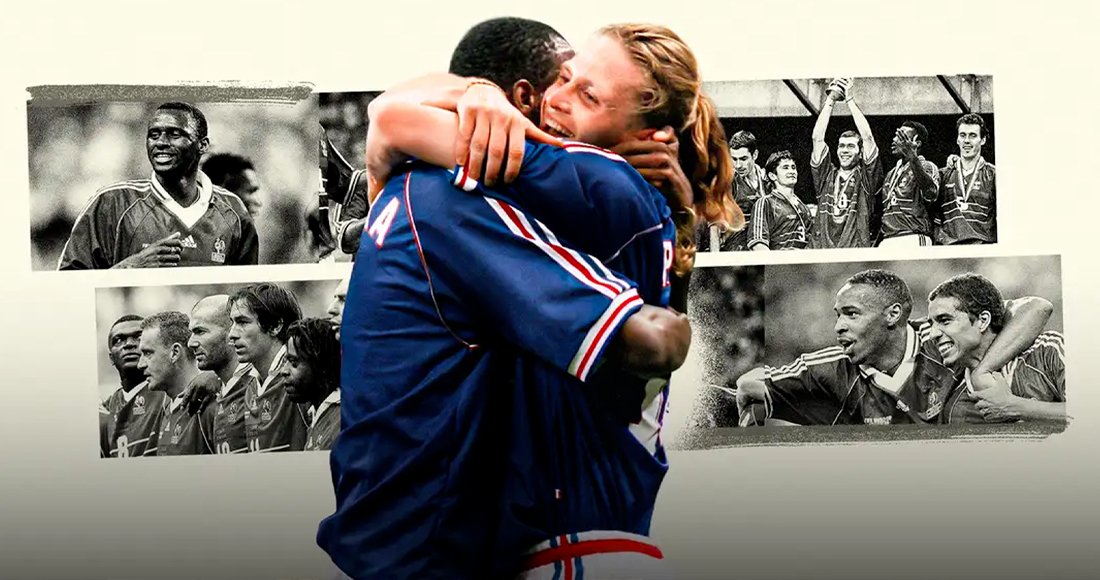
Paris. On July 12, 1998, France won more than just a trophy. They broke a historical inferiority complex and created a great saga that lives on to this day.
Before that date, French football was haunted by its own bad past. Despite being a founder of the world's biggest competitions, France was associated with a cruel paradox.
France was a nation that rarely won despite its impressive stature. It was an inventor who could not control its own creation. France's identity was built on a culture of 'magnificent defeat'.
This habit of finding greatness even in failure had, over the years, turned into a great psychological burden. To understand the true impact of the 1998 victory, it is necessary to understand the depth of the wound it healed. This wound was formed by three major traumas.
The first trauma is deeply etched in people's memories as the 'Seville Tragedy' of 1982. That World Cup semi-final against West Germany is a painful story. The foul by Harald Schumacher on Patrick Battiston—which broke Battiston's teeth and spine and left him unconscious—was a gross injustice, for which Schumacher received no punishment.
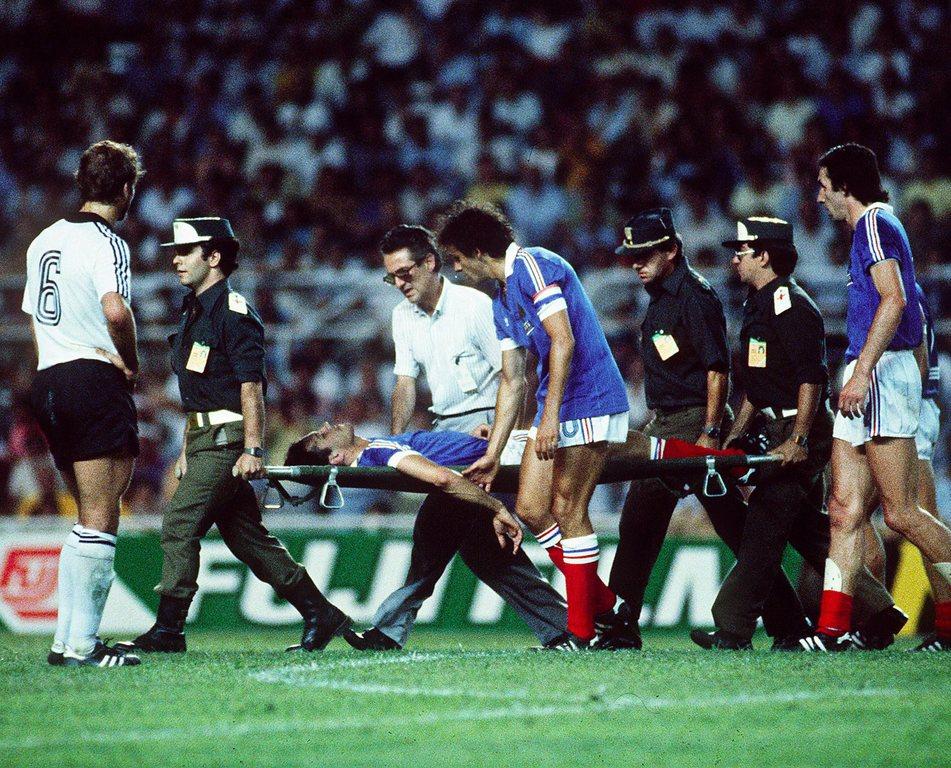
The defeat in the penalty shootout after leading 3-1 in extra time cemented France's image as a 'magnificent losing team'. France's 'Magic Square' of Michel Platini, Alain Giresse, Jean Tigana, and Luis Fernandez played the most beautiful football in the world. But the team seemed too romantic and weak to win the title.
The defeat in Seville fostered a dangerous mindset. A national narrative emerged that a magnificent defeat was better than a soulless victory. This was as poetic as it was progress-hindering.
The second trauma was utterly humiliating. With the end of Platini's generation, France faced a decade of devastation. France failed to qualify for Euro 1988 and the 1990 World Cup, and was unceremoniously eliminated from Euro 1992. But the national team faced its darkest night on November 17, 1993.
On that evening, France would have qualified for the World Cup in America with just a draw against Bulgaria at the 'Parc des Princes'. But in the final second, Emil Kostadinov scored from a counter-attack, shattering all hopes.
This defeat was no longer heroic. It exposed mental weakness and pathetic incompetence. The illusion of the 'magnificent losing team' was shattered, replaced by the shameful tag of simply a 'losing team'.
Finally, the third trauma was associated with a tainted victory. On May 26, 1993, by defeating the mighty AC Milan, Marseille proved that France could also win, securing the country's first European Cup.
This victory, which should have been a source of inspiration, was immediately marred by the match-fixing scandal between Marseille and Valenciennes. After the revelation that the match between these two was fixed, Marseille was stripped of its domestic league title and relegated to a lower division.
Thus, four major events marked this dark era: the Seville Tragedy of 1982, failure to qualify for the 1990 World Cup, Marseille's tainted victory in 1993, and the cruel defeat against Bulgaria in the same year. These events cemented France's inferiority complex.
Hope proved fleeting. It left the entire nation without a single pure moment to be proud of.
Therefore, in 1998, France was not just waiting for a victory. It needed liberation and redemption from these ghosts of the past. An undeniable victory was needed to erase injustice. Skill was needed to forget incompetence, and symbols of integrity were needed to wash away the stain.
- End of the Curse
The 1998 World Cup served as a collective catharsis. It was a psychological liberation that ended decades of inferiority complex. In the post-final period, the French press described it as 'The blue planet, completely blue, France's blue'.
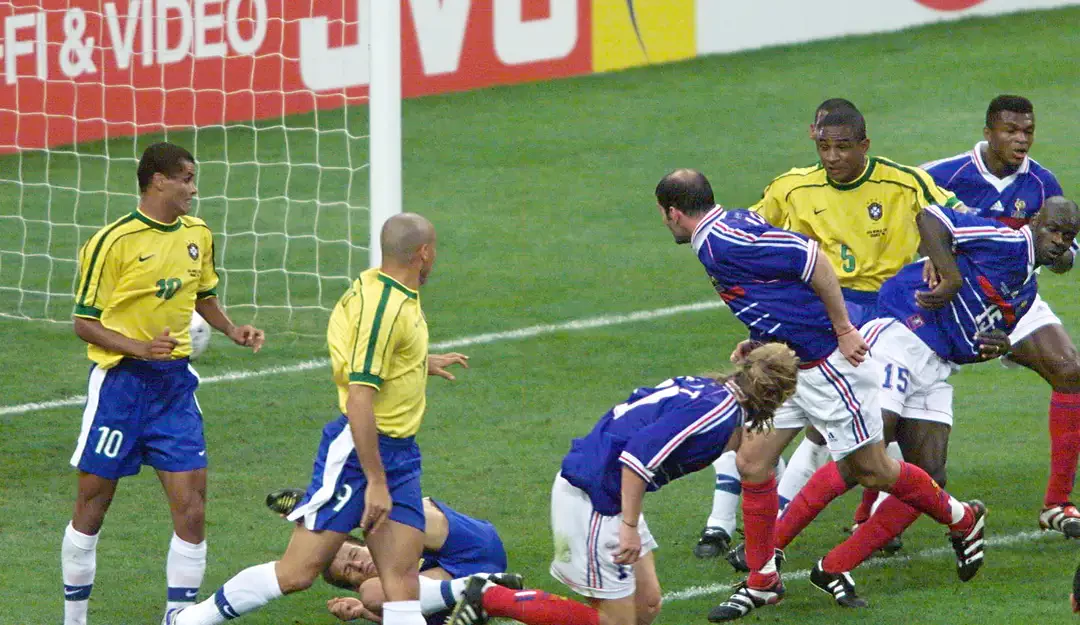
The chosen words were not of a mere sporting victory, but of rebirth. The same France that would bow before Brazil, considered the 'gods' of football, had just thrashed Brazil 3-0. The historical anomaly had now become a new reality.
This success ended France's 'Polydore Syndrome'. This term is associated with the French cyclist Raymond Poulidor. Despite his talent, he always finished second in major races and never won the 'Tour de France'.
This culture of always finishing second and accepting respectable defeats had severely plagued French sports. The 1998 victory freed a nation that used to hide behind the guise of 'beautiful football' to justify its defeats. Suddenly, a winning mentality was no longer the exclusive domain of Germans or Italians. French football could finally embrace high ambition without any excuses.
This liberation was achieved by breaking past conventions. The 1998 team was neither as romantic and weak as the 1982 team, nor as arrogant and fragile as the 1993 team.
Contrary to French tradition, the main strength of this team was its iron defense. With only one goal conceded via penalty in seven games, this team built its victory on a strong defensive foundation. Strategically, Aimé Jacquet had created an impenetrable fortress.
The heroes of this epic journey were not just artists like Zinedine Zidane. Defenders like Lilian Thuram, who scored two incredible goals in the semi-final, or tireless players like Didier Deschamps and Emmanuel Petit were also heroes.
By winning through discipline, toughness, and a pragmatic style, France proved that there was another path to success. The media often criticized such qualities. They broke the old curse by creating a new victorious identity, not by imitating the past, but by rejecting it.
- A Lone Man Against the World
The 1998 victory is intrinsically linked to the restoration of its architect, Jacquet's, honor. A national coach who was once scorned and later became a national hero, his journey is the story of a man who turned hostility into energy.
Before being carried on shoulders, Jacquet had to fight alone against almost everyone. He faced unprecedented media attacks. The criticism, particularly led by the newspaper 'L'Équipe', was personal and systematic. They blamed Jacquet for everything: his playing style was deemed cowardly, his decision not to include stars like Eric Cantona and David Ginola in the team was opposed. Even his provincial accent and his image as a 'tough' man incapable of leading France to glory were criticized.
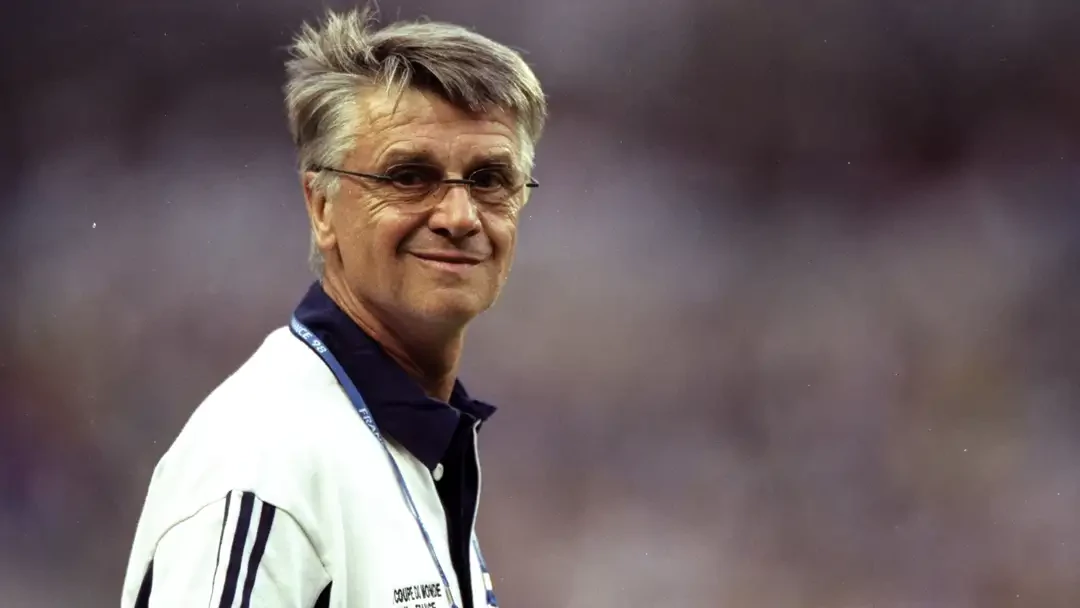
This controversy reached its peak as the World Cup approached. When Jacquet announced the preliminary squad of 28 players, L'Équipe's front page screamed in large letters: 'Are we playing with 13?'. This attack reflected the disdain of a segment of the elite media for a man they considered old-fashioned.
However, this campaign backfired. In a poll conducted by the same newspaper to discredit him, 72 percent of the French public showed faith in Jacquet. This created a deep rift between public opinion makers and the sentiments of the common people. Jacquet, representing provincial France, embodied the values of hard work, silence, and determination, which resonated deeply across the country.
Jacquet's approach in facing this storm was a prime example of leadership. He created a protective shield to shield his players from external attacks. His management was based on meticulous planning, where nothing was left to chance. He communicated directly and honestly with his players and showed unwavering loyalty to those who believed in his plan.
He had promised to wait for the injured defender Bixente Lizarazu and kept that promise. He made collective strength his main weapon, a principle that was non-negotiable. Marcel Desailly later described Jacquet's method as 'educating players by placing an iron fist inside a velvet glove'.
Therefore, the victory in the final was not just a sporting success; it was also a brilliant validation of Jacquet's vision. His famous statement on the evening of July 12—'I will never forgive'—was not just personal bitterness. It was a claim that the title was won through the strength of a united team against the advice of experts and in difficult circumstances.
Off the field, this victory brought about a cultural revolution within the French Football Federation (FFF). By proving that a coach could succeed under pressure and with a long-term vision, Jacquet dignified the coaching profession. He set a precedent that strengthened the authority and legitimacy of his successors and gave them unprecedented freedom to work.
His successor, Deschamps, used this power to implement his bold decisions. The 1998 victory cemented the principle that the coach is the primary responsible person for the national team, as if carved in stone.
- 'Black-Blanc-Beur'
The historic journey of 1998 quickly transcended sport to become a social phenomenon. The French team, composed of players from diverse backgrounds, became a mirror of a France undergoing transformation. Thuram from Guadeloupe, Lizarazu from the Basque Country, Zidane of Algerian origin, Youri Djorkaeff of Armenian origin, and Desailly of Ghanaian origin were examples.
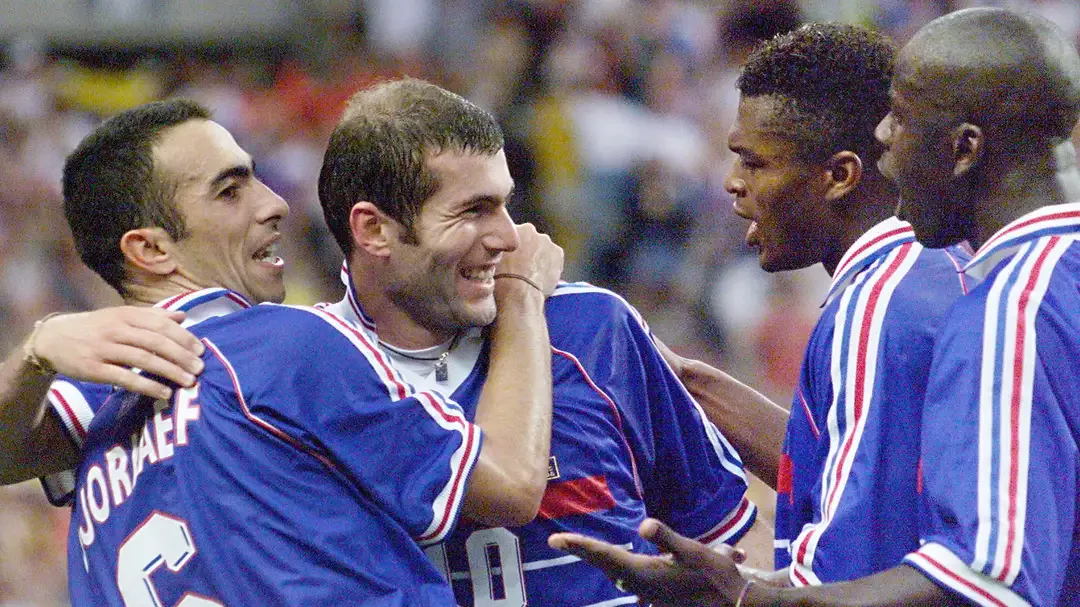
The slogan 'Black-Blanc-Beur' (Black-White-Arab), referencing the colors of the national flag, became a symbol of unity in diversity. Then-President Jacques Chirac himself praised this 'tricolor and multicolored team' for presenting 'a beautiful image of France and its humanity'.
This image of a reconciled France sparked the biggest popular wave since the liberation after World War II. From the 'Champs-Élysées' to across the country, millions of French people from all backgrounds celebrated together. It created a moment of national unity that was seen as a remedy for social divisions.
For many, this victory was living proof that France's inclusive republican model had succeeded. It strongly challenged the ideas of the right-wing party 'National Front' on their core issue of 'patriotism'. As sociologist Michel Tribalat noted, 'The French team did what years of policies could not achieve: integration'.
However, this 'World Cup effect' proved to be just a magical moment rather than a long-term transformation. After the euphoria subsided, social tensions and discrimination did not disappear. The 'Black-Blanc-Beur' myth was criticized for merely covering up the structural problems of French society with a festive veil.
The urban riots of 2005 and the subsequent heated debates on national identity highlighted the limitations of this sacred unity. Twenty years later, this concept seems like a relic of another era. It is a powerful but distant memory, when football gave France a chance to dream of a united and reconciled nation.
- Building a Global Model
If the 1998 victory was a human achievement and a social phenomenon, it was also the result of a structural revolution initiated years earlier. That revolution was: France's youth development system. At the heart of this system was the national technical center 'Fernand-Sastre', known to many as 'Clairefontaine'.
Inaugurated in 1988 on the initiative of then-Football Federation President Fernand Sastre, this center of excellence was established with the aim of becoming the technical hub of French football. Its main objective was to centralize the training of the country's best young talents and coaches to create a common working style and football philosophy.

The 1998 victory accelerated France's ambitions in youth development. Clairefontaine, established just 10 years earlier, had not fully prepared the world champion team (only Thierry Henry was a true product of it), but its existence clearly signaled the desire to build a national model. The global success of 'Les Bleus' gave this project immense legitimacy and impact. In the years that followed, many countries sought to adopt the Clairefontaine model.
The best example of this was seen in Germany. After being severely defeated and humiliated by Portugal in Euro 2000, the German Football Association (DFB) completely reformed its youth system. German officials, seeking inspiration, adopted the French model.
A plan was presented to create a network of national training centers similar to Clairefontaine for the identification and development of young talent. This structural revolution, which required every professional club to establish a high-level academy, yielded results a decade later. Germany's victory in the 2014 World Cup was a result of this.
Therefore, France's 1998 victory not only changed the fate of the national team but also helped redefine the standards of youth development worldwide. It ensured an inexhaustible supply of talent for future generations in France.
- New Heroes
Along with the collective impact, 1998 completely transformed the status of football players in France. Before that date, despite the popularity of players like Platini, footballers had not gained the recognition of 'icons' respected by all sectors. The World Cup victory changed everything. Overnight, players like Zidane, Fabien Barthez, Djorkaeff, and Lizarazu transformed from top-level athletes into national heroes. They became familiar faces who succeeded in capturing the minds of the general public.
This transformation is best exemplified by Zidane. With two headed goals in the final, he became 'Zizou', the symbol of victorious France. The image of Zidane's face projected onto France's famous monument, the 'Arc de Triomphe', on the night of victory, made history. It made him a true national icon.
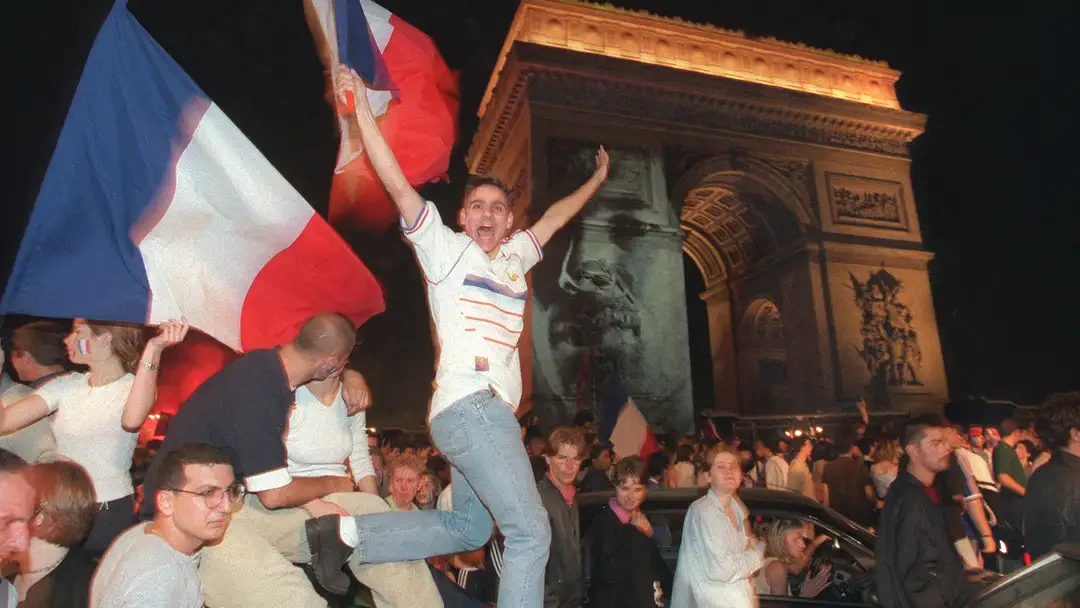
Zidane, the son of Algerian immigrants from the northern suburbs of Marseille, became living proof of success achieved through talent and hard work. He became a source of inspiration for millions of young people. Zidane's influence extended far beyond sports, and he remained one of the most beloved figures of the French people for decades.
This change in status had a profound impact on society. Football, sometimes viewed with disdain, now became a respected subject. It even became a subject of study for intellectuals and a focus of interest for politicians.
Most importantly, this new generation of icons gave birth to new dreams. On school playgrounds across France, children no longer just dreamed of becoming firefighters or astronauts. They began to dream of scoring goals in a World Cup final wearing the blue jersey.
These new superstars established football as the country's number one sport. They ignited unprecedented passion and inspiration in the new generation. This new generation grew up believing that becoming world champions was not only possible but a tangible goal within their reach.
- From Disciple to Strategist
The legacy of 1998 is not limited to trophies or memories. It is being passed on directly and vibrantly through the people who built it. The clearest and most enduring link is the relationship between coach Jacquet and his captain Deschamps.
On the field, Deschamps was Jacquet's representative, his mind. He translated the coach's strategic thinking onto the field. Twenty years later, Deschamps himself, as a coach, emerged as the natural successor to his mentor. He was the continuation of the same philosophy that had proven successful at the highest level.
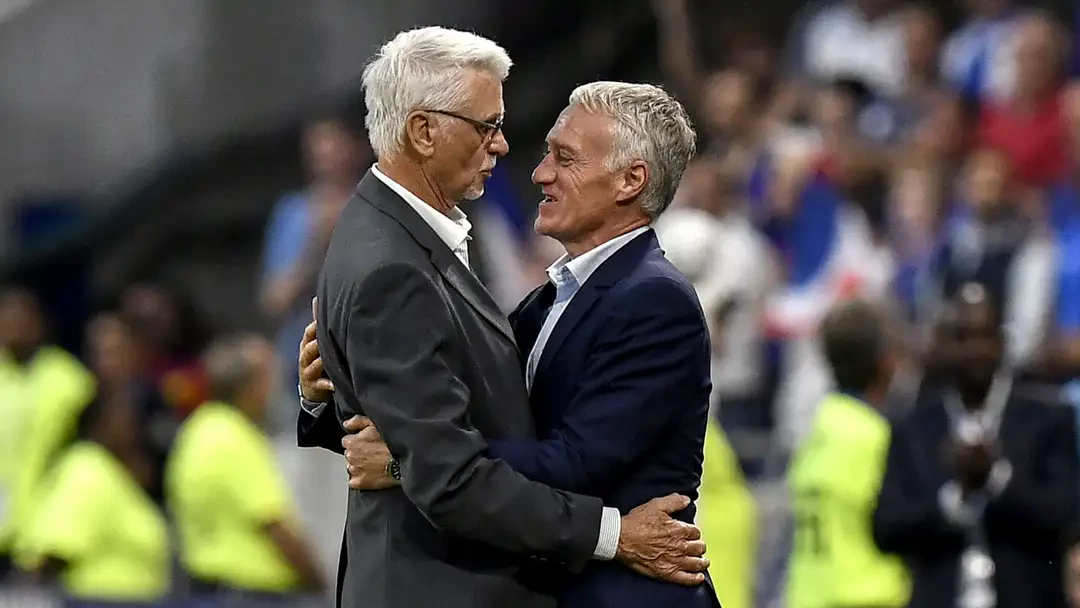
The similarities between these two men are striking. Both adhere to the same football philosophy, based on pragmatism, the supremacy of the group over the individual, and a strong defensive foundation. Like Jacquet, Deschamps is often criticized for presenting less attractive football. However, his exceptional effectiveness has always silenced his critics.
Their relationship with the media is also similar: controlled, distant, and sometimes curt communication. The main objective is to protect the team from external pressure. Jacquet himself acknowledged this similarity, saying, 'It might be a bit much to say he is my spiritual son. But I think, humbly speaking, our journey, our philosophy towards football and life are almost the same.'
This continuity was brilliantly demonstrated in the 2018 World Cup. Like Jacquet's team, Deschamps' France was not the most attractive team in the tournament. But it was the strongest, tactically astute, and most united team. Building success on a solid defense and rapid counter-attacks, Deschamps applied the lessons of 1998. He proved that Jacquet's legacy is not just a memory, but a management approach and a winning culture that remains relevant today.
By becoming the third person in history to win the World Cup as both a player and a coach, Didier Deschamps not only wrote his own saga. He transformed the French national team's DNA into a lasting legacy of 1998.
- Living Legacy
France's 1998 victory was not a historical coincidence. It served as a catalyst that profoundly transformed French football culture. Before that date, France was a nation that merely hoped; afterward, it became a nation that claimed. Victory became not just a dream but a standard, establishing a winning mentality that transcended generations.
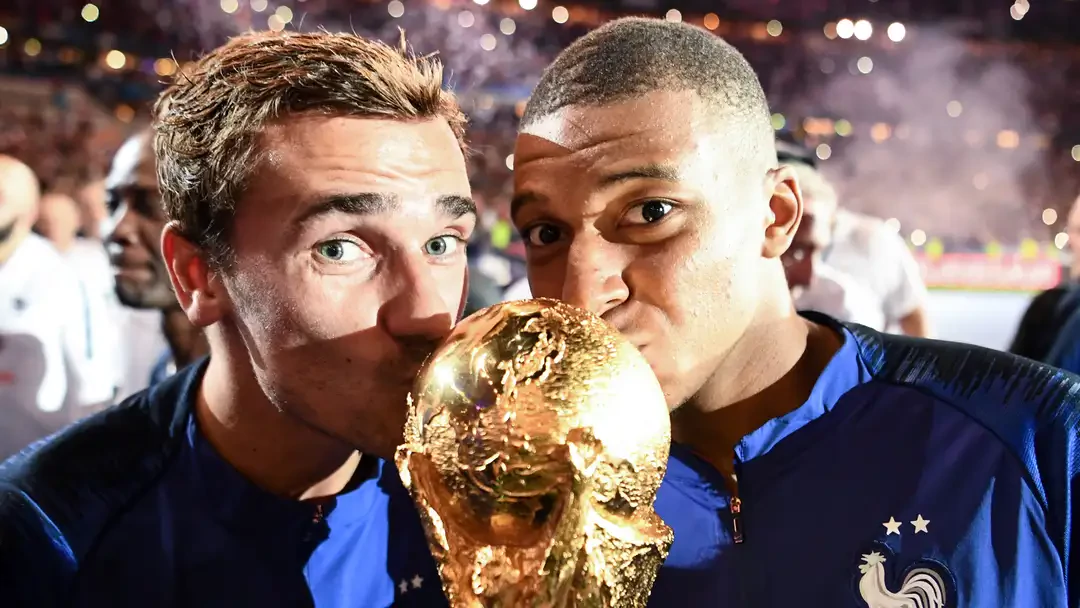
The most immediate proof of this was seen in Euro 2000. With the same core team, France achieved a historic double, establishing itself at the pinnacle of world football. Even in difficult times, the 1998 legacy was referenced. Reaching three World Cup finals—in 2006, 2018, and 2022—proves that France now belongs to the elite group of nations capable of playing at a high level with exceptional consistency.
The most direct connection to this is the second World Cup title won in 2018. Twenty years later, a new generation, trained by the captain of 1998, repeated that success. Young players like Kylian Mbappé and Antoine Griezmann grew up watching the exploits of Zidane and Thuram. For them, becoming world champions was not a fantasy, but a clear and achievable goal. The 1998 victory became, in the words of historian Pierre Nora, a 'lieu de mémoire'—an emotionally charged event that shapes the identity of an entire community.
More than a quarter of a century later, the echo of July 12, 1998, is still as powerful. It is not just a glorious chapter of the past, but also a compass guiding the future of French football. The team that will present itself in North America in 2026 will carry the memory of Zidane lifting the trophy at the 'Stade de France' not as a burden, but as inspiration. Because since 1998, the blue jersey has not just been a symbol of the nation—it has become a promise of pride.
This specific news has been automatically translated by AI. As a result, there may be some inaccuracies or language errors.