Arsenal Celebrations Expected Across Africa if Champions League Final is Won

Today, if Arsenal wins the Champions League final, celebrations are expected across Africa. The scenes witnessed last week after winning the Premier League title for the first time in 22 years suggest this celebration will be huge.
Excited fans poured onto the streets in the city centers of Kenya, Ethiopia, Uganda, and Nigeria. Despite growing insecurity due to the Boko Haram menace, people celebrated in the streets even in Zamfara state, Nigeria.
From the outside, the natural question arises: How did a club from North London become so deeply connected to African popular culture?
The most dramatic scenes were seen in Kenya, where tens of thousands, and by some estimates millions, poured onto streets and highways last week, dressed in red Arsenal jerseys, in what appeared to be a sea of people. This scene had never been witnessed before. Supporters climbed electricity poles, waved flags, and sang club songs. Some of these songs were also local language versions. Traffic was completely blocked. In a video widely circulated on social media, one supporter called this victory a 'victory that defeats all the hatred in the world.' Excited fans even paid homage at the tomb of the late Kenyan opposition leader, former Prime Minister, and staunch Arsenal supporter Raila Odinga.
But Kenya was not the only example. Videos of supporters across Ethiopia turning the capital Addis Ababa into a celebration of car parades, chanting crowds, and running youth on the streets are abundant on YouTube and TikTok. In another video, a grandmother is seen celebrating with her grandchildren in an Arsenal jersey. Supporters of Manchester United, who are numerous in the country, had to watch this scene unfold.
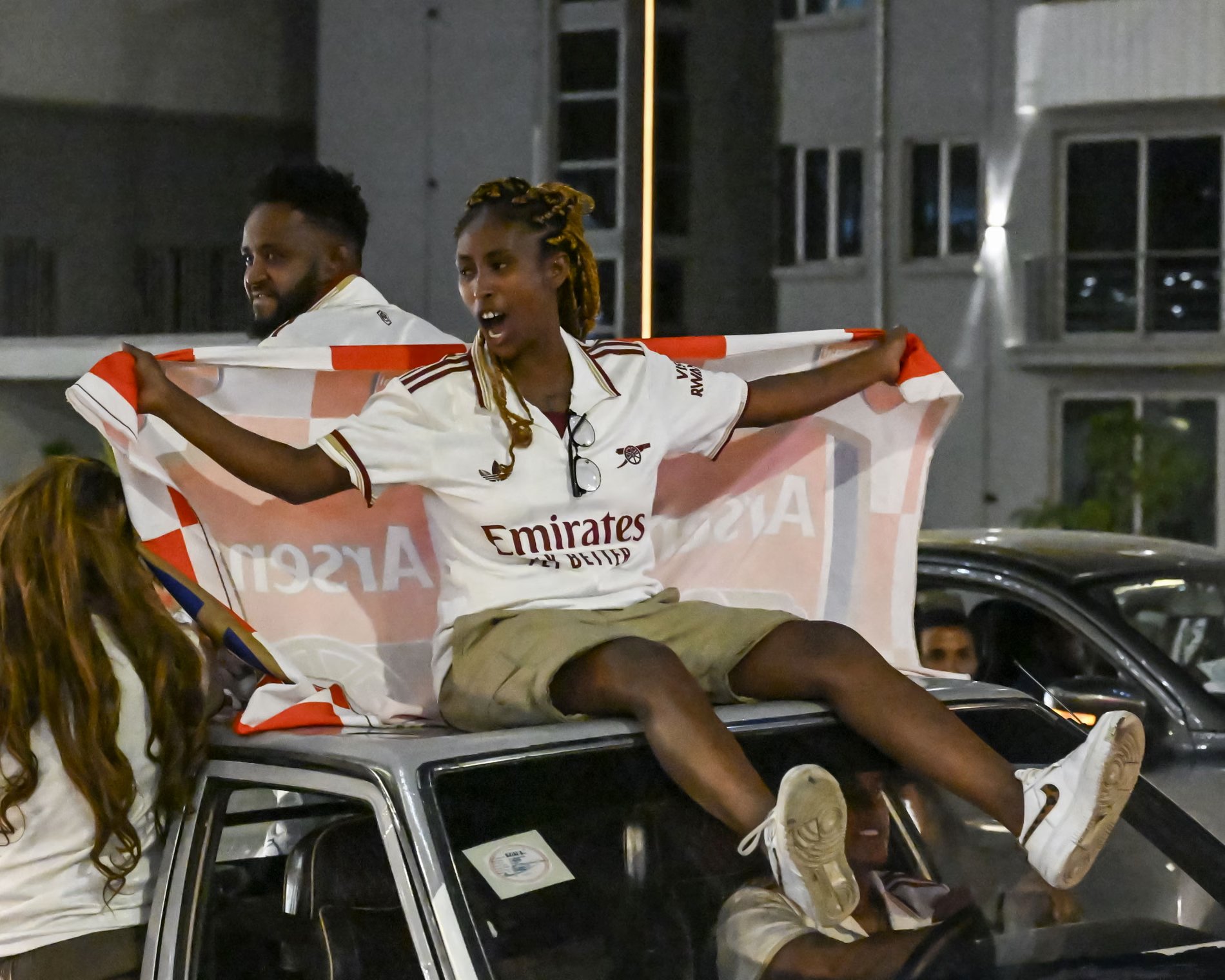
In Uganda, thousands gathered in Kampala's strong Arsenal supporter area 'Nsambya' and participated in an all-night concert called 'Wimbiisa Arsenal' after watching the game on a giant screen. One supporter live-streamed the event for those who could not attend. Elsewhere, worshippers going to church or mosque wore Arsenal-themed attire and thanked God for the victory. Such spontaneous energy seen across Africa was not surprising to anyone.
One of the main reasons for this is the expansion of Premier League broadcasts across Africa in the 1990s. Since the league started in 1992, clubs like Manchester United, Liverpool, and Chelsea had built a fan base in Africa. However, the decisive change came in 2000 when the South African satellite network 'DSTV' acquired the Premier League broadcasting rights and began broadcasting matches live across sub-Saharan Africa through the 'SuperSport' channel. Suddenly, these games became available weekly in homes, bars, and gathering spots from Kenya to Nigeria and Ethiopia.
These football bars became informal meeting places. Supporter clubs were formed, which even had elections, annual meetings, and grand celebrations. Unintentionally, SuperSport and DSTV helped build a form of non-political 'Pan-Africanism' consciousness (consciousness of unity of African origin) based on a shared audience culture. However, even though African and players of African origin played for English clubs, this new football culture had not yet fully established its symbolic home.
This change, however, came with the arrival of coach Arsène Wenger. This renowned coach, who came to Arsenal from the Japanese league in 1996, entered English football at a time when African players were considered rare. Wenger completely changed that situation. By the time he left the club in 2018, Arsenal had become a symbol of the rise of African football and London's African diaspora in the Premier League.
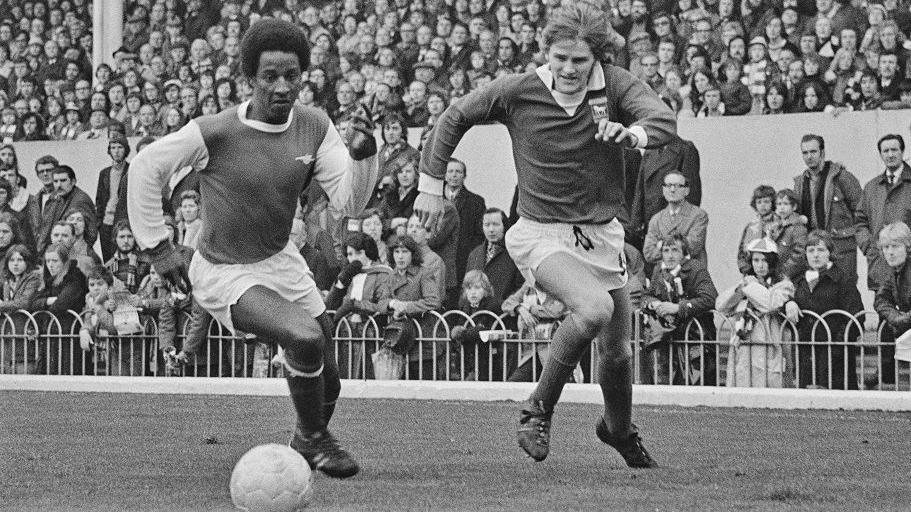
In 1957, Arsenal signed the white South African player Danny Le Roux, who played for the club in the 1957-58 season. Wenger's first African signing was Liberian striker Christopher Wreh, whose success at Monaco under Wenger had strengthened Wenger's belief in African talent. Christopher Wreh was a relative of George Weah, who also played with Wenger at Monaco and later became the President of Liberia after his illustrious football career.
Under Wenger's leadership, more than two dozen players of African origin represented Arsenal, including star players like Lauren, Patrick Vieira, Kolo Touré, and Nwankwo Kanu. This identity helped establish Arsenal as an open, global, anti-racist, and forward-looking club. According to many supporters, these values are rather scarce in their own political systems.
Football celebrations can also be seen as a momentary escape from political pressure. Where politics often feels like a bargain of the elite and elections are limited to vote-buying practices, such spontaneous street occupation provides a sense of real collectivity. For a short time, the streets are occupied by ordinary people.
It is true that authoritarian figures like Rwandan President Paul Kagame are also Arsenal supporters, and the club's sponsorship relationship with Rwanda complicates its image somewhat. However, this does not diminish the energy that Arsenal generates in the African continent, the diaspora, and Black identity.
This specific news has been automatically translated by AI. As a result, there may be some inaccuracies or language errors.