Nepal's First Budget Presented in 2008 BS


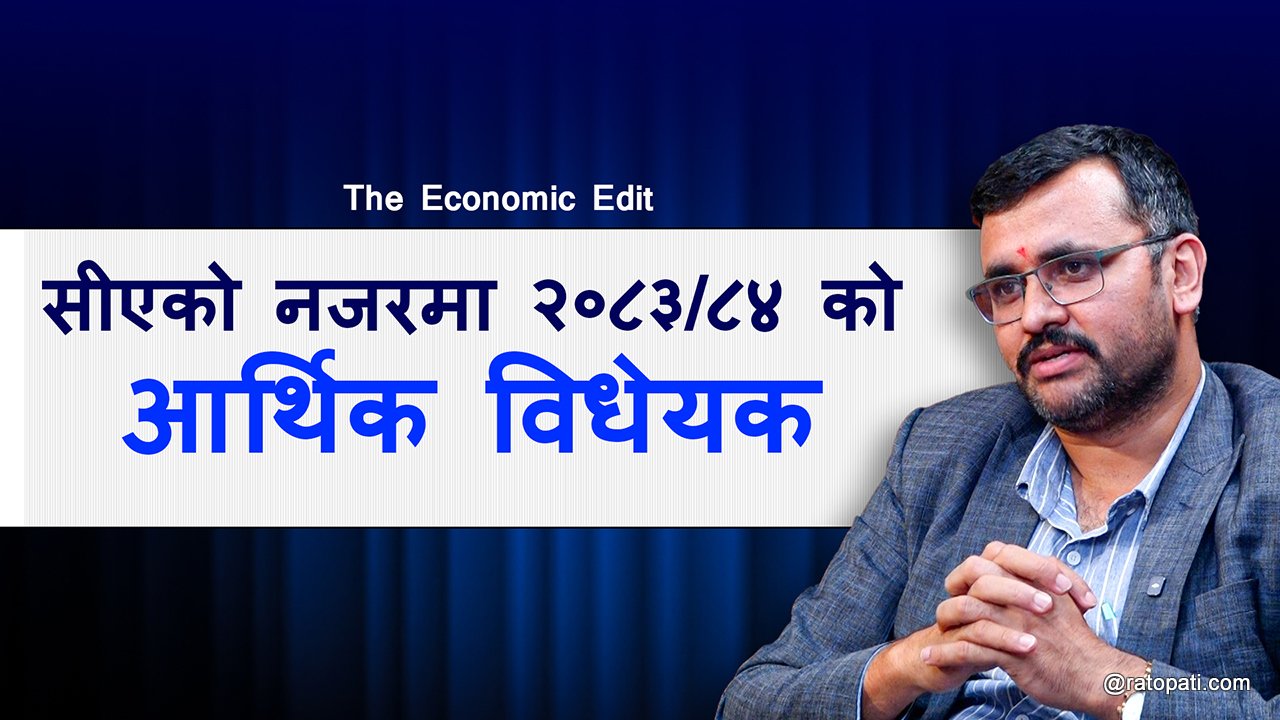
Kathmandu. The annual budget for the fiscal year 2083/84 has been made public today. Finance Minister Swarnim Wagle presented the budget for the upcoming fiscal year, including estimated income and expenditure, in a joint meeting of the Federal Parliament today.
Finance Minister Subarna Shamsher had presented Nepal's first budget in 2008 BS.
‘I believe that economic prosperity lies in increasing the country's resources and wealth rather than distributing existing assets equally. However, while increasing the country's wealth, the gap between the rich and the poor should be gradually narrowed without letting it widen.’
From the above quote, it is understood what kind of policy the country's first budget had adopted. Finance Minister Subarna Shamsher had presented the country's first budget on Magh 21, 2008 BS. Prior to this, there was no practice of presenting an annual budget.
At that time, an annual budget of Rs 5 crore 25 lakh was presented. The public budgets from 2008 BS to 2012 BS primarily focused on maintaining peace and security, collecting revenue, and operating daily administration.
The first budget, which prioritized issues directly related to the people's standard of living and daily lives, had strengthened economic, social, and political policies.
Finance Minister Shamsher wrote in the budget speech, ‘Now I want to say something about the government's economic policy. The objective of the government is to raise the standard of living of the people and improve the cultural and social life of the citizens. To achieve this goal, the government will prepare a comprehensive plan covering all areas of social, cultural, economic, and governance.’ Shamsher further stated, ‘Inappropriate and undesirable actions will not be allowed. Our plan will not be influenced by the economic ideology of any 'ism' but will be based on a realistic policy that provides maximum benefit in the shortest possible time. The government's determined policy is to prevent mixed economic exploitation and provide equal opportunities for all and ensure equitable distribution of wealth.’
The budget, which also emphasized the private sector, industry, and trade at that time, stated, ‘There will be ample scope for private industry and trade (private entrepreneurship).’
Regarding Foreign Aid
The then government, through the budget, also mentioned accepting foreign economic and technical assistance and seeking it for the benefit of the country.
On page 36, mentioning this, Finance Minister Shamsher said, ‘We face many obstacles. One of them is the lack of employees who understand modern governance and are trained in the work of various departments. We also need highly skilled experts and professionally proficient people for various tasks, but we do not have enough. Therefore, we have made efforts to bring in trained people from India and other countries and are trying to benefit as much as possible from various international aid programs like Point Four Program (Swiss Technical Aid Plan), Colombo, etc.’ the budget speech stated.
‘Since the nation needs to be built, we are facing an uphill task. Therefore, until our people receive proper education and training, it is essential for us to seek assistance from other countries for experienced and trained personnel,’ the speech stated, adding, ‘Since other countries have also overcome similar needs, there is no reason for us to be ashamed of seeking assistance from trained personnel.’
Another problem is that of material resources. Although our country has sufficient mineral and other natural resources and there is ample scope to derive great benefit from them, we have to depend on other countries for machinery, equipment, and other necessary tools to utilize such resources.
Nepal started planned development and infrastructure development only after 2013 BS, and initiated the first five-year plan from the fiscal year 2013/14. After the first five-year plan came into implementation, the practice of budget management to achieve the goals of that plan began. _page-0001_6gztw57WsB.jpg)
_page-0002_Eztbm3n4Ku.jpg)
_page-0003_pqzBBNYTjK.jpg)
_page-0004_Wv6zsR1fZT.jpg)
_page-0005_zYy4MDQ2lC.jpg)
_page-0006_KshTZB1HbG.jpg)
_page-0007_FcbS2mqTdh.jpg)
_page-0008_C4QFQ4DRbg.jpg)
_page-0009_msIs5AQlok.jpg)
_page-0010_eHoy96lHPK.jpg)
_page-0011_dq71PI3aa7.jpg)
_page-0012_ivc39hkzhM.jpg)
_page-0013_RtK5Ln0yEz.jpg)
_page-0014_IHfwlFnxXc.jpg)
_page-0015_sGgnCIsfRi.jpg)
This specific news has been automatically translated by AI. As a result, there may be some inaccuracies or language errors.


_jxKX1kXOlf.jpg)