Power Outages and Water Shortages Cripple Birendranagar

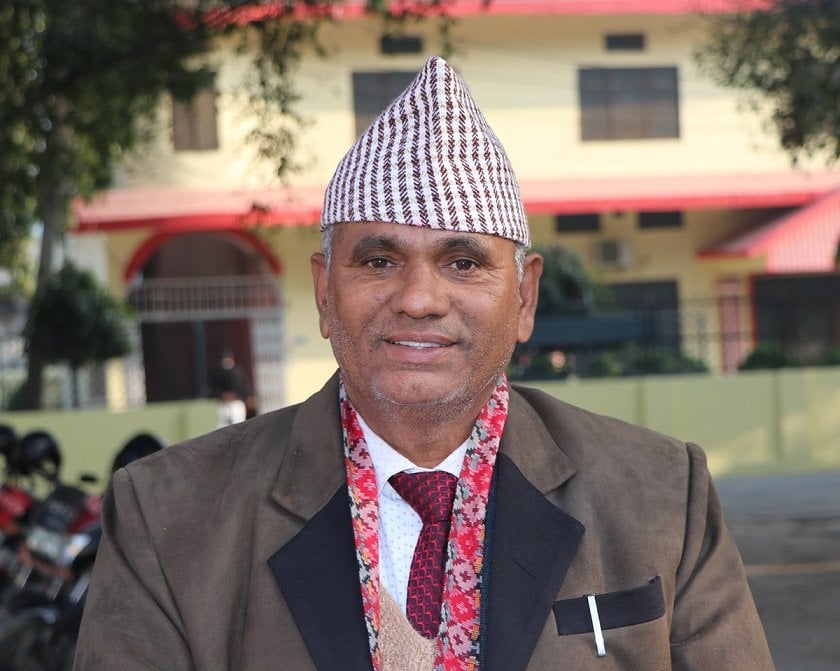
Surkhet. It has been 15 years since Dailekh's Keshav Sodari moved to Birendranagar and started operating a fresh house. Previously, due to electricity, his shop's meat never went to waste. This time, however, due to power outages, 8 kg of meat had to be discarded on Tuesday and Wednesday.
"Due to the power problem, 6 kg of meat was wasted on Tuesday and 2.5 kg on Wednesday," said the operator of the fresh house located at Chandraman Chowk in Birendranagar Municipality-4, adding with disappointment, "The loss was around 3,000 rupees." He states that this amount is significant for people like him who earn a living. According to him, the electricity problem in this area has been ongoing. Last year, there was no situation where meat was wasted like this. "Electricity is irregular by the second, and even when another power supply comes, it's low-voltage," he told Ratopati. "Because of this, even the fridge didn't work, and the heat outside made it worse. Cut chicken meat spoiled because it wasn't kept in the fridge for long."
_WAyTJCmPxp.jpg)
He used to cut goats according to the needs of his customers. But he said that work has stopped due to the electricity problem. Keshav says that the electricity crisis is causing great problems for people like him who earn a living. "They call Birendranagar a developed city now, but even if a crow sits on the electricity wires, the power goes out," he adds. "It's unbearable to sit outside due to the heat, and if we sit inside, the fan doesn't work; it's very difficult due to the heat, sir..!"
Ganeshkanchan Bharti recently opened a restaurant named Yarsa Chulo a little east of Erichok in Birendranagar. He is still in the process of further management. However, he is worried as a large financial loss is occurring daily due to the lack of electricity. "In the last two days alone, we suffered a loss of about 70,000 rupees due to electricity," he told Ratopati. "Business is in ruins." Restaurant items for the next day must be prepared the evening before. After the storm on Monday evening, there was no electricity for almost 24 hours. Because of this, all his prepared items were wasted. He said that running the generator all day costs 20-25 thousand rupees. If the government had taken prompt action and repaired the damaged electricity towers, such a problem would not have arisen. "But the current government doesn't seem very people-oriented either," he says, disappointed.
Hospitals, schools, and all sectors are stressed due to the electricity problem
Due to irregular electricity and low voltage, not only hotels and restaurants but also schools, hospitals, and all sectors are affected. In Surkhet and Karnali, oxygen concentrators and nebulizer machines are currently not working. Dr. Navraj KC, who operates Bal Polyclinic in Birendranagar, says that the daily lives of people are being affected by the electricity and drinking water crisis, along with extreme heat in Birendranagar. There is a severe heatwave, and the fan doesn't work. On the other hand, there is an extreme water crisis, which he says is causing problems from children's studies to all areas. "Heat itself causes heatstroke, dehydration, and lethargy," he says. "Therefore, the electricity problem is directly related to diseases." According to him, fruits kept in the fridge are not at the required chilling temperature. This increases the possibility of them spoiling quickly. Traders do not discard such fruits for business. KC says that if people buy and eat such fruits, there is a possibility of diseases like diarrhea, typhoid, and hepatitis spreading. He says that electricity is now linked to people's health.
_qXy2s4gnf1.jpg)
According to him, nebulizer machines and oxygen concentrators are not working properly in hospitals in Birendranagar due to electricity. When the machines don't work, the health of parents with asthma worsens. He also said that vaccines in the fridge are spoiling. On the other hand, KC says that the lack of water in the taps leads to a lack of sanitation, which increases the risk of other diseases. The Kohalpur-Surkhet 132 KVA electricity transmission line, seen as a solution to the electricity problem in Surkhet and Karnali, was completed in January. In the last week of April, two towers (poles) on this line in Chisapani, Banke, were damaged by falling trees. Due to the storm, trees in the national park fell on the towers, causing them to collapse. Those towers have not yet been erected. Although it was said to take a few months, the authority arranged for electricity supply to Birendranagar from the old 33 KVA and the line coming from Kailali as an alternative. The storm on Monday evening further exacerbated the electricity crisis. According to the authority, the storm damaged the old structures' electricity poles. This has now been addressed. However, due to the low capacity, the problem of irregularity and low voltage persists. Kamal Shahi, who lives in Tatapani, Birendranagar Municipality-3, says that with the current electricity supply, it's not even enough to charge a mobile phone. "Instead of giving intermittent electricity, it's better not to give it at all," he says. "If a mobile can't be charged, a computer can't run, and a fan doesn't work, what's the use of electricity?"
Dr. Navraj KC believes that the falling of electricity poles only in Karnali due to the storm needs to be looked into deeply. He suggests that the collapse of high-tension line towers, which were built very strongly, might be due to weaknesses during construction. "Are the construction standards met? Such storms occur all over the country; why is the electricity supply only stopped in Karnali?" he questions. He argues that corruption is not just in cement and sand but affects people's lives here.
Birendranagar is the capital of Karnali Province. This city is now discussed as a developing and emerging city in western Nepal. Birendranagar Municipality has moved forward with plans to make it a sub-metropolis. Major structures in health, education, and sports have been built. Roads have also been blacktopped everywhere. However, the extreme drinking water crisis and irregular electricity problems have not yet been resolved. Life in the Birendranagar valley from April to June is arduous.
Drinking water is as unreliable as electricity
In Birendranagar, not only electricity but also drinking water is unreliable. The drinking water problem, like electricity, has been ongoing here. With the onset of summer, there is no certainty whether water will come from the taps or not. Shanta Shahi of Birendranagar Municipality-1 did not build a well as her house has tap connections. However, there is a lot of trouble when water doesn't come from the tap. She says, "First, water doesn't come from the tap at all; sometimes, when it does, it's in small quantities. It's not enough for cooking, flushing the toilet, or bathing for even 1-2 days." Complaints of water not coming from taps for up to 15 days have reached the Surkhet Valley Drinking Water department in the lower areas of Birendranagar (Tatapani, Ranatol, etc.). Although a distribution schedule was implemented on April 7 for the smooth distribution of drinking water during the summer, drinking water supply has not been possible in all areas according to that schedule. Engineer Balaram Tiwari of the Surkhet Valley Drinking Water Consumer Committee says that the current drinking water problem in Birendranagar is not possible with the current sources. Due to the drought, the drinking water sources have decreased. About 500,000 people, both permanent and temporary, live in Birendranagar. The number of households has reached about 40,000. According to the statistics of the Surkhet Valley Drinking Water Consumer Committee, taps have only been distributed to 20,529 households so far. Although 4,600 households have applied for tap connections, installation work has not been completed. According to Tiwari, 347 liters per second of drinking water are required to supply water to households with tap connections. According to the Drinking Water Committee, the current capacity of Jhupra Khola is 86, Kharibori Khola 30, Itram Khola 27, Khorke Khola 10, and Dundure Khola 10 liters per second. Due to the current dry drought, the drinking water sources have dried up, and only 83 liters per second of drinking water are available from all sources, according to the Drinking Water Committee. This availability is insufficient to meet even 10% of Birendranagar's drinking water crisis. Citizens without tap connections use water from wells. However, locals say that wells are also drying up due to the drought. "Living in Birendranagar feels like a crime," says Rudra Acharya, who lives north of Khajura in Birendranagar. "No water, no electricity." Engineer Balaram Tiwari of the Drinking Water Committee says, "Until the water from the Bheri river arrives, it is impossible to quench the thirst of Birendranagar with the current drinking water sources." He says that even to distribute water to the entire population and lay pipe networks, a rotation of 5 days would be necessary in winter.
_Eme4KGVaYE.jpg)
When will Birendranagar's drinking water and electricity crisis be resolved?
The only solution to Birendranagar valley's drinking water problem is to bring water from the Bheri river to Birendranagar. The first phase of the project is in its final stages, and the second phase is being studied. This project, undertaken considering the potential population growth in Birendranagar by 2050, will bring water from the Bheri river to the capital Birendranagar using pumping technology. The project is funded 80% by the federal government, 13% by the provincial government, and 7% by the municipality. The construction of the project has been carried out by the Chinese company Xinjiang Terms International Economy & Technical Co-operation since last year. The work is being carried out at a cost of 3 billion 5 crore 8 lakh 15 thousand 280.61 rupees under the first package. Birendranagar Municipality Mayor Mohan Maya Dhakal said that water from the Bheri river would reach Birendranagar within the next two years. The solution to the electricity problem is the 132 KVA transmission line. Ravi Chaudhary, the project chief of the Kohalpur-Surkhet 132 KVA electricity transmission line, says that the foundation of the collapsed towers in Banke has been constructed. "The line will be operational in a few days," he said. However, he argued that since trees still exist in the national park area, it cannot be said that storms will not cause problems again. According to him, in some places, if the trees could be cut, the problem would be solved permanently. The process of cutting trees is very long. "We have already cut trees within the radius of the towers and wires, but there seems to be a problem with trees outside that could cause damage," he says. "However, we have not received permission to cut trees." He also stated that letters have been written to the central Ministry of Forests, and Banke and Bardia National Parks for this purpose.
This specific news has been automatically translated by AI. As a result, there may be some inaccuracies or language errors.