
Construction Sector Faces Severe Crisis Amidst Economic Challenges


Kathmandu. Nepal's construction sector is currently going through a severe crisis. Even as the end of the financial year approaches, capital expenditure is extremely disappointing. On the other hand, construction entrepreneurs are suffering as billions of rupees in payments for completed projects remain unpaid. The exorbitant price hike in construction materials and petroleum products due to tensions in the Middle Eastern countries has brought development and construction work to a near standstill.
Issues such as amendments to the Public Procurement Regulations, crackdown on entrepreneurs over security vulnerabilities in the e-GP system, and labor shortages in the construction sector have widened the gap between the government and entrepreneurs. Entrepreneurs complain that the state machinery's inability to make timely decisions and its tendency to solely blame entrepreneurs are negatively impacting the overall economy.
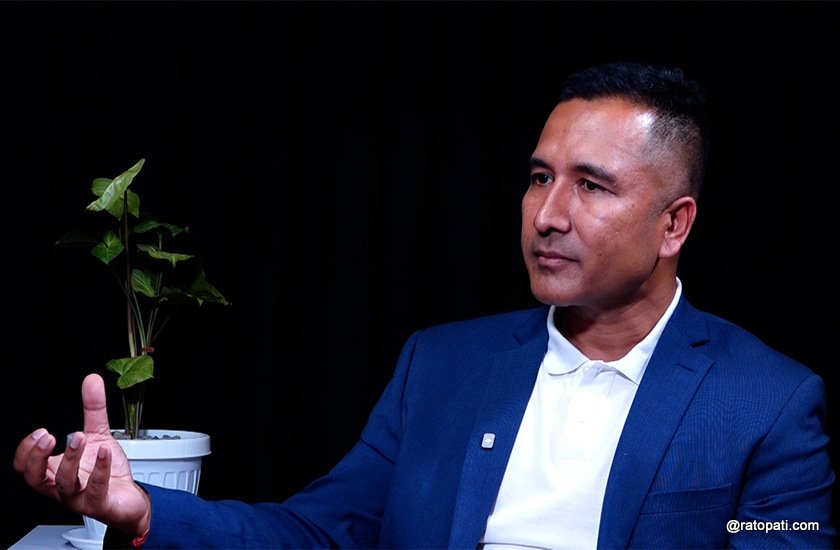
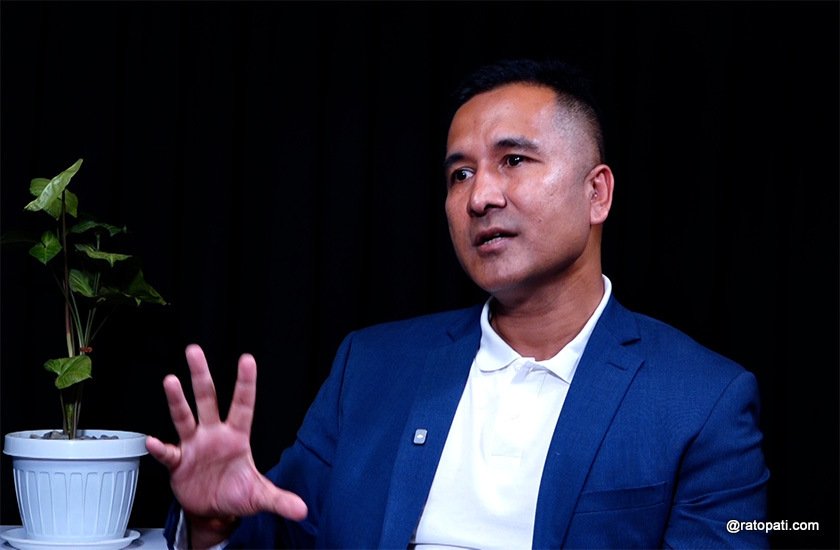
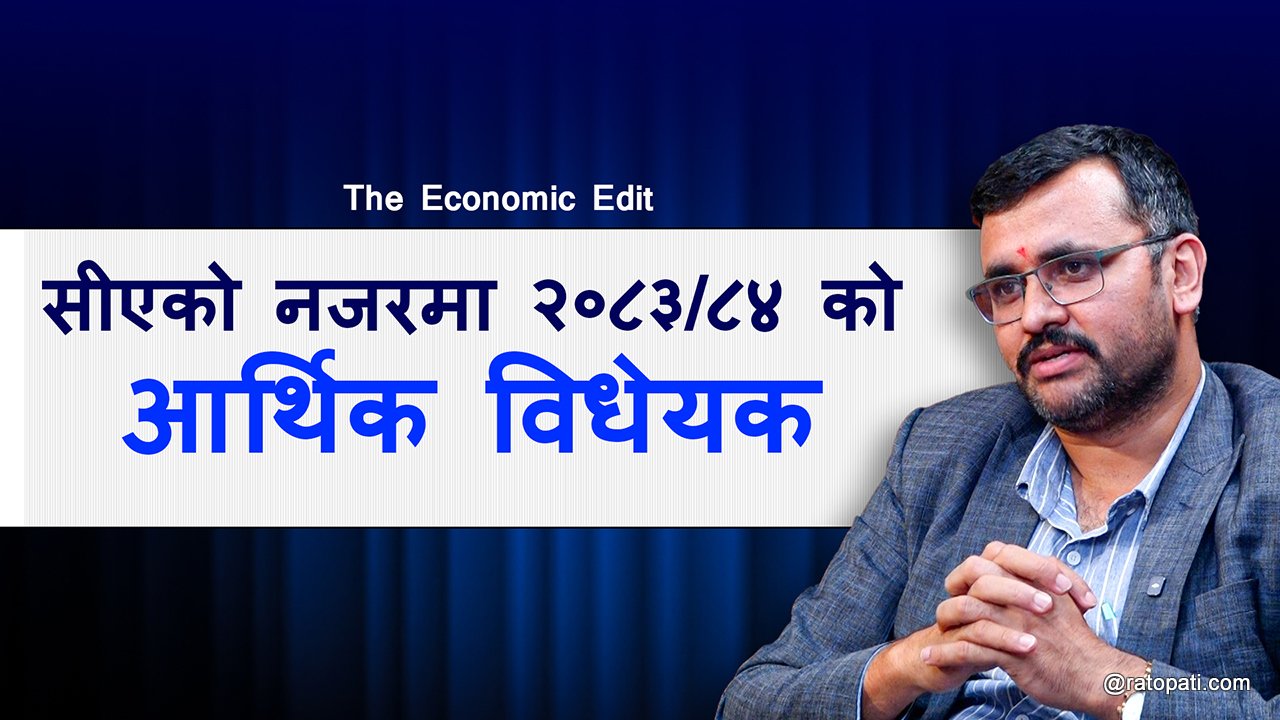
Focusing on these issues, a conversation was held with the President of the Federation of Contractors' Associations of Nepal, Nikolas Pandey, in Ratopati's ‘Economic Edit’. The following is the edited excerpt of the interview (detailed video can be watched and listened to):
Nowadays, it is heard that the construction sector is not in the same easy situation as before. There are also reports of entrepreneurs being harassed. In what state is the construction sector going through currently? How do you view this?
Currently, we are in an extremely complex situation where we have to proceed by declaring the construction sector under an undeclared state of emergency. Today's most pressing issue is the extremely low capital expenditure of the nation as the end of the financial year nears. Looking at the latest data, capital expenditure is only at 31 percent. A large portion of our capital expenditure goes into the construction sector and physical infrastructure.
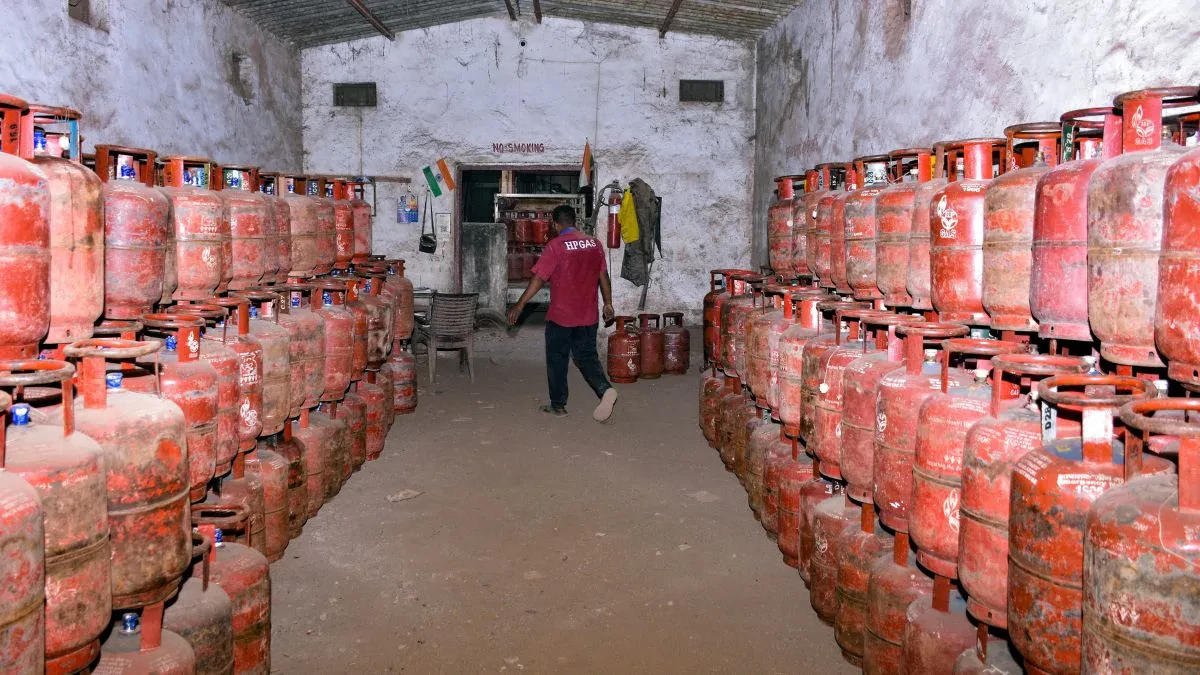
On the other hand, global circumstances have severely affected us. Due to the conflict in the Middle East and the closure of the Strait of Hormuz, the price of petroleum products has increased exorbitantly. This has severely impacted Nepal's entire transportation sector. The price of all types of construction materials has skyrocketed as transportation costs have increased, whether by road or air.
Specifically, the prices of heavy construction materials like steel bars and cement, as well as bitumen, have doubled. The monsoon season is about to begin. It is certain that transportation costs will further increase when our important road networks are disrupted during the monsoon. This will have a direct impact on consumers' households. More than 50 percent of the cost of road construction is due to petroleum products, bitumen, and diesel. In such a situation, the construction sector is in complete uncertainty due to the lack of contract extensions and price adjustments for projects whose deadlines expire at the end of Asar.
You demanded a 'construction holiday' citing price increases. Will the problem be solved just by asking for a holiday when it is uncertain when international market prices will decrease?
I want to clarify something here. We have not asked the government for a 'construction holiday'. We have stated that due to the current situation and high prices, the construction sector itself is forced to go on holiday. It is not possible to work at the current price increases.
The law also states that entrepreneurs must bear price fluctuations of up to 10 percent. However, the price increase has now gone far beyond that limit. In such a situation, it is not possible to work by mortgaging one's home and land or by facing blacklisting by the bank. We do not want to avoid work, but we are unable to work due to extreme price increases.
To solve this, the state should issue a directive. Our Public Procurement Act itself has a provision for price adjustment for any project if the price increases by more than 10 percent. This rule applies to both sides; if prices decrease, we also have a provision to return money to the state. Therefore, the price adjustment provision should be implemented by making the index of Nepal Rastra Bank realistic and scientific. If the government addresses this, we are ready to return to work immediately.
Is there any practice or example of entrepreneurs returning money when prices decrease after a contract has been signed?
Certainly. There is an example of such a practice around 2065 BS. All the projects being contracted today are based on a high price index. If the price of petroleum products decreases in the international market in the future, that index will also decrease, and the state will benefit.
Our Standard Bidding Document has a provision to include the rate of Nepal Oil Corporation. If the project office has signed the contract with the same provision, the rate will automatically decrease when oil prices fall in the future. However, for this, the inflation and market price index calculated by Rastra Bank must be realistic.
It is a common understanding that entrepreneurs must bear both profits and losses. Government ministers say they are positive about price adjustments, but why is work not moving forward? Who will bell the cat?
This is a very serious question. I myself am constantly visiting ministries and concerned bodies regarding this very issue. The construction entrepreneurs across the country have only one question: will we get price adjustments or not?
Wherever we go to discuss, from ministers to secretaries and directors-general, everyone is positive. Everyone knows that this problem is real. But no one has the courage to make a decision. Truly speaking, there is a great lack of people to bell the cat here.
There is a strong psychology of fear in the bureaucracy right now. The idea that 'investigative bodies might investigate, we might get into trouble, let's spend our tenure safely and leave' is prevalent. We have heard that files are being returned even after reaching the Chief Secretary's table. The tendency of the bureaucracy not to take risks and always play it safe is seriously affecting the country's development and construction.
Do you believe the Chief Secretary is holding up this matter?
That is what it seems like to me. I have tried to meet the Chief Secretary multiple times. I have sent letters through various channels, but he has not given me an appointment. When the head of the concerned body does not want to meet and listen, it reflects a lack of transparency. My understanding is that since he does not want to meet, this price adjustment issue is being held up at his level.
The problem of not spending capital and making payments only at the end of Asar is not new, is it? Last year too, it was around 35 to 40 percent and reached 55 percent at the end. Isn't it the same this year?
In previous years, budget expenditure used to be around 60 to 70 percent. But this year, the possibility seems very low. The government has cut down on old, small projects, which might be why the expenditure figures appear somewhat lower.
Why can't payments for completed work be made in Chaitra or Pusa? Why wait until the end of Asar?
You have raised a very correct point. This is a serious weakness in the state's cash flow management. There seems to be a mindset in the Ministry of Finance to save money as much as possible. In the final moments, they pull budgets from where they were not spent into their own ministry and then reallocate funds.
No entrepreneur undertaking a business of 100 crore does so with 100 crore in their pocket from the start. They start work with 20-30 crore and increase their business by putting the generated cash flow into working capital. However, the financial cycle of construction entrepreneurs is disrupted because the government does not release the budget on time and withholds payments.
The government has recently amended the Public Procurement Act through an ordinance. What is your official stance on this?
We do not consider this amendment bad, but it is incomplete. While it may not be possible to cover everything through an ordinance, it has not worked to remove the main obstacles in the construction sector.
There are certainly some good aspects to it. For example, the provision of not awarding contracts without source assurance is positive. It includes the requirement that at least the first year's budget must be assured when starting a multi-year project. Another good aspect is the assurance of an environment for unimpeded work at the project site. The practice of awarding contracts without clearing trees or sites should end.
However, the serious issues we raised are missing from it. The provision of awarding contracts to bidders with low prices has increased unhealthy competition. We had suggested implementing the average bidding or standard deviation system to prevent this, which was not included. Similarly, the issue of easy supply of riverbed and quarry materials (sand, gravel, stones) is not clearly addressed in the act. The contract agreement should specify from which quarry or river how much material to bring, so that entrepreneurs do not have to conflict with local bodies or administration in the future.
Regarding the e-GP system being hacked, the CIB has now arrested major construction entrepreneurs. What is the entrepreneurs' fault in this incident that has affected the public procurement process itself?
The state has the right to investigate, and culprits should be punished; we have no objection to that. However, the way this incident has been presented to trap entrepreneurs is regrettable.
We, from the Federation of Contractors' Associations of Nepal, had repeatedly informed the Public Procurement Monitoring Office, both in writing and verbally, about the security weaknesses of the e-GP system. When our entrepreneur friends complained that 'someone else operated the document from my ID,' the office irresponsibly replied, 'You must have given your username and password to someone else.'
This is like someone informing that a house lock is weak, and instead of strengthening the lock, the homeowner is accused of 'giving the key to the thief'.
We had filed a complaint with the CIB about 15 months ago when we were dissatisfied. At that time, the CIB investigated and responded that 'everything is fine, there are no problems.' But today, suddenly, those same entrepreneurs are being arrested and taken away as if they were criminals. If illegal activities were carried out from an entrepreneur's office IP address, punishing them would be justifiable. But if someone hacks the system from a completely unknown IP address and manipulates documents, is it fair to imprison entrepreneurs and file cases against them? This is a clear example of the state machinery sacrificing entrepreneurs to hide its technical weaknesses.
However, why did the Federation remain silent initially even when such reputable entrepreneurs were arrested? Was it out of fear of the government?
We were not scared or silent. We understood the reality of the incident and issued a formal statement a few days later to protest it. We believe in speaking only after understanding the facts, rather than reacting hastily to any incident.
Our point is that investigations should be conducted according to the law. It is wrong to arrest and imprison any entrepreneur based on suspicion as if they were caught red-handed. We have pledged to always cooperate with investigations based on sufficient evidence and proof, and to take action if guilt is proven. But the defamation of reputable companies that have been operating for years without basis is unacceptable.
Let's talk a bit about the labor force. In Nepal, there are many Indian or foreign laborers in development and construction work. However, our youth are forced to go abroad due to lack of employment. Why is there a mismatch between employment and manpower here?
There are mainly two reasons for this. First, there is a significant lack of a system or 'labor pool' for formal labor supply in Nepal. If you need 200 laborers for a project today, there is no organized body to provide them.
Second, construction work is mostly seasonal. Work is not done during the monsoon, only during the winter. Many of our laborers are involved in agriculture. They are busy with farming during that time.
Another serious issue is the problem of payment. When the government does not pay construction entrepreneurs on time, we cannot pay wages to laborers on time. Without receiving wages, their household expenses are not met, and they are forced to seek employment in Gulf countries or other nations. We do not have a shortage of technical manpower (engineers, overseers), but there is an extreme shortage of skilled and hardworking laborers. To fulfill this shortage, we are compelled to bring laborers from India or Bangladesh.
The government is preparing to bring a policy that prohibits employing laborers not registered with the Social Security Fund. How do entrepreneurs view this?
From a policy perspective, this is a good thing, and we are ready for it. However, its practical aspect is quite complex. Most informal laborers in Nepal do not have PAN cards. To get a PAN card, a citizenship certificate is required. Many laborers only get a citizenship certificate when they need to make a passport.
We need workers immediately at the workplace. In such a situation, if we say, 'We will only give work if you bring a PAN card,' they will not come to work. There is high demand for labor in the market, and they will go elsewhere. Therefore, the government must facilitate providing PAN cards and enrolling laborers in social security by going to the worksites. This policy will not succeed if all the responsibility is placed solely on the entrepreneurs.
A new government has been formed, and a new budget is also coming. What are the main things the government should do immediately to ease the construction industry and increase capital expenditure?
We have many expectations from the new government. A budget is not just a game of numbers allocating so much money to this project and so much to that project. It should be a policy that drives the overall economy.
First, payments for old and completed projects must be made immediately.
Second, the cumbersome provisions of the Procurement Act and Regulations should be abolished, and a practice of awarding contracts only after ensuring site clearance (forest, electricity poles, drains) should be established. A policy should be implemented not to transfer project chiefs from the start of the project until its completion.
Third, and most importantly, the private sector should also be given investment opportunities in infrastructure development. The model adopted by our neighboring country India's Minister of Road Transport and Highways, Nitin Gadkari, could be suitable for Nepal. There, the government invests 30-40 percent, and the remaining 60 percent is borne by the private sector through bank loans or foreign investment to build roads. The private sector also handles maintenance for 15 years. The government makes installment payments to them.
For this, we need to create powerful bodies like an 'Infrastructure Authority' or 'Road Authority' to work. If the state brings such a policy, construction entrepreneurs of Nepal are fully prepared to invest and build world-class quality infrastructure.
Video/Photo: Manoj Khadka, Ayush Dhami/Rato pati
This specific news has been automatically translated by AI. As a result, there may be some inaccuracies or language errors.
_jxKX1kXOlf.jpg)


_htFaNqpIDJ.jpg)