National Human Rights Commission Report Sparks Political Debate

Kathmandu. The political circle has been stirred with the public release of the National Human Rights Commission's study and investigation report regarding the human rights violations during the Genji protests on August 23 and 24. The commission's report, which pointed out weaknesses in the political, administrative, and security sectors, is currently drawing reactions regarding its findings and conclusions.
Most stakeholders have stated that the Human Rights Commission's report is more comprehensive and balanced than the report of the Gauribahadur Karki Commission formed by the government earlier. While many have praised the Human Rights Commission's report, some have expressed dissatisfaction. Some have raised questions about the commission's impartiality due to its silence on former Kathmandu Metropolitan City Mayor Balen Shah (Balen) in the report, and have even suspected that the report might have been tampered with.

Specifically, the Human Rights Commission's report has identified former Prime Minister KP Sharma Oli, Home Minister Ramesh Lekhak, and Communications Minister Prithibsuwa Gurung as perpetrators of human rights abuses. While recommending legal action against Oli, Lekhak, and Gurung for the August 23 incident, it has also recommended further investigation into some National Independent Party (Rastriya Swatantra Party) MPs involved in the August 24 incident and suspension of some security personnel. The recommendation regarding security personnel has raised questions about the morale of the security forces in the future.
_I08nzafqjV.jpg)
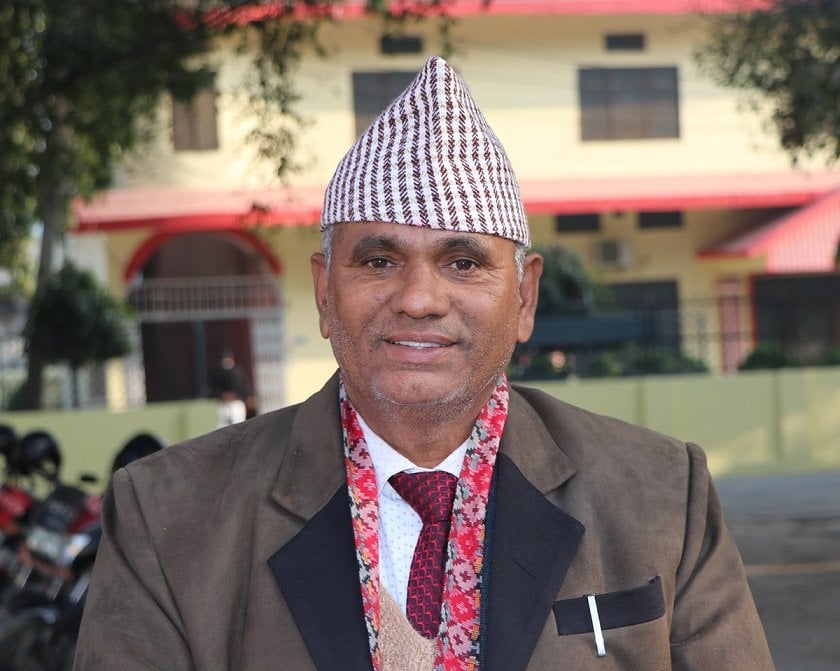
Former Prime Minister and respected leader of the Communist Party of Nepal (Maoist Centre) Jhalanath Khanal believes the National Human Rights Commission's report is more balanced than the Gauribahadur Karki-led commission's report. Nevertheless, Khanal commented that questions remain about the Human Rights Commission's silence on then-Kathmandu Metropolitan City Mayor Balen Shah. However, Khanal believes it is hasty to comment without a full study of the report.
"Looking at the content of the parts of the National Human Rights Commission's public report, it appears more comprehensive than the Gauribahadur Karki Commission's report," Khanal told Ratopati. "It has touched upon various aspects of August 23 and 24 and given its conclusions."
However, Khanal states that questions have arisen due to the National Human Rights Commission's silence on Balen Shah. "This report is silent about Balen Shah. But the question of why it is silent has arisen," said leader Khanal.
Khanal emphasized that past reports from the commission have been shelved and that this should not happen again. "Only parts of the National Human Rights Commission's report have been made public. It is necessary to study it meticulously before commenting on it," Khanal said. "Previous reports have been gathering dust in drawers. This should not happen anymore."

Nepali Congress General Secretary Pradeep Poudel believes the National Human Rights Commission's report holds national and international significance and that the government must take the implementation of the report seriously.
"The Human Rights Commission is a constitutional body. Its report shapes Nepal's international image and relates to how sensitive our state is regarding human rights," said Poudel.
Poudel stated that the government should proceed with the implementation of the issues highlighted in the report. "If the government implements the report, it shows that we are serious and sensitive about human rights," Poudel said. "If it is ignored, it sends a message that the entire state system and government are involved in human rights violations."
Poudel stressed the need to implement the report to protect Nepal's international image regarding human rights.
However, Poudel mentioned that the commission's report has not covered many of the publicly known incidents. "There is still no basis to say that this is extremely impartial and the report is complete," Poudel said. "For example, the incident at our former president's house is a public incident, a visible incident, and the abuse against him was also a famous incident. But the report does not seem to have covered that incident."

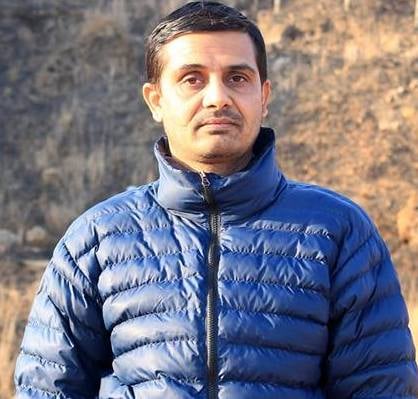
CPN (UML) Deputy General Secretary Yogesh Bhattarai believes that questions have been raised about whether the report prepared by the National Human Rights Commission's committee has been tampered with, and the commission should clarify this.
"There are also claims that the report by the committee formed by the Human Rights Commission was tampered with. The Human Rights Commission should clarify what this is about," Bhattarai said. "It is being said that those who needed to be protected were protected and those who needed to be framed were framed by tampering with it."
If that is the case, the report will be deemed biased, according to Bhattarai. "If that is the case, it is not impartial, it is prejudiced," he said.
Bhattarai stated that although the Gauribahadur Commission's report, formed by the government led by former Sushila Karki, did not mention August 24, the Human Rights Commission's report has included August 24 as an incident, thereby acknowledging the previous commission's mistake.
"This aspect is good. Otherwise, only the incident of the 23rd was being discussed. In this sense, we have been saying that the incidents of both the 23rd and 24th should be analyzed," Bhattarai said. "In any case, action should be taken impartially based on the report."
He stated that there should be no discrimination, such as punishing the culprits of the 23rd and letting go of the 24th, or punishing the culprits of the 24th and letting go of the 23rd. He emphasized that if there is a main criminal charge, action should be taken accordingly, and all concerned should be vigilant to prevent such incidents from happening in the future.
"The important thing is that all state mechanisms should exercise caution to prevent such incidents from happening in the future," he said. "Political parties, as well as state organs like the Nepal Police, Armed Police Force, National Investigation Department, and security agencies like the Nepali Army, should learn from this report."
Although the commission's report raised questions about the role of 17 MPs from the ruling Rastriya Swatantra Party (RSP), party leaders General Secretary Kabindra BurlaKoti and spokesperson Manish Jha did not answer repeated calls for comment.
This specific news has been automatically translated by AI. As a result, there may be some inaccuracies or language errors.