
Nepal Explores Green Urea Production Using Hydroelectricity and Cement Industry Byproducts


Kathmandu. Every year, as soon as the farming season begins in Nepal, there is a severe shortage of chemical fertilizers. The fate of farmers wandering without fertilizer has been the same for years. However, the possibility of producing chemical fertilizer (urea) domestically by using the country's abundant but wasted hydroelectricity and carbon dioxide emitted from the cement industry is now being taken seriously.
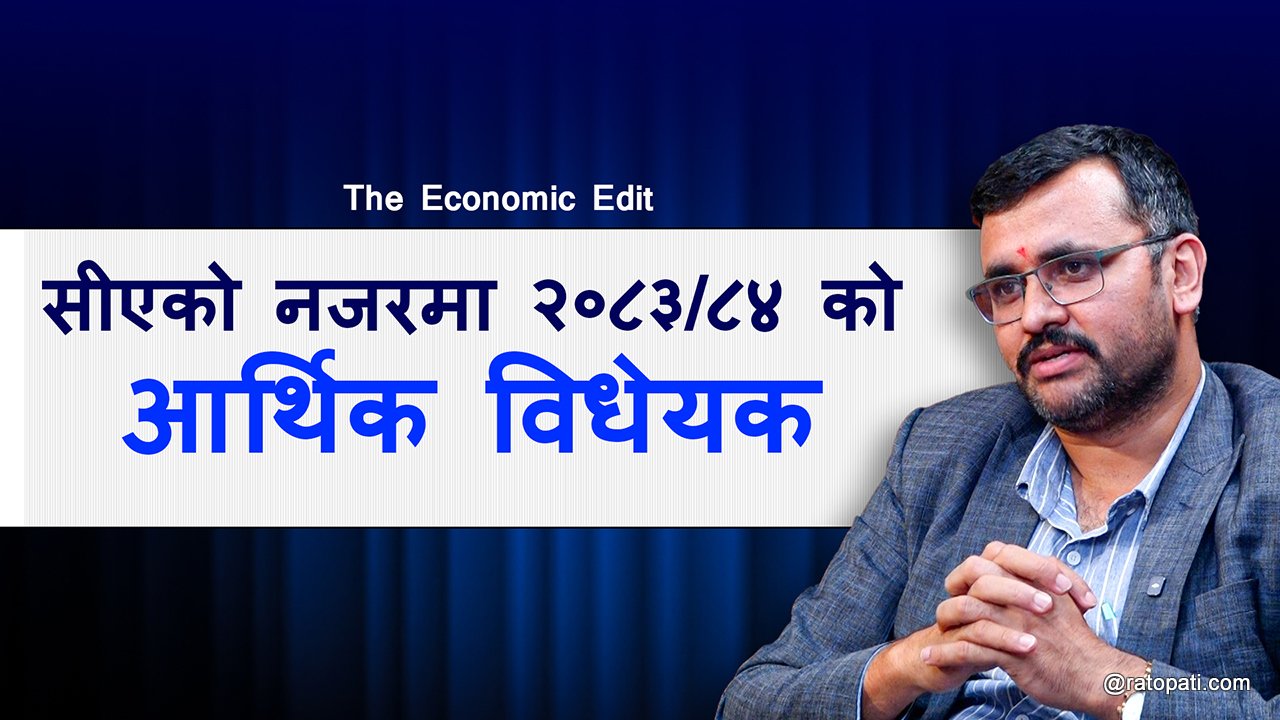
Biraj Singh Thapa, Associate Professor at Kathmandu University and Head of Green Hydrogen Lab, has been researching the development and feasibility of hydrogen technology in Nepal for a long time. Recently, this debate has come to the forefront after the government included the topic of green ammonia and chemical fertilizer factories in its policy and program.
Here is a dialogue with Associate Professor Engineer Biraj Singh Thapa for Ratopati's weekly program 'The Economic Edit' about hydrogen technology in Nepal, the feasibility of fertilizer factories, policy challenges, and the path of future green industrialization. (Detailed interview can be watched and listened to in the video):
You have been studying hydrogen and chemical fertilizers at Kathmandu University for a long time. Currently, on one hand, there is a shortage of chemical fertilizers as the monsoon season begins, and on the other hand, the topic of chemical fertilizer production has become popular due to the policy adopted by the government and discussions in parliament. From a technical perspective, how is hydrogen fertilizer made, and what is its feasibility in Nepal?
You have started with a very appropriate and technical question. Fertilizer is essentially nitrogen. Air contains many types of gases, of which about 79 percent is natural nitrogen gas. The rest are mainly oxygen and other elements.

What we provide to any plant through fertilizer is nitrogen. However, plants cannot directly absorb nitrogen from the air. Therefore, it needs to be delivered to the roots through a special process. Chemical fertilizer is a technology that stores and preserves that nitrogen, making it available for the roots to absorb when mixed with the soil.
If we think that plants absorb urea directly, that is incorrect. It is the nitrogen stored within the urea that enters through the roots. There are many technologies for delivering nitrogen to the roots in this way. Among them, urea fertilizer is considered the most widely used and relatively inexpensive technology globally.
To make urea, we need to mix nitrogen from the air with hydrogen, which forms 'ammonia'. Ammonia can be liquid, but its direct use is challenging. It is also considered somewhat toxic (carcinogenic). Therefore, ammonia is mixed with carbon dioxide, which finally forms 'urea'.
Urea is in solid (powder) form, making it easy to store, transport, and spread. When it comes into contact with soil and water, it breaks down and produces nitrogen in a form that the roots can utilize. Therefore, in this process, hydrogen is a primary basis for delivering nitrogen to the roots, and carbon dioxide is another primary basis.
It is said that there are two methods for producing urea. One uses natural gas, and the other produces hydrogen by splitting water. What are the technical aspects of this?
We primarily need nitrogen, hydrogen, and carbon dioxide. The method currently used worldwide is the use of 'natural gas'. Natural gas is a mixture of hydrogen and carbon (CH4 - methane). When split, both hydrogen and carbon dioxide are produced. The hydrogen produced from this is mixed with nitrogen from the air to form ammonia, and the remaining carbon dioxide is mixed to form urea.
However, instead of this, there is another method of producing hydrogen by splitting water with electricity. Hydrogen is produced this way, and ammonia is made using nitrogen from the air. But for this, we need carbon dioxide separately. We can obtain this carbon dioxide from industrial gases, especially from the cement industry.
In the cement industry, limestone is fired at 1400 degrees Celsius with coal to produce clinker, which releases a large amount of carbon dioxide. Developed countries do not allow this released carbon to escape into the atmosphere; it must be captured.
There are currently about 55 cement industries in Nepal. If hydrogen is extracted from water using the abundant but wasted electricity from hydropower, and the carbon dioxide being released by the cement industry is captured and mixed with ammonia, urea will be produced. This has two benefits. Carbon emissions into the environment are reduced, and the wasted electricity is utilized to its fullest.
We see two options here. On one hand, there is a natural gas reserve in Dailekh (112 billion cubic meters), and on the other hand, we have water and electricity. In terms of processing and investment, which one is more advantageous or cheaper?
The use of natural gas has been ongoing worldwide for the past 50-60 years. The technology for this has developed significantly. All the urea that comes to Nepal today is produced from that natural gas.
However, we must also consider the effects of climate change. If the use of fossil fuels is not reduced, the melting of glaciers and environmental degradation will not stop. Therefore, the entire world is moving towards the goal of net-zero carbon. Large nations and foreign investors have already introduced policies to reduce investment in fossil fuel-based industries to zero.
If we were to build a fertilizer factory using the gas from Dailekh, it would take at least 10 years for detailed study (DPR), extraction, and scaling up to industrial levels. Bringing a pipeline from India or Bangladesh would also take 4-5 years and increase dependence due to geopolitical risks.
On the other hand, we have already connected more than 4,000 megawatts of electricity, while our consumption is only 2,000 megawatts. Electricity is being wasted, and this is increasing every year. Therefore, looking towards the future, we have no alternative but to move forward with hydropower and carbon capture technology.
The technology of splitting water to produce hydrogen is currently expensive, but is your conclusion that it is viable in the long run?
Technically, that is also correct. The lifespan of any industry is at least 30 to 50 years. As we develop industries today that will operate for 50 years, we must also consider the global situation 25 years from now. In 25 years, strict international standards may emerge that prohibit the use of natural gas. And we also have the challenge of increasing the domestic consumption of our hydropower.
Therefore, although this technology may seem somewhat expensive today, looking at it from the perspective of the next 10-15 years, it is not only cheap for Nepal but also has no alternative. Relying on fossil fuels again, while ignoring the abundant hydropower and the carbon dioxide emitted from the cement industry, could be fatal for us.
What would be the estimated investment required to open a fertilizer factory by splitting water? Have you conducted any studies?
We have conducted many technical and economic studies on this at the university. According to our data, a fertilizer factory with a minimum capacity of 200,000 metric tons can be built in Nepal by integrating hydrogen technology and the cement industry.
For this, we conducted a study based on the Udayapur Cement Industry. Udayapur has the best limestone reserves in South Asia, but the industry is currently on the verge of closure.

If that closed industry is run at full capacity and the carbon dioxide emitted from it is captured and connected to the fertilizer factory, 200,000 metric tons of urea can be produced. The carbon from just one cement industry is almost sufficient for us.
Research shows that an investment of approximately 50 to 80 billion rupees is required to create this 'ecosystem' of running a closed cement industry and building a new fertilizer factory.
Are such technologies being operated in other countries?
A similar green fertilizer project has already started in Paraguay and is about to go into construction. If there were no pressure from climate change, chemical fertilizer factories might not be built from hydrogen even today. However, the fertilizer factories that will be built now are being constructed by many countries through the 'green pathway'. Bangladesh has operated a 800,000 metric ton fertilizer factory using carbon dioxide from a cement factory, even though it extracts hydrogen from natural gas. Countries like India, Australia, and New Zealand have also put projects to build fertilizer factories from hydrogen in the pipeline.
If Nepal advances this technology, what would be the cost per kilogram of urea? Can it compete with the international market?
As this technology is developing rapidly, its cost is decreasing every year. Today, 50 to 80 billion rupees is the capital investment. Factors like land acquisition and ease of access to natural resources play a significant role. For example, there is hundreds of acres of land near Udayapur Cement, the carbon dioxide is available there, and the transmission line is also there. By integrating all these, the cost can be reduced.
The main challenge is to be able to produce urea in Nepal at the same price at which the government currently imports it. The government currently buys fertilizer at approximately 80 to 100 rupees per kilogram (and even then, it's not available on time). Nepal's own policy allows for the purchase of domestically produced goods at a price up to 15 percent higher.
This means that if we can produce urea fertilizer within Nepal for 115 rupees per kilogram, it will be profitable. Our analysis shows that if the government provides some subsidies and the private sector takes the initiative, it is possible to produce at this price.
The state alone cannot make such an investment of 50-80 billion, can it?
The state has undertaken much larger projects. Projects worth trillions like Budhigandaki and Fast Track are being advanced by the state. However, the notion that the state must do all the business is gradually diminishing.
This will primarily be done by the private sector. The state only needs to provide policy-level assurance (guarantee). Some concessions in electricity tariffs, tax holidays, and facilitation in land acquisition would suffice.
Nepal's private sector has already invested 300-400 billion in hydropower, so there is no shortage of capital and management capacity here. However, this is a project that must be taken forward in a Public-Private Partnership model. If the government guarantees the market by saying, 'I will buy 100 percent of your urea,' domestic and foreign investment will come easily.
Let's talk a bit about the use of hydrogen. You have also driven a car using hydrogen produced by splitting water. But as the use of EVs is increasing, why is hydrogen still limited to laboratories? Why is public awareness about it not growing?
It is natural to expect hydrogen to become as widespread as EVs today, given the success of EVs. But look at the state of EVs 20 years ago; how many challenges were there?
It took 20 years for EVs to become accessible to the general public and for infrastructure like charging stations to be built. Where EVs were 15-20 years ago, hydrogen technology is at that same point today. Its technological development is rapid, and its cost is also decreasing.
Another point is that EVs are mainly suitable for light and short-distance vehicles (which individuals buy and drive). However, hydrogen is for long-distance, heavy-load transport (like trucks, tankers, large buses).
The ecosystem of public transport cannot be built by a single individual. However, in India, companies like Tata Motors and Ashok Leyland have successfully completed commercial production and testing of hydrogen buses. This technology is gradually entering the market. It is time for us to also provide tax exemptions and infrastructure concessions, similar to EVs, to make it suitable for our market.
The government's policy and program recently included provisions for tax exemptions and concessional electricity rates for green ammonia, chemical fertilizers, and hydrogen technology. Based on this announcement, what actions need to be taken now?
It is good that the topic has been included in the policy and program. However, previous governments have also introduced such programs. The main thing is that the government must be clear about how and through what process it will be implemented.
Firstly, the National Hydrogen Policy 2080 clearly states that the necessary acts, rules, directives, and procedures for its implementation will be formulated. But these have not been created yet.
Secondly, and most importantly, there is no institutional structure in Nepal to 'own' and implement this policy. The Nepal Electricity Authority is concerned with its own hydropower projects, and the Department of Roads, Civil Aviation Authority, or Oil Corporation have their own tasks.
A separate Green Energy and Industrial Authority should be established to attract foreign investment in hydrogen and green energy, lobby with climate funds, and coordinate between ministries. Without such an empowered body, it is extremely difficult to advance large projects.
What kind of arrangements should be made regarding taxes and customs in the budget?
Tax arrangements have already been included in the previous budget and tax laws. The government has already made provisions for a 100 percent tax holiday and customs exemption for 5 years for industries related to green hydrogen. While a 250 percent tax is levied on importing petrol vehicles, there is a zero-tax policy for hydrogen technology equipment. However, the problem is that when goods arrive at customs, there is no clarity on the 'Harmonic Code' to identify whether they are hydrogen technology items or not. Without the formulation of its procedures, how can customs officials provide exemptions?
Yes, this is precisely what needs to be resolved, and a separate regulatory body, as I mentioned earlier, is necessary to translate the policy into practice.
There is also a Ministry of Science, Technology, and Innovation now. Isn't it possible to proceed through that ministry?
We have now moved beyond the innovation phase. Research and promotion work will continue, but the production of fertilizer from hydrogen or the establishment of a steel factory is no longer just research; it is a phase of full industrialization.

Therefore, we need to integrate this into industrial integration within the next five years. Which ministry it should be under is the government's decision, but we absolutely need an empowered regulatory body.
As the government and private sector prepare, how can such a large investment be mobilized?
There are revolving funds for large projects in the global market. In the past, Saudi Arabia, Dubai, and others raised trillions of dollars in capital from the global market for oil refining. But now, with the global pressure of climate change, funds investing in fossil fuels are being diverted towards green energy. After 2028, mandatory international standards like 'carbon penalty tax' will be implemented.
This means that industries emitting carbon will have to pay penalties, and that money will have to be invested in green energy infrastructure. Today, large investors worldwide are searching for green energy projects. We do not need to search for investors; we only need to create a suitable and legally secure environment (framework) for them to invest in Nepal.
What are the bases for considering Nepal advantageous for investors compared to other countries?
This is not just a basis but a proven fact. Three things are considered for investing in renewable energy. First, the source of renewable energy. We not only have flowing water but also the potential to generate 150,000 megawatts of electricity if we move towards reservoir-based projects.
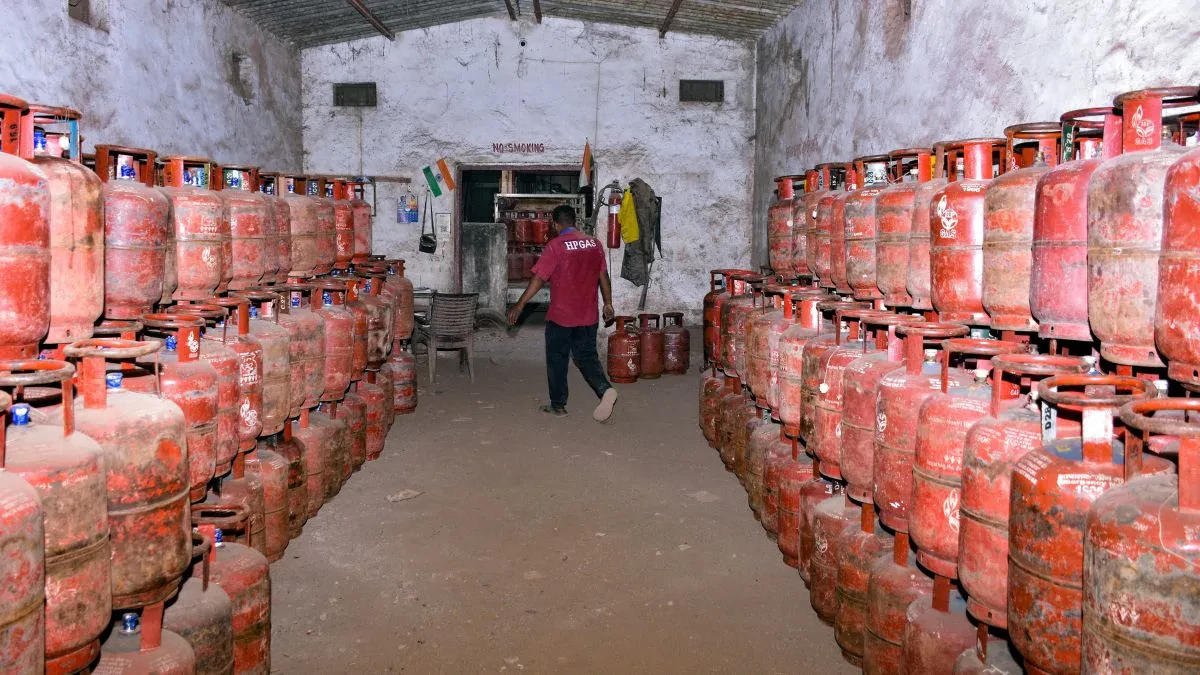
Second, the domestic market. Today, we import 200 billion rupees worth of petroleum products, 100 billion rupees worth of cooking gas, and hundreds of billions worth of coal. This is all a domestic market that can be replaced by green energy. There is also a market within Nepal for newly opening fertilizer factories, steel industries, and cement industries.
Third, and most importantly, the regional market and geopolitics. On one side is the emerging economy of India, on the other is China, and alongside them is Bangladesh with its large population. Such abundant natural resources, the potential for cheap energy, and such a strategic market are rarely found elsewhere in the world. Therefore, Nepal is a highly suitable destination for large-scale green energy projects.
The government is currently prioritizing the service sector (tourism, IT) and does not seem to be paying much attention to industrialization. Why might this be happening?
The government must consider all sectors in parallel. Tourism, hospitality, and IT are certainly important. But there are two main pillars of a country's national security - energy security and food security.
Today, we are not secure in terms of energy, importing about 300 billion rupees worth of energy (petrol, diesel, coal) annually. The situation regarding food security is also similar. We import 400 billion rupees worth of food grains. Despite having fertile soil, we have left our fields fallow.
IT may provide us with a digital platform, but it does not provide food. If a war breaks out in the Gulf, and 3 million Nepalis return, where will they be employed? They will have to go to the fields or industries. Therefore, to meet the demand of our domestic market and increase GDP, we must develop the manufacturing industry. While taking the service sector along, the country cannot become prosperous by neglecting industrialization.
Video/Photos: Manoj Khadka/Ratopati
This specific news has been automatically translated by AI. As a result, there may be some inaccuracies or language errors.
_jxKX1kXOlf.jpg)



_htFaNqpIDJ.jpg)