Government Prepares First Budget Under Balen Shah's Leadership Amidst Economic Constraints
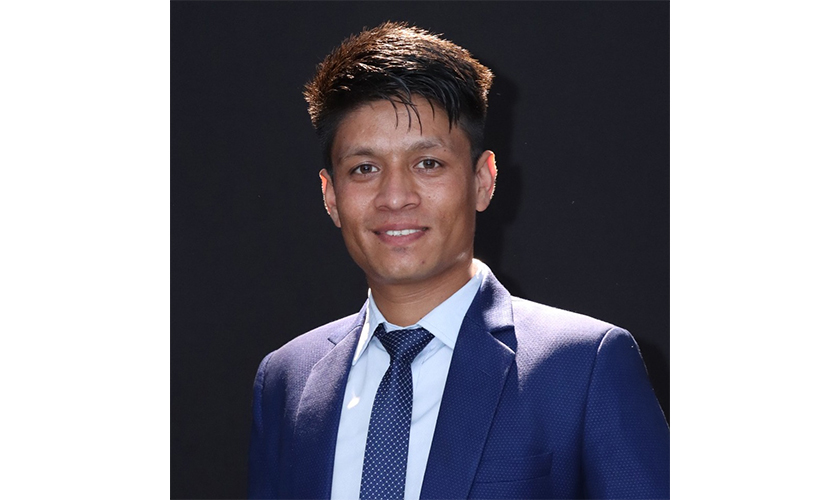

Kathmandu. The budget is nearing. There is widespread interest in what the upcoming fiscal year 2083/84 will look like. Interest has also increased as this is the first budget to be presented by the government led by Balendra Shah. As the budget announcement date approaches, the atmosphere at the Ministry of Finance in Singha Durbar has completely changed. Amidst economic contraction and limited resources, Finance Minister Dr. Swarnim Wagle is under immense pressure to present a hopeful and historic budget. Realizing this pressure and responsibility, Finance Minister Wagle has fully focused himself on budget preparation. Ministry sources indicate that apart from changes in tax rates, the budget writing work is almost complete. The budget draft committee, chaired by Uttar Kumar Khatri, Joint Secretary and Head of Revenue Management Division at the Ministry, has already prepared the draft of the annual policy and program, project and program priorities, and the appropriation bill for the upcoming fiscal year. Finance Minister Wagle has reviewed every point of this draft for budget writing. Atmosphere in the Ministry of Finance is quiet but 'intense' Normally, anyone entering Singha Durbar would not have to ask much to reach the office of the Ministry of Finance. However, since budget writing began in the last week of Chaitra, the doors of the Ministry of Finance have been closed. Entry into the ministry is strictly monitored. Even government employees cannot enter without permission. With only a few days left for the budget to be made public, this strictness has been further tightened. Finance Minister Dr. Wagle has put in great effort and meticulous study in budget preparation. According to ministry sources, he spends about 16 hours a day at the Ministry of Finance. Minister Wagle, who enters the ministry between 7 and 8 in the morning, is engrossed in budget writing work until 2 in the night. From the outside, the Ministry of Finance appears quiet at this time, but inside, work is being done day and night. There is a separate special room (budget room) inside the ministry for writing the budget. Where the budget team is working in extreme peace and secrecy. Meals and snacks for the minister and the staff involved in budget writing are also cooked within the ministry. Finance Minister Spends 16 Hours Daily at the Ministry, Scrutinizing Every Detail Finance Minister Dr. Wagle has put in great effort and meticulous study in budget preparation. According to ministry sources, he spends about 16 hours a day at the Ministry of Finance. Minister Wagle, who enters the ministry between 7 and 8 in the morning, is engrossed in budget writing work until 2 in the night. According to sources, the Finance Minister is not just casually reviewing the budget speech; he is meticulously reading and analyzing the draft prepared by the committee. Prioritizing the budget, Finance Minister Wagle has not even left Singha Durbar. He has also canceled various foreign trips for the budget. He addresses programs within Kathmandu virtually. Finance Minister Wagle has only left the ministry for essential meetings to defend the policy and program in parliament, present the principles and priorities, and attend crucial parliamentary committee meetings. Indication of Budget Size Increase The previous government had presented a budget of 19 kharba 64 arba for the current fiscal year. However, Finance Minister Rameshwar Khanal of the government formed after the Janji movement revised the estimated expenditure of the current fiscal year through a mid-term review. For the current fiscal year, a budget of 19 kharba 64 arba 11 crore rupees was allocated, but Finance Minister Khanal estimates that a budget of 16 kharba 88 arba rupees will be implemented. The interim government had estimated that only about 86 percent of the budget presented by the then Finance Minister Bishnu Poudel in parliament would be spent. Finance Minister Wagle is not in favor of making the upcoming budget a mere ceremonial document. He has taken the budgets presented by then Finance State Minister Mahesh Acharya on Asar 27, 2048, followed by Manoman Adhikari, Dr. Ram Sharan Mahat, and Baburam Bhattarai as his 'benchmark'. The National Planning Commission has set a budget ceiling of 18 kharba 90 arba rupees for the upcoming fiscal year, lower than the current fiscal year. However, sources claim that the budget will increase compared to the current fiscal year. The increase in size is mainly due to the preparation to increase the salaries of government employees, which has been pending for a long time, and the policy to increase investment in some large and transformative projects to stimulate the economy, according to sources. Finance Minister's 'Benchmark' is Past Transformative Budgets Finance Minister Wagle is not in favor of making the upcoming budget a mere ceremonial document. He has taken the budgets presented by then Finance State Minister Mahesh Acharya on Asar 27, 2048, followed by Manoman Adhikari, Dr. Ram Sharan Mahat, and Baburam Bhattarai as his 'benchmark'. The budget of 26 arba 64 crore in 2048 had opened the doors to economic liberalization, open market economy, and privatization for the first time in Nepal. Just as that budget after the restoration of multi-party democracy brought about structural changes in the Nepali economy, Dr. Wagle has prepared the upcoming budget by benchmarking the transformative aspects of the budgets presented by Manoman Adhikari, Dr. Ram Sharan Mahat, and Baburam Bhattarai. In this way, Finance Minister Wagle plans to present a budget that reflects the second phase of economic reform. To make the budget realistic and implementable, Minister Wagle has also held extensive discussions with the private sector, experts, and former finance ministers. On Jestha 7, he took suggestions by meeting collectively with 8 former finance ministers: Dr. Prakash Chandra Lohani, Bishnu Poudel, Dr. Yubaraj Khatiwada, Janardan Sharma, Barshaman Pun, Dr. Rameshwar Khanal, Dr. Prakash Sharan Mahat, and Shankar Koirala. Minister Wagle had requested concrete 'three-point' suggestions to address economic reform and current needs, rather than unnecessary and lengthy suggestions.
This specific news has been automatically translated by AI. As a result, there may be some inaccuracies or language errors.


_jxKX1kXOlf.jpg)