Rabi Lamichhane's Cooperative Fraud Case Modified by Kaski District Court

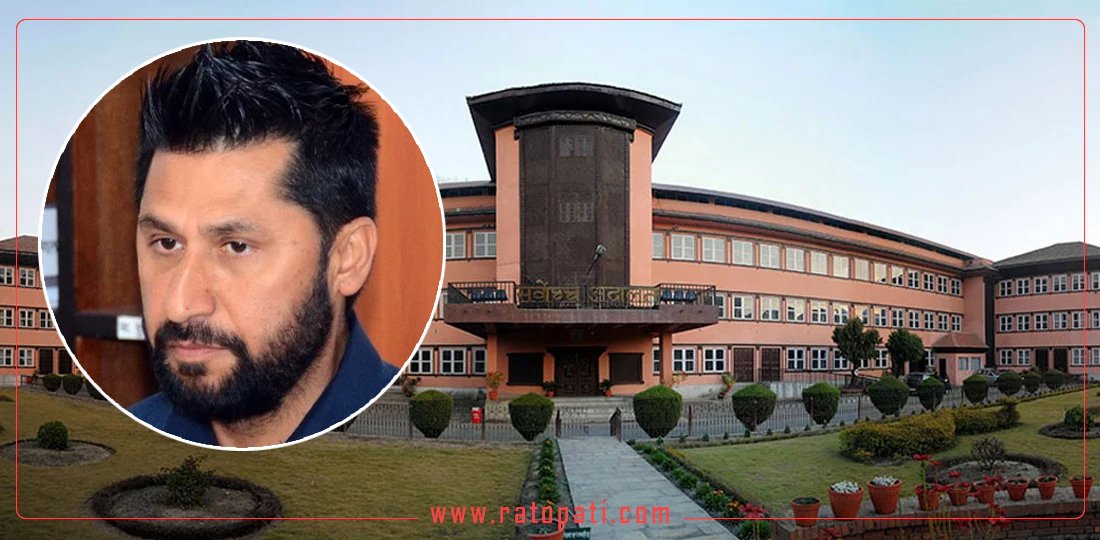
Kathmandu. The case related to cooperative fraud, money laundering, and organized crime against Rastriya Swatantra Party President Rabi Lamichhane has been amended by the Kaski District Court. Lamichhane has found it easier after the amendment of the case.
The Kaski District Court has allowed the amendment of the case, which was causing political difficulties for Lamichhane due to two charges of money laundering and organized crime. The District Public Prosecutor's Office, Kaski, had filed an application to amend the charge sheet in accordance with Section 36 of the Criminal Offenses and Procedure Code, 2074, based on the decision of the then Attorney General Savita Bhandari on Poush 30, 2082.
After the amendment of the case, only the cooperative fraud case remains against Lamichhane in the Kaski court. The charge sheet against Lamichhane and other defendants has also been amended by the Kaski court. The money laundering case, considered a serious offense under criminal law, was filed only in the Kaski District Court against Lamichhane.
The organized crime case, however, is under consideration in the Rupandehi, Parsa, and Kathmandu District Courts.
When the money laundering case is withdrawn through the amendment process, Lamichhane will no longer have any problems for political activism.
According to a Deputy Attorney General at the Attorney General's Office, with the amendment of Lamichhane's case, there is no longer any obstacle for him in politics.
With the order of the District Court, even though the writ filed in the Supreme Court has lost its relevance, how the Supreme Court interprets it will be important, said the Deputy Attorney General. 'It is not right for a writ to go to the Supreme Court in the name of extraordinary jurisdiction,' he said, 'On the other hand, it was not a matter that the District Court could have stopped by saying that this matter was under consideration in the Supreme Court.'
The Deputy Attorney General, who spoke to Ratopati on condition of anonymity, said that with the removal of the money laundering and organized crime charges, the accused and depositors now have a way to reach a settlement. 'A case of money laundering against a Member of Parliament would lead to the suspension of the parliamentary seat,' he said, 'Now that the status of the case has changed, there is no obstacle to becoming Prime Minister and Minister.'
Three writs pending in the Supreme Court against the decision to withdraw the case against Lamichhane are in the hearing stage in a full bench for serious constitutional and legal interpretation. The Supreme Court's joint bench of Justices Binod Sharma and Abdul Aziz Musalman had ordered on Poush 15, 2082, to send it to a full bench, citing serious constitutional questions.
After the Kaski District Court allowed the amendment of the case against Lamichhane, the question arises as to how the case will proceed. Writ petitioner senior advocate Dinesh Tripathi said that he is preparing to file another supplementary petition. Tripathi says that he is going to file a supplementary petition after the Kaski District Court allowed the amendment of the case while three writs against the decision of the Attorney General's Office are pending in the Supreme Court.
Article 158 of the Constitution gives the Attorney General the final authority to prosecute or not prosecute a case.
However, the question has arisen whether this authority to amend a charge sheet after a case has been filed in court is 'absolute/discretionary' or must be based on 'objective grounds'.
The Supreme Court will have to interpret this.
According to Section 36 of the Criminal Offenses and Procedure Code, a charge sheet can only be amended if 'additional evidence is found'. However, the court will have to interpret whether Lamichhane's own application or any self-declaration can be considered 'additional evidence' in this case. The court has sent it to a full bench because it appears that it will have to interpret whether the case can be withdrawn indirectly.
Legally, settlement or withdrawal of cases like money laundering and organized crime is not permitted. As claimed by the writ petitioner - is the internal objective of removing serious charges and keeping only 'cooperative fraud' to facilitate a 'settlement' in the future? It has been pointed out that judicial review is necessary on this matter. The Kaski District Court has stated that the objective of amending Lamichhane's case is to ensure the prompt return of the victim depositors' funds. The court had determined that the main subject of this case is the safe return of funds to the victim depositors.
In the context of Nepal, where governments keep changing, can the Attorney General remove charges imposed by the previous government under political pressure? What impact will this have on the criminal justice system and the principle of fair investigation? The Supreme Court will interpret this.
The relevant District Court has the authority to give final permission for amendment of the charge sheet. The full bench will also resolve the technical question of whether the Supreme Court can intervene in this matter before the District Court makes a decision.
Similarly, it raises the question of what will happen to absconding defendants when a case is withdrawn. Some defendants in the same case are absconding. What impact will the amendment of the charge sheet for the main defendant have on the rights and justice of other defendants who appear later? The court will also interpret the possibility of victim depositors receiving their money back and the impact on the confiscation process when the money laundering case is withdrawn. Further interpretation has been sought from the full bench to resolve this matter as well.
This specific news has been automatically translated by AI. As a result, there may be some inaccuracies or language errors.