Filmmaker Janak Ghartimagar Embodies Resilience with 'Mitjyu' Amidst Spinal Cord Injury


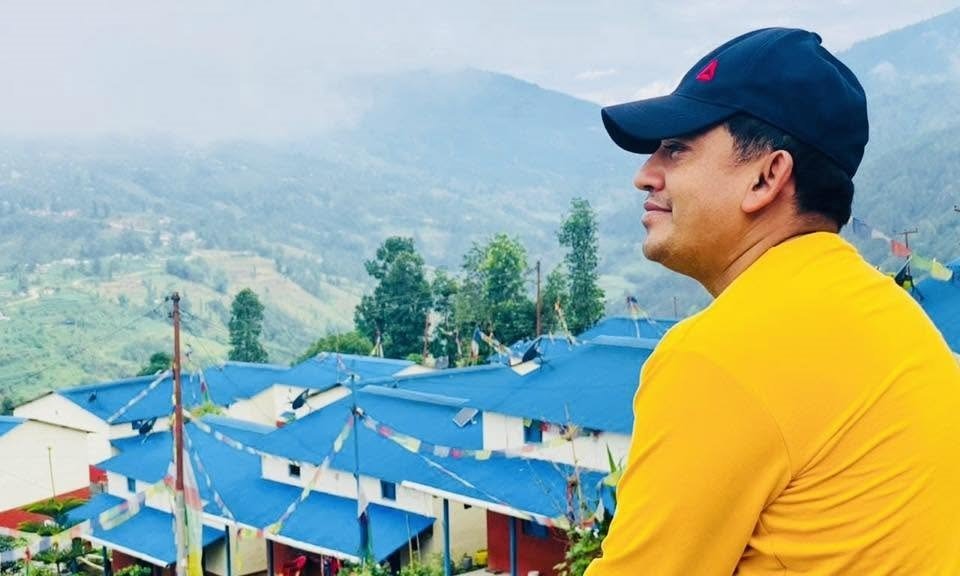
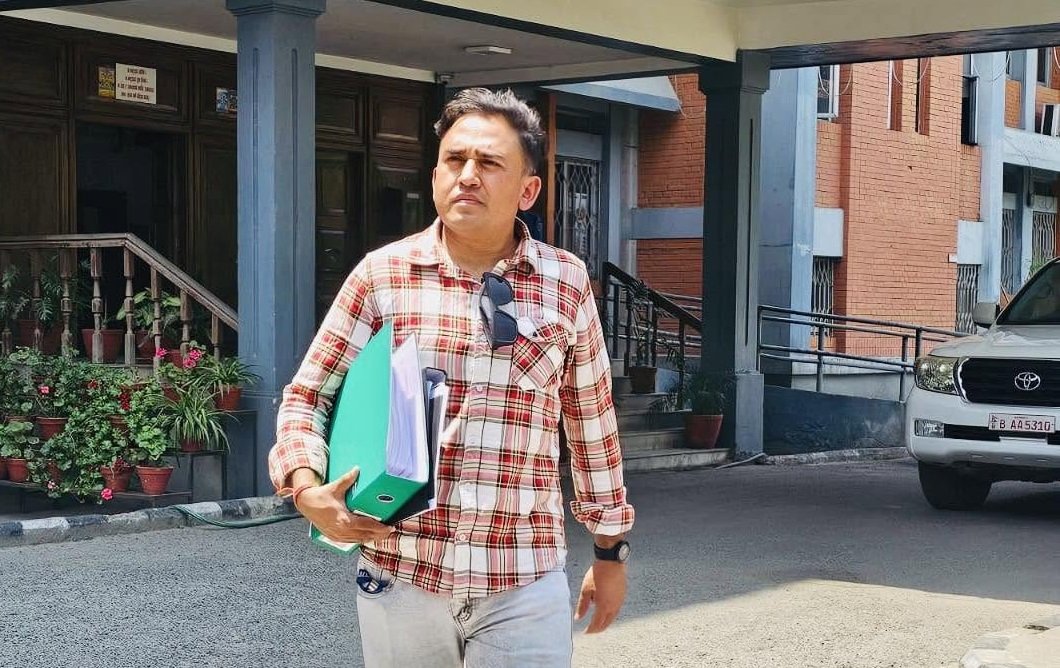
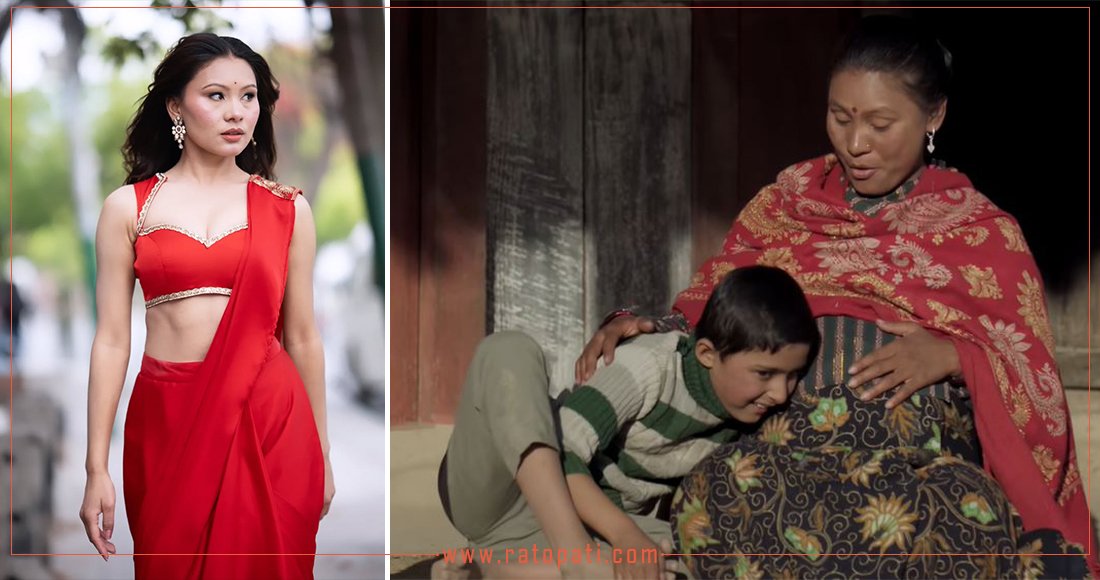
Mit – is a powerful social relationship based on folk culture, which is the most reliable, intimate, and close outside of blood relations. In folk culture, two relationships are of equal standing – Mit and Samdhi. In Mit, not only one relationship is equal, but the wife of the Mit is also respected equally as the Mit. Samdhi became Samdhijyu, and Mit became Mitjyu. A film matching the word Mit is currently being screened across the country – 'Mitjyu'. Starring Dayahang Rai and Saugat Malla, the film marks the explosive debut of Teria Magar. Based on the name, the film might be about the story of Mit, or perhaps other stories too. I am not here to tell the story of the film, but the story of its producer; who is living a second life in a wheelchair at a young age. The organs below his chest, his eyes see but do not feel – are they his own or someone else's. Second Life! Yes, he is living a second life, having returned from the brink of death, Rolpa Khumel's Janak Ghartimagar. In his first life, he made the film 'Gharjwal'. He finished the film's work while driving a Creta car. In his second life, he is not in a Creta car, but in a wheelchair. The body below his chest is inactive, but his dreams are alive. The hunger to make films from his first life was reborn and gave birth to – 'Mitjyu', with an investment of more than three crores. 000 I was visiting the 'Spinal Cord Injury Rehabilitation Center' at Sanga, on the border of Bhaktapur and Kavre, daily. My younger sister Sabina, who suffered a spinal cord injury in an accident on Bhadra 17, 2081, had been there for three months. The Spinal Cord Injury Rehabilitation Center is a family place, where there are various types of spinal cord injury patients. Mostly, the lower part of their body is completely paralyzed. Their legs don't move, some people's hands also don't move. They are on wheelchairs, walkers, and elbow crutches. Their geography and ethnicity may differ, but their stories are often the same. The stories of the patients' families, relatives, and supporters have also become similar. Family members who reassure the patient by saying, 'You will be fine, don't worry, we are here,' cannot hold back their tears in private. Shedding tears, they share their individual pains and try to lighten themselves. 000 When the spinal cord nerves are severely injured, the body's organs stop moving or feeling. Such patients require months of good care. My youngest sister quit her job to care for her elder sister. At the rehabilitation center, every evening, there are discussions about who came as a new patient, who returned home, in what condition they came, and in what condition they returned. Around mid-Poush of 2081, I had gone to Sanga to deliver food for my younger sister. My youngest sister said, 'Brother, someone from Rolpa has come, they say he made the film Gharjwal!' I became distraught. Janak Ghartimagar himself had come to be a neighbor on the upper floor of the rehabilitation center. They say spinal cord injury should not happen even to an enemy. 000 Before narrating the story of meeting Janak, who was lying in a state where he couldn't move his body, I want to connect it with the story of my own sister's spinal cord injury. What story to tell, it's just a collection of terrible accidents and the pains endured from them. On the afternoon of Bhadra 17, 2081, I was inside Singha Durbar. My friend Bir Bahadur Gharti called, 'We had an accident, Sabina has fallen down the cliff. Call the ward chairman, they are in the rescue.' My sister Sabina, who was young when our father passed away at the age of 49, is the main pillar of our family. Beyond her personal life, she is active in social work, and that day she was going to a youth club program. The news that she fell from a cliff near Jangbang, Madi-5, made me feel that my sister had left us. It is difficult to estimate the survival of a person who fell with a motorcycle from that cliff. News of my sister's rescue came – injuries from head to toe. The part below her waist was not moving. She couldn't feel anything she touched. After bringing her to the Trauma Center via Libang and Bhairahawa, it was found that she had a spinal cord injury, a complete T-10 lesion. What happens with a complete T-10 lesion? The doctor said, 'Life in a wheelchair now. Surgery to remove the broken bone, place steel to straighten the spine, and go to Kavre to learn rehabilitation skills to make the rest of life easier.' She was not fully conscious. Muttering, she kept saying one thing – 'Save me.' The reality that my sister, who until yesterday was moving day and night for her family and society, would now be in a wheelchair was right before my eyes. I could only imagine that wheelchair life, toilet management, and daily life. But I used to tell her, 'Everything will be alright, don't worry.' At home, mother couldn't sleep, her tears wouldn't stop. Family, relatives, and neighbors' tears wouldn't stop. I used to appear strong in front of my sister. But when I was alone, I couldn't hold back my tears. I cried secretly for many days at the Trauma Center. We used to say many encouraging things to stop my sister's tears. We used to try to make her laugh by considering the fact that she was alive as a great happiness. Surgery was done at the Trauma Center. We took her to Kavre for therapy and rehabilitation skills. Surgery had been done, but she couldn't even turn herself in bed. She could only turn with the help of two people. She had to be turned every few hours day and night, and her excreta had to be removed. 000 The time from the end of Bhadra to mid-Magh was spent there at the rehabilitation center. With self-confidence, hard work, encouragement, therapy, and learning, my sister's life gradually became easier. At the rehabilitation center, there is an ideal person – Dr. Raju Dhakal. Dr. Raju, who had polio as a newborn, is himself in a wheelchair and teaches people who have reached a wheelchair due to spinal cord injury how to live life. When patients return smiling, that is Dr. Raju's greatest happiness. My sister, after months of therapy, gradually moved from a wheelchair to a walker and elbow crutches. Even now, with the help of 'AFO', she is practicing walking at home with the support of elbow crutches, controlling her legs. Her waist doesn't support her. It's difficult to sit and get up from the floor. Her toes don't move, and she doesn't feel them. Still, she is continuously struggling, with the hope of recovering and walking one day. That hope is giving her confidence. Doctors and therapists called the journey to elbow crutches, despite a complete T-10 lesion, a result of her 'hard work, courage, and optimism'. Staying at the rehabilitation center gives patients and relatives deep knowledge about spinal cord injury; because it is like a school and a family. Every person who reaches there becomes a member of that family. Others' stories feel like one's own, others' pain is felt as one's own. That feeling is deeply felt there. 000 In the second week of Poush, I met Janak Ghartimagar in the cabin numbered three, which was next to where my sister was staying. He couldn't even turn himself. His mother and wife were helping him. He had complete paralysis below his chest. At that time, there isn't much one can say to a patient. One can only offer condolences and encouragement. I could feel Janak's pain. I was also aware of his condition and the progress being made. In response to the hopeful question from his mother and wife, 'Janak will be fine,' I would be speechless. I told him the story of my sister's accident and her stay at the rehabilitation center. I told him that there was a little progress. Those words made Janak's mother very hopeful. I used to say, 'Don't worry, you will be fine, it will be gradual, it will take some time.' I couldn't say that there is no alternative to a wheelchair for someone who cannot feel anything below their chest. I did not see Janak shedding tears. He was trying to be strong in front of his mother, wife, and friends. His mother and wife also did not shed tears in front of Janak, but a little distance away from Janak, their tears would not stop. 'How did the accident happen?' I asked Janak. On the night of Mangsir 23, 2081, Janak was going from Butwal to Dang. The Creta car he was driving went out of control and hit a tree. Even the airbags couldn't save him. From there, he was taken to Hams Hospital by helicopter and then to the Trauma Center for surgery. He has a complete lesion at T-4 and T-5. 000 Janak was in bed. He could only turn over with the help of others. But I saw amazing courage, bravery, and acceptance in him. For a moment, we talked about the film 'Gharjwal'. Then he said, 'I will make another film now. I will shoot that film in Dhorpatan.' I was surprised. He said directly, 'Further treatment is not possible for me right now. Technology will surely make it easier one day. For now, I have to accept this and get to work.' He added, 'It's going to be in a wheelchair now. I'll reach Dhorpatan in a jeep and move around in the wheelchair.' The next day, I met my friend Dipendra Lama, who became a director while working as a film journalist, there. I also met Laxman Subedi. I also met Anil Budhamagar, the director of 'Gharjwal', there. Janak would talk about filmmaking even with those who came to wish him good health. 000 The rehabilitation center does not reconnect severed nerves. It does not send those with complete injuries home running. It tries to activate inactive nerves through therapy. It teaches how to lie in bed, get up, sit in a wheelchair, get down, and walk. It teaches toilet management. It teaches how to live life. And, most importantly, it creates an environment to accept the truth. This story is not just personal, but a shared story of society. The most difficult aspect of spinal cord injury is for the patient and their family to accept reality and learn to live with it. This is not just a physical injury, but a great test mentally and emotionally. Patients and families must be able to understand each other deeply, support each other, and constantly encourage each other. That support, trust, and help are the forces that move life forward again. It is said that it takes four years to accept this truth. Janak, however, had accepted his reality within a few days of reaching the rehabilitation center. 000 There are accidents that change a person's body, a family's dreams, and thousands of future plans all at once. They can turn the wealthy into the poor in an instant. The treatment for spinal cord injury is expensive and uncertain. Whoever accepts their reality, keeps their dreams alive, and does not give up hope, even if they fall physically, their journey towards their destination never falters. Accidents like the one that befell my younger sister Savina also struck Janak Ghartimagar's life, but they could not break his dreams. The backbone of those dreams is – 'Mitjyu'. Janak is not just a filmmaker, he has become a living symbol of struggle. He himself moves with the support of others, but he has become a name that gives great inspiration and support to Nepali cinema. That is why Ghazal poet Suman Smarika writes in a poem about Janak – 'Sitting in his wheelchair / He is driving the whole society. / He moves with the support of someone day and night, / But the entire Nepali cinema / Today rests on his courageous shoulders.' 000 Spinal cord injury treatment is very expensive. Why did Janak get involved in making 'Mitjyu' with an investment of more than three crores after this expensive treatment? He says, 'I was born for films. Even now, I feel like I have received a second life for films.' Janak's story says – life is not about never falling, but about having the courage to get up again after falling. It is about the continuity of dreams and moving forward with new dreams and plans. Every morning my sister checks if her legs move, but the condition is the same as yesterday. My mother dreams of her daughter jumping up and running, but when she wakes up in the morning, her daughter's body is still the same. Janak also probably pinches his body every morning asking, 'Will I feel touch?', but surely he doesn't. His mother also probably dreams of her son's legs moving, running like before, but in the morning, his son's condition is the same again. About 10,000 Nepalis share this plight. The stories of their families are similar. Currently, 500 to 700 new spinal cord injury patients are being added in Nepal annually. There is no complete cure for spinal cord injury yet. However, patients must always live with hope. Recent research is showing new hope for spinal cord injury patients and their families. 000 Spinal injury is not just a personal incident; it is a humanitarian issue that society and the state must take seriously. Spinal cord injury patients and their families are each other's 'Mit', 'Miteni'; where there are relationships connected by pain, struggle, and hope. It is a shared and vast family in itself. The government and all sectors must be able to love, respect, treat, and support spinal cord injury patients as 'Mit'. Janak Ghartimagar has already become a member of this vast family. The film he produced, 'Mitjyu', belongs to the spinal cord injury family. Members of this family should support 'Mitjyu' considering it their own. The general Nepali public must also provide support to alleviate the pain of Janak Ghartimagar and spinal cord injury patients. Janak Ghartimagar has made 'Mitjyu' sitting in a wheelchair today, but one day a film should also be made on Janak's struggle. Because this is not just Janak's, but the shared dream and courage of 10,000 Nepalis with spinal cord injury. I have told my sister – 'You have two birthdays in a year.' For Janak too, I said – 'Mangsir 23 is not the day of the accident, it is the birthday of your second life.' Go to the nearest theater and watch 'Mitjyu', this will be an advance wish for the birthday of Janak's second life.
This specific news has been automatically translated by AI. As a result, there may be some inaccuracies or language errors.
_I0a7yjtDaq.jpg)