
APG Delegation in Kathmandu to Assess Anti-Money Laundering Efforts


Kathmandu. A high-level delegation from the Asia Pacific Group (APG) International Cooperation Review Group (ICRG) is currently in Kathmandu.
The APG team, which arrived in Nepal on Jestha 4, has already met with officials from the Prime Minister's Office, the Finance Minister, the Law Minister, the Foreign Minister, the Governor of Nepal Rastra Bank, and the Inspector General of Police.
By Wednesday, the APG team had held discussions with bodies related to money laundering and terrorist activities. Nepal is on the Financial Action Task Force (FATF) 'grey list' after being found weak in preventing money laundering and financing of terrorism.
Nepal, which was placed on the FATF grey list 15 months ago due to weak performance in preventing money laundering, has been striving to get out of this list since then.
The FATF had placed Nepal on the 'grey list' on Falgun 9, 2081.
Nepal had fallen into the grey list primarily due to weak investigation and prosecution in controlling illicit money. The team is in Kathmandu to evaluate the extent to which the suggestions given by the APG have been implemented.
Nepal has mobilized its entire mechanism to get out of the 'grey list' since being placed on it. Furthermore, after being placed on the 'grey list', Nepal has committed to an international standard 15-point 'Intensive Co-operative Review Group' (ICRG) action plan and is working on it. The team led by APG Secretariat Deputy Executive Secretary David Shannon and Policy Officer Kiya Sassal is in Nepal to assess the progress and provide technical assistance.
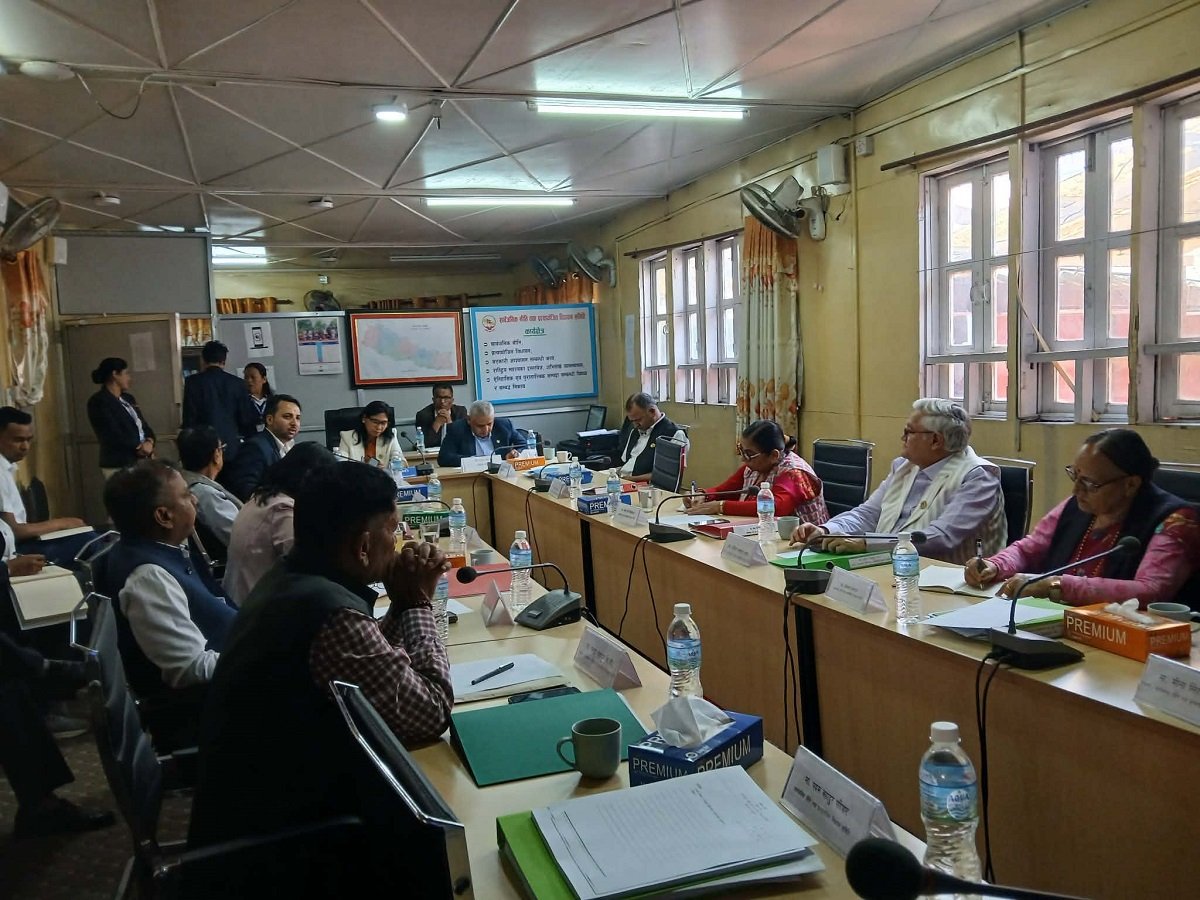
The team in Nepal is holding intensive discussions with Finance Minister Dr. Swarnim Wagle, Foreign Minister Shishir Khanal, Law Minister Sobita Gautam, NRB Governor Dr. Bishwanath Poudel, officials from the Prime Minister's Office, Nepal Police Inspector General Dan Bahadur Karki, and bodies related to money laundering.
Government officials have stated that the visit is not intended to impose penalties but rather to provide technical assistance and support in establishing good governance. According to them, the APG team has shown keen interest in the improvements and progress made in matters related to money laundering.
According to senior government officials, the APG has also primarily inquired about the efforts being made to remove Nepal from the list of countries with high-risk for money laundering.
They stated that they primarily raised issues related to the implementation of various laws related to the prevention of money laundering and coordination, investigation and prosecution of money laundering offenses, and the prevention, control, and confiscation of proceeds of crime.
Ministers and Governor's Commitment
In their meeting with the APG team, high-ranking officials of the Nepal government clearly stated that Nepal is committed to coming out of the 'grey list'.
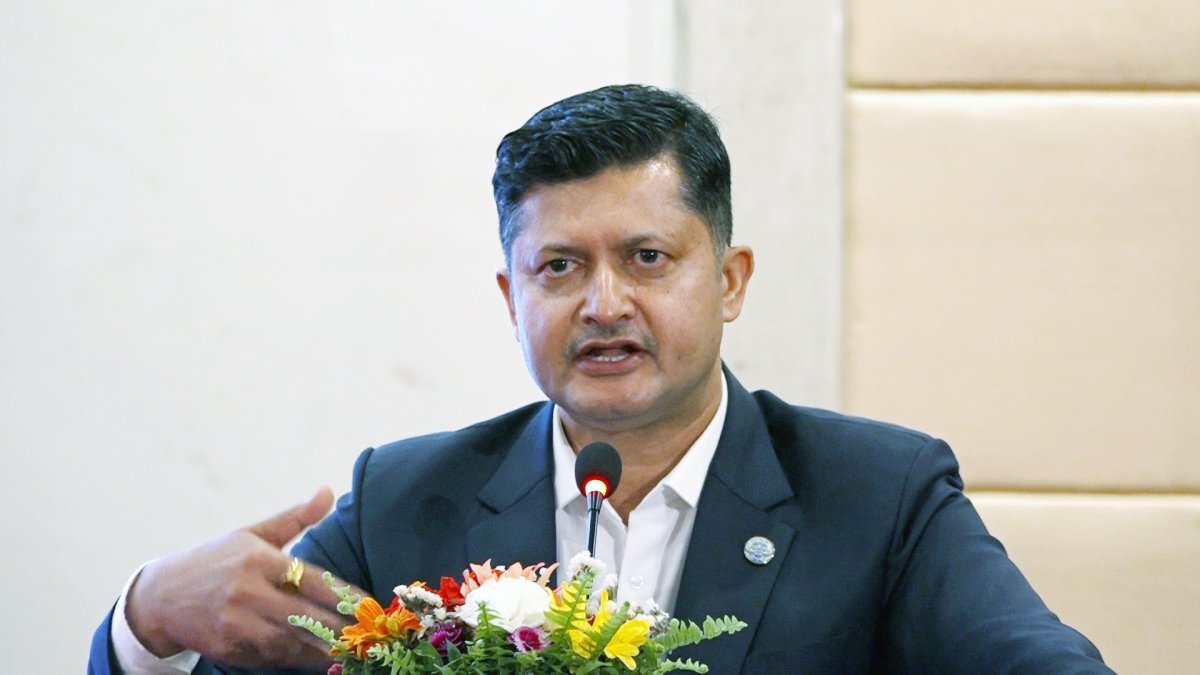
Finance Minister Dr. Swarnim Wagle expressed his commitment to using the government's full capacity to remove Nepal from the 'grey list'. He said, 'The current grey list situation is the result of 30 years of misgovernance.' He added, 'After the formation of the new government, the work done in terms of good governance is perceptible to all.'
He stated that the government is regularly making efforts to convince donor agencies and the international community.
Similarly, Foreign Minister Shishir Khanal also said that the government is determined to enhance Nepal's national capacity in accordance with international standards. He expressed confidence that by strengthening cooperation with the APG and implementing the identified issues, Nepal will get out of the 'grey list' as soon as possible.
Likewise, Minister for Law, Justice and Parliamentary Affairs, Sobita Gautam, said that legal reforms are being prioritized to remove Nepal from the 'grey list'.
She pledged to strengthen coordination among the relevant bodies and amend laws related to the confiscation of proceeds of crime. She also mentioned expanding the mutual legal assistance agreements with India and China to other countries.
Nepal Rastra Bank Governor Prof. Dr. Bishwanath Poudel stated that the risk assessment related to money laundering in the banking sector has been further tightened. He informed the APG team that the central bank has tightened risk-based supervision and promoted transparency.
Reform Efforts and APG's Interest
Nepal has implemented the Financial Investment Strategy and Action Plan (2081/082–2085/086) to be removed from the 'grey list'. Significant amendments have been made to the Prevention of Money Laundering Act through an ordinance.
The central bank has increased monitoring by creating a separate division, while the Money Laundering Investigation Department and Nepal Police have intensified investigations into major suspicious activities.
According to the latest report from the central bank's 'Financial Intelligence Unit (FIU)', suspicious transaction reports (reporting) have increased by 30.34 percent. The APG has concluded that investigations and supervision are weak in non-banking sectors such as real estate, casinos, gold and silver trading, and cooperatives. The team's suggestion is that the investigation and prosecution in courts still need to be strengthened.
7 Key Tasks Nepal Must Do Immediately
It has been pointed out that Nepal must effectively carry out the following 7 key tasks to get out of the FATF 'grey list' and meet international standards.
This includes conducting a deep assessment of national and sectoral risks related to money laundering and terrorist financing and improving understanding.
Customer identification and risk-based supervision must be strictly implemented in commercial banks and financial institutions, as well as in high-risk cooperatives, casinos, precious metal and stone businesses (gold and silver), and the real estate sector. The government has stated that it is working on this.
Furthermore, identifying, regulating, and taking strict legal action against informal payment service providers, including Hundi; clarifying the authority among bodies investigating money laundering and strengthening investigation capacity and inter-agency coordination; and achieving qualitative and quantitative growth in quality investigation of suspicious financial activities and filing cases (prosecution) in court with successful outcomes. The team was informed that the new government has been working with increased rigor in these areas.
The process of tracing, freezing, confiscating, and making final decisions on assets acquired through crime, in line with the risk profile, must be effectively implemented. Similarly, to prevent financial investment in terrorist activities and the construction of weapons of mass destruction, the implementation of the United Nations sanctions list must be carried out, and technical weaknesses in targeted financial sanctions must be removed and fully implemented.
In addition, emphasis has been placed on making the suspicious transaction reporting system effective and making the details of the beneficial owner transparent.
What are FATF and the Grey List?
The Financial Action Task Force, established on the initiative of the G-7 nations, is an intergovernmental body that formulates policies to prevent money laundering and the financing of terrorism. The APG is its Asia-Pacific regional committee.
The FATF places high-risk countries that fail to prevent illicit money laundering and comply with international standards, but have committed to reforms, on the 'grey list' (list for enhanced monitoring).
Countries on the 'grey list' are viewed with suspicion by international donor agencies, institutions like the World Bank, and the IMF. This makes it difficult to receive foreign aid, grants, loans, and foreign direct investment, and makes the process of international trade and opening letters of credit (LC) expensive and cumbersome. Countries that do not cooperate internationally are placed on the 'black list'.
If Nepal makes significant improvements in the specified standards and indicators, the path to exit the 'grey list' will open in the next evaluation. The results-related evaluation will take place from Kartik to Magh, 2083.
This is the second time Nepal has been placed on the 'grey list'. Nepal was previously on the 'grey list' from January 2008 to January 2014. At that time, Nepal was removed from the list after establishing legal and institutional structures. However, in 2024, Nepal was again placed on the 'grey list' for failing to make legal reforms according to international standards.
This specific news has been automatically translated by AI. As a result, there may be some inaccuracies or language errors.

_IvrWQ1hN9m.jpg)