UK to Continue Support for Nepal's Climate Resilience and Agriculture

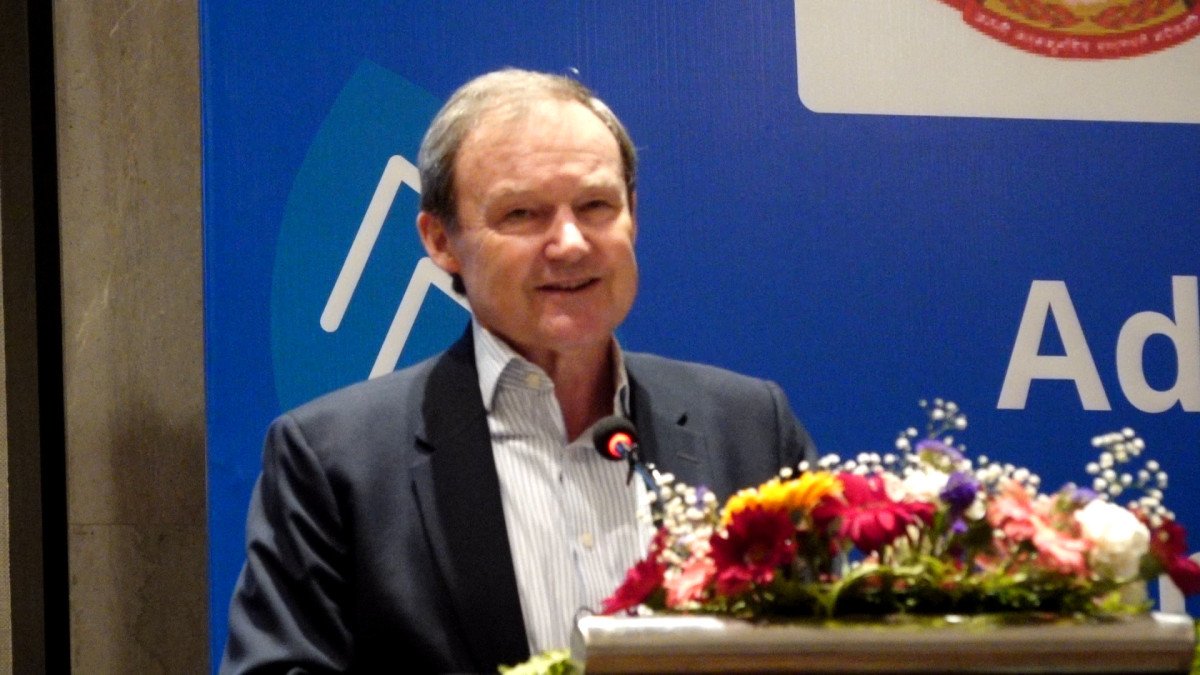
Kathmandu. British Ambassador to Nepal Rob Fenn has expressed commitment that the UK government will continue to support Nepal through various programs for climate resilience, professionalism in the agriculture sector, and sustainable development. Speaking at a program in Kathmandu on Monday, Ambassador Fenn stated that projects implemented through British foreign aid are playing a significant role in improving the economic and environmental conditions of Nepali communities. Ambassador Fenn discussed the UK's 'Resilience, Adaptation, and Inclusion in Nepal' program, emphasizing collaboration with the National Trust for Nature Conservation and the Alternative Energy Promotion Centre. According to him, the UK is providing technical assistance to increase Nepal's access to climate finance from international mechanisms such as the Green Climate Fund and the Loss and Damage Fund. Recalling the success of the completed 'Commercial Agriculture for Smallholders and Agri-businesses' program, Ambassador Fenn informed that this project connected 156,203 small farmers in Nepal to the market. He mentioned that Nepali Rupees 830 million (5.37 million pounds) in private investment was mobilized through this program, and 62 percent of the beneficiaries were women. As a new initiative, the UK has launched 'Catalytic Finance' under the 'Nepal in Business' program. Managed by the Dutch development finance institution, this fund will encourage banks and financial institutions to provide loans in underfunded sectors like agro-processing. Currently, this program is assisting three herb processing companies in preparing for export. Ambassador Fenn stated that work is being done with ICIMOD through the 'Climate Action for Asia' program to mitigate the effects of climate change. He mentioned that a 'Regenerative Agriculture' framework has been developed in collaboration between the University of Birmingham, UK, and ICIMOD, and its testing will begin soon. He expressed confidence that the UK will always support Nepal in adapting its agricultural system to the changing environment and promoting local solutions. At the program, Dr. Govinda Prasad Sharma, Secretary of the Ministry of Agriculture, Forests, and Environment, stated that a competitive international fund will play an important role in addressing the challenges faced by small farmers in Nepal. Secretary Sharma noted that most small farmers in Nepal are at high risk of climate-induced disasters. Pointing out the complexity of the problems in Nepal's agriculture sector and for farmers, he said that farmers lack access to technology, finance, and markets. He expressed concern over the increasing trend of youth migration from villages and the fallowing of arable land. At the program, he expressed confidence that the 'Climate Adaptation Innovation Accelerator' program, supported by the UK government, will promote innovative financial investments in sectors like banking, the private sector, and agro-processing. He praised the long-standing partnership with the WFP and stated that such programs will continue in the future. Secretary Sharma emphasized that Nepal needs to enhance its capacity to compete in international funds and attract more resources. Stakeholders have stated that mobilizing funds obtained through international competition will be effective for the upliftment of small farmers in Nepal, who are highly vulnerable to climate change and various agricultural risks. Krishna Yogi, Deputy Head of Mission at the World Food Programme (WFP) Nepal, mentioned that Nepal's agriculture sector is dominated by small farmers who are at high risk from climate-induced disasters. He stated that providing access to technology, finance, and markets to farmers cultivating with limited capital in rural areas is the main need at present. He expressed concern over the increasing migration of youth due to growing challenges in the agriculture sector and the increasing fallowing of arable land in villages. He specifically mentioned that in many districts of western Nepal, homes are becoming empty due to a lack of youth manpower, and the practice of abandoning agriculture is increasing. In this situation, it is believed that innovative financial schemes like 'Catalytic Finance' and agro-processing, supported by the UK government, will encourage the private sector and banks to invest in agriculture. The 'Climate Adaptation and Innovation Accelerator' program, being implemented through WFP, is expected to help enhance farmers' capacity and support climate adaptation. Deputy Head Yogi emphasized that Nepal now needs to go beyond the national budget limits and compete internationally to attract more funds. He expressed commitment that WFP has been collaborating with the government in Nepal's agriculture and food security sector for a long time and will continue such programs for the benefit of small farmers in the future.
This specific news has been automatically translated by AI. As a result, there may be some inaccuracies or language errors.