Interview with Nepal Red Cross Society Official on Squatter Holding Center Issues


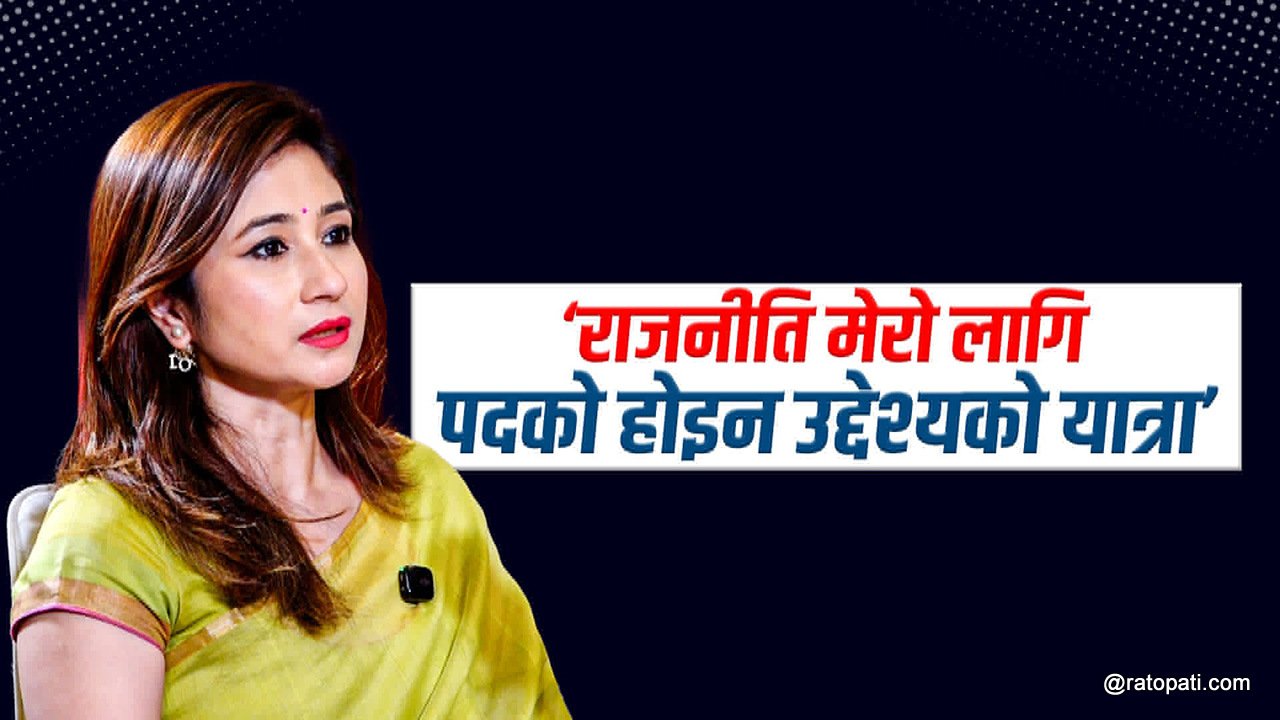
Rashmi Shrestha is the departmental head of the Manpower Development Institute at the Nepal Red Cross Society Central Office. She has been associated with the Nepal Red Cross for 12 years. The Nepal Red Cross Society, Banepa has arranged temporary accommodation for squatters whose settlements in various parts of the capital have been cleared.
What kind of problems are the squatters facing in the temporary shelter? This is what Narendra Raula of Rato Pati discussed with Rashmi:
Nepal Red Cross Society, Banepa has arranged accommodation for squatters. How is the management?
The squatters were brought here in three vehicles on April 24. We registered their names and accommodated 110 people. There are people of various age groups here, including a woman who gave birth 9 days ago.
How many children are school-going?
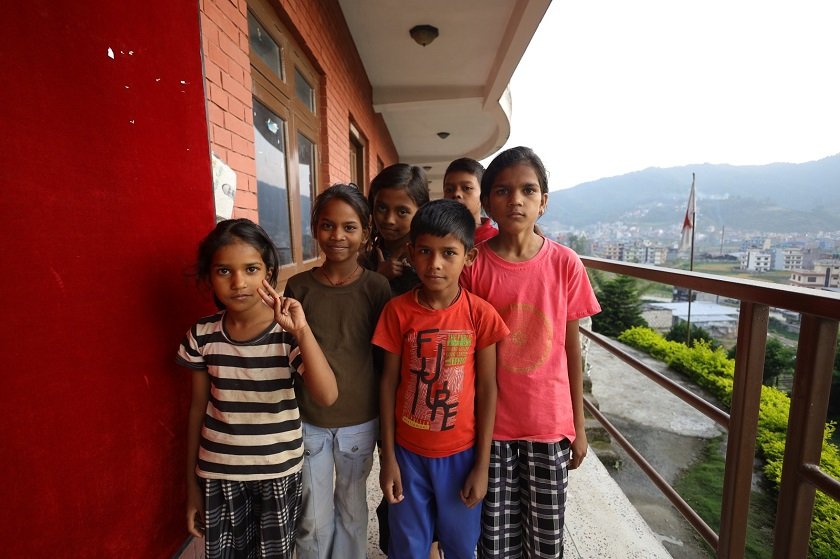
As we were detailing the data that day, we found children under 18 years of age. Among them, there are 26 children, including 16 girls and 10 boys. Except for two or three, all of them are school-going children. Additionally, there are four or five college-going students aged 20-22.
Which age group is the largest?
There are 7 women and 9 men among the elderly. The rest are school and college-going children. In total, there are 110 people of all age groups.
You mingled with the squatters for a few days. What was their mindset like?
It's very difficult. There are individuals of different age groups and with diverse needs. There is a minor, a new mother, who lacks nutritious food. She needs postpartum care.
There is a 10-year-old girl with non-verbal autism. Although her parents are with her, they have to manage everything from her basic hygiene care. There are significant problems. There is also a color-blind adult female with her daughter. Her daughter has her own needs. Similarly, there are chronically ill individuals.
The difficulty for us is that not only the elderly but also adults are suffering from various illnesses, such as hypertension, diabetes, requiring insulin, asthma, COPD, and many other cases. They need to take regular medication, and some need injections. Some do not even have medication. Their hospital documents were buried when their houses were demolished.
We also organized health screenings. With the coordination of the CDO, a health facility team from the DHO of Dhulikhel came and conducted the screening. Relief has been felt with the arrival of some medicines. Patients are lacking insulin. Diabetes medication and hypertension medication cannot be missed even a single dose. Their biggest fear is the problem of medication.
Are those who are taking medication facing more problems?
There are immense problems. Today a patient took an injection, but next week they won't have any. We are communicating with the DHO for this. That is a big challenge. However, yesterday, in coordination with the CDO, we discussed emergency care at two nearby large hospitals if needed. He assured us that he would correspond to coordinate with two hospitals. We are optimistic. Hopefully, no such accident happens tomorrow. I believe two hospitals can provide assistance if emergency care is needed.
What are the complaints of the squatter women who have lost their jobs? What kind of stress are they under?
Not just women, but men are also under stress. They came here, but their businesses or jobs were in various places. Some men were working as security guards or drivers. Women used to do housework, daily wage labor, or run small shops. Now all that is lost. For those who have jobs, it is far from Banepa to Chabahil, Vanasthali. It takes two to three hours just to reach there. The bus fare is also expensive. Due to this problem, they are unable to go to their jobs or work. Their businesses are already lost. The little money they had is also gone. They have no money to buy diapers for their children or medicine. They cannot go to work leaving their children behind. Employment is a very big issue right now.
What problems are the school-going students facing?
I consider this a very alarming issue. The number of students who want to go to school immediately, from class one to eight, has reached 20-22. In coordination with the madam from DHO, we have coordinated to see if it can be started for some time in a nearby government school, Dupeshwor. The month of Jestha has already begun. The children are very confused about where to enroll and what their studies will be like. How long will they just look at their mobiles in their free time? Their study habits are getting disrupted.
It is difficult to teach children who have studied in a formal setting in this informal setting. The age groups of children from class one to eight do not match, so they cannot be kept in the same place.
Children are under mental stress due to not being able to go to school. Problems like insomnia, sudden awakenings during sleep, loss of appetite, and dazing have appeared. The same type of problem is seen in children and all age groups. Mental health has become a very big alarming issue. How to address this problem? It is an urgent need for us to coordinate immediately.
A woman who gave birth is also kept here. What is her condition?
On the very first day of arrival, we coordinated with the CDO. Health screening was done by the DHO. A female health worker also came. From our side, we have given a bag of basic necessities for the baby and mother, and a dignity kit. The medicine will be sufficient for her. However, she lacks other care and nutritious food. There is a lack of management in that regard.
We are at a high altitude in Banepa. This is a somewhat cold place. Some people are walking in the clothes they are wearing. Many did not even have time to grab blankets, bedding, or clothes. They have complained about not having clothes to change into. The clothes they have are dirty, and they don't have another pair to change into. We are giving them what we have collected from those here. But there is also the issue of dignity. There are not enough clothes to change into.
What are the difficulties for those with autism?
The 10-year-old with autism still wears diapers. Her parents lost their jobs. The diapers they had are also running out. The child does not speak, nor does she go to school. There is a situation where the child needs care 24 hours a day. For that, special care, special school, and special medical attention are needed, which we have not yet been able to identify and link.
When the bulldozers ran through the settlement, most squatters could not retrieve their clothes. Are there enough clothes now?
We are at a high altitude in Banepa. This is a somewhat cold place. Some people are walking in the clothes they are wearing. Many did not even have time to grab blankets, bedding, or clothes. They have complained about not having clothes to change into. The clothes they have are dirty, and they don't have another pair to change into. We are giving them what we have collected from those here. But there is also the issue of dignity. There are not enough clothes to change into.
How is the food arrangement being managed?
On the day of arrival and the following day, arrangements were made at Ugrachandi Hotel. After that, we took catering services from Krishna Surya Darshan Party Private Limited. Everyone is uncertain about how long this temporary settlement will last. From service providers to the displaced families, their first question is always the same: When will we be moved from here, where will we be moved, what will the government do for us? We still cannot provide answers to these questions. It would be good if the government could manage the displaced families in a suitable place with minimum health and education facilities as soon as possible.
How is the government coordinating with the squatters housed here?
Initially, the CDO told us that he had no information, neither informal nor formal. The CDO was asking us how many people arrived and what was being done. After the squatters from Kathmandu were relocated here, he might not have had much information as it did not fall under his jurisdiction. Once they are brought to the Red Cross, it is our responsibility and duty.
We said that we do not have the capacity to accommodate 110 people, we cannot accommodate such a large number. Later, we coordinated with the CDO's office. We coordinated with the police office and DSP office for security. We have also written to the CDO for water supply and waste management. The municipality is coordinating for waste management. The Red Cross is managing breakfast, lunch, snacks, and dinner.
After the squatters were brought here, have any government representatives returned?
No. We ourselves coordinated and went to the Kavre CDO office. We discussed security, water supply, etc. The CDO of Kavre himself came here. No government representatives from Kathmandu have come so far. After they verified the list and left, the urban development employees said, 'We are starting now' and left.
Is the government coordinating as necessary?
On the first day, employees from the Empowered Bagmati Civilization Integrated Development Committee came, coordinated by the Kathmandu Valley Development Authority under the Ministry of Urban Development. They came, handed over the responsibility, and left.
After handing over the squatters and leaving, coordination was done over the phone. We informed them about the problem that arose with food management. They have not returned.
The Red Cross, considering it our responsibility, has called a public health team and conducted health check-ups for everyone. We have arranged medication for the new mothers and chronically ill patients. Some need insulin injections, some have mental problems, and some need long-term medication. There is great concern about them.
This specific news has been automatically translated by AI. As a result, there may be some inaccuracies or language errors.