Ebola Threat Intensifies in Africa, Raising Concerns for Nepal


Currently, the Ebola disease is spreading rapidly in the Congo, an African continent, due to the Bundibugyo virus. The Ebola virus has already reached neighboring Uganda along with Congo.
According to information published by the World Health Organization on May 17, 80 people have died in this outbreak, and 246 suspected infected individuals have been identified. The World Health Organization has also declared it a "Public Health Emergency of International Concern." This means that the extraordinary and rapid spread of the virus currently observed poses a risk of affecting other countries, necessitating a coordinated international response.

Therefore, the risk of the Ebola virus, currently limited to these two African countries, spreading to other countries cannot be ruled out. The case of Monkeypox (Mpox) virus, which was confined to the African continent for a long time, spreading globally, including to Nepal, can be taken as an example.
It has been confirmed that the cause of the current Ebola disease is the 'Bundibugyo virus.' Past data show that two other species of Ebola – Zaire and Sudan viruses – have caused major outbreaks. However, the mortality rate of the Bundibugyo virus appears to be lower compared to the aforementioned two viruses. Various studies indicate that the mortality rate of Ebola caused by the Bundibugyo virus ranges from 25 to nearly 40 percent.
Nevertheless, the current Ebola outbreak shows a mortality rate of 33 percent. The Bundibugyo virus was first seen in the Bundibugyo region of Uganda in 2007. Subsequently, an outbreak of this virus was also seen in Congo in 2012.
According to various studies and research, infected individuals with the Bundibugyo virus exhibit symptoms such as fever, severe headache, sore throat, muscle or joint pain, extreme physical and mental fatigue, vomiting, diarrhea, and bleeding. These symptoms typically appear within 2 to 21 days of infection. If the condition becomes more complicated, it can also affect the kidneys, liver, and nervous system. Bats and monkeys are considered the initial sources of this infection.
Later, the infection spreads from the bodily fluids of an infected person, such as blood, vomit, and feces, to another person. Since the initial symptoms resemble infections like malaria, typhoid, and dengue, there is always a high possibility of healthcare workers treating the patients getting infected.
In 2007, when the Bundibugyo virus was first detected, many infected individuals were healthcare workers themselves. Recently, four healthcare workers have also been confirmed with potential Ebola infection. This indicates a lack of adequate preparation or practical knowledge among healthcare workers to prevent Ebola infection.
A few years ago, when Ebola broke out in Africa, healthcare workers in Nepal were trained on how to wear PPE (Personal Protective Equipment) to prevent infection. Subsequently, during the COVID-19 pandemic, they worked in treatment wearing PPE. However, with the end of the pandemic, the use of PPE has not been common for a long time.
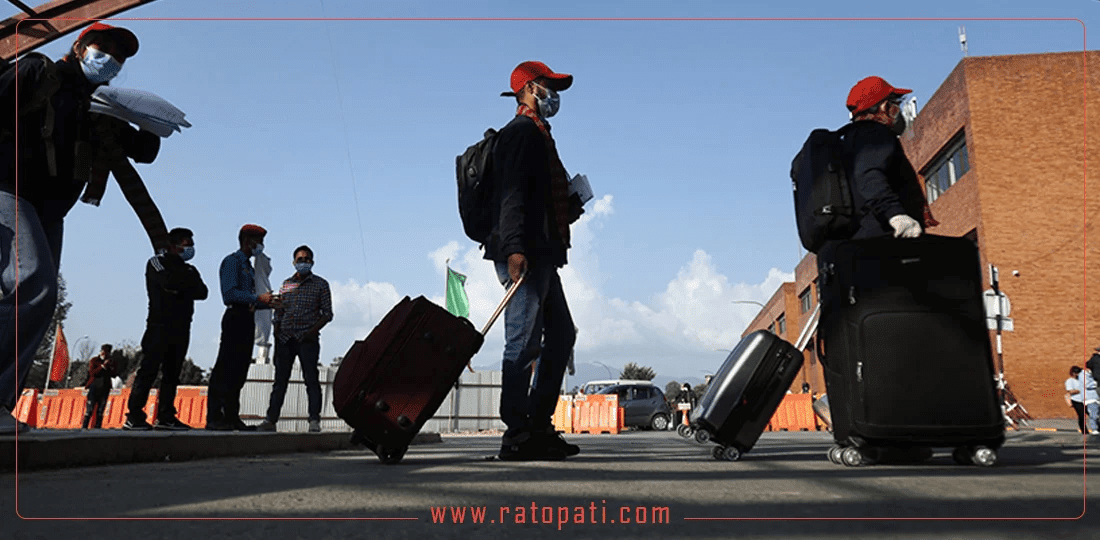
Although the African continent is not a primary destination for Nepali employment, the number of people going there has been increasing in recent years. The increasing rush of people coming to get the Yellow Fever vaccine, which is considered mandatory for traveling to Africa, also indicates this.
The author has personally seen some patients return to Nepal after being infected with malaria while working in African countries for employment. The increasing number of Nepalis going there is due to easy access to transportation and growing employment opportunities.
Therefore, although the risk of Ebola in Nepal is currently very low, it is not possible to say with certainty that infections seen in the African continent in the coming years will not be imported into Nepal. In the past, when Ebola broke out in Africa, precautions were taken in Nepal, and Teku Hospital was kept on standby for its identification and treatment.
After the COVID-19 pandemic, the Nepali government had announced the upgrade of Teku Hospital with modern infrastructure. However, as of the preparation of this article, the physical construction work according to the announcement has not yet begun.
The COVID-19 pandemic has made the need for a well-equipped infectious disease hospital and research center in Nepal apparent. We still tend to panic when problems arise and forget them as soon as they are over. No one can predict exactly where and when an outbreak will occur. However, with good preparedness, we can certainly control the potential high mortality rate and its spread to a great extent.
In conclusion, the future course of the Ebola outbreak will depend on the capacity of the response in the coming days. Although the risk of this virus in Nepal is currently low, it is not zero. The increasing movement of Nepalis to African countries in recent years for employment, travel, or other reasons cannot rule out the possibility of infectious diseases seen there entering Nepal.
It has become an imperative today to be prepared to face Ebola, which is considered new to Nepal, and such highly infectious and deadly diseases. For this, it has become necessary to establish a modern, well-equipped infectious disease hospital and an institution like the Center for Disease Control and Prevention (CDC).
Puna is the coordinator of the Clinical Research Unit at Shukraraj Tropical and Infectious Disease Hospital.
This specific news has been automatically translated by AI. As a result, there may be some inaccuracies or language errors.