Government Mandates Manpower Companies to Monitor Migrant Workers

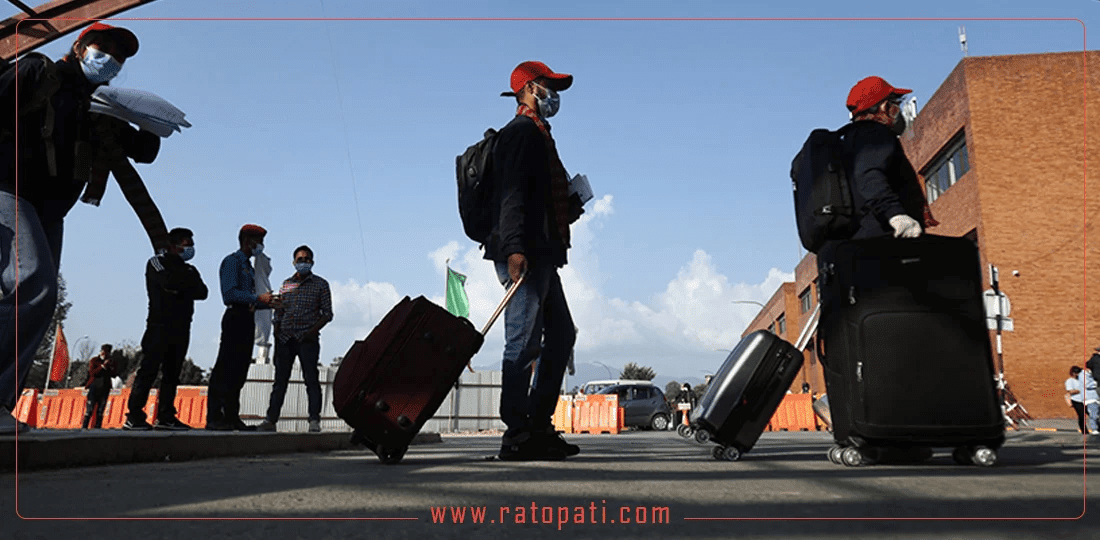
Kathmandu. The government has started a new policy to ensure the safety of workers going for foreign employment. The government is going to make manpower entrepreneurs primarily responsible for preventing the hardships, labor exploitation, and employer arbitrariness faced by Nepali workers after reaching their destination countries. Foreign employment is considered the backbone of Nepal's economy. Therefore, the government has started intervening in policy to ensure the safety and systematic management of workers going for foreign employment. Under the direct supervision of the Prime Minister's Office and the Council of Ministers, the Department of Foreign Employment issued a notice a few days ago stating that every manpower company will now be required to compulsorily and regularly monitor the condition of the workers they have sent abroad. This system aims to end the irresponsible practice prevalent in the foreign employment sector for a long time, where manpower companies consider their responsibility over once the workers are sent abroad. What is in the new system? According to the department's latest directive, manpower entrepreneurs will now have to regularly monitor and keep records of the condition of Nepali workers sent for foreign employment, the work environment, and the problems they are facing. For this, the department has put forward some strict conditions. Quarterly reports are mandatory. Every manpower company will have to submit a monitoring report detailing the condition of the workers they have sent to the department every 3 months. Similarly, the scope of direct contact needs to be increased. Entrepreneurs will have to directly contact at least 5 to 10 workers from each group on a monthly basis. During this contact, they must clarify whether the workers are receiving their contracted salary, the condition of their accommodation, and whether the work environment is safe. The department has stated that if any situation contrary to the contract is found during monitoring, the concerned manpower company must immediately coordinate with the employer company and ensure the implementation of the terms. If the workers need to be rescued immediately, the manpower company will be responsible for coordinating with the relevant bodies to arrange for rescue and compensation. The manpower company will also be responsible for clearly explaining to the worker, before they leave the country, their rights, the grievance process, and the employer's terms. Why has the government made it mandatory for manpower companies to monitor? Nepali workers going for foreign employment not receiving their contracted salary, lack of safe accommodation, being forced to do work against the contract, and passport confiscation by employers have been common problems for Nepali workers for years. Domestic workers and workers with limited language knowledge are particularly at high risk of such exploitation. Therefore, the department stated that the government is implementing a new policy to reform the foreign employment sector and make entrepreneurs responsible. The department's Director General, Mira Acharya, said that this system has been brought to change the current practice where manpower companies are sought only after workers face problems. 'The primary responsibility for the condition of the workers they send is that of the manpower company,' she says. The department stated that while the primary and main responsibility for workers sent for foreign employment lies with the respective manpower company, and since this has not been the case so far, they are being made more responsible. She informed that the department has implemented a new action plan to make manpower companies more responsible based on the instructions received from the Prime Minister's Office and the Council of Ministers. She also mentioned that the department has reminded the entrepreneurs of the provisions in the Foreign Employment Act. According to Director General Acharya, manpower companies will have to monitor and coordinate the condition of workers for at least two years if they become stranded or face problems abroad. For this, manpower companies will be required to submit a monitoring report detailing the workers' condition to the department every three months. If any worker lodges a complaint, the department will demand the report from the manpower company, she said. Acharya mentioned that workers going for foreign employment with individual labor approval are themselves responsible. She claimed that this step has been taken with the objective of identifying the actual condition of the workers and bringing about necessary improvements in the field of foreign employment. International labor standards hold employers and recruitment agencies responsible for the safety and regular monitoring of workers. The department argues that since the state has delegated its authority by issuing licenses to manpower companies, they have an equal responsibility to protect the interests of the workers. According to the department, the Foreign Employment Act of 2064 already had provisions for entrepreneurs to look into the condition of workers and deploy representatives if necessary, but this had not been implemented until now. Businessmen's Complaints and Practical Difficulties Although the government considers this system a positive and responsible step, manpower entrepreneurs have raised serious practical and technical questions regarding its implementation. Nepal Association of Foreign Employment Agencies Chairman, Dil Bahadur Khatri, stated that this system will not be effective due to the flaws in the current act and limited resources. According to Chairman Khatri, workers do not want to stay in touch with manpower companies unless they face problems. 'Workers who have found good employers do not even say hello upon return; they only look for businessmen when they face problems,' he said. In such a situation, it is very difficult to keep the A to Z details of all workers updated. He claimed that the main reason why manpower companies cannot have their representatives or branch offices abroad is the government's decision on free visa, free ticket, and the low service fee of ten thousand rupees. He argues that it is impossible to build a monitoring structure or deploy staff abroad with ten thousand rupees. Currently, most Nepali manpower companies operate through local agencies in the destination countries. Due to the lack of their direct presence, they are compelled to prepare reports based on the information provided by these agencies, which may not always be true. Demand for Legal and Policy Reforms Chairman Khatri claimed that the decision of 2072 BS has disrupted the foreign employment sector, and monitoring and regulation without amending old and flawed laws and rules will not be effective. He said, 'Making entrepreneurs responsible is justified, but for that, the necessary infrastructure and proper management of service fees must also be in place.' He informed that the department has already sent the monitoring format to the entrepreneurs. According to him, from now on, manpower companies will have to submit a report to the department's institutional monitoring branch every 3 months. This system is believed to provide great relief, especially to the families of the workers. He stated that the success of this system depends on the coordination between the government and the entrepreneurs. On one hand, the government is trying to tighten measures for the safety and rights of workers, while on the other hand, entrepreneurs are presenting their technical problems. The department, however, has a strategy to activate post-departure monitoring at all costs. As millions of youth join the labor market every year from Nepal, it is the state's responsibility to ensure the value of their sweat and the safety of their lives. If this step, which compels manpower entrepreneurs to fulfill their professional duty, works effectively, it is expected that many irregularities seen in the field of foreign employment will be reduced.
This specific news has been automatically translated by AI. As a result, there may be some inaccuracies or language errors.


_jEGOtGcTjV.jpg)