Sukumbasis Relocated to Banepa Face Difficulties


Banepa. On the evening of April 24, three vehicles stopped in front of the Red Cross Training Center in Banepa. Inside the vehicles were 110 landless people. The landless people from areas like Gaindhara, Gainchaur, Sinamangal, Banshighat, Jadibuti, and Balaju were taken to the training center building after their names were entered.
The landless people had no idea where they were going or for how long. They were directly taken to Banepa on the phone call of the Chief District Officer of Kavre and the order of the employees of the Kathmandu Valley Development Authority under the Ministry of Urban Development. Even after 10 days of being kept at the Red Cross training center, no government representatives returned. The government did not show the concern and worry that should have been shown for the condition and management of the landless people.
The sole caretaker of the 110 landless people from 27 families is the watchman of the Red Cross training center, Bishnu Prasad Acharya. He works from 5 in the morning until 2 in the late night caring for them. The remaining two Red Cross employees coordinate when needed. The limited manpower is facing difficulties and complexities in managing the large number of landless people. It is not even certain how long they will have to stay at the training center.
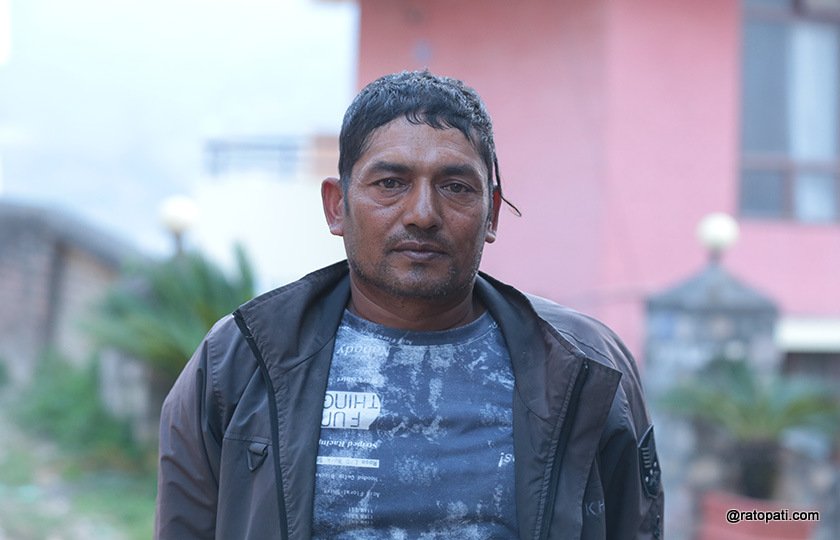
For the first few days after the landless people were brought to Banepa, food was ordered from a local catering service. After that process became cumbersome, food preparation has started in the Red Cross's own canteen.
Government Unaware of Landless People Displaced from Hills
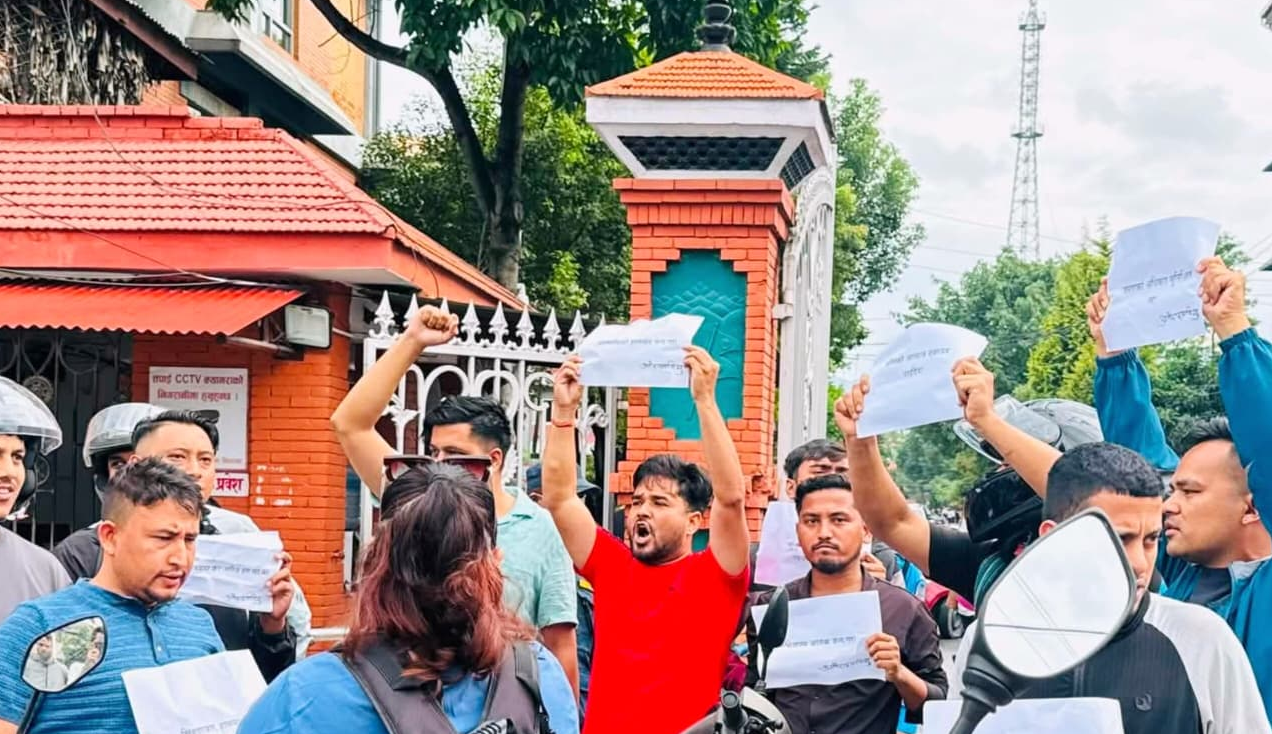
When bulldozers were used in the landless settlements, there was a large presence of Nepal Police, Armed Police, and Metropolitan Police Force. A vehicle of the Nepali Army was seen moving around Thapathali for surveillance. In Manohara, the Nepali Army came out onto the road with weapons. Looking at all these scenes, it seemed like a war was about to begin. Employees from the Prime Minister's Office would secretly come in disguise, take photos, and leave after inspection.
The government, which considered the act of bulldozing the landless settlements as the greatest victory and success, has not shown much promptness in its subsequent responsibilities. When the landless settlements were bulldozed, they were surrounded by security forces, but those same landless people, who were displaced and sent to Banepa, now feel alone and helpless.
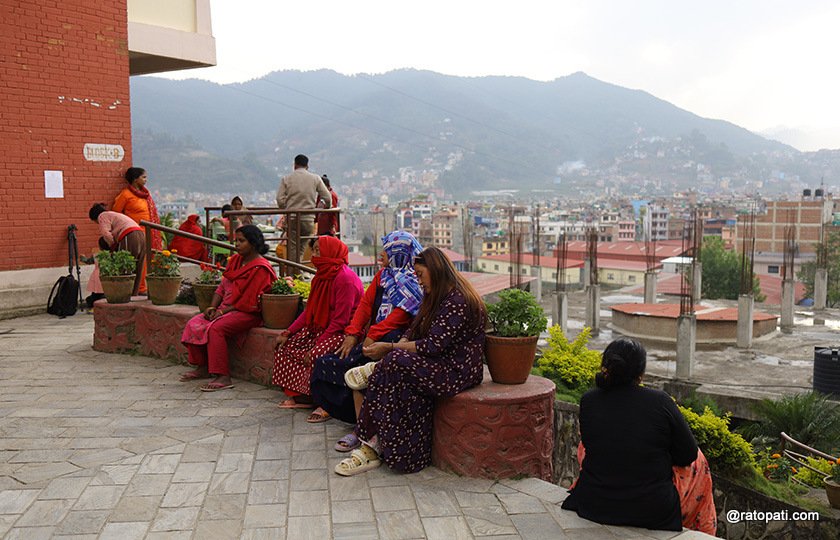
Children, students, new mothers, the sick, and the elderly are struggling with various problems, and not a single government employee is present here to listen to their problems.
Landless People Cramped Together
The landless people who were displaced from the Kathmandu Valley and brought to the Red Cross training center in Banepa are living in cramped conditions. It is difficult for them to spend their days on the cold hill where the wind blows. They are not allowed to go out except to buy medicine and essential supplies. Those who earn a living through daily wages are restless because they cannot return to work. Students studying in schools and colleges are most worried about missing their studies.
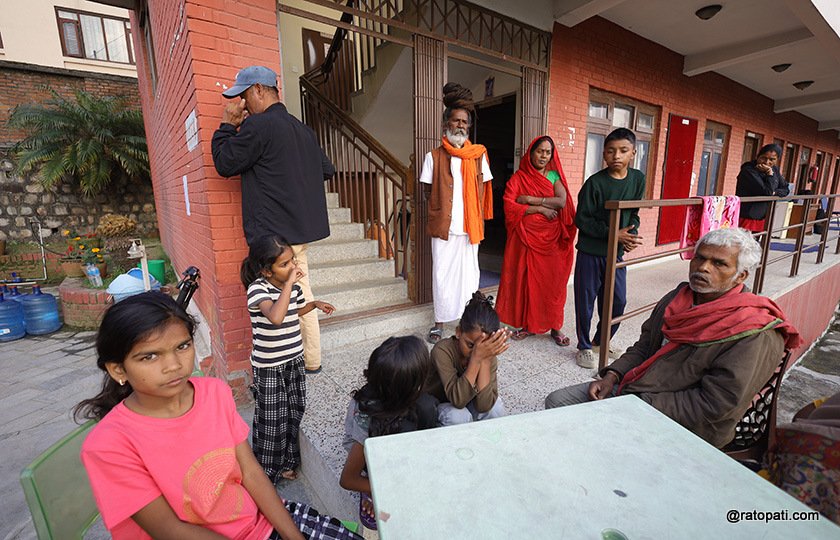
Chandni Mahato, who was nine days postpartum, was restless when she arrived in Banepa. There is no nutritious food, nor warm clothes. On top of that, the uncertainty of a permanent place to stay has added to her worries. After her landless settlement in Sinamangal was bulldozed, she stayed in a hotel in Gongabu for a few days. Being brought to Banepa for temporary settlement has caused her more distress. "We should be treated humanely," Mahato said.
Anita Lama, who was displaced from the landless settlement in Thapathali, is tired of the uncertain stay in the shelter.
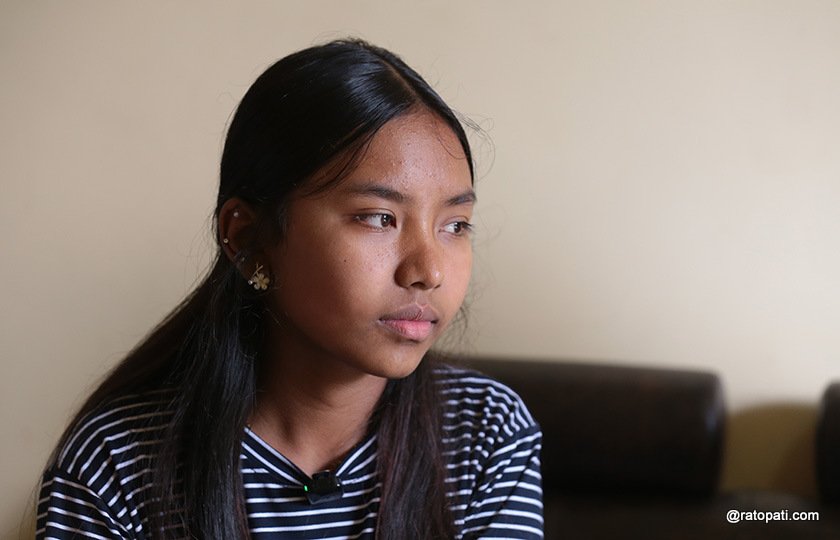
She used to study at VS Niketan in Thapathali. Lama, a 7th-grade student, is stressed because she cannot enroll in school. Her daily routine consists of spending the day on her mobile and being lost in thought.
Limited Beds, More Landless Than Capacity
There are only 66 beds available at the Red Cross training center in Banepa. Managing 110 people is proving extremely difficult. The burden of food, accommodation, sanitation, and all other aspects is being carried by the Red Cross watchman, Bishnu Prasad Acharya. "We have more burden than we expected," says Acharya. Kapil Karki of the Red Cross states that there are difficulties in managing drinking water and waste.
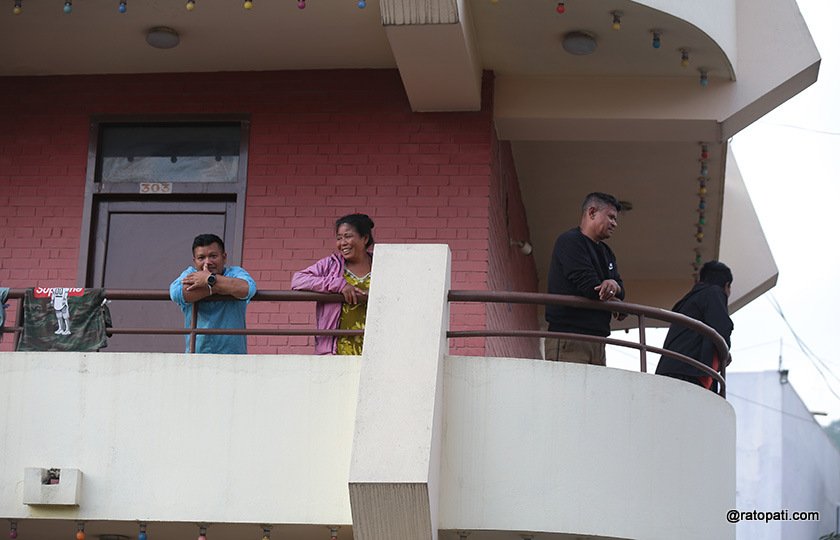
Although work is being done in coordination with the local administration, he says it is not possible to fulfill all needs in temporary housing. He argues that children should not be deprived of their right to education. "Permanent management must be done," he says, "There are people with chronic illnesses, anything can happen tomorrow." It is very difficult to manage children, new mothers, the sick, and the elderly in the same place.
Stress Increases as Livelihoods are Lost
Ramnath Mahato, 55, who used to live in the landless settlement in Thapathali, worked as a laborer and in concrete work. Mahato, who earned Rs 20,000 per month, supported a family of nine. He sent his four daughters and one son to school. After the bulldozer ran over his shack, he lost his job. He is worried about the future while staying in the shelter in Banepa. "We have no home, no land, at least give us a place to stay, do something, government," Mahato says in a Madhesi accent, "We have children, where do we go? Where to go? Arrange something for us."
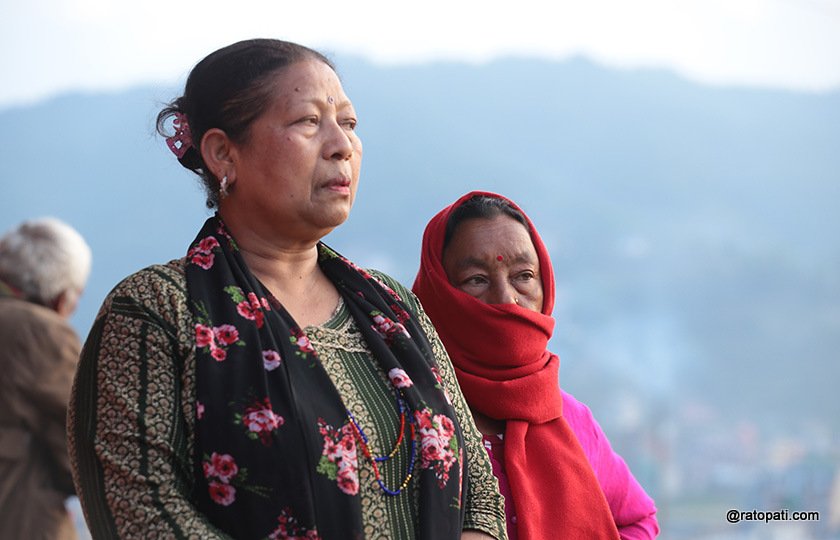
Dalli BK, who lived in Manohara, was supporting her son's education by working for others. She earned Rs 5,000 by washing dishes at other people's homes. After losing that income, she was more worried about her son than herself.
She says, "Now school is over, where will we live? We didn't even get rent for a room before." Like Dalli and Ramnath, there are many such characters who have lost their jobs and used to support their families through labor. But now there is no employment.
Video/Photo: Subash Shrestha/RatoPati
This specific news has been automatically translated by AI. As a result, there may be some inaccuracies or language errors.