Wrongful Prosecution Leads to Injustice in Nepal
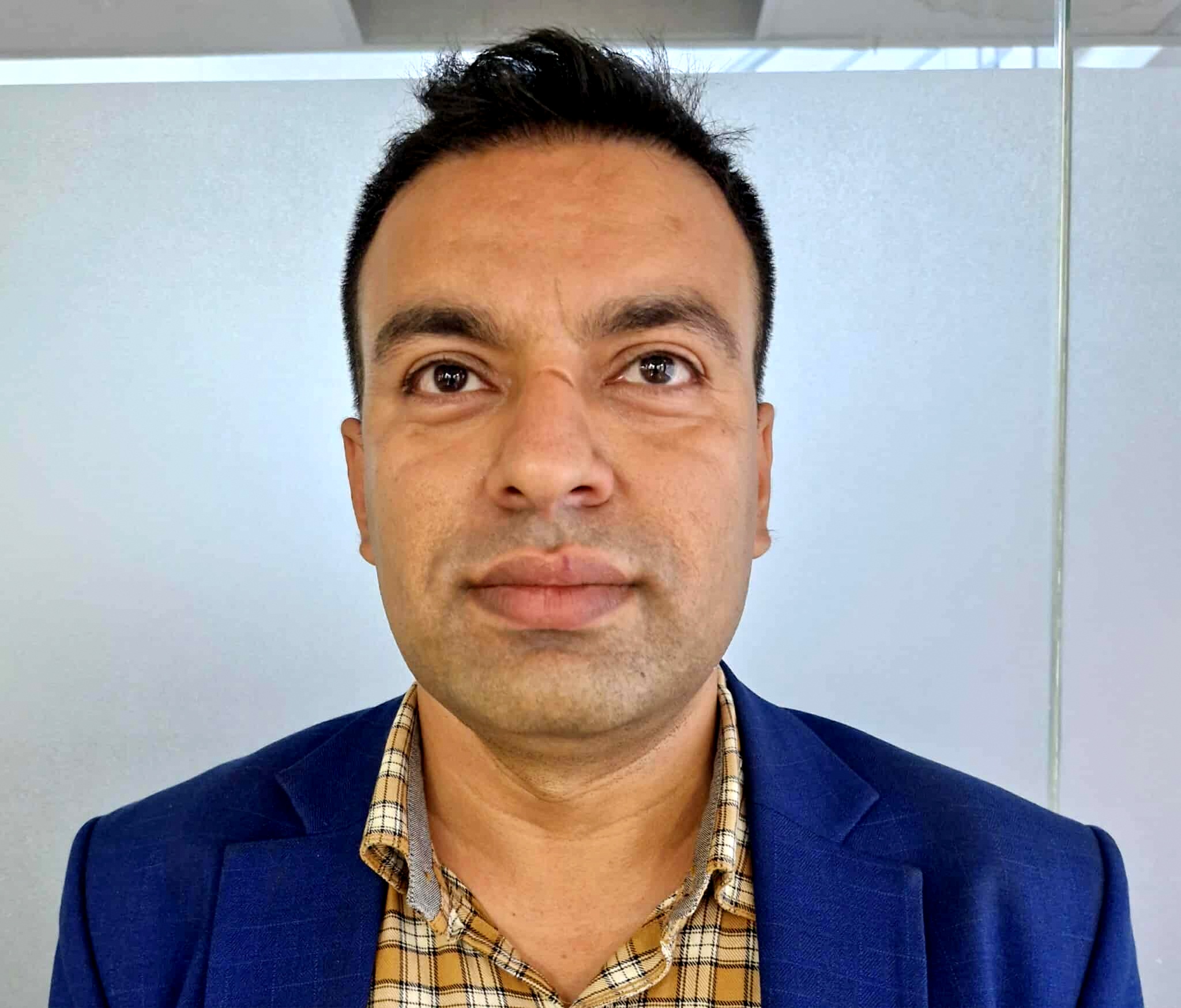

Kathmandu. Biranjan Yadav, residing in Ghaṭṭekulo, Kathmandu, was living a normal life. He was studying BBA first year at Saraswati Campus and was building beautiful dreams for the future. He was excellent in his studies and had set a goal – to become a successful banker or entrepreneur.
However, on Bhadra 26, 2076, a rape complaint was filed against him, and his dreams and hopes began to crumble from that day.
A teenage girl filed a complaint with the police accusing him of rape, and Biranjan was arrested. He was sent to jail. He spent 5 years and 8 months, the most energetic period of his life, looking at the prison walls. But on Baishakh 31, 2082, the Supreme Court declared him 'innocent', and he was released, but his life had already changed, time had passed, and he had lost a lot.
Initially, the Kathmandu District Court found him guilty based on the charge sheet and sentenced him to 12 years of rigorous imprisonment. The court considered the claim that the girl was a minor and the police report as the main basis.
After that, the case went to the High Court Patan. On February 26, 2078, a bench of judges Subhash Poudel and Narishwor Bhandari reduced the district sentence to seven years but kept him in the category of a criminal.
Finally, the case reached the Supreme Court. Judges Tilprasad Shrestha and Bal Krishna Dhakal delved into the depths of the case and studied the evidence. One fact was found – there was no objective evidence to prove Biranjan guilty. The Supreme Court said – it is not permissible to establish guilt solely on the basis of a written complaint and the testimony of hearsay witnesses.
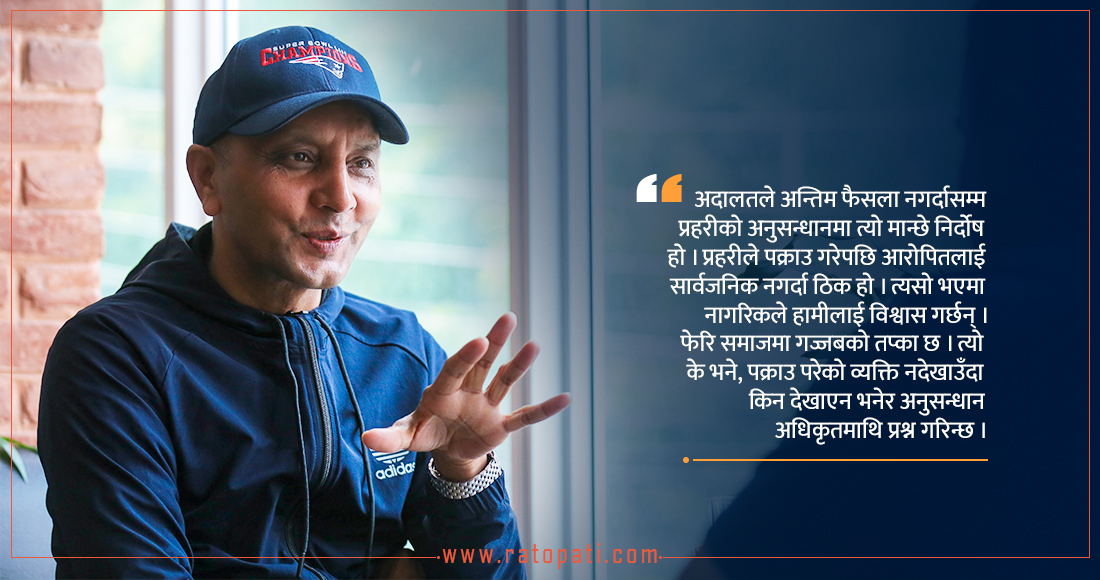
Although Biranjan was acquitted by the Supreme Court, he is still a 'prisoner' in society. The 5 years and 8 months of imprisonment have left him mentally devastated. His old nature of going to college, laughing and enjoying with friends is now history.
Society has not yet accepted him. Neighbors whisper and relatives shun him. 'The court declared him innocent, but who will change society's view?' Biranjan's family is seeking an answer to this question.
Biranjan's precious time will not return. But who will pay for the mental torture he endured? There is no clear provision in Nepal's law that 'the state will provide compensation for being imprisoned on false charges'.
Who will be held accountable when the government attorney's office and the police send someone to jail as an accused without evidence? How many Biranjans are there in Nepal's prisons who are rotting in jail on whims without evidence?
- Where is true justice?
A young man studying BBA is now forced to live in fear of society. Although the Supreme Court's verdict removed the tag of a criminal, he has lost his social status, lost time, and his honor.
Biranjan is just an example. There is also Madannarayan Shrestha (Nepal Police Havildar) from Nuwakot, who suffered from wrongful prosecution due to the state system. He also fell victim to a serious judicial error. On Kartik 10, 2060, Shrestha was arrested two days after the incident, arrested by the police team that went from Hanumandhoka to investigate the incident of rape and murder at New Parbat Lespar Guest House in Gongabu on Kartik 8. He was on duty from 10 PM to 3 AM on the night of the incident. Two people who saw him on duty testified.
Local people pressured the police to investigate the incident that occurred on Kartik 8. Amidst that pressure, Shrestha was arrested. The police subjected him to extreme torture, forced him to confess to the crime, and made him give a statement in court after making him sign papers.
However, on May 10, 2066, the Kathmandu District Court, determining that Madan Narayan had been subjected to extreme torture, concluded that the false statement was obtained through severe torture and ordered him to be paid 40,000 in compensation.
The court stated that in a criminal case, evidence must be proven beyond a reasonable doubt.
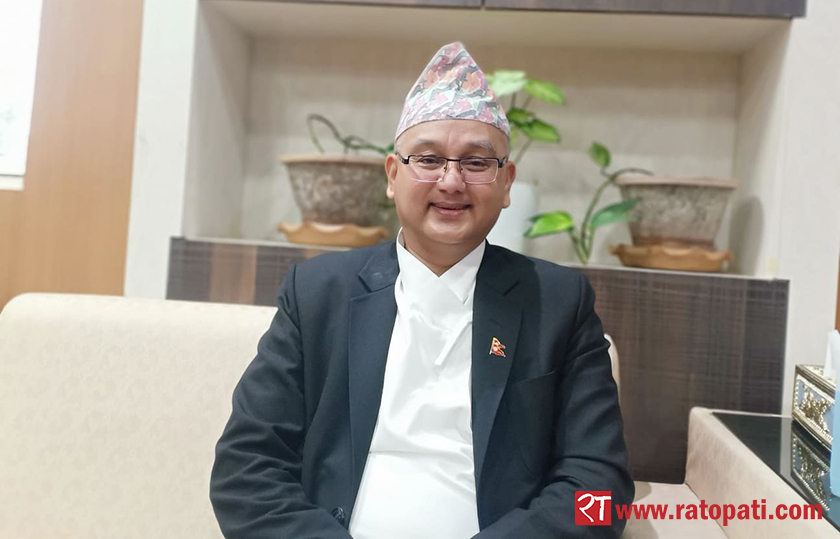
Giving a statement under physical or mental torture is contrary to the principles of criminal justice. 'It appears that the confession made by the defendant Madan Narayan Shrestha to the authorized officer during the investigation was not voluntary but obtained under physical and mental pressure, therefore, the confession cannot be accepted as evidence,' the District Court's verdict stated.
However, the court did not acquit Shrestha; instead, it sentenced him to life imprisonment. Two years later, the Appellate Court upheld the district court's decision. Shrestha then approached the Supreme Court. A joint bench of Supreme Court judges Deepak Kumar Karki and Kedar Prasad Chalise declared Shrestha innocent on April 24, 2074.
Shrestha, who was imprisoned at the age of 34, was released after spending 13 years and 6 months in jail. He was 48 years old. Shrestha got justice after losing everything in his life. Upon being sent to prison, he lost his father, the head of the family. The house was burdened with debt. The family was devastated. The district and appellate courts sentenced him to life imprisonment based on a fraudulent claim that a hotel worker said, 'He looks familiar,' although the Supreme Court eventually declared him innocent, albeit late.
Biranjan and Madan are just examples. Many individuals, economically disadvantaged and lacking access to education in rural areas, are falling victim to the wrongful prosecution system.
Their lives are being ruined due to the negligence and malice of the bodies responsible for investigation, prosecution, and judgment in serious criminal cases.
A fundamental principle of justice administration states, 'Let a thousand guilty be acquitted, but not one innocent be punished.' However, in Nepal, the practice of imprisoning first and then hearing the case has led to many instances where individuals are declared innocent after spending a long time in jail.
Even if the guilty are acquitted, an innocent person should not be punished. This is based on the fundamental universal principle that the accused should be given the benefit of doubt. There is a principle that a person should only be imprisoned after their alleged crime has been heard and proven in a judicial process.
Furthermore, before sentencing, the judicial mind must consider hundreds of times whether the accused is innocent. However, when individuals are declared criminals based on accusations and suspicion, and are later acquitted of any crime, they should receive compensation. But due to the lack of such laws, they do not receive compensation, and in the eyes of society, they remain criminals. Since there is no law to compensate individuals declared innocent, the victims are unable to restore their unjustly lost reputation.
- Declared Innocent After Serving Jail Time
Ramkumar Karki of Kirtipur fell victim to the revenge of his neighbor and the abuse of state power. He spent seven years in jail on a false charge for no reason.
The relationship between Ramkumar and Raju Khatri had become hostile due to a land dispute and disputes between brothers. The dispute over land between Ramkumar's brother Achyut and Raju Khatri led to enmity. This dispute, which began with Raju holding Ramkumar's brothers hostage, later escalated into cases of assault and 'kidnapping industry'. Ramkumar was charged with attacking Raju and his wife with the intent to kill.
However, serious errors were found in the police investigation. The 'red substance like blood' found at the scene was not subjected to laboratory testing. Furthermore, no further investigation was conducted regarding the dog that was allegedly poisoned. Although weapons were found, the case was filed based on bullet casings. The district and appellate courts, relying on the police's weak investigation and fabricated evidence, sentenced Ramkumar to 7 years imprisonment.
Ramkumar filed a petition with the Supreme Court to review the case in 2070. If the decisions of both the lower and appellate courts are the same, a petition can be filed with the Supreme Court to review the case. If permission to review is granted, an appeal is registered. The Supreme Court, citing reasons such as the wound examination not showing life-threatening injuries, no third-party involvement in the incident, and the case being filed under arms and ammunition possession despite only finding casings and no weapons, found errors in the verdict and granted permission for review in February 2070.
Ramkumar served his full 7-year jail sentence and was released in 2073. One year after his release, the Supreme Court declared him innocent. The Supreme Court concluded that the incident was a 'fake incident' fabricated due to personal animosity. This incident illustrates the extreme injustice a blameless citizen suffered from the state due to the misuse of police administration and the delay in the judiciary. Justice was served, but only after the loss of 7 precious years and his life.
There is neither a legal provision to bring those who commit the heinous crime of imprisoning the innocent to justice, nor a law to compensate for the economic, social, mental, and constitutional rights lost during imprisonment. Despite the Supreme Court's directive to enact a law for compensation a decade ago due to the increasing number of cases of falsely accusing innocent individuals, the law has not been made.
- Police Havildar Accused of Stealing a Pistol Gets Justice After 30 Years
Khul Bahadur Kunwar, a Havildar in the Nepal Police, accused of stealing a pistol, spent 4 years in jail in the 2044 BS decade on charges of pistol theft from the Police Training Center. He not only served his sentence but also lost his job and his honor was tarnished. However, he proved his innocence after 31 years.
Having joined the service in his youth, he spent his prime years proving 'I am not a pistol thief'. He filed a petition with the Supreme Court demanding the salary, benefits, and pension he had been receiving. On February 23, 2075, a joint bench of Supreme Court judges Bishwambhar Prasad Shrestha and Prakashman Singh Raut, finding injustice, ordered compensation.
The verdict stated that it would be just to provide Kunwar with the salary, allowances, and other benefits he would have received as a police officer from the date of his detention on the pistol theft charge until his retirement date, along with his pension. The verdict stated – the respondent is ordered to provide the petitioner with the salary, allowances, and other benefits, including the pension amount, within two months of the date of this order. The Supreme Court issued a mandamus against the respondents.
- 5 Years in Jail for Human Trafficking, Later Declared Innocent
Arjun Prasad Sharma of Kaski was arrested by the police in Kathmandu on October 17, 2073, on charges of human trafficking. Initially, he had no idea why he was arrested. The police accused Arjun of trafficking a victim woman from India to Sri Lanka and then to Oman. He stated in court that he was innocent.
However, the Kaski District Court sent him to jail for pre-trial detention. A year later, on December 11, 2074, the Kaski District Court sentenced him to 11 years imprisonment and ordered him to pay 1 lakh in compensation for human trafficking. The High Court Pokhara, overturning some aspects of the initial court's decision, reduced the prison sentence to 5 years and ordered him to pay 5 lakh in compensation on November 11, 2075.
Sharma, who appealed to the Supreme Court, was acquitted on March 14, 2080, by a joint bench of judges Kumar Regmi and Tekprasad Dhungana, who stated that the incident of trafficking the victim woman abroad was not proven. By the time the Supreme Court's verdict arrived, Sharma had already served 5 years in jail.
- Imprisoned Solely Based on Matching Name
In 2060 BS, Lalitpur police arrested Rajendra Maharjan, who was absconding in a five-year-old murder case. Maharjan was arrested and imprisoned to execute a life sentence in the murder case of Prem Avale in Sundhara, Lalitpur, in Kartik 2055.
The charge sheet mentioned that Chakku Maharjan, also known as Rajendra Maharjan, residing in Dupat, Ward 7, Lalitpur Sub-Metropolitan City, who was involved in the incident, was absconding. However, the police arrested Rajendra from Chaupur Galli, Lalitpur 17, and sent him to jail. Despite his statement of innocence, the police did not listen to him. His plea was not heard even after submitting an application with documents to the District Court, Lalitpur.
The arrested individual filed an application in the then Patan Appellate Court (now High Court) in February 2061. After the appellate court upheld the district court's decision, he approached the Supreme Court. In 2063, the Supreme Court ruled that the person involved in Avale's murder was not Rajendra Maharjan and that he had been arrested arbitrarily, thus declaring him innocent.
After the Supreme Court's verdict, Maharjan was released. The Supreme Court also issued some directive orders. It ordered that in future investigations and prosecutions, evidence that can reveal the identity of the accused, such as citizenship details, educational certificates, physical build, facial features, special appearance, photos, and lapel badges, should be attached.
The Attorney General's Office and the Police Headquarters were instructed to ensure that the name, lineage, citizenship number, voter ID number, and other documentary evidence, including any aliases, are included in the investigation of the defendant.
- Directive Order Issued by the Supreme Court Not Implemented
Advocate Amrit Prasad Shrestha filed a writ petition in the Supreme Court in 2070 demanding the enactment of a law to provide compensation to those who are declared innocent after being imprisoned on false charges.
In the case filed by him, a constitutional bench ruled in 2072 that the state should issue a directive order to enact a law regarding compensation for those unjustly detained. It was stated that compensation should be provided to protect the right to personal liberty guaranteed by the constitution due to wrongful investigation and improper prosecution, and because the opportunities for social, economic, and employment rights are lost during imprisonment. However, the government has not yet enacted the related law.
- In Which Countries is Compensation Provided for Wrongful Conviction?
In New Zealand, Australia, and Canada, there is no separate legal provision for compensation for wrongful convictions. However, there is a directive to provide compensation if such a request is made. Japan even has a law on compensation for wrongful prosecution, under which those who have served jail time due to wrongful investigation and prosecution are to be compensated with amounts ranging from a minimum of one thousand yen to a maximum of 12,500 yen per day.
- How Does Wrongful Prosecution Occur?
The first problem leading to this is when lawyers representing the victim are not strong. If their lawyer does not work diligently and does not analyze and present the available evidence to the court, an innocent person is likely to be trapped.
Second, it has been observed that some innocent individuals receive sentences even when forensic science fails. Errors can occur in laboratory tests in criminal cases. In a rape case, if the DNA samples of two individuals need to be tested, and the samples are swapped, the case can be different?
Third, innocent individuals are punished when the complainant provides false information. Cases are sometimes filed due to someone's personal interests or grudges. If the incident is not analyzed meticulously before prosecution, innocent individuals have to serve jail sentences.
Fourth, innocent people are trapped for no reason due to false confessions. Under pressure, victims may admit to involvement in an incident even if they are not involved. In some cases, individuals become liable for punishment by giving false statements under temptation.
- What Does the Muluki Criminal Code Say About Wrongful Prosecution?
The Muluki Criminal Code includes provisions for punishing those who conduct investigations and false prosecutions with malice. However, despite the provisions in the code, they have not been implemented so far. Section 99 of the Criminal Code states 'No malicious investigation or prosecution,' holding investigating officers accountable for malicious investigations.
Subsection (2) of this section states that an officer responsible for investigation or prosecution who maliciously investigates or files a charge with the intention of framing an innocent person or protecting a real culprit can be punished with imprisonment for up to 6 months or a fine of up to 5,000 rupees, or both. Subsection (3) states that if any person suffers any loss or damage due to such an act, compensation can be recovered from such a culprit.
This specific news has been automatically translated by AI. As a result, there may be some inaccuracies or language errors.